10 December 2025
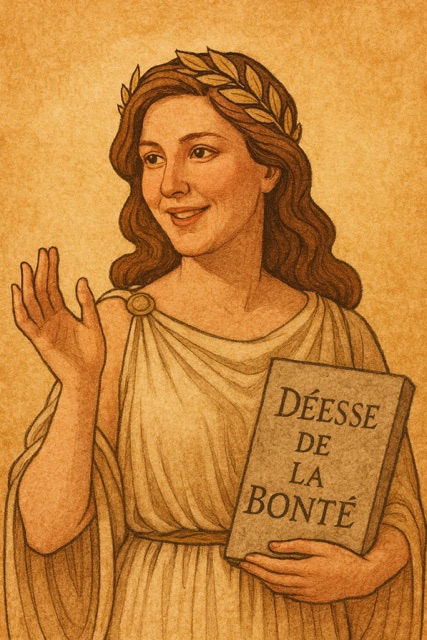
Our protective Swiss goddess of kindness watches over us as we awaken to a Peloponnese blue sky, the sun soft across tiled rooftops and the olive-green hills of Nafplio. The church next door rings its bells in dedicated fervor. No ignoring its wake-up call.
We linger over a Mediterranean breakfast—thick yogurt drizzled with honey, warm bread, and a cup of latte that exudes comfort. Finally, we retrieve our car for the day’s adventure.
Argolis Region
Argolis takes its name from the ancient city of Argos, once the region’s capital. According to mythology, Argos was named after several heroes of the same name, the first being a son of Zeus and Niobe. Over time, the name came to represent not just the city but the entire region. Argives became a term used for the people of Argolis—and eventually for the Greeks as a whole, as reflected in Homer’s Iliad.
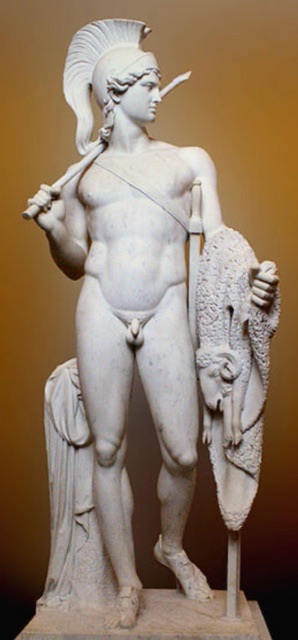
Argolis has a mythological connection to Jason and the Argonauts. The name Argonauts comes from Argo, the ship they sailed during their quest for the Golden Fleece. The ship itself was said to be named after its builder, Argus, who—again, according to myth—hailed from Argos in Argolis. However, the story of Jason and the Argonauts mainly unfolds around Iolcos (in Thessaly) and Colchis (modern-day Georgia). Jason probably never saw Argos.
Epidaurus Theater and Ruins
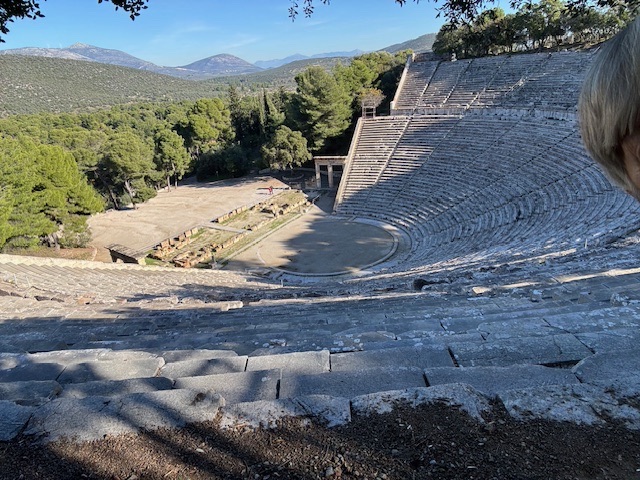
The ancient Theater of Epidaurus is one of the best-preserved classical structures in Greece and a masterpiece of ancient architecture. Built in the 4th century BCE by the architect Polykleitos the Younger, it was part of the sanctuary of Asklepios, the Greek god of medicine and healing.
The sanctuary drew pilgrims from all over the ancient world seeking cures. The theater provided a space for entertainment and spiritual enrichment, as drama was seen as a vital part of therapy and well-being. Hopefully, there were a lot of comedies, too.
The theater’s significance lies in its remarkable acoustics, symmetry, and beauty. It could hold about 14,000 spectators, and even today, someone speaking in a normal tone at center stage can be clearly heard in the top rows. Many a tourist confirms this claim although the person dropping the coin below remains unheard. This feat of design resulted from the perfect harmony between the limestone seating, circular orchestra, and surrounding landscape.
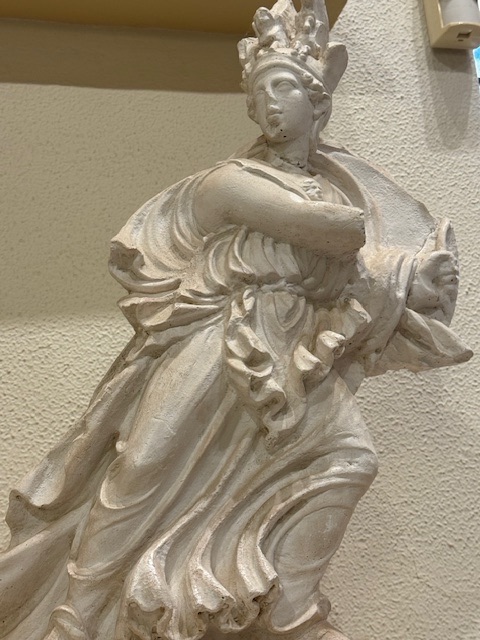
What remains today is a large performance area, and the skene, the stone stage building once used by actors and chorus members. The site still hosts summer performances during the Epidaurus Festival, continuing a 2,400-year-old tradition of theater under the stars. Surrounded by pine-covered hills, it’s a breathtaking place to sit quietly, listen to the wind, and imagine the voices of ancient Greece echoing through time. I wonder if concessions sold pillows for the stone seats?
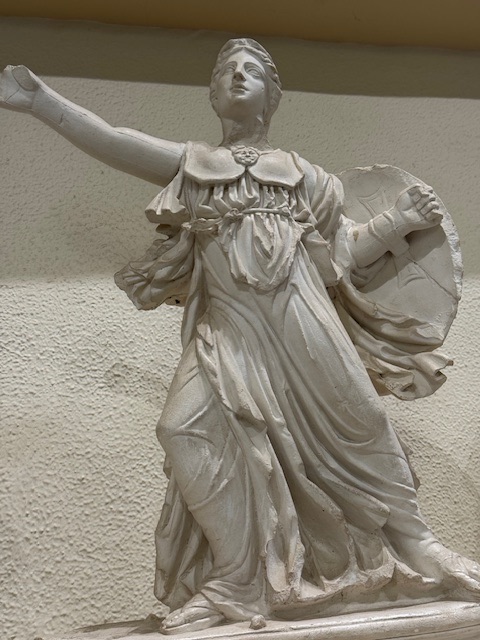
Also at the site is a small museum housing the statues and artifacts found at the site. A large area of archaeological ruins sits on the hill nearby. Ongoing restoration continues for its temples and buildings.
Mycenaean Bridge – Open 24-hours
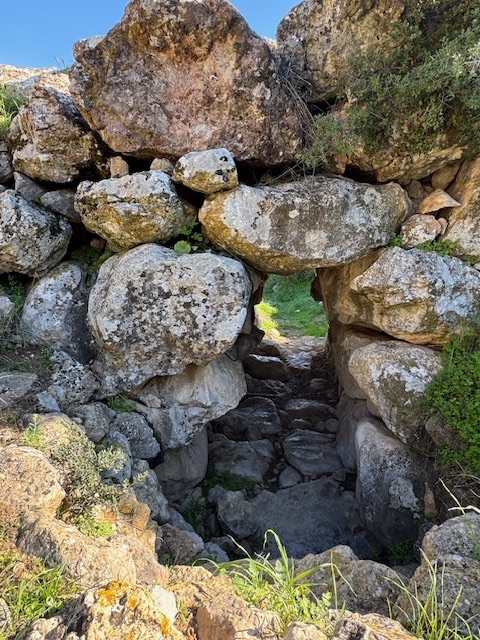
When in the neighborhood, why pass up a ruin or new adventure? This old bridge represents just that sort of experience. Basically in the middle of nowhere, this may be perhaps the oldest surviving bridge one will ever walk across.
Amid a barking dog in a nearby village, olive trees and isolated hills, this 3,500 year old bridge invites a stop. A quick stop off the highway from Epidarus to Nafplio, no ticket needed, free parking, and lightly visited. The rock bridge is still standing, attesting to the skill of the Mycenaeans when they built it!
It’s a peaceful corner of the road and something one does not experience on a tour or bus. Olive groves, quiet, big spiders darting about, and spectacular countryside. A perfect, timeless spot for my BFF.
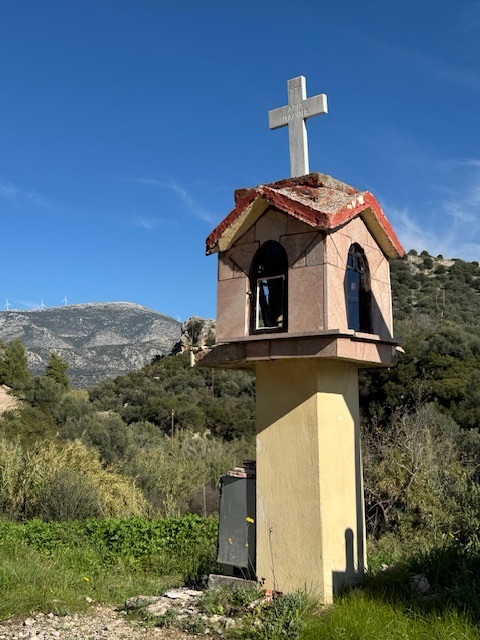
There’s are possibly millions of roadside mini-chapels called kandylakia found everywhere from busy highways to these remote paths, primarily built as memorials for fatal accidents, but also as expressions of thanks. Many represent warnings for dangerous spots or to honor saints. Considering the crazy Greek drivers, I now understand why I see so many.
Marble and Whispered Memories – 1981
“In Nauplio, I climbed to the fortress. Beautiful view of harbor, yachts and first capitol of Greece. Met Nicholas for coffee at dockside at sunset. Strolled and wondered if he meant to eat. Finally at 10 we sat down to wine and lamb. Spent rest of evening convincing romantic Greek no is no. We live only once, may never meet again, etc. What a line. Did learn that tourism down 25%, unskilled worker $80 a week, dowry required, maybe buy apartment if good catch. He also said German girls fastest, US most polite. Hmm, thank you.”
Nafplio
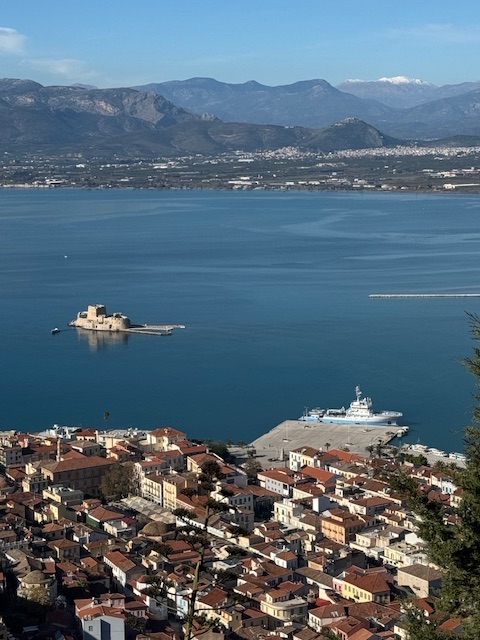
The drive passes quickly with little traffic and smooth roads. We want to visit Palamidi Fortress but neither of us care to climb the 999 steps. So, we motor up the hill. The fortress is gigantic and offers spectacular views for miles. Snow tops the peaks of distant mountains to the north.
Finally, we return our little blue Swiftie to free port parking before continuing our exploration of Nafplio. My old friend Nicholas probably found his dowry-bride and is an old man, if lucky. For us, there remains many things to do.
Staikopoulou Street begins just below Syntagma Square and gently winds downhill through the heart of Old Town. There are no major steps—just a gradual slope—making it an easy and pleasant walk. Actually, all the streets represent a winding maze of pedestrian arteries, lined with small shops selling handmade jewelry, olive oil, and local crafts. Cafés, some closed for the winter season, sit on every street.
Places to explore include the War Museum, the Komboloi Museum with its Greek worry beads, and a crafts museum. Over wine, we weigh our options. We walk just down the street to check out the beads.
What? Me Worry?

The Komboloi Museum dedicates itself to the Greek worry bead, or komboloi—a string of beads traditionally used for relaxation, reflection, and sometimes prayer. Founded in 1998, the museum preserves the history and artistry of this beloved object.
It traces its evolution from prayer beads used in various religions to the modern Greek komboloi, a symbol of calm and contemplation. The collection includes hundreds of komboloi from around the world, crafted from amber, coral, ivory, glass, bone, and semi-precious stones. Many date back to the 18th and 19th centuries.
The museum also has a shop where we could purchase handcrafted komboloi made in the traditional style. It’s worth visiting because it offers a window into everyday Greek life—one that’s personal, tactile, and deeply human. Unlike ancient rocks and ruins, the Komboloi tells a quieter story about relaxation, patience, and the small rituals that still exist in modern Greece.
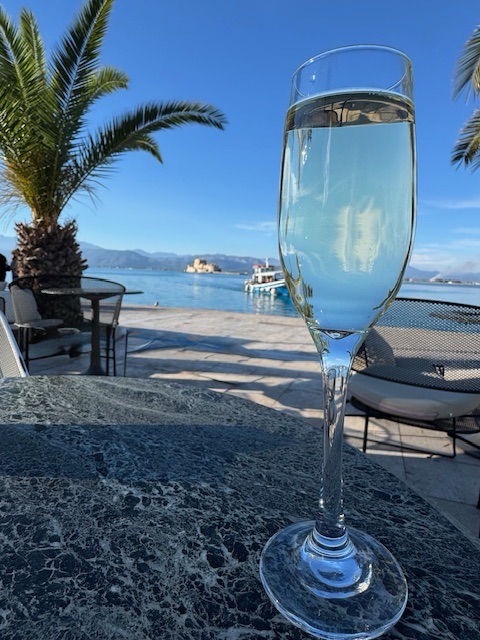
Between Ruins and Prosecco: Nafplio Port
Originally built by the Venetians in 1473, it protected the city from pirates and invaders approaching by sea. The fortress served as the first line of defense for Nafplion’s port, with chains that could be drawn across the entrance to block ships. During the Greek War of Independence, it was used by revolutionaries, and in the 19th century it briefly became the residence of the executioners for prisoners held in the Palamidi Fortress (a nightmare of cells). Surrounded by water and high stone walls, the executioners probably felt safer than walking the streets of Old Town.
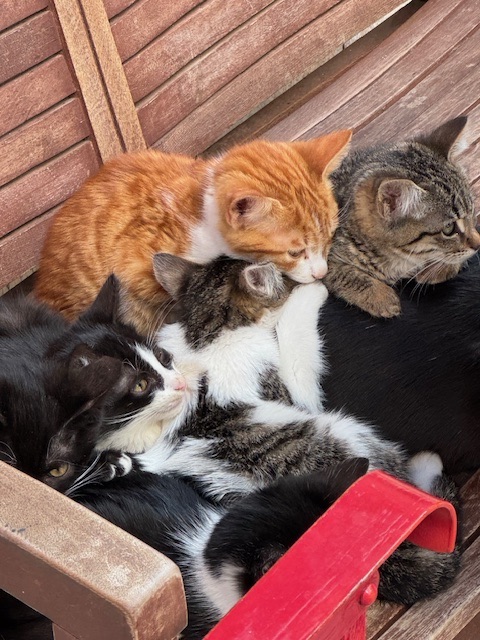
We stroll today’s streets, nearly empty except for the well-loved Nafplion cats. At the end of Staikopoulou Street lies the port. In the near harbor is the Bourtzi Fortress, open to those who wish to ride the calm bay waters to its tiny island.
Nearby, and reachable via a short peer, Nafplio’s lighthouse stands as a later addition, guiding ships safely into the port. Though very modest in size for a lighthouse, it’s picturesque as the light glows over the waters with Bourtzi silhouetted behind.
Dinner and a Farewell
Sadly, tomorrow we must head east for our final explorations of the Peloponnese and its rocks, ruins, and myths.
Bright lights, big city beckons. But tonight, dinner by the sea awaits.
There are many restaurants all gaily decorated for the holidays: port side, Syntagma Square, Staikopoulou Street. Or, along any small street to discover papa Greeks’s specialty. Gabrielle decides on Rendezvous Nafplio overlooking the port.
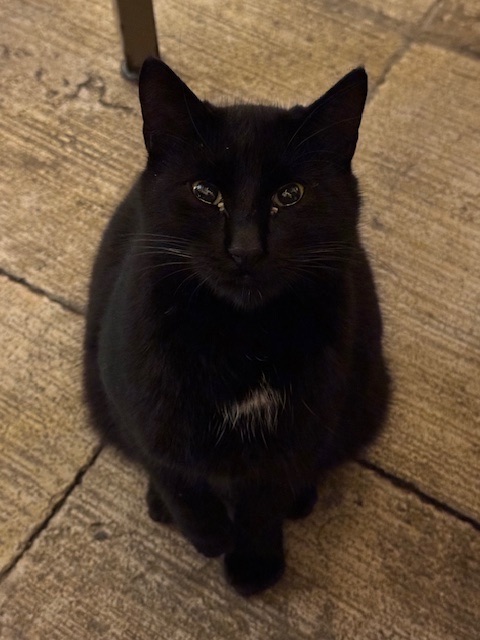
Delicious chicken souvlaki and a chilled white wine from the region. No Nicholas, no worries. I have my sweet, polite Greek cat patiently waiting for little bits.
