13 December 2025
Today, a change of pace. After breakfast, we walked to Syntagma and through the National Garden. We hope to see more green, fewer rocks, receive a little edification, and explore the more modern side of Athens.
Syntagma Square
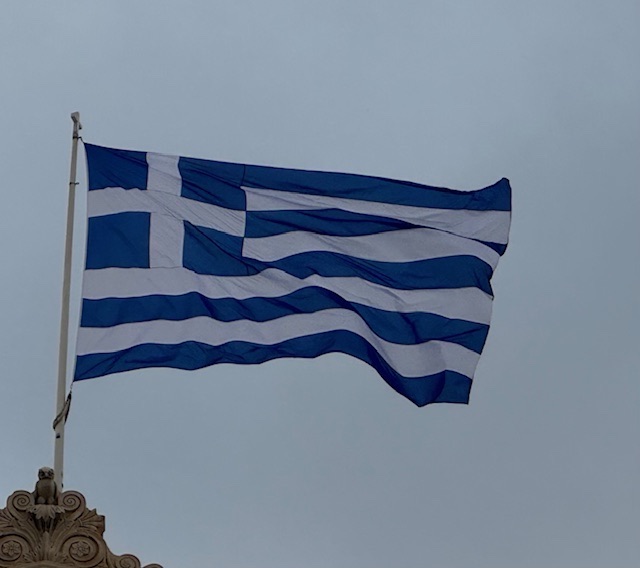
Syntagma Square acts as the symbolic heart of Athens, both historically and socially. Syntagma, means “Constitution” in Greek. It commemorates the 1843 uprising in which citizens demanded a constitution from King Otto.
This event transformed the square into a focal point of political life. Over the years, it has hosted demonstrations, parades, and civic celebrations. The surrounding neoclassical buildings, like the Old Parliament (Vouleftiko) and the Hotel Grande Bretagne, reflect its long-standing importance.
The square is also a perfect spot for people-watching and social activities. The season is evident everywhere as holiday lights twinkle in the trees and surround the square.
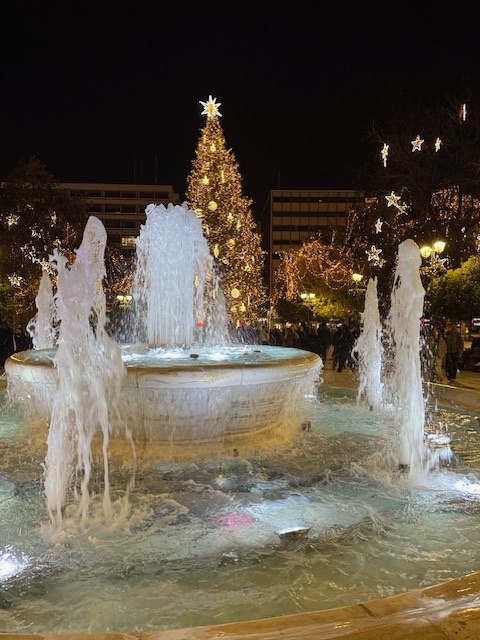
Beyond the high-end shopping, there are the numerous cafés. Climb the wide marble steps to reach the Parlament Building.
Monument to the Unknown Soldier
Carved upon the marble wall beneath Parliament is the Tomb of the Unknown Soldier. It was dedicated in 1932 to honor Greek soldiers who died in wars defending their country and whose identities remained unknown. It serves as a national symbol of sacrifice and remembrance, representing all those who gave their lives for Greece without recognition.
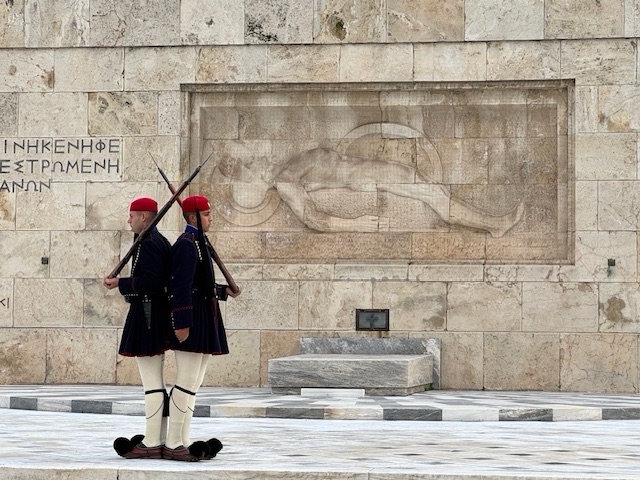
The monument is a large marble relief depicting a fallen soldier, guarded continuously by the Evzones, members of the Presidential Guard. An hourly changing of the guard ceremony adds solemnity to the site.
Changing of the Guard
The Evzones’ elite ceremonial unit have proudly preformed this ceremony every hour of every day since 1926. The unit was chosen because of their historic role as light infantry in the Greek army. Their uniforms reflect their 19th-century military dress. The traditional dress: white kilts (fustanella), red caps with long black tassels, pom-pom shoes (tsarouchia), and high socks.
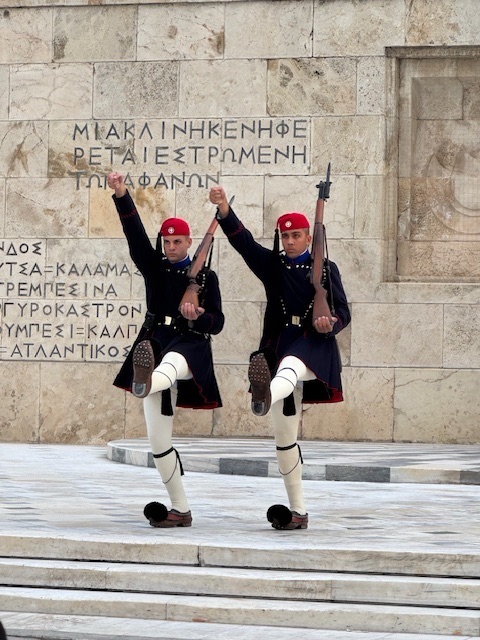
The ceremony was formalized in the years following the tomb’s dedication in 1932 and has since become very ritualized, evolving into both a solemn act of remembrance and a major attraction for visitors. It combines military precision, national pride, and theatrical flair, linking modern Athens with centuries of Greek military tradition.
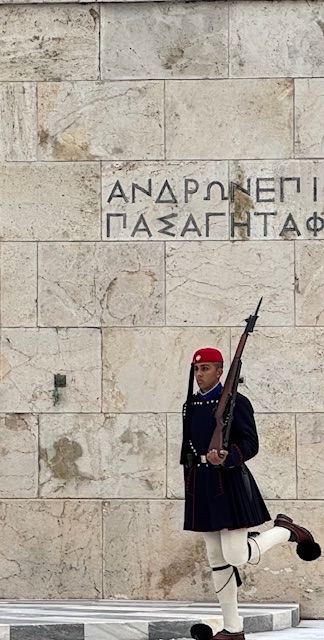
The guards stand for an hour at a time, then the relief shift begins with very slow, deliberate steps. Each movement is exaggerated for ceremonial effect. The guards swing their legs high with every step, and their shoes’ heavy pom-poms thump and scrape rhythmically against the marble surface. The entire process lasts about 10 minutes.
Arrive early or your best view may be the tall guy’s cell phone video in front of you. (Though almost 10 minutes of this could be a deadly party-spoiler when you get home.) For the longer, more elaborate ceremony featuring a military band and marching ceremony, attend on Sundays at 11am.
Two Women, Two iPhones, and a Hundred Ruins Later
We walk through Athen’s National Gardens. December is actually a great time to wander here. It’s quiet, cool, and green. Though the flowers are fewer, the Mediterranean climate keeps the gardens lush year-round. Tall palms, citrus trees, and thick laurel hedges give the garden a tropical feel, even in winter.
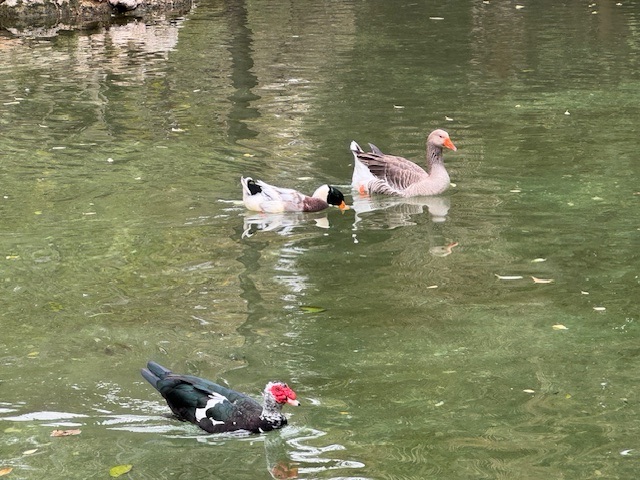
Ducky Duck Pond appears lively with ducks and geese. Our surroundings represent a relaxing escape from the rocks and ruins.
However, never far away sit more rocks and ruins. Scattered throughout the gardens are ruins, columns, and mosaics—remnants of ancient Athens situated between paths and benches.
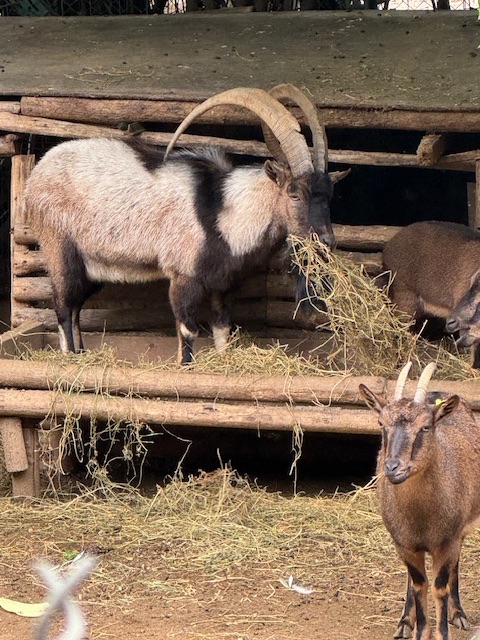
However, by this time, the cages of goats and deer and overhead parakeets prove more interesting.
Archaeological Site of the Lyceum of Aristotle
When in Greece, I suppose one should not totally ignore the Lyceum of Aristotle. Much here is fragmentary, all that remains, so far, are foundations of several rooms and porticos, along with remnants of paved walkways. But the site is remarkable for its connection to one of history’s greatest minds. Views from outside the fence are adequate to appreciate the history of this site.
The Lyceum of Aristotle marks the location where Aristotle taught and conducted research in the 4th century BCE. It was discovered in the 1990s and partially excavated to reveal the remains of the school and its surrounding structures.
The Lyceum was more than a lecture hall. It represented it a teaching complex, research center, and gymnasium reflecting Aristotle’s holistic approach to learning. Students would walk along covered colonnades as Aristotle discussed philosophy, ethics, politics, and natural science—hence the term “peripatetic,” from the Greek peripatein, meaning “to walk about.” Sounds to this educator as a pretty wise teaching and learning style.
Byzantine & Christian Museum
Housed in an early 20th-century neoclassical building, the Byzantine & Christian Museum holds one of the world’s premier collections of Byzantine art and artifacts. These offer a vivid journey through Greece’s Christian and medieval past from the 3rd to the 20th century. The museum displays thousands of artifacts including icons, frescoes, manuscripts, mosaics, ceramics, textiles, and liturgical objects.
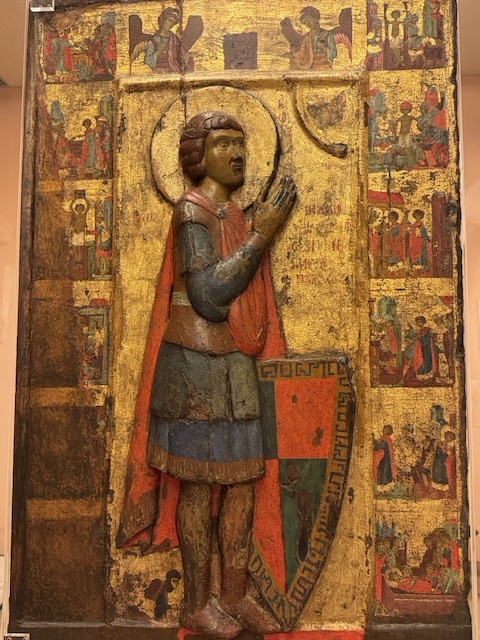
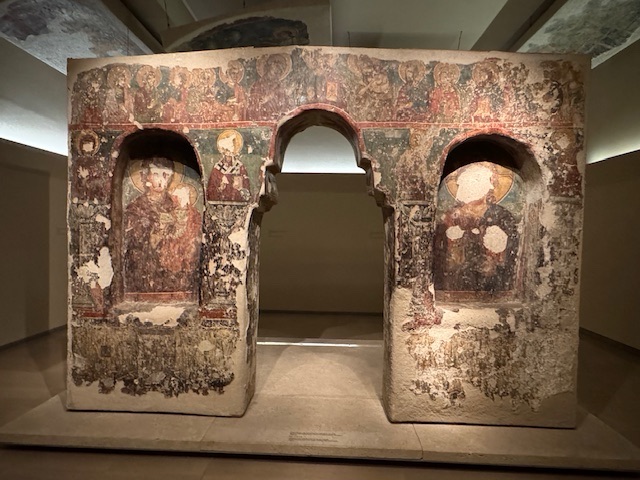
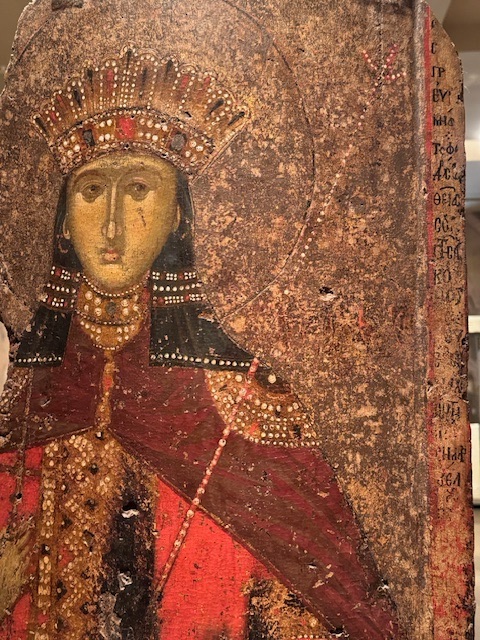
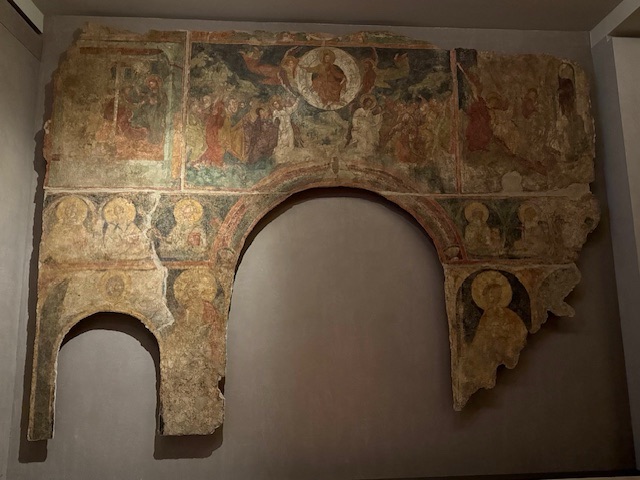
Displayed are sections of wall paintings and mosaic fragments from churches across Greece. Chalices, crosses, censers, and vestments illustrate the everyday and ceremonial life of the Orthodox Church through the centuries. Capitals, reliefs, and stone carvings reveal the craftsmanship of Byzantine artisans.
Definitely, visit this museum.
Lycabettus Hill
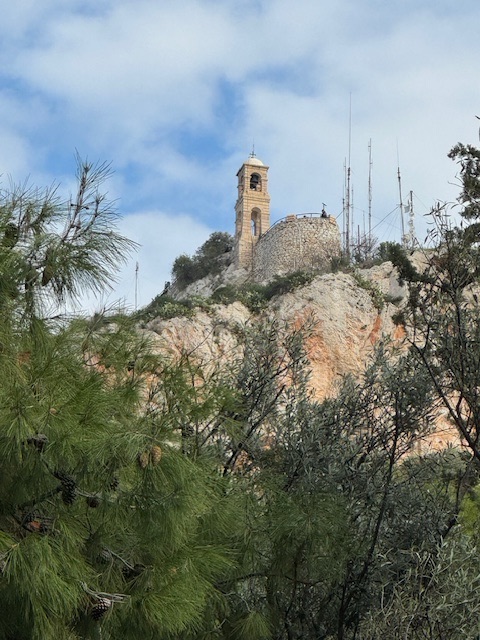
A longish uphill walk takes us to the Teleferik/funicular which ascends Lycabettus Hill. It saves me one steep climb while delivering one of the most spectacular panoramic views of Athens.
They say sunset is the best but I’ll take anytime of the day. The hill rises about 908 feet above sea level, making it the highest natural point in Athens.
We take the funicular up, happily leaving every switchback and step behind us. My calves have already suffered enough climbing monasteries, amphitheaters, and ruins. Our little car rattles and hums as it climbs, and in minutes we emerge at the top. Athens sprawls beneath us in a dizzying mosaic of white buildings. The Acropolis stands a proud crown in the middle. Visible are the surrounding mountains and the Aegean shimmers in the distance.
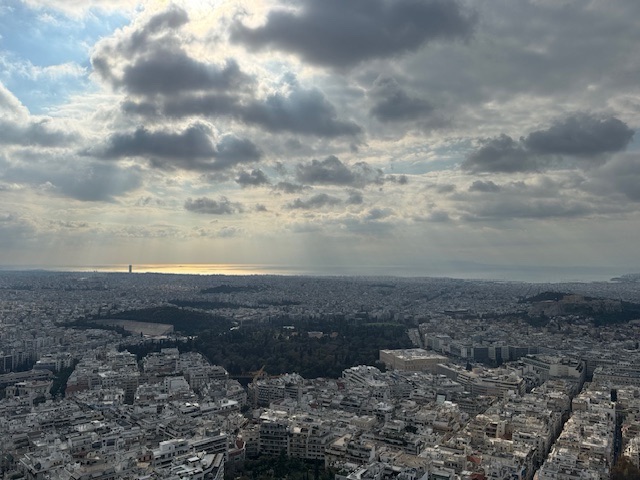
At the summit, there’s a small plaza and the Chapel of St. George, a charming whitewashed church dating from the 19th century. The top also has a restaurant with terrace where we relax with coffee and lunch while soaking in the view.
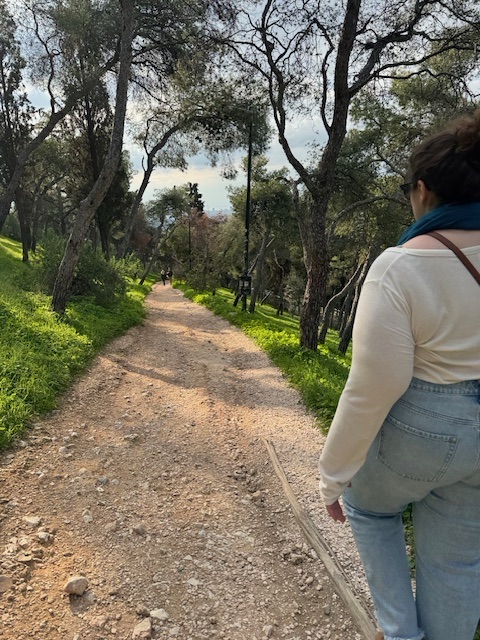
Rather than wait for the return by funicular, we take the path down to the city. Passing a couple on their way up, we offer our return funicular tickets. After that climb up, they will have earned a break. Then, we walk back to Syntagma Square.
Evening and a Full Glass in the Heart of Athens
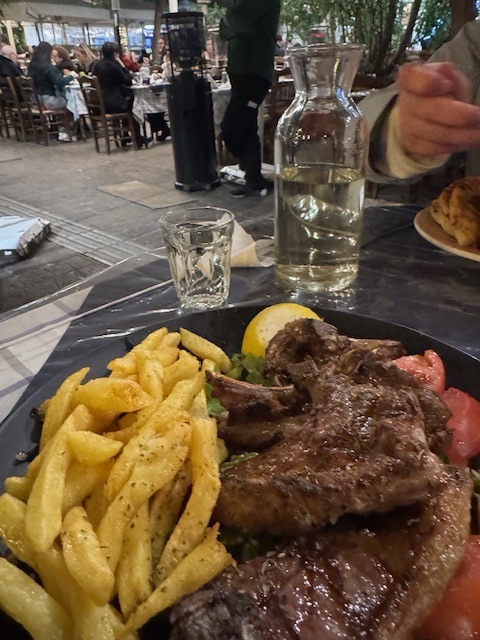
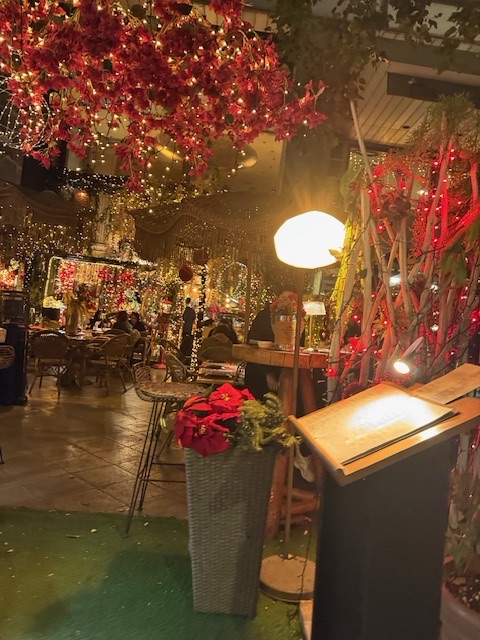
Tonight, our Volta takes us into the Monastiraki neighborhood shoulder-to-shoulder crammed with shoppers, diners and strollers. Choosing a café, we sit and just soak up the atmosphere. Ancient ruins, clear skies, perfect wine, and food so good it almost competes with the Acropolis for our attention.
Athens, you win!
Culture, cuisine, and sparkling holiday lights mingle seamlessly, reminding us that Athens isn’t just rocks and pillars.
It’s a wonderful, life too.

0 Comments