23 March 2026
Climbing aboard a 4-wheel Landrover hints at what our day may be like. While we travel mostly on paved roads thru low hills, sand cliffs and dunes, we seem destined for a distant time and place: “A long time ago in a galaxy far, far away….” In reality, our destination – Tatooine.
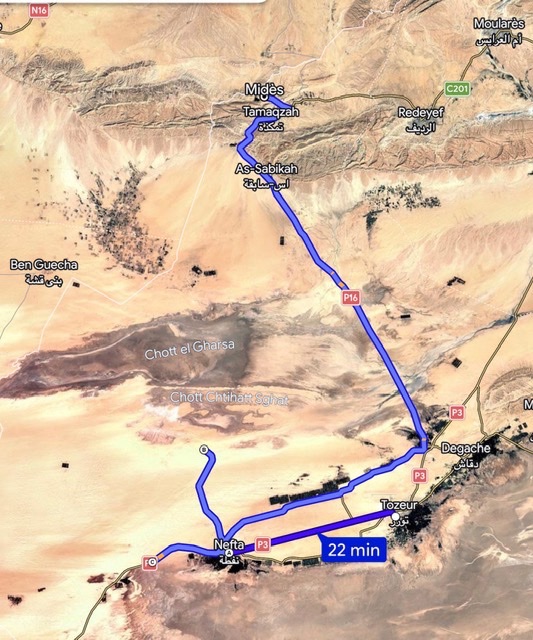
In 1976, this desert region of Tunisia took on an entirely new look, not geologically but spiritually. Tatooine was born. Its life-forms became cinematographers, gaffers, foley artists, directors and Luke Skywalker.
Why here?
In early 1976, filming began in and around Nefta, Tunisia, for the production of the original Star Wars: Episode IV — A New Hope. Early scenes – including exterior shots, occurred around the Chott el-Djerid salt flats and the nearby sand dunes outside Nefta. All used for the Lars Homestead. Thus, the desert planet Tatooine was born. This became the birthplace of Luke Skywalker, and therefore Darth Vader, who appeared in all seven of the Star Wars series.
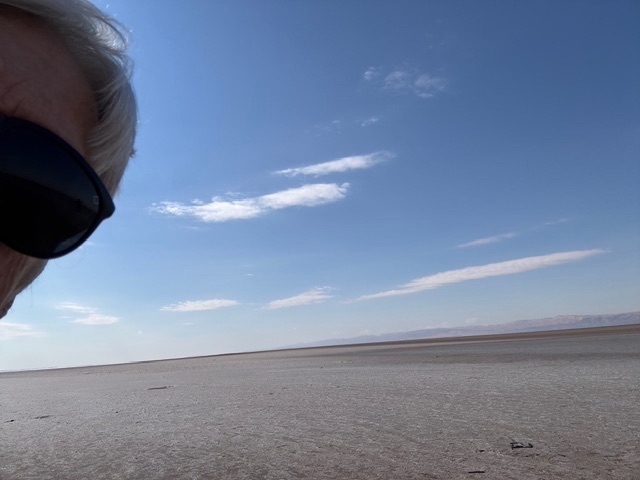
George Lucas chose to film Star Wars around Nefta for a mix of practical, visual, and symbolic reasons – and a bit of cinematic luck. The area matched his vision for his backwater desert planet.
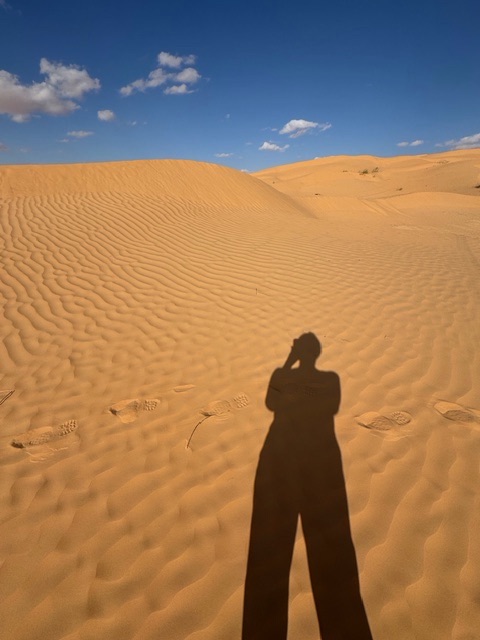
First, the striking landscape was perfect for his fictional Tatooine. The deserts offered vast, treeless horizons, baked earth tones, salt flats, and strange, almost alien light—natural scenery needing very little alteration to feel like another planet.
Lucas wanted a world that looked harsh, remote, and timeless. Southern Tunisia delivered that without expensive set construction or visual effects.
Second, Tunisia was logistically and financially attractive. In the mid-1970s, it was relatively inexpensive to film there, politically stable, and open to foreign productions. Local architecture, especially the earth-toned ksour/Berber villages, troglodyte dwellings, and desert villages, blended seamlessly with the sci-fi aesthetic Lucas imagined. Many locations could be used almost as is, saving time and money.
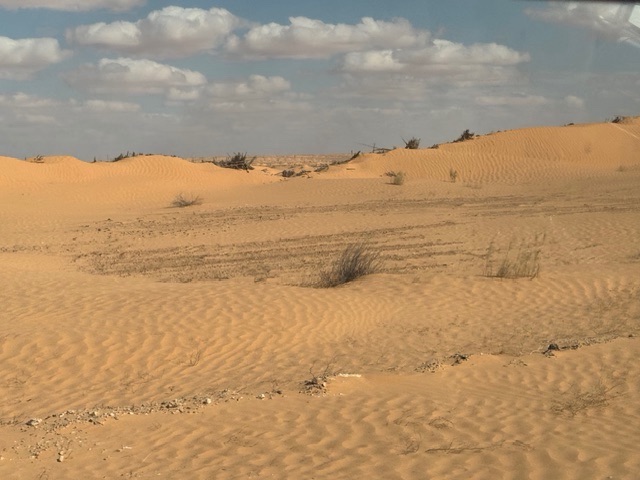
Finally, there was a thematic element. Lucas said he wanted Tatooine to feel like a mythic frontier, a place outside modern time where ancient storytelling could unfold. The desert around Nefta, quiet and seemingly unchanged for centuries, met that desire. The result was so convincing that Tunisia didn’t just host Star Wars – it permanently became part of its universe and why tourism has blossomed into its own here.
Being on Location in Nefta
Our jeep bounced over the roads to arrive in Nefta. Here, we explored both Mos Espa and other Lars Homestead locations.
Mos Espa
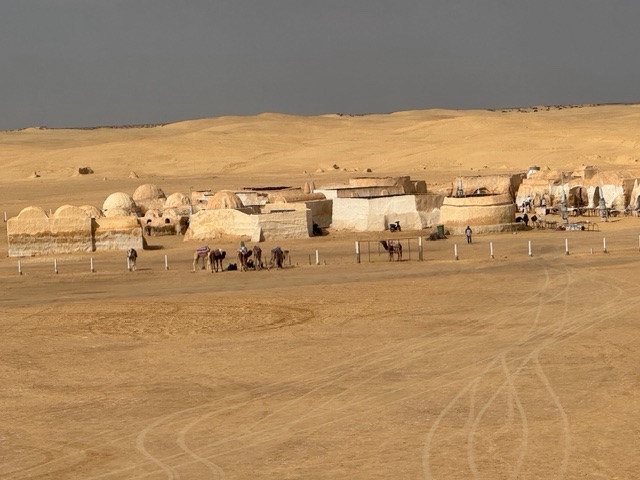
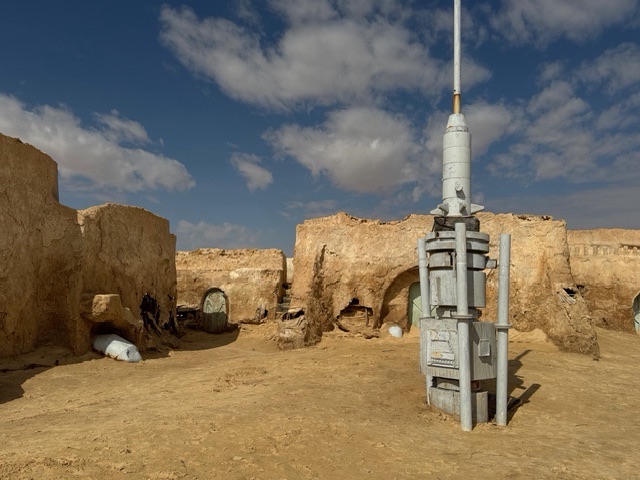
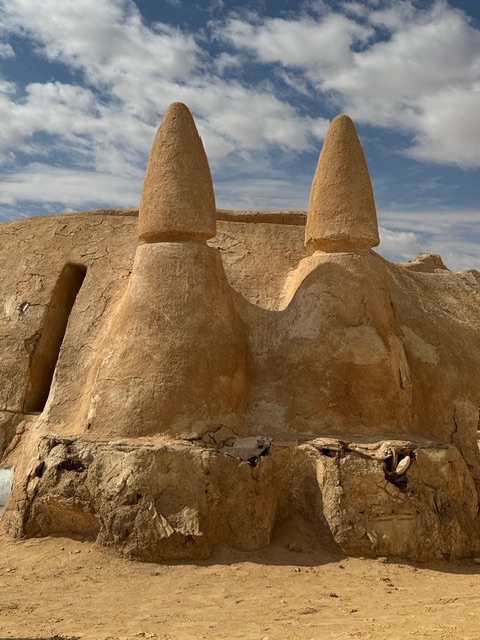
Mos Espa became the most recognizable Star Wars site in Tunisia: a partially preserved film set built in 1997 for Episode I: The Phantom Menace. Walking through it today feels like stepping into a sun-bleached sci-fi ghost town. You still see domed buildings, crumbling facades, narrow alleyways, and courtyard walls that once framed scenes of young Anakin Skywalker’s home world.
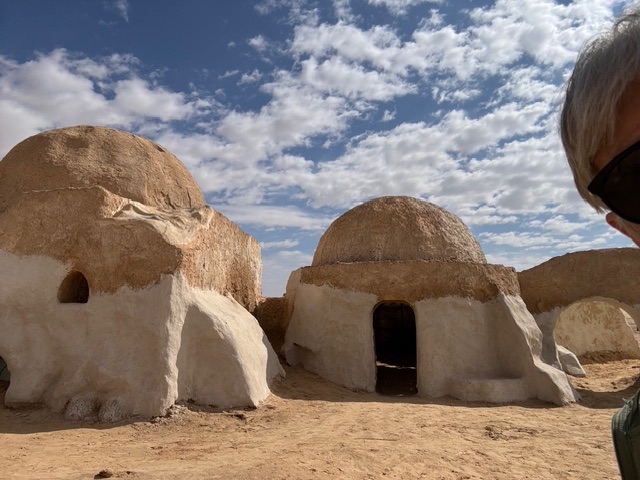
Wind and sand have softened the edges, giving the set an authenticity no studio could fake. Though weathered, Mos Espa’s layout is intact enough that movie aficionados instantly recognize the skyline and street geometry.
Ong Jmal
Ong Jmal, which means the Neck of the Camel in Arabic, is a striking desert landmark above the dunes of Mos Espa.
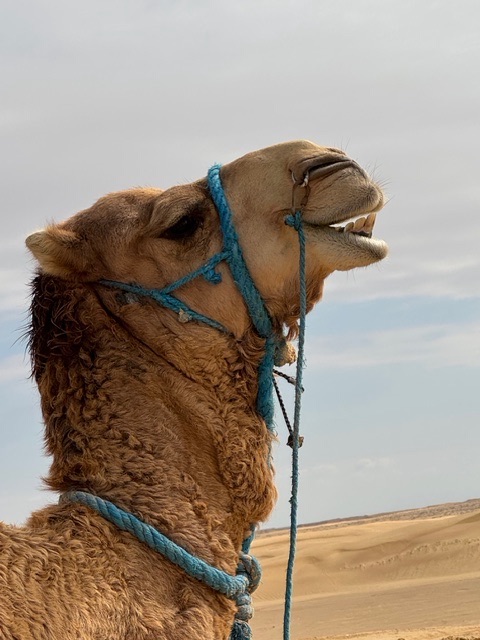
It’s a natural rock formation shaped like a camel’s neck and hump—or so those with imagination see. The combination of its shape, scale, and isolation makes it instantly photogenic.
Or, just catch a real camel neck.
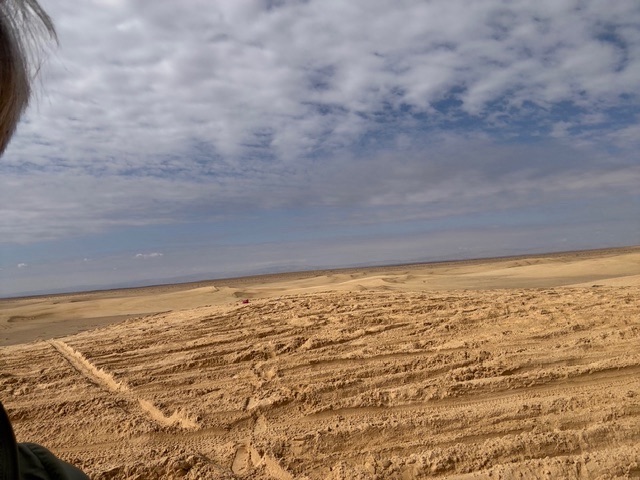
Ong Jemel is also famous among Star Wars fans because its surrounding dunes and rocky outcrops were used as part of the Tatooine landscapes in the original Star Wars trilogy, particularly for scenes showing Luke Skywalker’s home.
They perfectly suited the idea of a desert planet far from civilization. Ong Jemel and its surroundings were used for wide shots and sweeping desert vistas, giving a sense of scale and isolation on a remote planet.
Lars Homestead (Chott el Jerid)
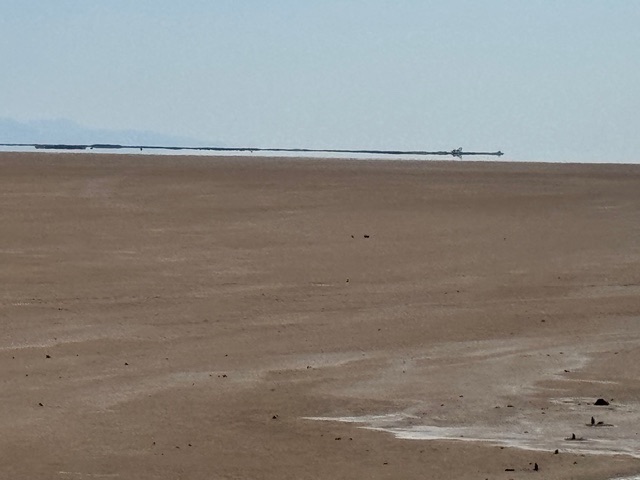
The Lars Homestead lies on the Chott el Jerid (salt flats), where Luke Skywalker’s childhood home was filmed for A New Hope. What remains today is subtler and more haunting than Mos Espa. Low, circular outlines and partially reconstructed domes emerge from the salt crust. The vast emptiness becomes the real attraction here. It’s flat, blinding white stretching to the horizon, with mirages shimmering in the distance. Standing at the site, I recall the twin suns scene, not because of elaborate remains, but because the isolation and silence still perfectly capture Luke’s sense of longing and the mythic pull of the desert.
Luke longed to escape and find a sense of purpose. On Tatooine, he was restless and confined, stuck on a remote farm doing repetitive work while the wider galaxy felt impossibly distant. Pretty much like any energetic teenager who ever lived. Luke dreamed of leaving the desert behind, of joining something larger than himself—adventure, heroism, meaning. His famous gaze toward the twin suns captures a young man aware that his life could be more, but unsure how to reach it.
Luke doesn’t yet know about The Force, his lineage, or destiny, but he feels the pull of destiny. What he truly wants is not just to leave home, but to become someone. Little did he guess what his future would bring.
Jeep Drive into the Desert
Perhaps not as dramatic as the opening credits of Star Wars and its unfurling of the galaxy and acceleration into space, but our drive into the desert oasis region is a great leap forward. Picturesque oases, lush palm groves, and winding streams below towering cliffs stand in contrast to the surrounding arid terrain of the desert.
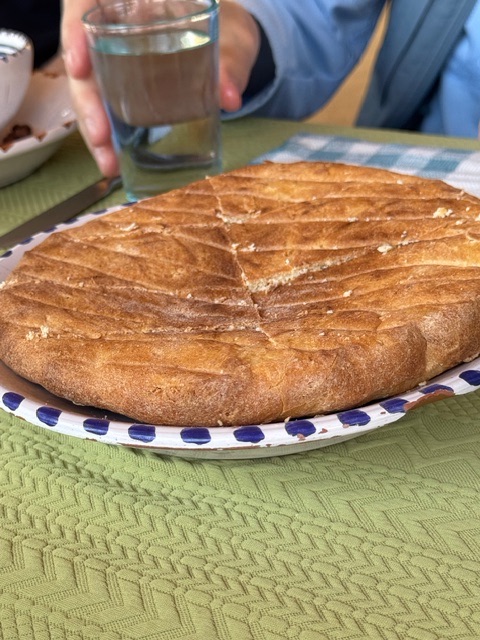
We eat lunch at a local restaurant, “savoring the flavors of traditional Tunisian cuisine.” Perhaps, a couple more days of lunch and dinner “savoring the flavors of traditional Tunisian cuisine” will prepare me to comment further about those savory flavors. And what to use to wash them down.
We make several stops, enabling us to trek through stunning landscapes. Driving northerly, along our 90-mile route, we visit:
Chebika Oasis
Just beyond the Berber village of As-Sabikah sits the spectacular Chebika Oasis. High in the desert Atlas Mountain foothills erupts a sudden burst of water, palms, and rock amid an otherwise harsh, sunburned landscape. Natural springs spill through narrow gorges, forming small waterfalls and pools below pale stone cliffs. The contrast is startling: green life clinging defiantly in a totally unexpected place.
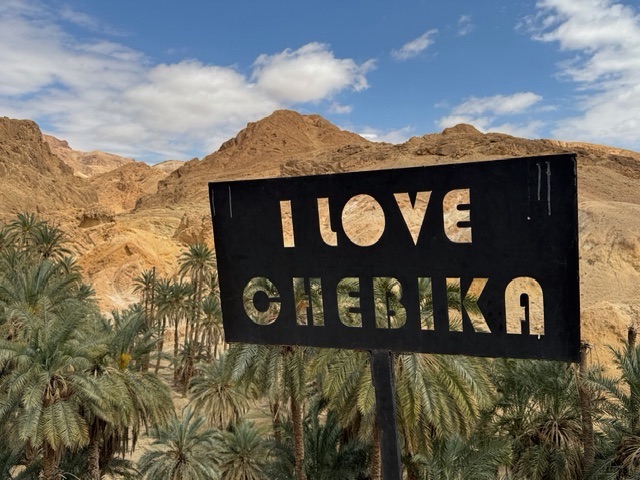
This dramatic setting has made Chebika memorable not only to travelers but also to filmmakers. The terrain looks ancient, elemental, and slightly unreal. I stand in the northeast corner of the same Sahara Desert that I visited last year in Morocco.Today, I stand in southern Tunisia. These are not separate deserts, but different edges of the same continuous Sahara. Between Morocco and Tunisia lies Algeria, and nearly all of that space is Saharan terrain: sand seas, stony plains, plateaus, and salt flats. There is no real break—no green corridor, no natural boundary where one desert ends and another begins.
The Sahara is immense—roughy 3.6 million square miles, making it the largest hot desert on Earth. It stretches across 11 countries, from the Atlantic coast of Morocco all the way to the Red Sea. If I were a crow, or aboard a camel, I am talking about roughly 1,100–1,250 miles of largely uninterrupted desert between Morocco and where I stand today. It appears to be an entire continent of unforgiving, roadless and empty desert.
Nearby, the old village of Chebika tells a quieter, more human story. Once home to a Berber community, it was largely abandoned after devastating floods in the 1960s, leaving behind stone houses that seem to grow directly out of the rock.
Today, ruins cling to the hillside, stairways lead nowhere, and doorways frame empty sky. It feels like moving through a paused moment in time—part ghost village, part testament to resilience where nature slowly reclaims what people were forced to leave behind.
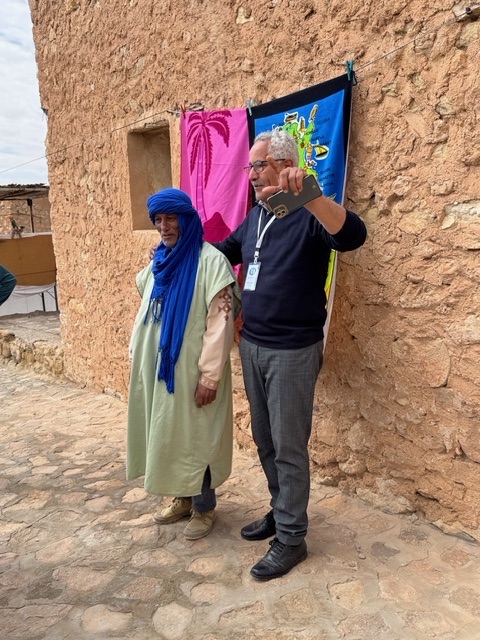
Our Berber guide deftly guided us among the rocks to the falls and around frog-filled pools. He is the star of the village as he fondly recalls being an actor with a speaking line in the 1996 film The English Patient filmed here in his village.
The fossil beds are wonderful! Embedded in rocks, ancient sea creatures appear wherever one looks – a reminder that this desert was once underwater.
Tamaghza Waterfall
Tucked away amid stone and sand flows the small miracle of Tamaghza Waterfall. The waterfall is seasonal. Because it’s fed by natural springs from the Atlas Mountains, typically water falls even in the dry season (May-September). However, the volume changes dramatically. After winter rains and spring runoff, the waterfall can be lively and full, with strong flow and a deep, clear pool. In late summer or during drought years, it often shrinks to a gentle cascade or trickle, though it rarely disappears completely. Whether it feels like a dramatic waterfall or a quiet drip, either way, in a desert landscape, even a modest trickle feels remarkable.
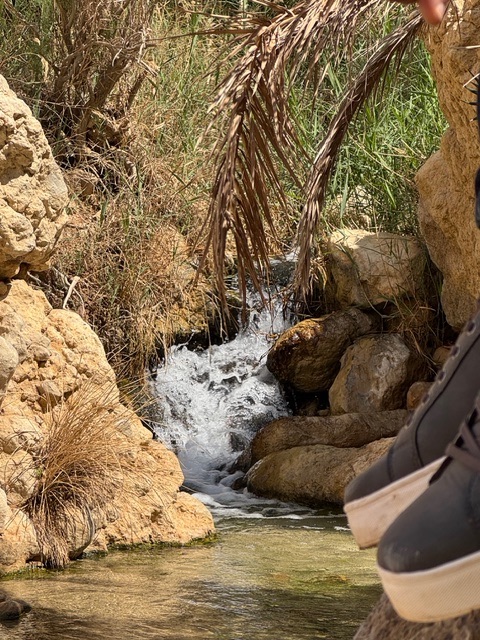
Water spills down a rugged cliff into a clear pool below, framed by towering canyon walls streaked with mineral colors of rust, chalk, and sun-bleached gold. The sound of falling water echoes through the gorge, a sharp contrast to the surrounding desert silence. Palms and scrub cling to the edges, fed by the same spring that has sustained life here for centuries.
What makes Tamaghza especially striking is the setting: a dramatic mountain oasis where heat, rock, and water collide. You can walk close enough to feel the cool spray. The, look outward to see barren hills rising just beyond the green ribbon of life. It’s refreshing, unexpected, and slightly surreal—a place where the Sahara briefly loosens its grip and reminds me how precious water truly is. I’m sure it was a lifesaver for the desert nomads and villagers. And the camels.
Midès Oasis and Grand Canyon
Further north, just beyond the village of Tamaqzah, sits the Mid Midès es Dam and Oasis. Also, the rather unexpected green expanse of the Midès Stadium.
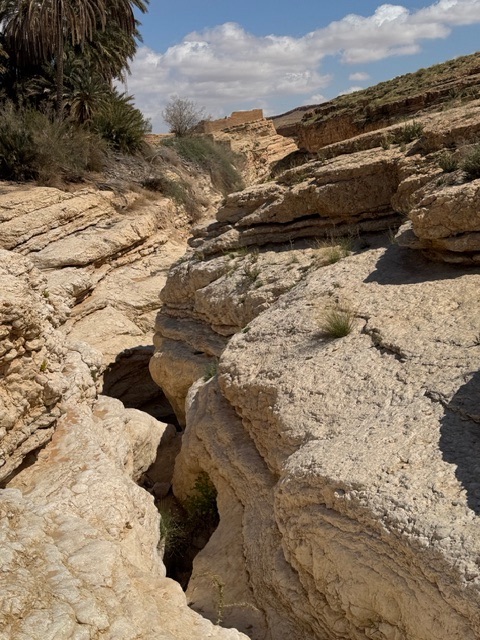
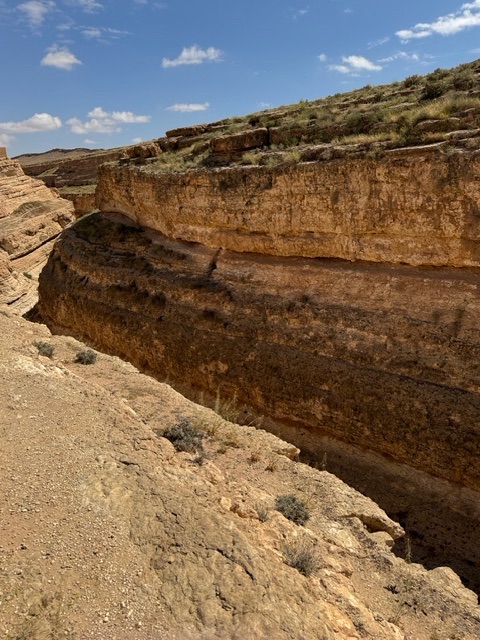
Midès Oasis represents the third of the three famous mountain oases in southwestern Tunisia, (alongside Chebika and Tamerza). The Oasis sets among towering, geologically dramatic canyons carved by water over millennia. Theoasis is nestled at the edge of steep cliffs. Its springs and seasonal riverbed (wadi) known as Oued Oudeï provide life to date palms, fruit trees, vegetables, and lush vegetation amid an otherwise dry, rugged landscape (and probably waters that soccer stadum).
The old village above the canyon was abandoned after deadly floods in 1969, which destroyed much of the original settlement. What you see today combines ruins clinging to rock with newer cultivation and paths through the palm groves. The canyon itself stretches for miles and offers striking layered rock colors and panoramic views that have drawn nature lovers and filmmakers alike.
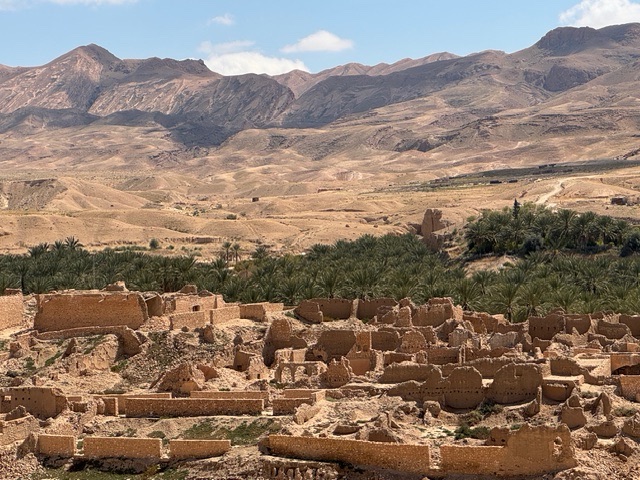
Midès Dam represents a human attempt to harness scarce water in this tough environment, making the oasis greener and safer for locals. This small dam built on the Oued Oudeï, downstream of Midès, captures and stores water from seasonal flows. Constructed around 2000, it created a modest reservoir to help regulate water, limit flood damage, and support the irrigation of the surrounding groves and farmland.
Also, it helps to manage the wild variations of water in this arid region—water that can surge violently during rare storms. While not a large or famous engineering project on the scale of major national dams, it plays an important role in sustaining Midès’s fragile oasis system and protecting cultivated land from sudden flood events.
Return to Tozeur
For late afternoon, we board a calèche, a horse-drawn carriage, and trot through Tozeur. Typically light, two or four-wheeled, historically it transported villagers about town. Now, they are just tired horses dragging tourist around. I don’t recommend this as it is hot, a whip was used on our horse to keep him trotting or to run even faster.
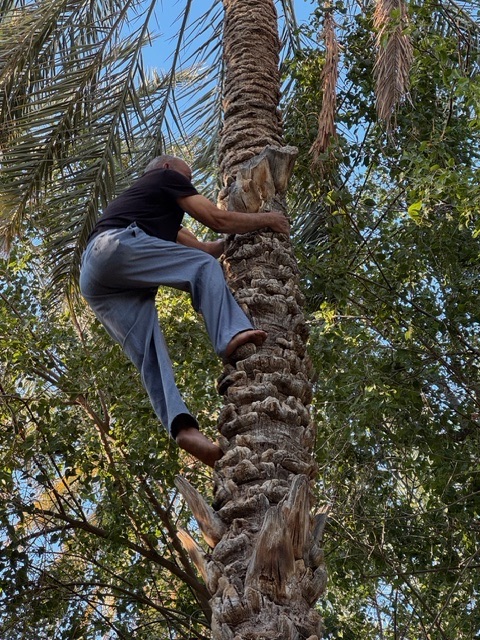
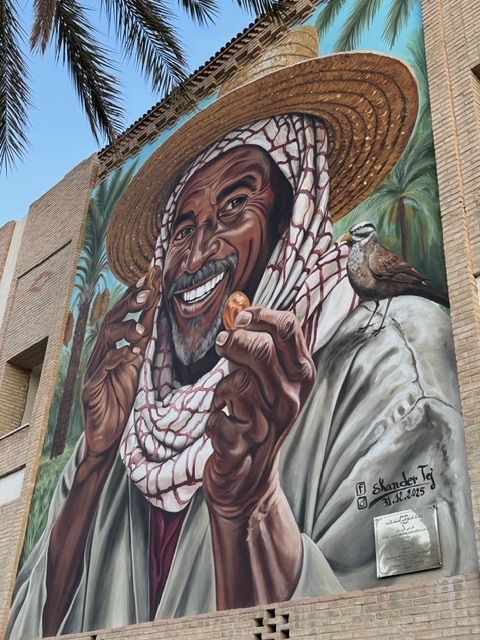
We walked around a date tree orchard and learned all about harvesting them. The farmer works the tree estate for the owner for a percentage of profits. He showed us how he climbs the tree for trimming, fertilizing and harvesting. Tough work and done barefooted! Dates are served at every meal and they are delicious.
Enthusiasm Wanes
Once again, the day has been long. At least 12 hours from breakfast, to sites of interest, lunch, more sites. And just because it is there, we stop at a couple more sites. It is all interesting but makes for a long day. We end with dinner, always tasty and filling. Then, we finally drag into our hotel round 8:30.

A long day. And, we have learned, as warned, there is little in the way of alcoholic beverages as. a little chilled wine would be very welcome. There are very few stores selling alcohol, few hotels that serve, and even fewer restaurants. After the current several-day dry spell, most on the tour are looking to spot a liquor store to stock up. Unfortunately, we may not see one in our near future.

0 Comments