27 March 2026
Touring: not for the weak or the slow. It rewards those who can function on little sleep, adapt to early wakeup schedules, and climb vans and jeeps with the agility of a mountain goat. Usually, in-room coffee saves my morning. Bathrooms require timing, yet I constantly remain at the mercy of other women’s weak bladders.
Meals are aspirational and after a few days of planned 3-meals a day, entirely too long and too much food. Just a quick stop proves never quick. If you require slow mornings, naps, or emotional support when plans change, touring invariably separates you from those expectations by day two.
I hardly imagine I am currently on the Mediterranean Coast. The wind blows cold and strong, just the type of gale that blew Odysseus off course for years. We crossed the Djera-Zarzis Roman Causeway above the Boughrara Gulf on arrival to the small, resort island of Djerba. There appears much to see before we exit the island, this time by ferry, for other destinations.
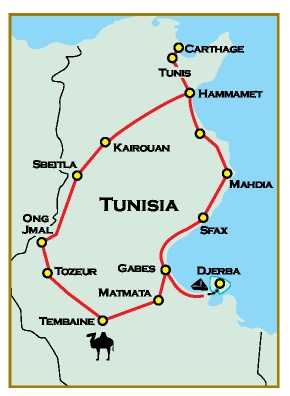
Djerba lies off the southeastern coast of Tunisia with the Gulf of Gabès to the north. If you could swim that far, the island republic of Malta is just 270 miles to the northeast. Libya’s border is but 76 miles southeast. This area of the desert saw quite a bit of action during pirate days and World War II.
Djerba may be small but it is Tunisia’s largest island, covering roughly 200 square miles. The island is famous for its whitewashed villages, palm groves, beaches, and rich cultural mix of Berber, Arab, and Jewish influences. Despite its island status, its easy bridge connection means it feels like an extension of the mainland, but geographically and culturally it retains a distinct identity with its own traditions, architecture, and pace of life.
Guellala Museum
The Guellala Museum is noteworthy for how clearly it brings together the island’s traditional life, crafts, and beliefs under one roof. Set above the village of Guellala, it displays detailed reconstructions of Djerban homes, weddings, religious practices, and daily routines, alongside richly embroidered costumes, jewelry, tools, and agricultural implements.

Color of ribbon tells all – red ribbons for the bride and marriage, white for the single girl. Gabrielle proves the dude magnet without the ribbon.
The ceramics section is especially good, reflecting Guellala’s reputation as the island’s pottery center. Large storage jars, cooking vessels, and decorative pieces are still made much as they were centuries ago. From the museum’s terrace, panoramic views stretch over southern Djerba.
My favorite display and explanation:
The Healer and his Therapeutic Rites
His strange ways of preparing medication result in traditional therapeutic medicine of the highest calibre. His amulets and magic prescriptions perform miracles. The lucky charms which he offered to his patients acted as talismans to help preserve them from the evil eye and a sorry fate.
In former times (from the 19th to the beginning of the 20th century, in traditional society, he put at the disposal of women who came to seek advice, potions to help them exercise total domination over their husbands and to restore order to their marital homes. In a famous popular song at the beginning of the last century, the healer boasted of the great services he could offer to women in distress:
Any woman who wants to dominate her husband and cast a spell on him can contact me. I will supply her with the drug she needs.
The Museum Curator
Historic Synagogue in Galaxy year 5786
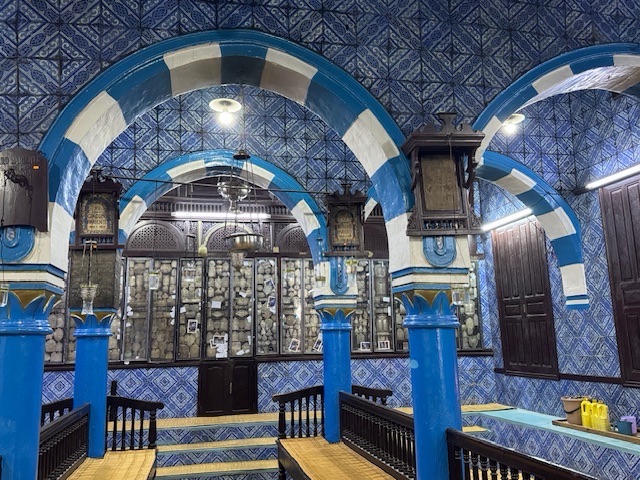
Next, we stop at the historic El Ghriba Synagogue, considered the oldest synagogue in North Africa and one of the most important Jewish pilgrimage sites in the region. Jewish tradition traces its origins back more than 2,000 years, possibly to Jews fleeing Jerusalem after the destruction of the First Temple. Rumor reads they brought a stone—or a door—from the Temple itself. For centuries, El Ghriba has acted as a spiritual anchor for Djerba’s Jewish community and the focal point of an annual pilgrimage drawing visitors from Tunisia and abroad.
From the outside, the synagogue looks modest and almost fortress-like. It quietly blends into the village of Erriadh with its whitewashed walls and simple courtyard.
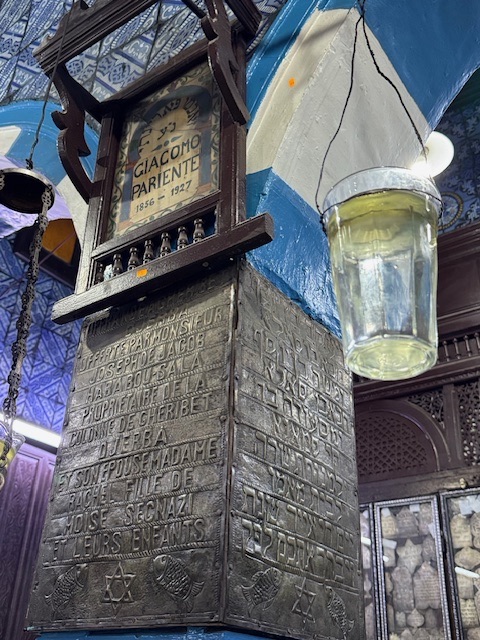
Inside, however, it opens into a richly decorated space filled with blue-and-white tiles, intricate mosaic panels, colorful stained glass, carved wooden doors, and hanging lamps. The prayer hall accommodates a few hundred people, with multiple Torah Arks.
These mosaics demonstrate richly patterned with geometric and floral designs typical of Tunisian craftsmanship. However, what makes them special is how they blend Jewish symbolism with local North African decorative tradition. I see repeating stars, stylized vines, and symmetrical motifs that create a calm, almost meditative rhythm across the walls. The reflecting light off the tiles gives the interior a calm, luminous glow.
Djerbahood and Jasmine Revolution
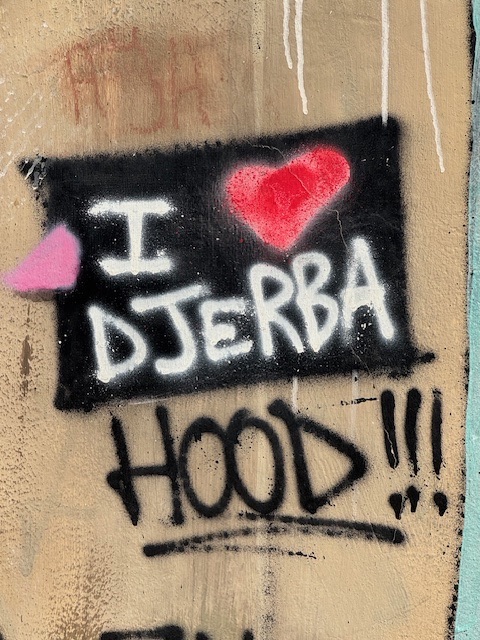
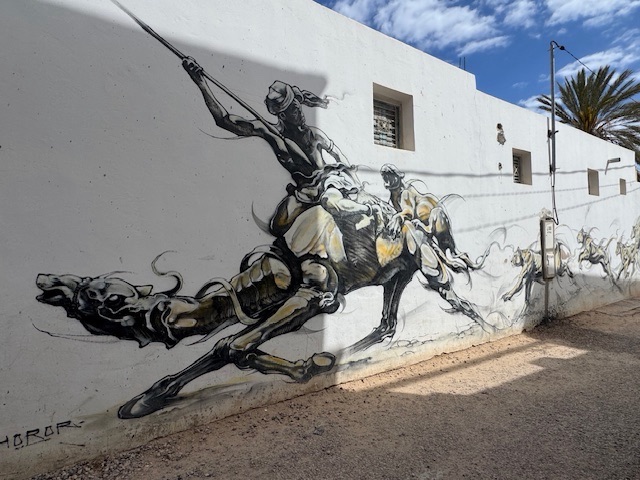
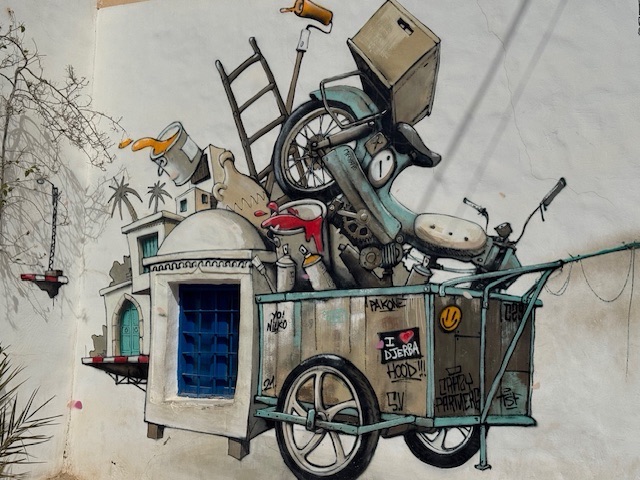
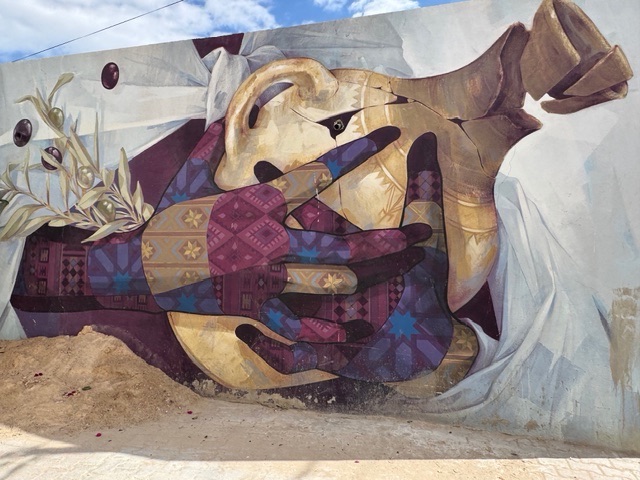
Djerbahood became an open-air street art project created in 2014 by the Paris-based Galerie Itinerrance. Instead of a conventional museum, the village itself became the project. Erriadh was chosen because of its traditional architecture and need for clean-up and saving.
The whole island suffered like much of Tunisia. Civil unrest led to neglect and, I am told, a big garbage pileup. The Tunisian Revolution, also known as the Jasmine Revolution or the Revolution of Dignity, became an intense 28-day wave of civil unrest that swept the country in late 2010 and early 2011. It resulted in dozens of deaths and many injuries, most caused by police and security forces responding to nationwide protests.
Driven by high unemployment, rising food prices, corruption, restricted freedoms, the absence of free speech, and harsh living conditions, demonstrations erupted in cities and towns across Tunisia. The uprising culminated in January 2011 with the removal of longtime dictator Zine El Abidine Ben Ali. In its aftermath, Tunisia embarked on a path toward democratization and held free elections, leading many historians to view it as the only Arab Spring movement to achieve lasting political change.
The Hood
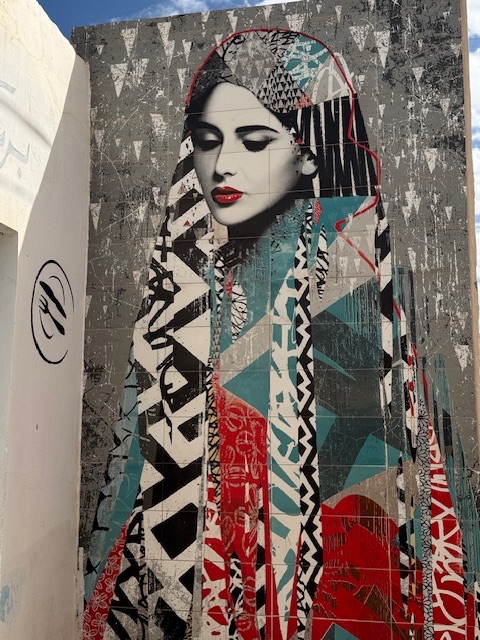
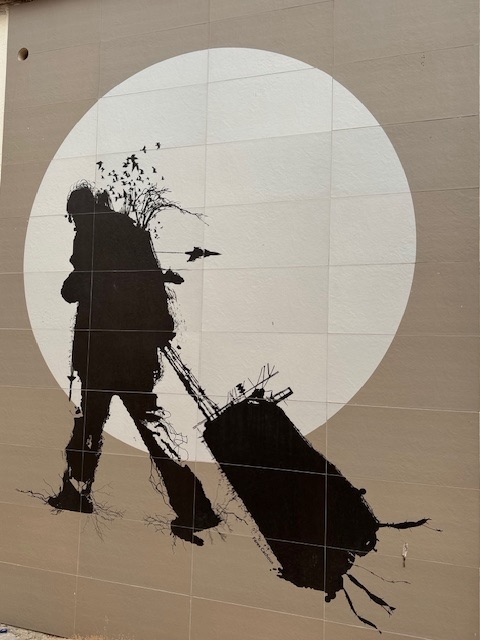
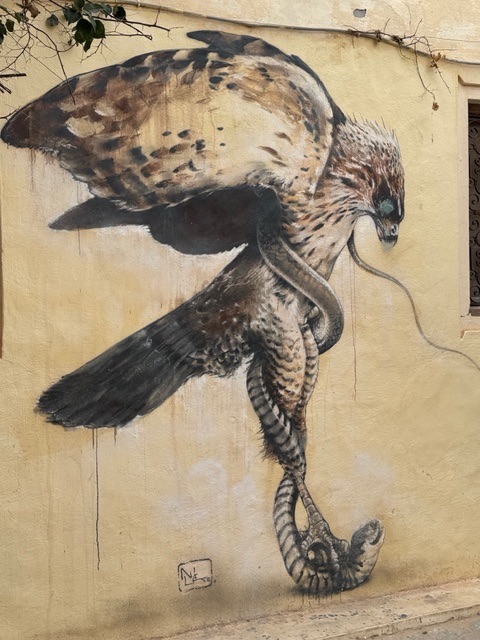
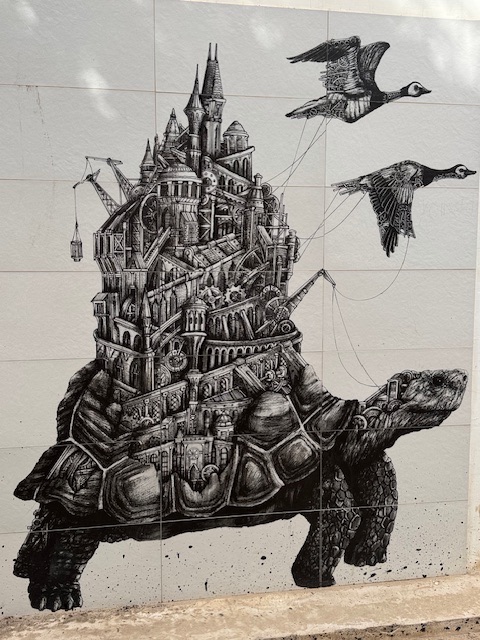
So, in 2014, more than a hundred international street artists were invited to paint walls, doors, alleyways, and courtyards. They adapted their work to the village’s traditional whitewashed architecture rather than overpowering it.
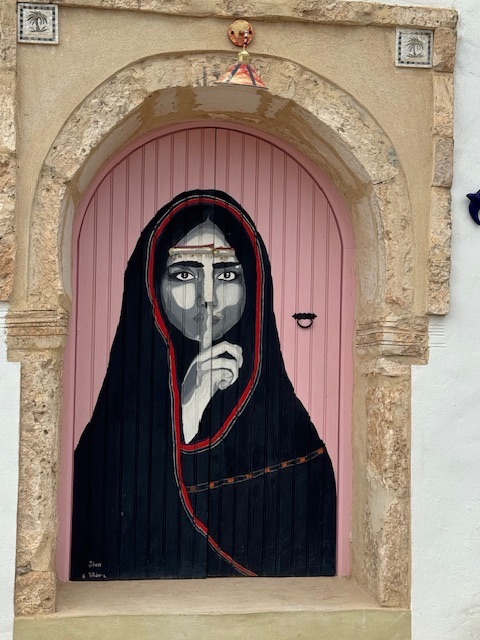
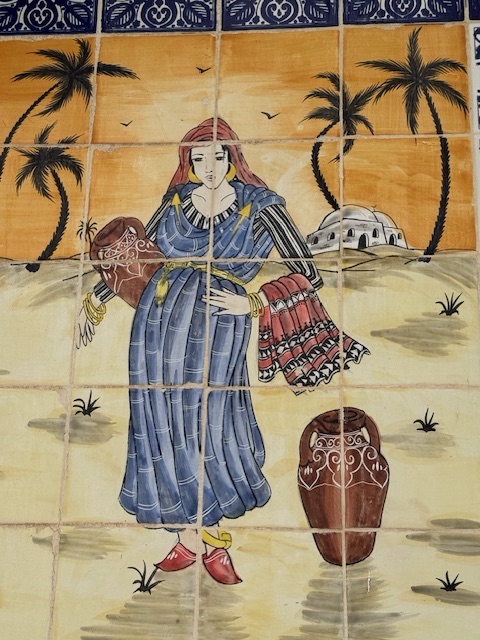
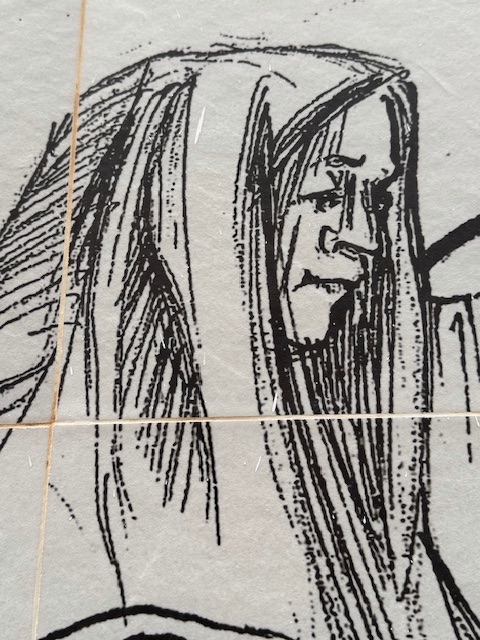
Walking the streets of The Hood feels like wandering through a living gallery. You’ll see bold murals mixed with subtle calligraphy and geometric patterns inspired by Amazigh (the indigenous Berbers). Islamic art, portraits, abstract pieces, and playful visual jokes tuck into corners and doorways. The art is beautiful with a little something for everyone. What makes it special is the contrast: contemporary global street art set against centuries-old homes, white-washed walls, quiet lanes, and among everyday village life, where laundry flaps above a mural and a painted doorway still leads to someone’s kitchen.
Mareth Defensive Line Museum
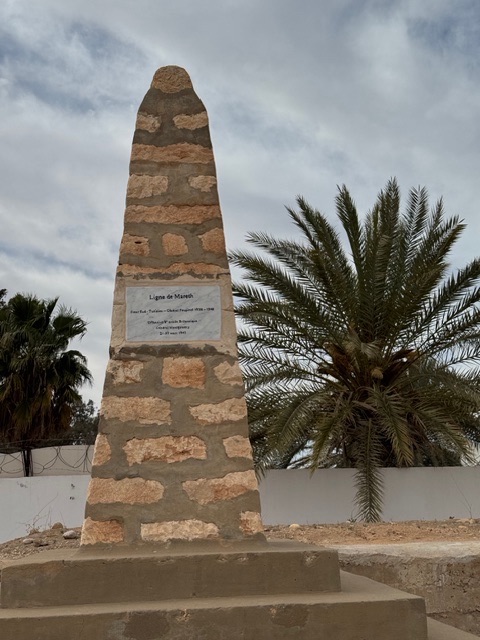
While many people know about D-Day or El Alamein, the Tunisian campaign receives less attention despite being crucial in ending Axis presence in Africa. The museum helps illustrate how geography, desert warfare, and strategy shaped the outcome of WWII in North Africa.
Whoever controlled the Mareth Line passage from Libya into Tunisia controlled movement through southern Tunisia.
After the defeat of Allied troops at Kasserine Pass, the next major battle occurred here along the Martel Line. In March 1943, Axis forces under Field Marshal Erwin Rommel used the Mareth Line to resist the British Eighth Army led by Bernard Montgomery. The battle involved over 240,000 troops, 900 tanks, over 1,000 artillery pieces, and hundreds of aircraft.
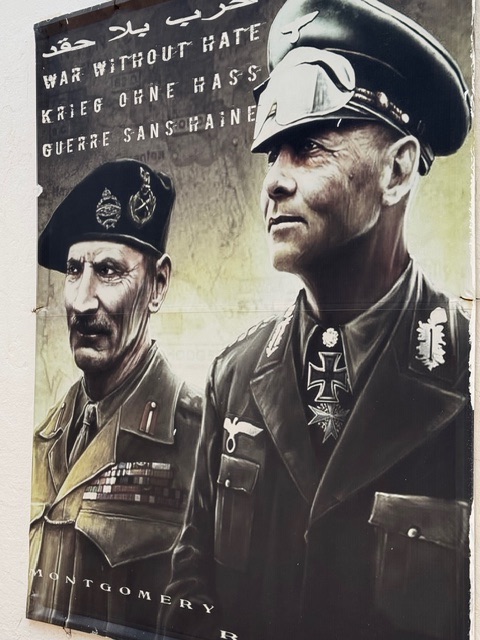
Montgomery and Rommel clashed at Mareth Defensive Line.
The line was demilitarized but later reoccupied and strengthened by German and Italian Axis forces in 1942. The defensive works were reinforced with mines, barbed wire, and heavy weapons to resist the Allied advance across North Africa.
Initially, the defensive line slowed the Allied advance, but British forces eventually bypassed the fortifications through the Tebaga Gap, forcing Axis troops to retreat north.
With this victory, it became a race of Allied and German troops to the important ports of Tunis. Led by the British 1st Army and US II Corps, the final battle began on 6 May 1943 after smashing the Axis line. Tunis fell to British forces on 7 May, culminating in a mass Axis surrender by 13 May.
The Mareth Military Museum displays weapons, vehicles, maps, and preserved fortifications, helping visitors understand the strategic importance of Tunisia and the role geography played in shaping the outcome of this pivotal campaign.
On The Road
We enjoy a short walk around the marina. Boats from derelict pirate ships and masted schooners to small fishing boats crowd the ports. Fish, crab, and octopus represent much of the local catch. Andò. The port, we drive up to the ferry on which we plan to leave the island of Djerba.
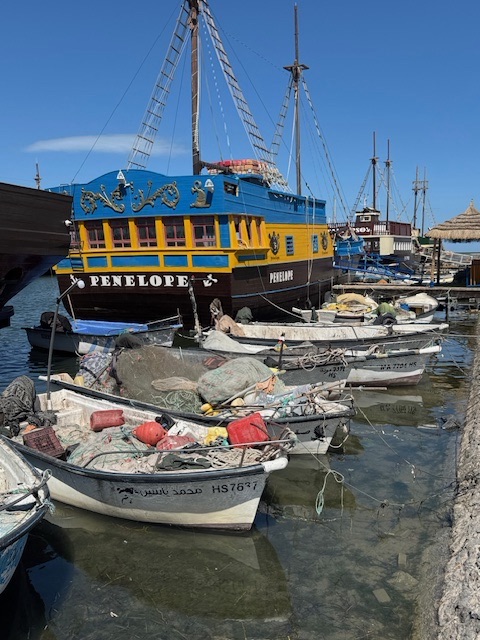
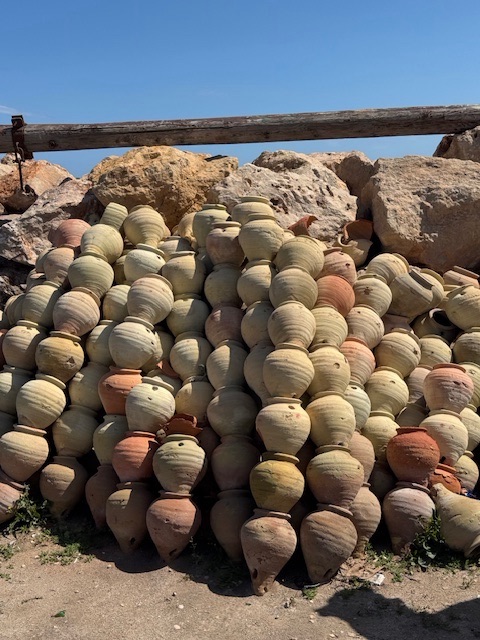
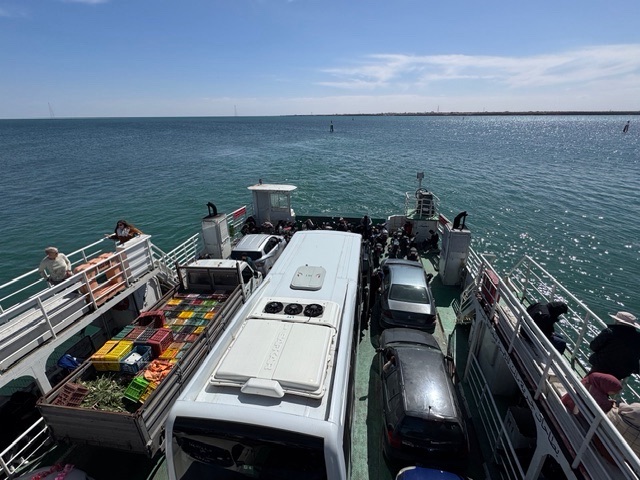
Many cars wait in line. Once again,our guide hustles the right people. Bribing a policeman is a crime here. However, telling them that he has an American ambassador on board our bus seems okay. We relax that the man does not co e on board and ask to meet his ambassador. Gabrielle and I agree we will, point to our ex-CIA agent, figuring she will be a better last-minute fabricator.
About 30 minutes of choppy seas, we arrive on the mainland destined for Gabes and lunch.
SFAX
We continue our journey somewhat inland of the gulf for another 100 miles to the town of Sfax. One pronounces the name something like “so-fax”, rhyming with fax. Sfax acts as a major port city in Tunisia.
Touring becomes torture by 6pm when it is suggested we visit one more place before our hotel. This time, our stop results in dinner. Among just a few of Tunisia’s 70 million olive trees, we take a dinner break at Dar Fatma Ktifa. A Sfax lawyer owns this grove but established a restaurant for tourists. Great chef, originally from Brazil, he has cooked all over the world. Everything tasted great and friendly staff.

Overnight on Sfax
We lodge for the night at Borj Dhiafa Hotel. Modern but architectural appealing, the hotel lies outside the city center. It offers spa, pool, restaurants and a bar. What more could one desire? There are several weddings occurring so the lounge is booming – literally. No alcohol served but the guests seem to be having a blast. Bass drums stopped pounding at 1am.
Tired but all in all a great day. The island, and the desert, have feen fascinating. Good sights, food and companionship. Tomorrow, we continue a northerly direction, trading the isolations deserts for bright lights and bigger cities, shades on brown for the colors of green.

0 Comments