6 April 2026
The M’Zab Valley is a striking and historically significant region, a UNESCO World Heritage site recognized for its unique combination of geography, architecture, and social organization. There consists a series of five towns, or ksour, in the oasis—Ghardaïa, Béni Isguen, Melika, Bou Noura, and El Atteuf. The valley is also famous for its palm groves, date production, and ingenious water management systems, including foggaras.
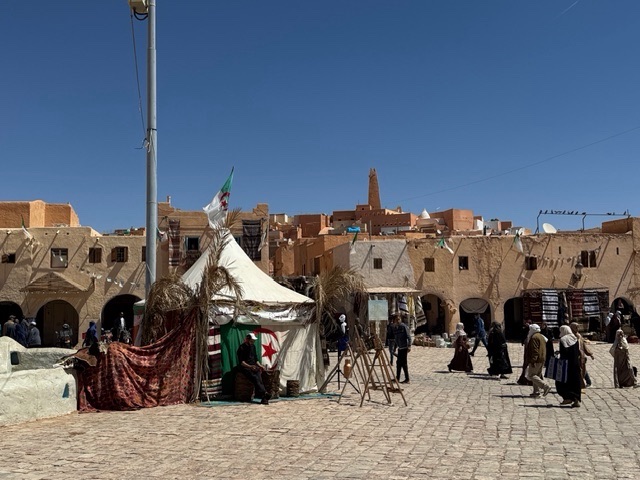
These fortified ksour were built by the Ibadi Muslim community (a branch of Islam distinct from Sunni and Shia) in the 11th century. Their design adapted perfectly to the harsh desert environment while reflecting strict social and religious principles. The towns feature mudbrick buildings, narrow alleys, and fortified walls that create compact, defensible communities. Builders arranged houses to preserve privacy, protect against heat, and facilitate communal life. At the center of each town is a mosque, market, and public spaces, reflecting the balance of spiritual, commercial, and social life.
Modern – Stay Out
Yet, there exists a modern side to these villages. Rules say: build outside the Medina walls. No Starbucks, no new build.
Within M’Zab Valley, I see signs for a car wash and wonder if cars actually need washing here. Does the sand not remove most of the paint? The signage for Noah’s Ark Zoo intrigues me even more (I am told they cage lions there). It reminds me of the first time I drove to California thru the blistering Sonoran and Colorado Deserts – sans air-conditioning. In August! I saw an animal dead in the road and thought he represented one of the lucky ones.
Ghardaïa
The rules of building and living within the traditional villages read almost like any modern condo committee’s brochure. Except here, residents commit to helping each other.
Within the jurisdiction of Ghardaïa, specifically the historic settlement of Tégherdeït (established 1048), residents shall comply with an early but impressively enforceable set of municipal-style bylaws designed to ensure long-term survival, social harmony, and an admirable absence of regrettable architectural decisions.
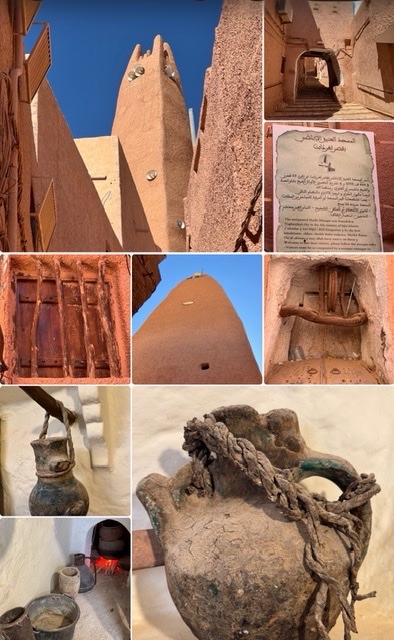
Sustainability regulations require that for every palm tree removed, two must be planted, thereby guaranteeing shade for future generations and ensuring grandchildren have somewhere respectable to complain about the heat. Approved construction materials shall consist primarily of limestone and sand, both recyclable, because nothing says civic pride like composting your civilization. All organic waste shall be repurposed as fertilizer, proving that even garbage has a higher calling. This includes human waste! Waste not – want not on steroids.
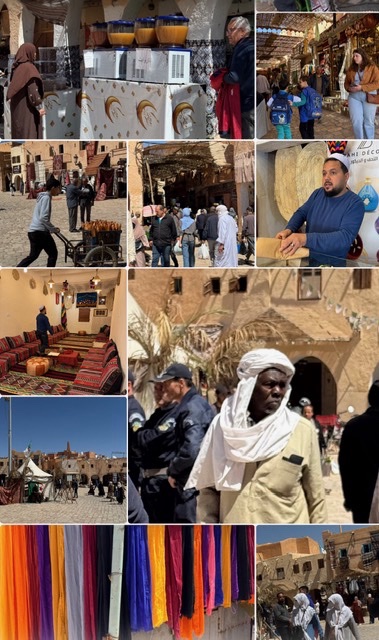
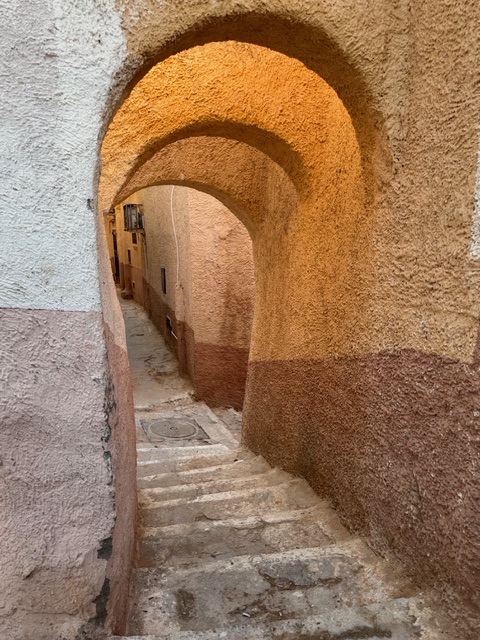
Urban planning codes mandate zigzagging streets to maximize shade and minimize sunburn-related grievances. Doorways, steps, and passage widths must accommodate the smooth passing of two donkeys simultaneously, reflecting a transportation policy both practical and refreshingly unconcerned with SUVs.
Exterior surfaces shall not be painted white, as blinding neighbors is considered poor etiquette and potentially grounds for passive-aggressive committee review. Civic governance includes committees dedicated to social harmony, including support of women and the discouragement of offensive commentary; violations such as making a particularly foolish remark about someone’s posterior may result in exile, or at minimum, very pointed disapproval.
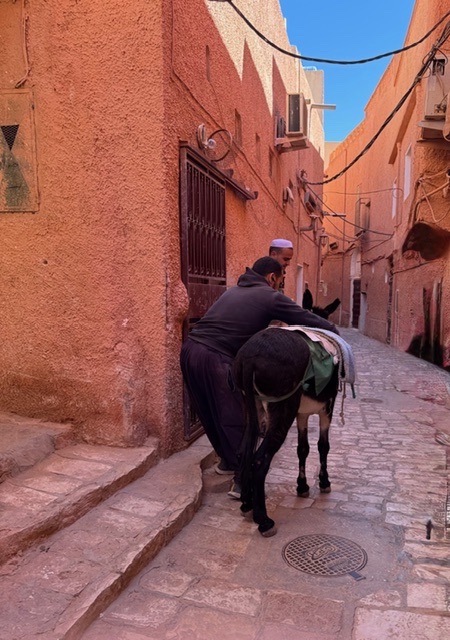
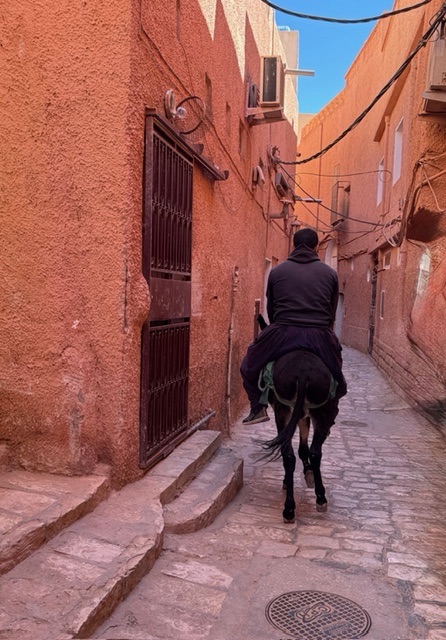
Collectively, these regulations ensure a community where sustainability, modesty, and donkey traffic flow operate in admirable balance, proving that medieval desert planning often outperforms modern condominium boards by several centuries!
Siesta
People in the Ghardaïa Sahara region practice a siesta mainly because the climate makes productivity between roughly noon and 4 pm feel like volunteering to be slow-roasted. Summer temperatures commonly exceed 104°F, and historically there was no air conditioning — only thick limestone walls, shaded alleys, and good sense.
Traditional desert urban design in places like Tégherdeït supports this common sense. Narrow zigzag streets create shade, houses stay cool, and daily schedules naturally shift earlier and later. People work in the morning, retreat indoors during peak heat, then resume activity in the evening when the air becomes human again.
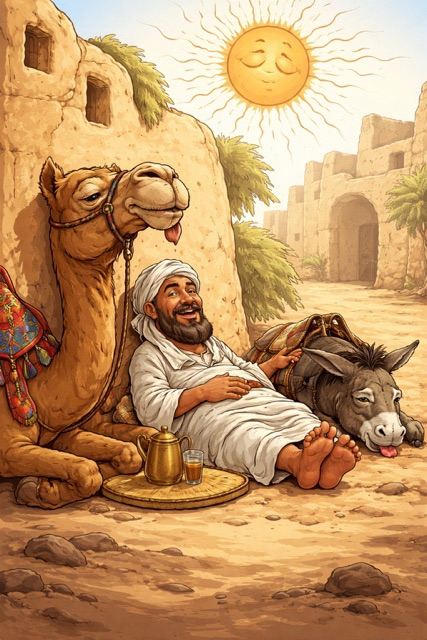
The siesta is also practical energy management. In hot climates, the body tires faster, hydration becomes critical, and concentration drops. Resting during peak heat reduces heat stress and preserves energy — something desert societies perfected long before modern offices invented the afternoon tea slump.
The siesta is less laziness and more climate adaptation: when the sun behaves like an overenthusiastic furnace, even the most ambitious to-do list agrees to reconvene after sunset.
I wonder why the Central Vally of California, where summer temperatures often exceed 108°, never thought of this.
Ksar Bounoura
After siesta, we visit a second of the five historic UNESCO cities of the M’Zab Valley.
Founded in the 11th century (1046) by Ibadi Mozabites, Bounoura represents the second oldest city of the valley. It formed part of a network of desert settlements created for security, religious cohesion, and communal independence.
Like other towns of the Mʾzab Valley, Bounoura was planned around a central mosque, with tightly clustered whitewashed houses stepping down the slope, all enclosed within defensive walls.
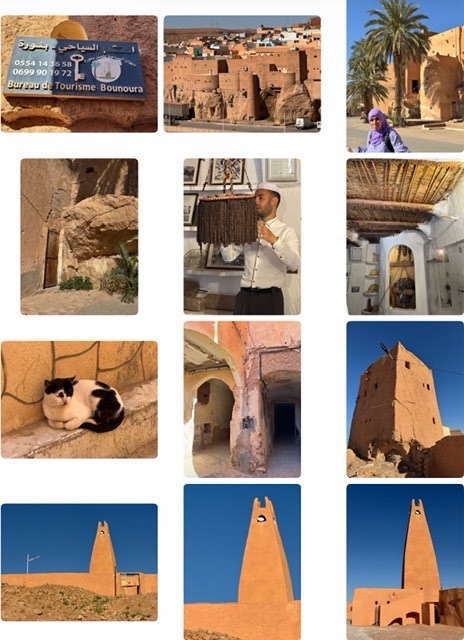
Life in Bounoura traditionally followed the social and religious principles of the Mozabite Ibadi community. The ksar’s layout reflects both spiritual and practical priorities. Its mosque crowns the highest point, symbolizing the central role of faith.
We are told that the community takes care of its own. There is no jobless, no homeless. Except for a serious crime like murder, the community punishes those who transgress against another. There is no jail. Residents do not depend upon the government for necessities but on each other. Everyone is considered rich.
Meanwhile, narrow winding streets provide shade and protection from desert winds. The architecture uses simple geometric forms and local materials, creating a beautiful harmony between the buildings and the arid landscape.
Minaret of Ksar Bounoura
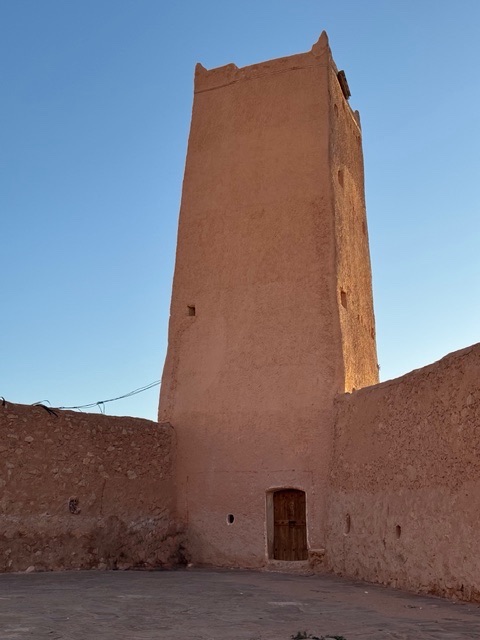
The Minaret of Ksar Bounoura rises at the summit of the settlement and creates a defining landmark seen across the valley. It sits directly beside the central mosque, following the characteristic urban pattern of the Mʾzab Valley.
Tapered and austere, it exemplifies the distinctive Mʾzab style. Siting upon a square base and built of stone and plaster, it’s designed for clarity and symbolism. Ornamentation is minimal. Near the top, small openings allow light and air into the stairwell, and a simple platform crowns the structure from which the call to prayer is traditionally given.
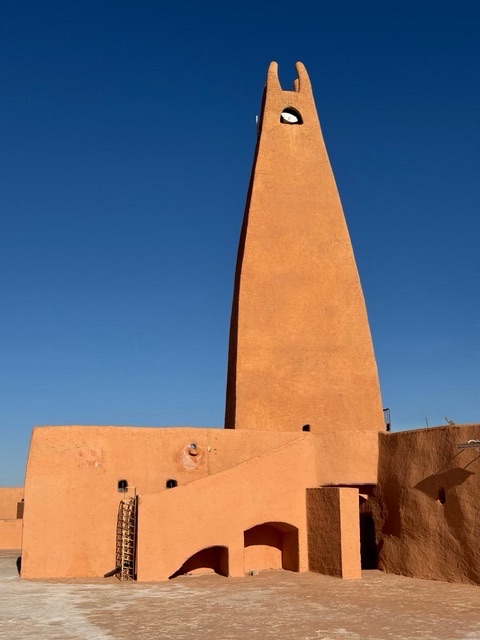
Like other Mozabite minarets in the region, the minaret is estimated to be roughly 60–70 feet tall. Mozabite minarets are not extremely tall by Middle Eastern standards; their visual impact comes more from their placement at the summit of the ksar than from dramatic height.
From its elevated position, it offered wide views over the surrounding palm groves and desert approaches. This allowed inhabitants to watch for caravans or potential threats.
Today, the minaret becomes highly visible prominent landmark against the desert sky. In the clear Sahara air, it stands prominently seen from several miles away.
Béni Isguen
When visiting this ksar, one steps back into a preserved time capsule. Béni Isguen is known for being the most traditional and culturally strictest city. Being the most sacred Berber Islamic town, it prohibits all non-M’zabites from various sections of the town, and all foreigners from spending the night within its walls.
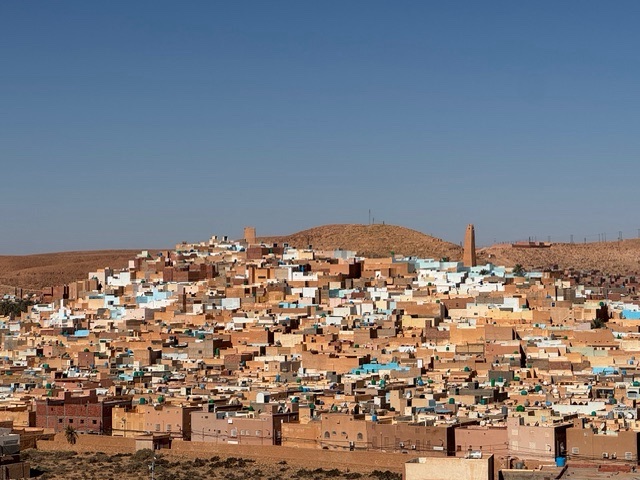
Béni Isguen remains compact, labyrinthine, and walled, with narrow, shaded alleys winding between red‑mudbrick houses stacked tightly to conserve space and keep interiors cool. Privacy and communal life are carefully balanced: windows and terraces are modest, and the streets are mostly for foot traffic. The steps are numerous but not steep. The architecture feels practical, with straight lines, domed roofs, and occasional arches catching desert light.
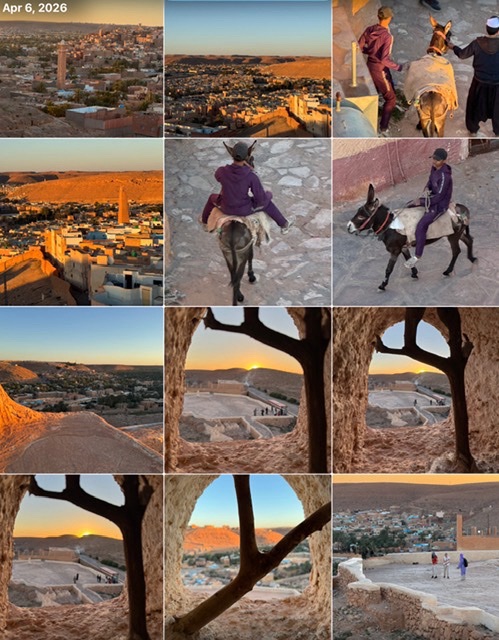
The traditional market (souk) is the heart of Béni Isguen’s social and commercial life. This evening it is quiet with just a few men gathered around some wares, form shoes to glassware, looking for a bargain. This may be as close as one gets to a living desert society. I clearly am the tourist looky-loo.
Other days, merchants may sell dates, grains, spices, woven mats, textiles, and handmade goods, often in small, family-run stalls. Haggling occurs, but it’s polite, reflecting the town’s Ibadi traditions emphasizing moderation and social harmony.
We climb up the lookout tower for amazing views of the surrounding villages, minarets, and the spectacular sunset.
Dining Like a Mozabite
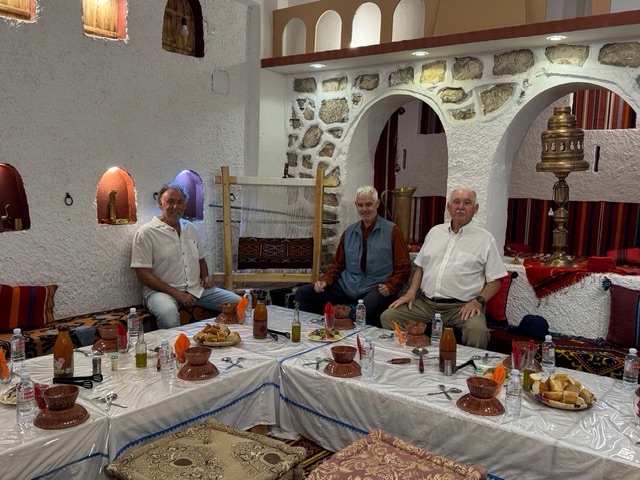
We dine at a traditional restaurant outside the walls of Béni Isguen. Everything was authentic as one could ask. Salads, delicious soup, date plate that seemed too sweet for an appetizer but not large enough for the entree.
No food was turned away. Then the main meal came on a huge silver platter. Roasted chicken, meat balls, fries, olive, and boiled eggs.
Instead, we force ourselves to devour as much of this delicious food as we can. After, we adjourn to another carpeted room for tea and sweets.
Algerians do not serve small portions. It would be rude. Instead, this large bowl of couscous and vegetables were served to our one vegetarian. This serving followed salad, soup, date plate and bread. We are told the leftovers will not be wasted.
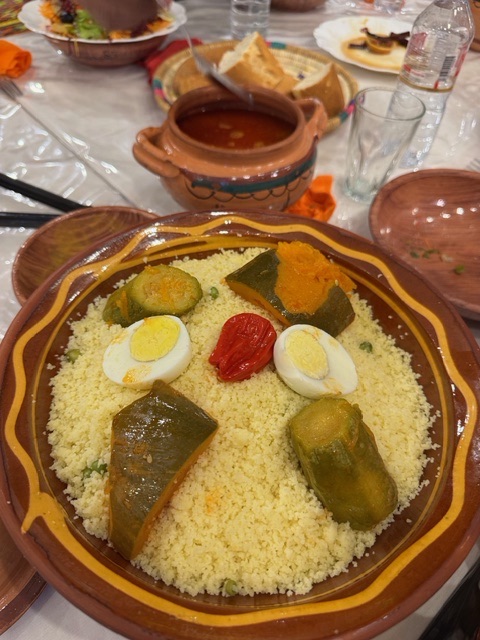
The combination of hospitality and excellent food, beautiful decore and kindness made this a great night.
