2 April 2026
Constantine does not gradually reveal itself. It startles. After miles of green fields, days of deserts and dunes, I look around and wonder if nature simply decided to show off a little. Mother Nature clearly woke up one morning, looked at this part of Algeria, and thought, “Let’s put a city on top of a gorge and see how people feel about that.”
Constantine rises dramatically above a deep gorge carved by the Rhumel River. Its strategic position made it a prize for Numidian kings, Romans, Ottomans, and the French alike. And today’s tourist! The city’s layered past reveals itself in bridges spanning impossible distances, colonial façades, and mosques that echo centuries of devotion. Constantine does not simply sit on the landscape – it grips it!
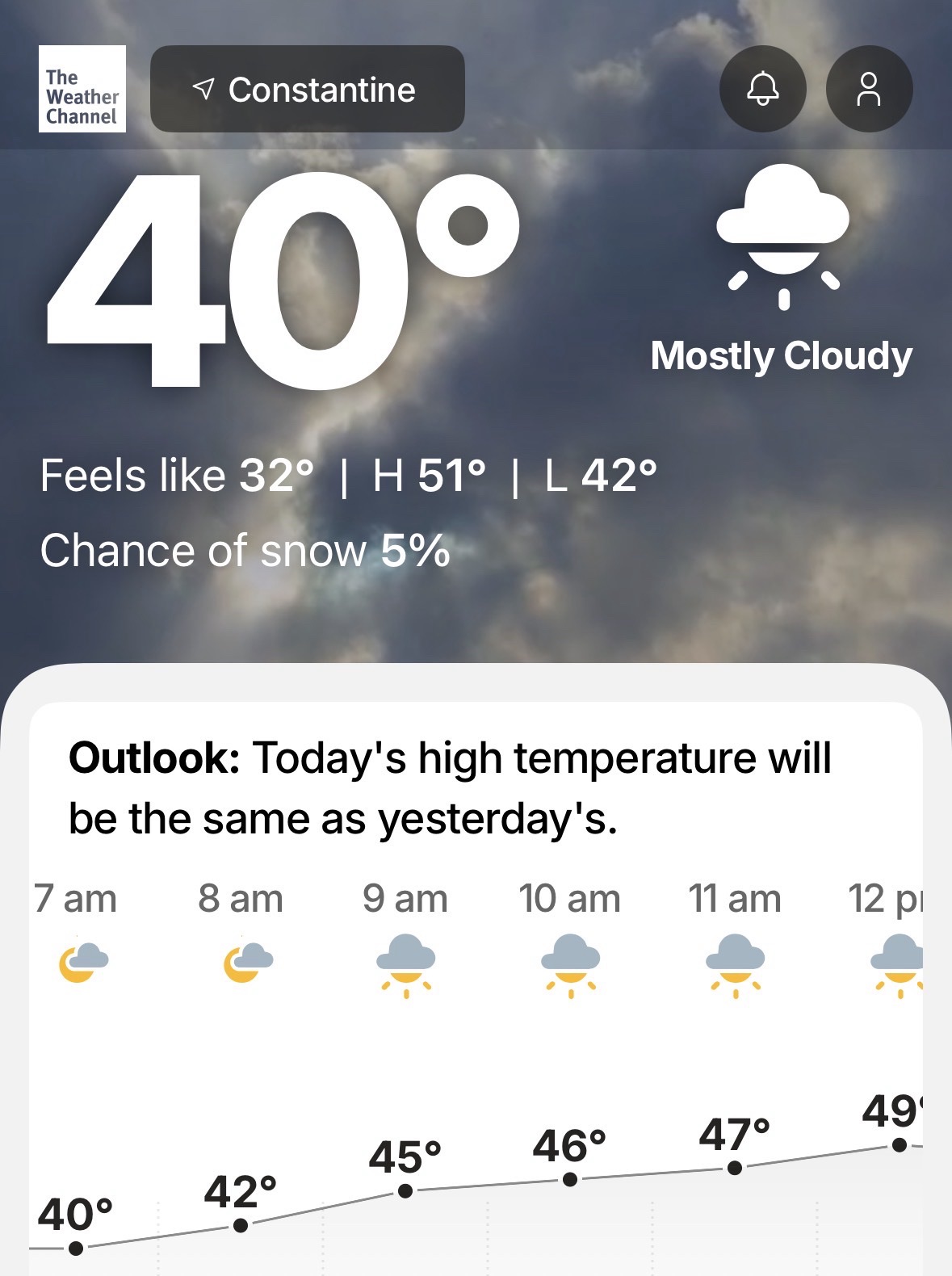
Our guide promises a day of adventure and experience. So, we board the bus to set out to see this city and its environs in, for me, freezing cold. Rain threatens to turn to snow. I wear 5 layers of clothes and my windbreaker. I’m still cold.
Teddis
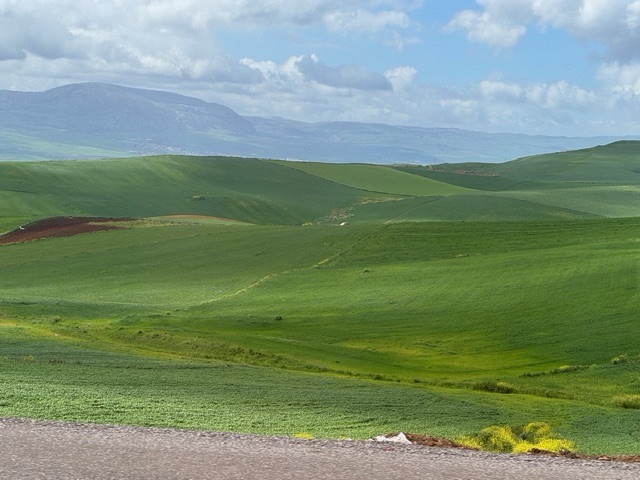
Today’s exploration begins with a 20-mile/40-minute winding, mountainous drive north to Teddis. The countryside is emerald green with the yellows, purples, reds and white of wildflowers coloring the undulating hills. Snow lies in the distant mountains.
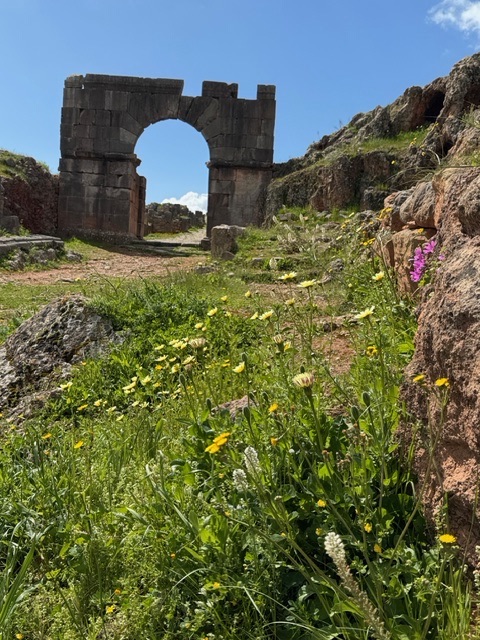
Located on a steep hillside, Teddis was known during Roman times as Castellum Tidditanorum. It developed into a well-fortified town that formed part of the wider territory of ancient Cirta. The site reflects layers of Numidian, Punic, and Roman occupation, offering insight into the cultural transitions that shaped this part of North Africa.
Remains include paved streets, houses, workshops, water cisterns, and baths, which together illustrate how the Romans adapted urban life to a rugged mountain landscape. The town’s layout reveals careful planning, typical of Romans, including systems for collecting and storing water in an otherwise dry environment. Religious life is also evident in the ruins, with traces of temples and shrines, including one associated with Mithras, as well as signs of early Christian presence in later periods.
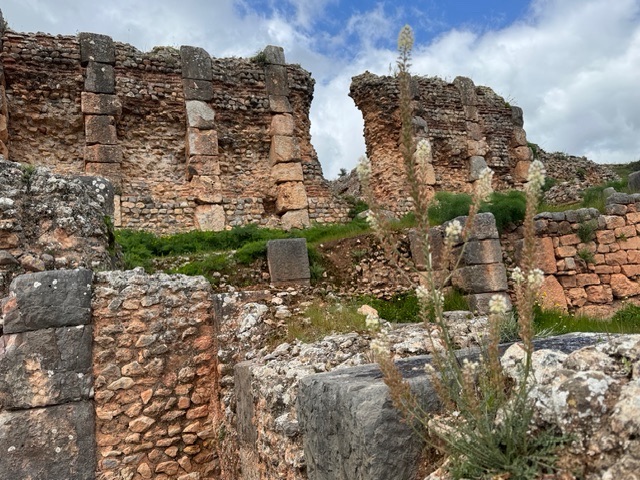
Nearby stands the remains of the Mausoleum of Quintus Lollius Urbicus, a Roman official who was born in the region and later became governor of Roman Britain. His circular monument underscores the far-reaching connections between this North African community and the broader Roman Empire.
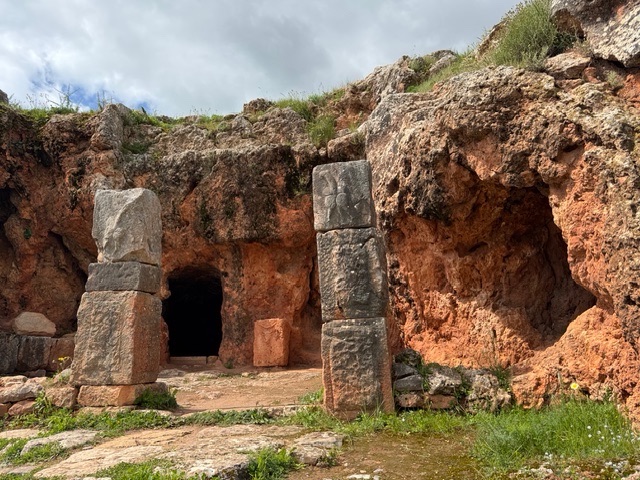
Beyond its historical importance, Tiddis is valued for its dramatic setting. It existed as a Roman city that depended on Cirta (Constantine) and a bishopric as Tiddi, which remains a Latin Catholic titular see. Perched above a deep valley, the site offers sweeping views of the surrounding landscape.
Unlike more heavily visited Roman ruins in Algeria, it is often quiet, allowing visitors to explore at a relaxed pace. We share the paths and steps with few others. The sun gallantly peeks out from clouds both white and fluffy and dark and threatening. Little wind allows us to climb the steps and hills for magnificent views.
Teddis’ combination of historical depth and striking scenery made it worth the twists and turns to get here.
Cirta Museum
We retrace our drive, returning to Constantine in order to visit the Cirta National Museum. Many consider this museum as one of Algeria’s most important museums, with a wide range of collections that tell the story of this region from prehistoric times to the modern era. Its exhibits cover archaeology, ethnography, and fine arts, and reflect the many civilizations that have shaped Constantine over millennia.
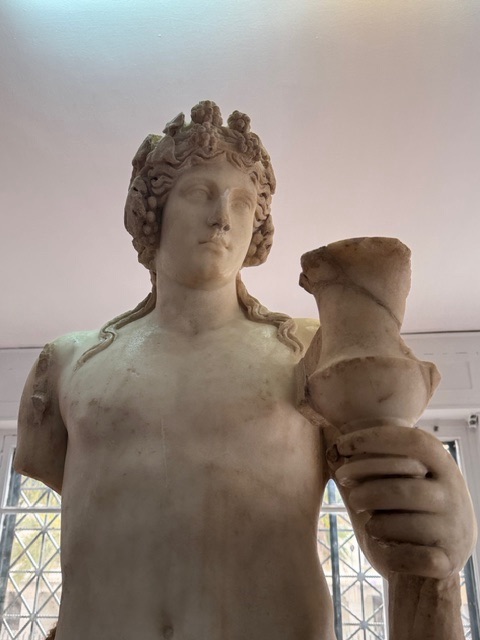
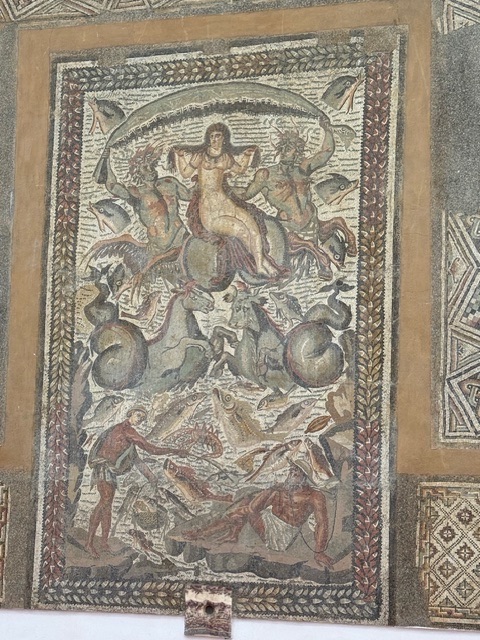
The archaeological collection is impressive. It includes artifacts from the prehistoric period, the Numidian and Punic kingdoms, the Roman and Byzantine eras, and later Islamic history. The rooms overflow with beautifully preserved Roman mosaics and sculptures. Displays include pottery, statues, coins, many stone stelae (with funerary and votive inscriptions), and items recovered from ancient sites such as Teddis.
A particularly notable object is the bronze sculpture known as the Victory of Constantine, discovered in the Casbah in 1855. A much larger replica now stands above the Martyrs Monument. Some exhibits also include pieces connected to local kings like Massinissa and other ancient rulers.
In addition to archaeology, the museum has an ethnographic section that showcases local cultural heritage. This includes traditional clothing, jewelry, carpets, manuscripts, firearms, copperware, and other objects that illustrate the daily life and customs of the people of eastern Algeria.
A fine arts collection features paintings and sculptures from the 17th to the 20th century. Works by Algerian and French artists, including Orientalists and other masters offer both artistic interest and historical perspectives.
Palace of Ahmed Bey
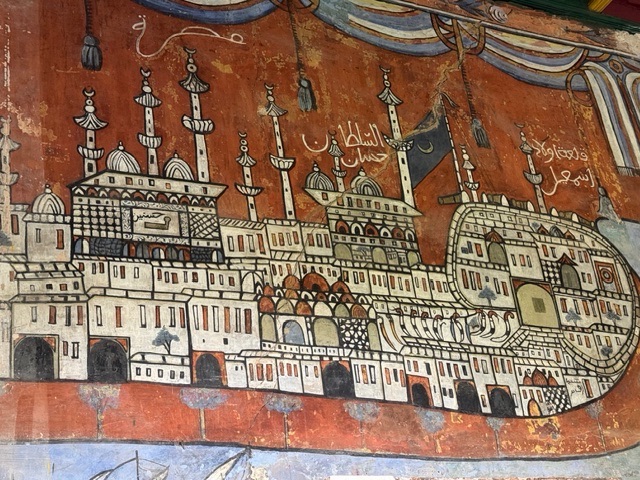
We arrive at the Palace of the Bey in the northern section of Constantine. The palace remains one of the finest surviving examples of Ottoman architecture in Algeria. It was built between 1826 and 1835 as the residence of Ahmed Bey, the last Ottoman ruler of Constantine. This occurred during a period when the Ottoman Empire tried to modernize and assert control just before the French conquest. The palace symbolized political authority as well as refined urban life, combining Ottoman design with local craftsmanship.
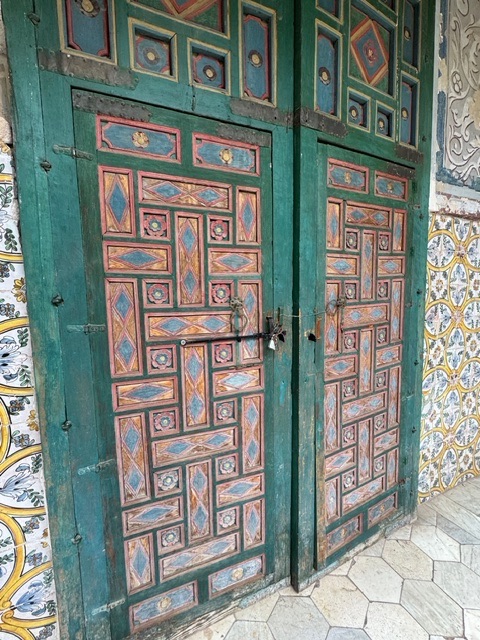
Architecturally, the palace design centers around courtyards and terraces that overlook an awesome view of the Rhumel Gorge. The layout means to manage heat, privacy, and ceremonial functions. Inside, I see richly decorated rooms with painted walls, carved wooden ceilings, marble columns, tiled floors, and elegant arches. Many of the wall paintings depict landscapes, cities, and scenes inspired by Ottoman tastes, including views of Constantinople and Mediterranean ports.
Currently, it is cold and damp. I look for sources of heat in these rooms. I see none. seems the comfort level may have been lacking in the Bey’s days.
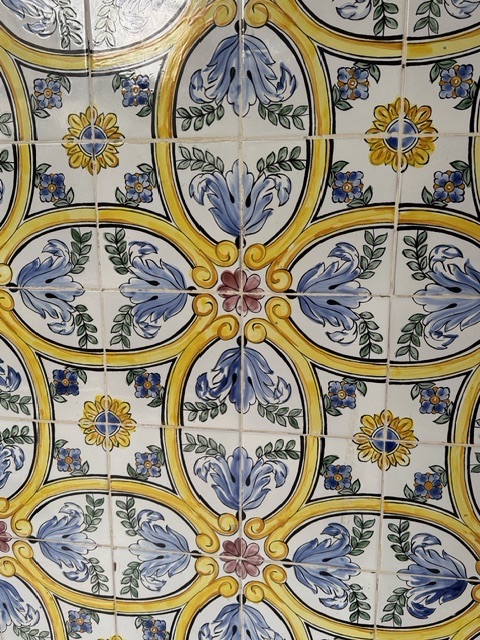
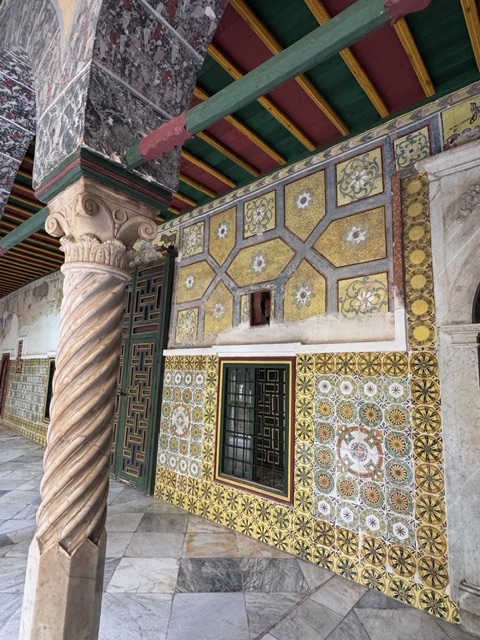
The most impressive feature of the Palace is its painted interior decoration, especially the richly illustrated walls and ceilings. Unlike stone or structural grandeur, the power of this palace lies in color and detail. Murals depicting gardens, ships, cities, and imagined landscapes inspired by the wider Ottoman world cover its walls. These paintings meant to project refinement, authority, and cosmopolitan taste rather than military strength.
Equally stunning is the way the palace opens onto the Rhumel Gorge. From its terraces and windows, the view drops dramatically into the canyon, blending architecture with sheer natural spectacle. The contrast between the decorated interior spaces and the vast, rugged landscape outside leaves a lasting impression. The palace feels both luxurious and precariously poised above the city’s dramatic geography.
Monument aux Morts
We stop for photos at the Martyrs Monument high on the rocky bluffs over Constantine. Builders laid the first stone on 18 November 1918, just days after the end of WWI. Work continued for many years before its inauguration in 1930 by French President Gaston Doumergue during ceremonies marking the centenary of French rule in Algeria.
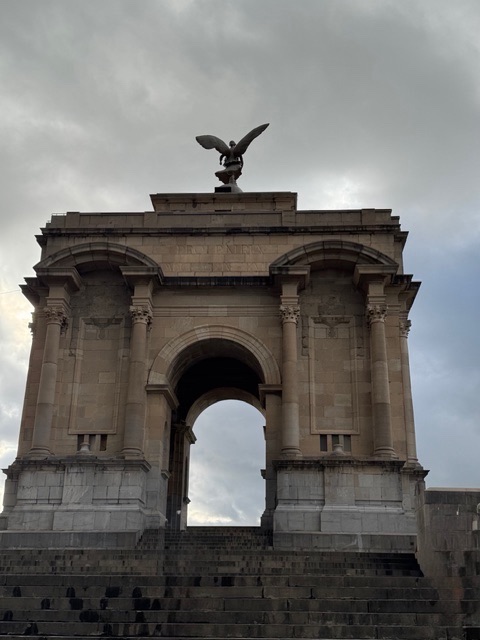
The neoclassical memorial takes the form of a 69-foot triumphal arch inspired by the ancient Roman Arch of Trajan at Timgad. Underneath the arch, plaques once bore the names of more than 800 soldiers from Constantine. These included Muslims, Christians and Jews who died on the battlefields of Europe in the Great War. At the top of the monument stands a statue called the Victory of Constantine and modeled on a small Roman bronze found in the city’s Casbah (seen earlier in the Cirta Museum).
The arch commands spectacular views over the Rhummel Gorge, Constantine and the Sidi M’Cid suspension bridge. Besides its honorable purpose, I find its panoramic views breathtaking. But dang, it is cold!
A Bridge Too Far
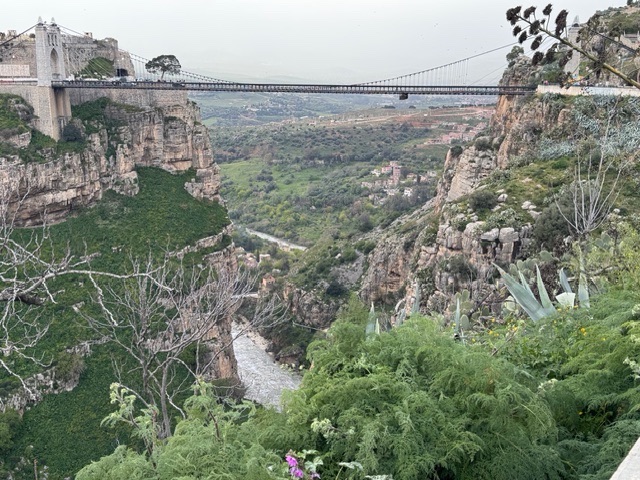
Constantine became the City of Bridges. Its deep gorges required engineers to construct bridges to span the Rhummel River Canyon linking sections of the city that otherwise would be completely isolated. Each bridge reflects the technology and ambitions of its era.
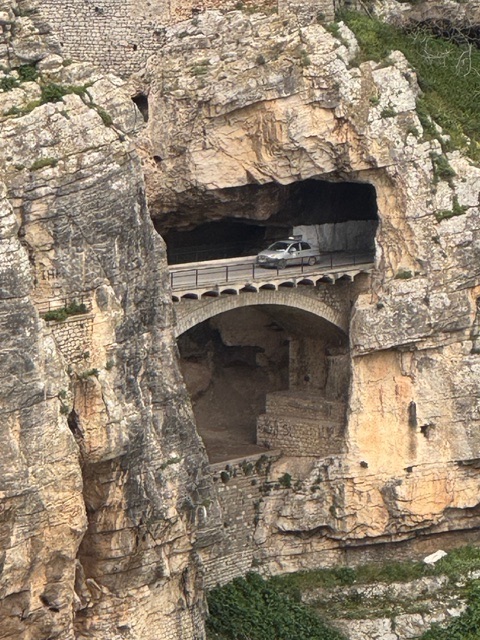
The site of the Martyrs Monument allows for excellent views of Constantine and its seven bridges plus one. Views range from the modern Salah Bey/ Independence Bridge to the historic Bab El Kantara built by the Romans in the 2nd century. Stop for the panoramic view of Sidi M’Cid Bridge (above) or walk the trail down from the memorial via the Grotte des Pigeons.
Evening Dinner
There comes a time on all group tours when one needs a timeout. Three large meals a day is anathema after a couple weeks. Tonight, I prefer a beer in the lounge and a warm evening in bed. Guides worry I may starve. I worry my clothes won’t fit.

0 Comments