31 March 2026
After a breakfast of yogurt, nuts and a bit of baghrir (semolina pancake soaked in honey), we depart Algiers to visit the nearby city of Tipaza.
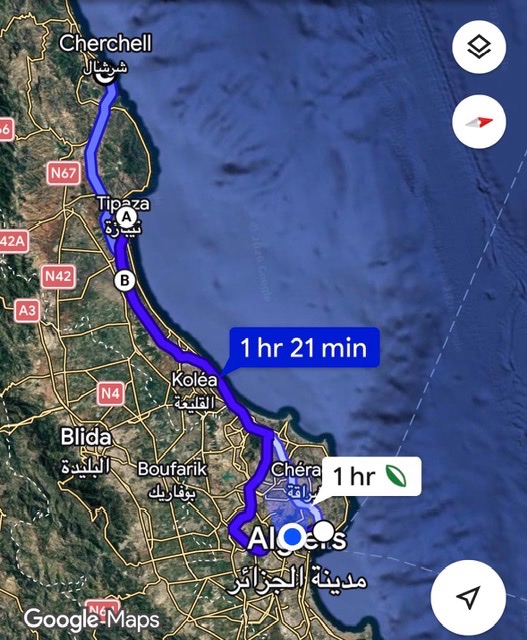
The day seems warmer as there is less wind, but rain threatens to pour on our parade. Driving west along the bay for about 150 miles, we discover some of the best Roman archeological sites in the Algeria.
CHERCHELL
Once known as Caesarea of Mauretania, this ancient city became one of the most important Roman cities in North Africa. Its highlight is the Cherchell Archaeological Museum, one of Algeria’s finest. Inside are superb Roman marble statues of emperors, gods, athletes, many found locally. Mosaics, inscriptions, and everyday objects show just how wealthy and Romanized the city once was. It’s a compact museum, but the quality of the sculpture is exceptional.
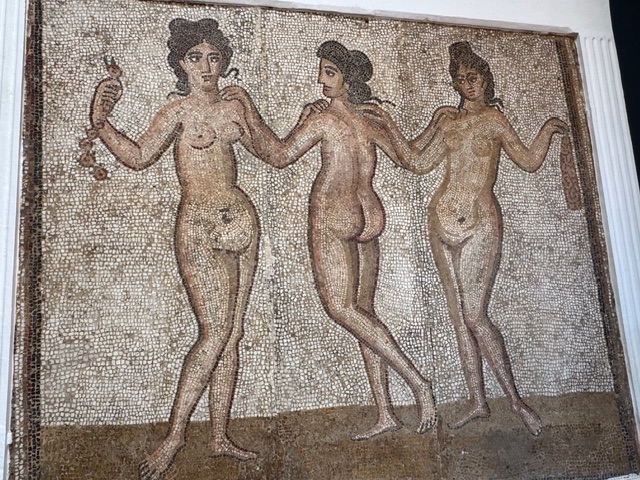
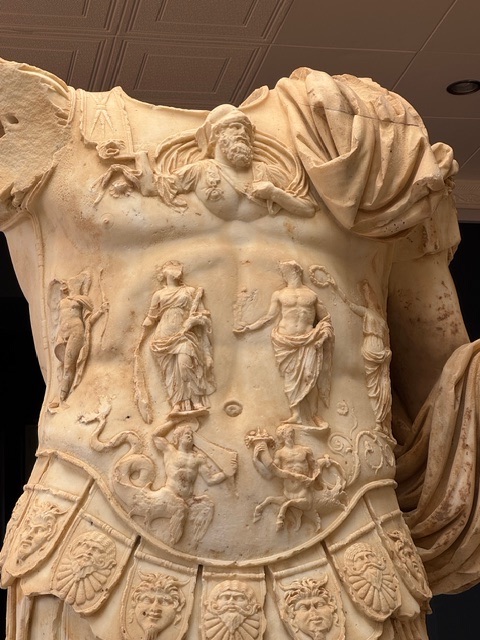
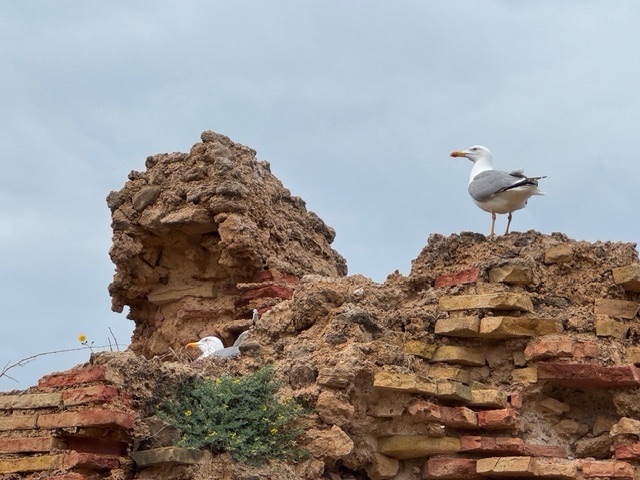
Around the city itself, ruins appear almost casually. Remains of the Roman theater, parts of the amphitheater, baths, villas, and stretches of ancient streets intermix with the modern town of Cherchell.
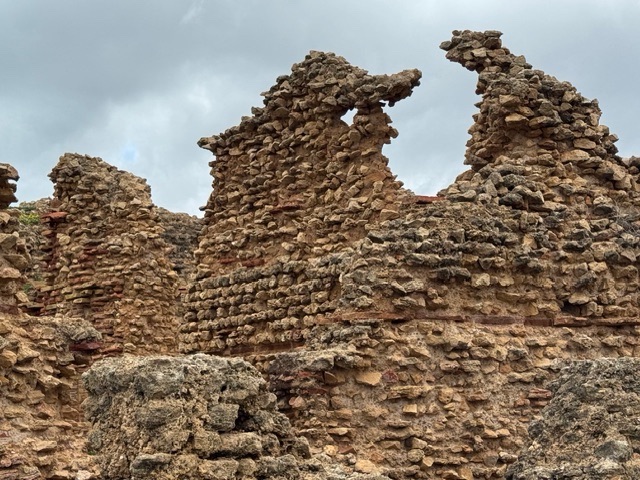
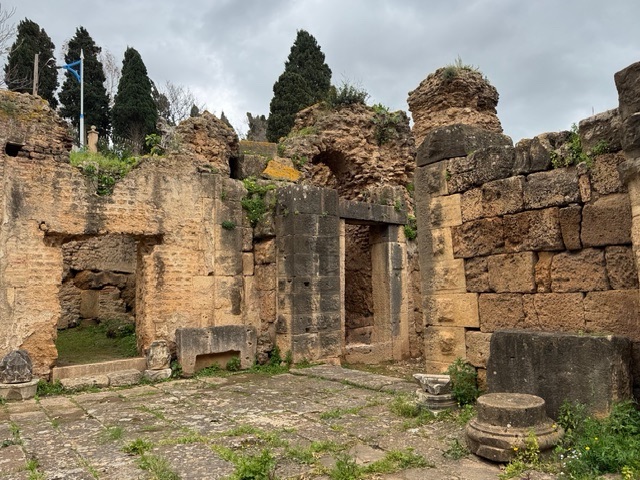
One sees Ottoman-era structures, a prominent mosque, and French colonial buildings woven into the fabric of everday life. Nothing appears fenced or monumental. Instead, the past feels embedded in daily life, with columns and stone blocks reused by the next generation or standing quietly in open spaces.
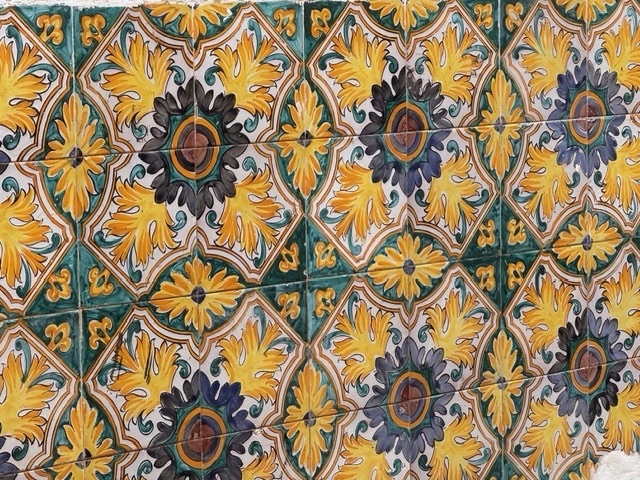
And there are the ever-present colorful tiles.
Cats
I believe Algeria, in general, suffers from an overpopulation of cats. While I see evidence of feeding, makeshift housing, and tolerance, universal health and welfare is lacking.
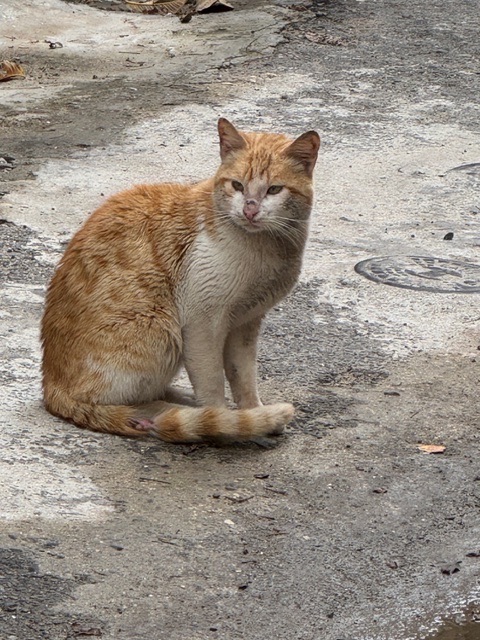
There are sites where dozens of cats loiter.
Grizzabellas of Algeria will be chosen by Old Deuteronomy to be reborn, ascending up to the Heaviside Layer and come back to a different Jellicle life.
Always, when I see tiny kittens, some hungrily foraging solo, I know there lacks a neutering effort. I love cats; however, I do not like seeing such a plethora of them.
Lunch
We drive a short distance to Tipaza. We dine at the Terazza Restaurant – Chez Ziani.
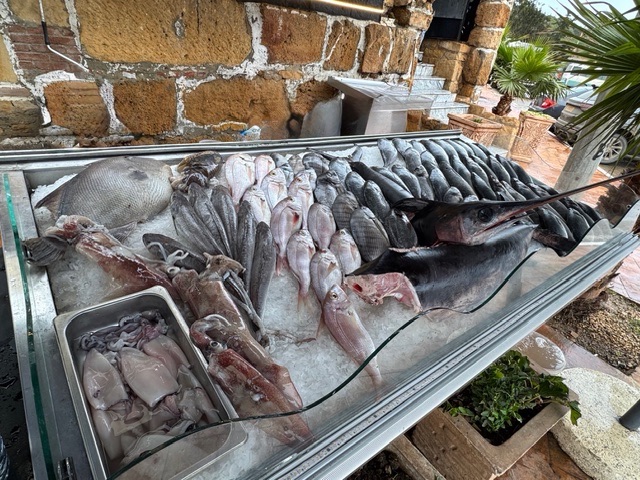
Our lunch consists of delicious squash soup, the ubiquitous bread and olives, and grilled swordfish and sea bass. In general, Algerian cuisine ranks as excellent. However, I may be getting a little tired of chicken.
Mother Nature smiles on us. No more than minutes after we enter the restaurant, the rain pours down. By end of lunch, all is calm and we are able to continue our walk. Muddy but dropless.
Tipaza
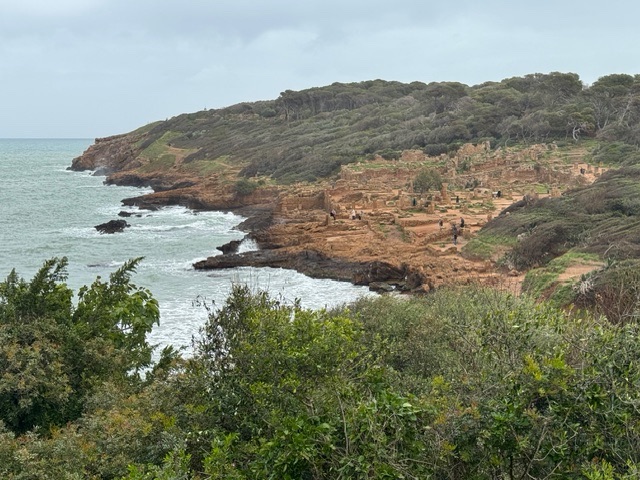
Located at the foot of the Chenoua Mountains and overlooking the sea, these ruins mainly consist of rock foundations and stone arches and pillars, albeit picturesque ones.
They also represent a fascinating history. The Phoenicians founded Tipaza as a trading post. It later flourished under Roman rule after being absorbed into the empire during the 1st century CE. Tipaza became an important coastal colony, strategically placed between Caesarea (modern Cherchell) and Icosium (Algiers). It served both commercial and religious roles.
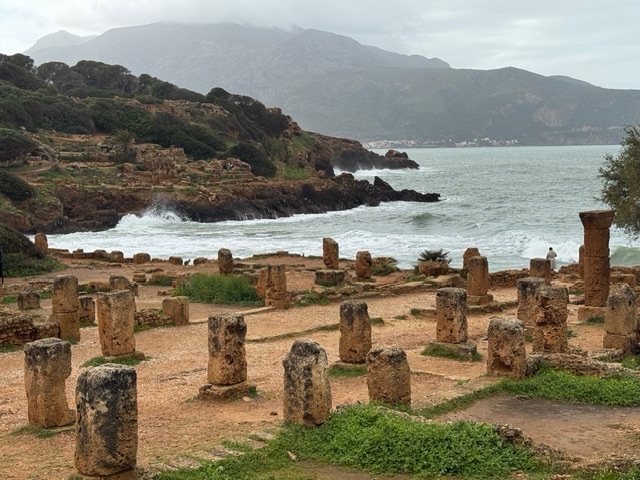
Christianity took strong root here in late Roman times. Tipaza was known for its basilicas and martyrs, before declining after Vandal invasions around 430 CE. Later came a brief Byzantine rule during the 6th century. By the time of the Arab-Muslim expansion in the late 7th century, Tipaza was largely abandoned, leaving its ruins scattered along the Mediterranean shore.
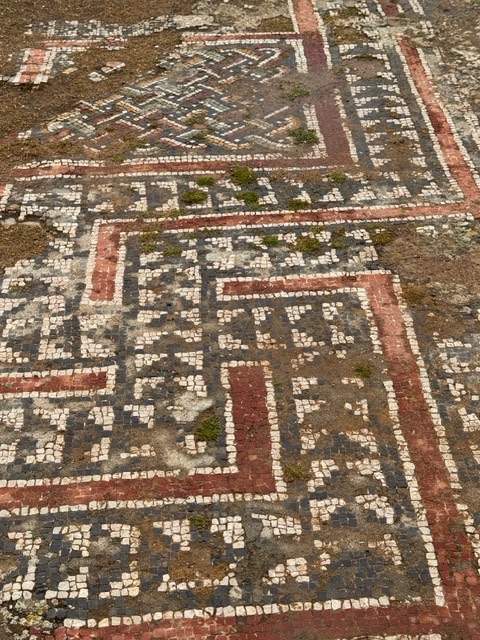
Today, we walk through the remains of villas, baths, streets, and a theater, with the sea constantly in view. Three early Christian basilicas, funerary monuments, and a large necropolis testify to the city’s religious importance, while mosaics and stone foundations hint at everyday Roman life.
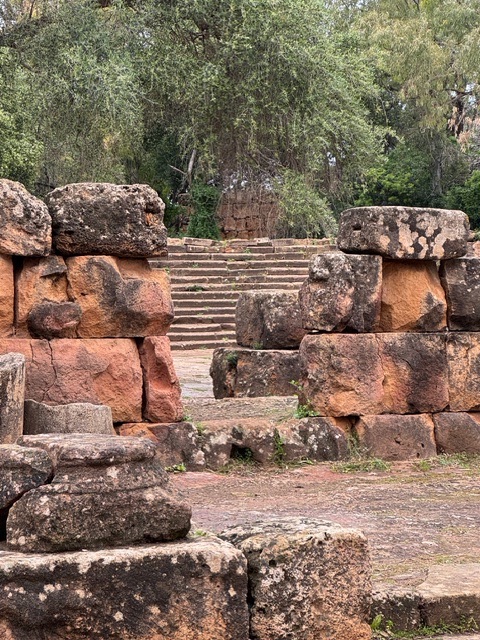
The theater remains among the most legible structures, even though it is modest by Roman standards. What survives today is a semicircular theater carved partly into the natural slope, with several tiers of stone seating still clearly defined.
From the upper rows, the view opens toward the Mediterranean, suggesting that scenery mattered almost as much as the performance. The orchestra space is identifiable, though stripped of decoration. Traces of the stage building sit at ground level, enough to understand its original form without overwhelming reconstruction. There are no standing columns or towering walls, but the layout is easy to read.
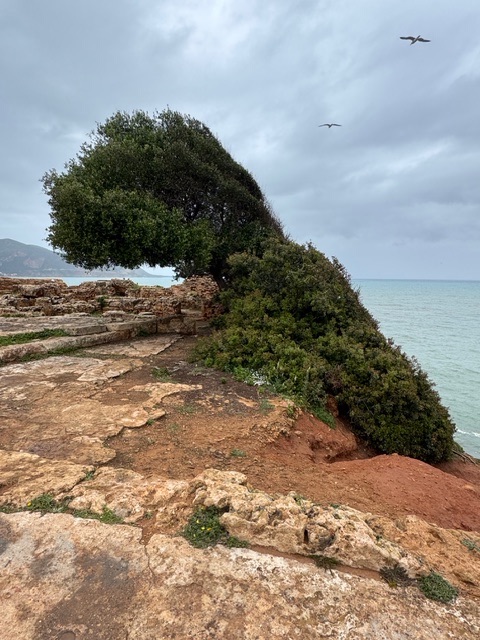
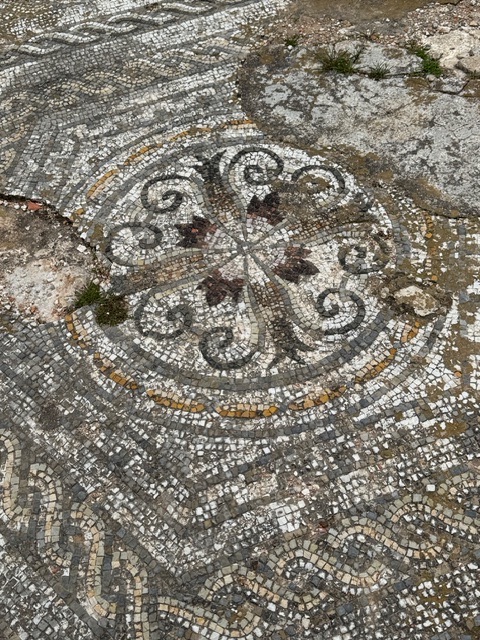
We follow a path upwards among cypress and evergreens, bent over as a result of strong and constant winds. There, even more beautiful and preserved mosaics can be seen.
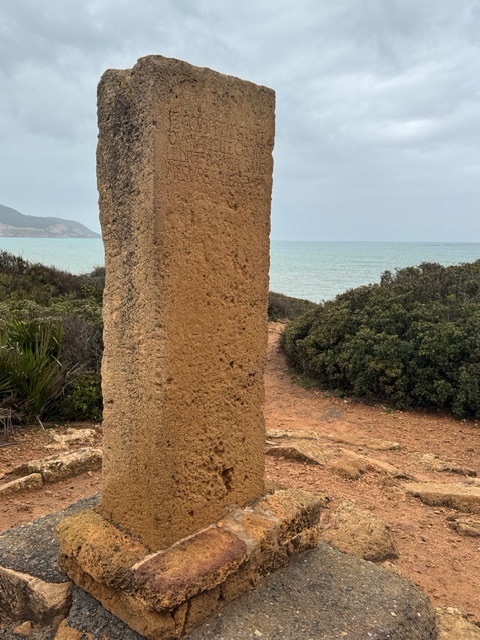
Also, an interesting stele commemorating Albert Camus sits at the top. Camus, though not born in Algeria, wrote of his hive for the country. Another famous name, Ives Saint Laurent was born here.
What makes Tipaza distinctive is not monumental grandeur but the spectacular setting. Ruins spill gently toward the seas, framed by pine trees and blue horizons. Its location creates a quiet, almost lyrical encounter with the Roman past rather than an overwhelming one. The Phoenicians certainly knew good real estate!
Royal Mausoleum of Mauretania

Before returning to Algiers, we stop at a monumental tomb dating to the late 1st century BCE. Historians believe it was built for King Juba II of Mauretania and his wife Cleopatra Selene, the daughter of Cleopatra of Egypt and Mark Antony. It stands as a powerful symbol of cultural fusion, blending Berber, Hellenistic, and Egyptian influences. It reflects the political sophistication of a North African kingdom closely tied to Rome yet proud of its local identity.
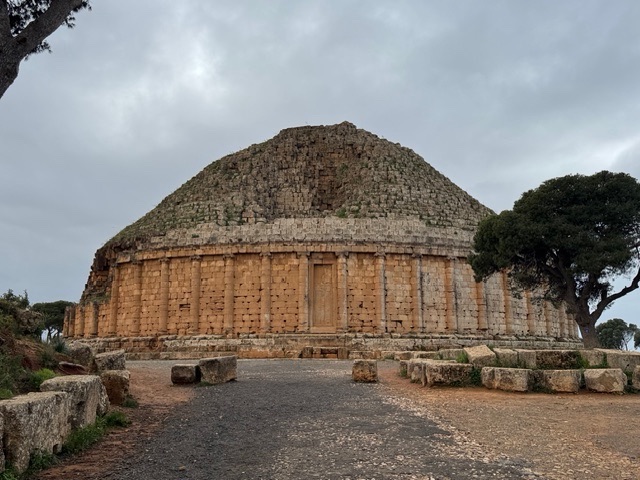
Located on a hill near Tipaza, the mausoleum dominates the surrounding landscape and deliberately positioned to be visible from afar. Today, it stands isolated and weathered, but imposing, its scale still commanding respect. Because of this location, the wind is beyond gale force. Giving it a lonely, almost abandoned feel, the tomb commands a view of the green countryside all the way to the ocean.
Architecturally, the mausoleum remains striking and unusual. It takes the form of a massive circular stone drum topped by a stepped, pyramid-like cone, once rising to nearly 130 feet in height.
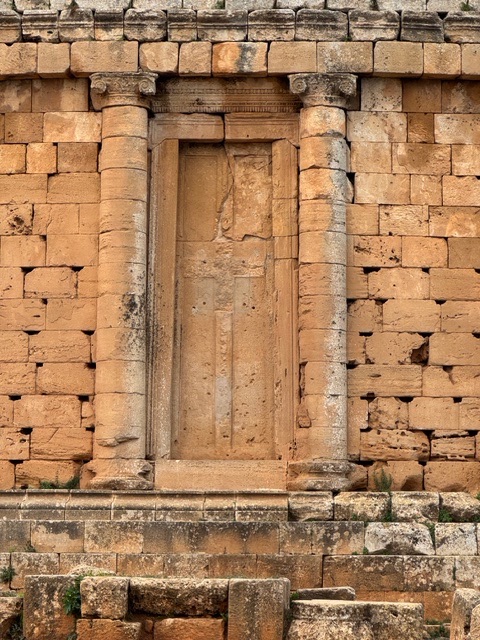
Sixty Ionic columns ring the structure, giving it a classical look, while the overall shape echoes ancient burial traditions from both the Mediterranean and North Africa. Inside, a narrow corridor spirals toward burial chambers. Researchers discovered the tomb empty when explored in modern times, likely looted centuries earlier.
Observations on the Road
Driving allows one to observe a country beyond cities and tourist spots. On our drive west along the Mediterranean, I motor through more green than I have seen in weeks. This region obviously represents an important agricultural bread basket.
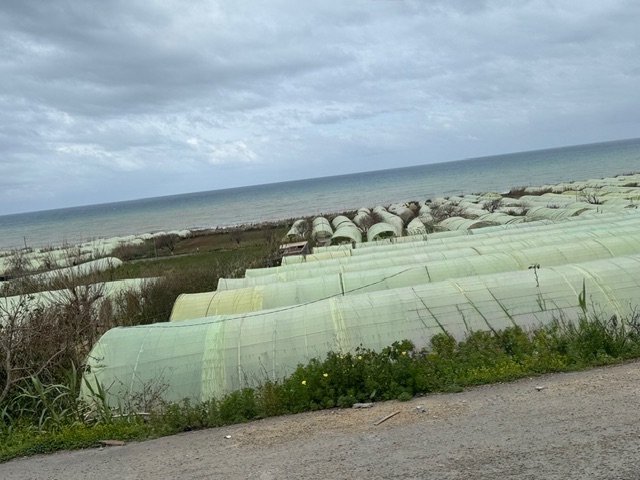
Multitudes of hot houses and vast vegetable fields and orchards cover the land all the way to the sea. Garlic, tomatoes, strawberries, lemons, potatoes, olives, almonds, grapes, even Algerian bananas (more like plantain).
The roads are excellent and well maintained. Our guide explains that toll roads and booths were built, but the decision was made not to charge drivers. So, booths sit empty and unused. Traffic zooms past.
I also note that while Cherchell had many trash piles, the highways are very clean, lacking in the presence of plastic bags and bottles seen elsewhere. I did see many security personnel standing about every mile along the roadsides. Armed, just watching the traffic.
Driving also allows time for our guide to answer questions about her country. I learn there is strict gun control laws. And heavy penalties, include death penalties, for serious crimes. It is an automatic 6-months in prison for a DUI.
I learn more about the Algerian Civil War of 1992 to 1999. Once again, the citizens said no to Islamist Extremists and were willing to fight a war in order to retain their freedoms. Interestingly, our guide credits tourism as bringing to locals added insight into the history and understanding of their own country. I hear once again how Covid encouraged people to explore more of their own Algeria.
Final Night in Algiers.
Many artists, poets and writers wrote about Algiers over the centuries, from Albert Camus to Chares Aznavour to Miguel de Cervantes (held captive in Algiers during the 16th century).
Their words praised, mourned, resisted, and remembered Algiers as a place that left a mark long after one had gone. I understand that feeling.
I love all cities, a little more than Paris
But not like Algeria
How beautiful she is! And I love her madlyWherever I am, I won't forget her, Algiers, Algiers, how much I love herWhen I'm far away and I think of you, oh white cityMy heart is full of sadness, but it won't forget you“Alger Alger” – performed and composed by Lili Boniche

0 Comments