September 2026
I continue to hope to find the name of my 4Xs great grandmother. Women’s roles were hard work, birthing children, then anonymously dying. Unless from a family of wealth or importance, many women only represented a number in a census before 1850.
The woman I seek was born around 1770. While I know her husband and the lives of her children and their descendants, she remains a mystery.
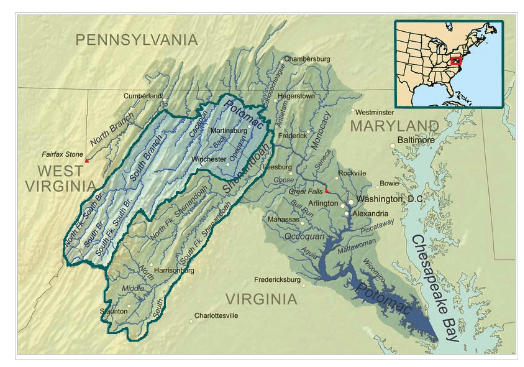
During her lifetime, she lived in and around Berkeley County in what was referred to as the Northern Neck of Virginia. It became West Virginia in 1863. Land records show my 5Xs great grandfather’s family farmed in Back Creek Valley near Tomahawk, within sight of the Potomac River and the state of Maryland. Records indicate that the family left this region, traveling west, by 1803. I strongly suspect this generation of great grandparents died in Knox County, Ohio.
Why Richmond, Virginia?
I travel to Richmond in order to research within the Library of Virginia. While many records were destroyed as a result of fires and the Civil War, Richmond’s library houses archives and books not found elsewhere. It remains my hope that some surviving record will point me toward the names of my unknown female ancestors.
Through research and DNA matches, I discovered hints that a side of my maternal ancestors lived in areas of Virginia. It came as a surprise that some of my German ancestors were rooted in the Shenandoah Valley and counties of Augusta, Pendleton, and Highland. During the years 2022-2024, I traveled to these areas in search of further clues.
With each trip, I discovered more information and additional clues. These led me to travel around West Virginia and Maryland. With each library, cemetery, or genealogy museum, I found more. Ultimately, I found the land lived upon by my 5Xs great grandfather and where he and his spouse raised his children. DNA pointed toward who these children were. One of them was my 4Xs great grandfather, John. (A major stumbling block comes from the propensity of half the Germans in the country naming a child John, Joseph, James or Jacob. Females leaned to Catherine, Mary, Eliza, and Susannah. Don’t get me started on the overuse of Sarah and Polly!)
Who is My 4Xs Great Grandmother?
Tip for researchers: Mary is Polly, Sarah is Sally, and Martha is Patsy. But not all of the time. Good luck.
According to land records and censuses, my 5Xs great grandfather lived in Berkeley County, Virginia (now West Virginia). And to make it even more confusing, Berkeley County came into existence on May 15, 1772, when an act by the Virginia House of Burgesses split Frederick County, Virginia. The northern end of Frederick County became Berkeley County. The central portion remained Frederick County, and the southern end became Dunmore County (later renamed Shenandoah County). Therefore, marriages and births can also be noted as happening in Frederick County.
That is the case for his son, my great grandfather John, who was born ab out 1764 in Frederick County but married in Berkeley County (spouse unknown). Same lands but different names, he began to raise his family. It would seem his first 4 children were born there. Because of the disappearance of any records concerning his father and his own family after 1802, it appears they had left the area by that time. Land further West in the Ohio Territory beckoned. Like many German families, my ancestors packed up and moved.
The next records found indicate my ancestors appeared in Knox County, Ohio by 1806. I believe a 5th child was born in Pennsylvania, while on the long trek to Ohio. The 6th child and the two who followed, were born in Ohio. Records show my 4Xs great grandfather and his family arrived in Mohican Township, Wayne County, Ohio by 1808. A brother remained in Knox County. A sister married in Maryland and had moved south into Augusta County within the Shenandoah Valley.
What is still missing is who married my 4Xs great grandfather and birthed his 8 children. It is as if, even in 1800, relatives strictly followed the genealogist’s commandments:
Thou shalt leave NO trace of your female children or spouse. Thou shalt name all females Elizabeth, Maria, Sarah, Catherine, or Susannah. If their name is Mary, thou shalt forever call her Polly. In all Wills, thou shalt refer to her as your beloved wife but seldom by name.
Historic Richmond
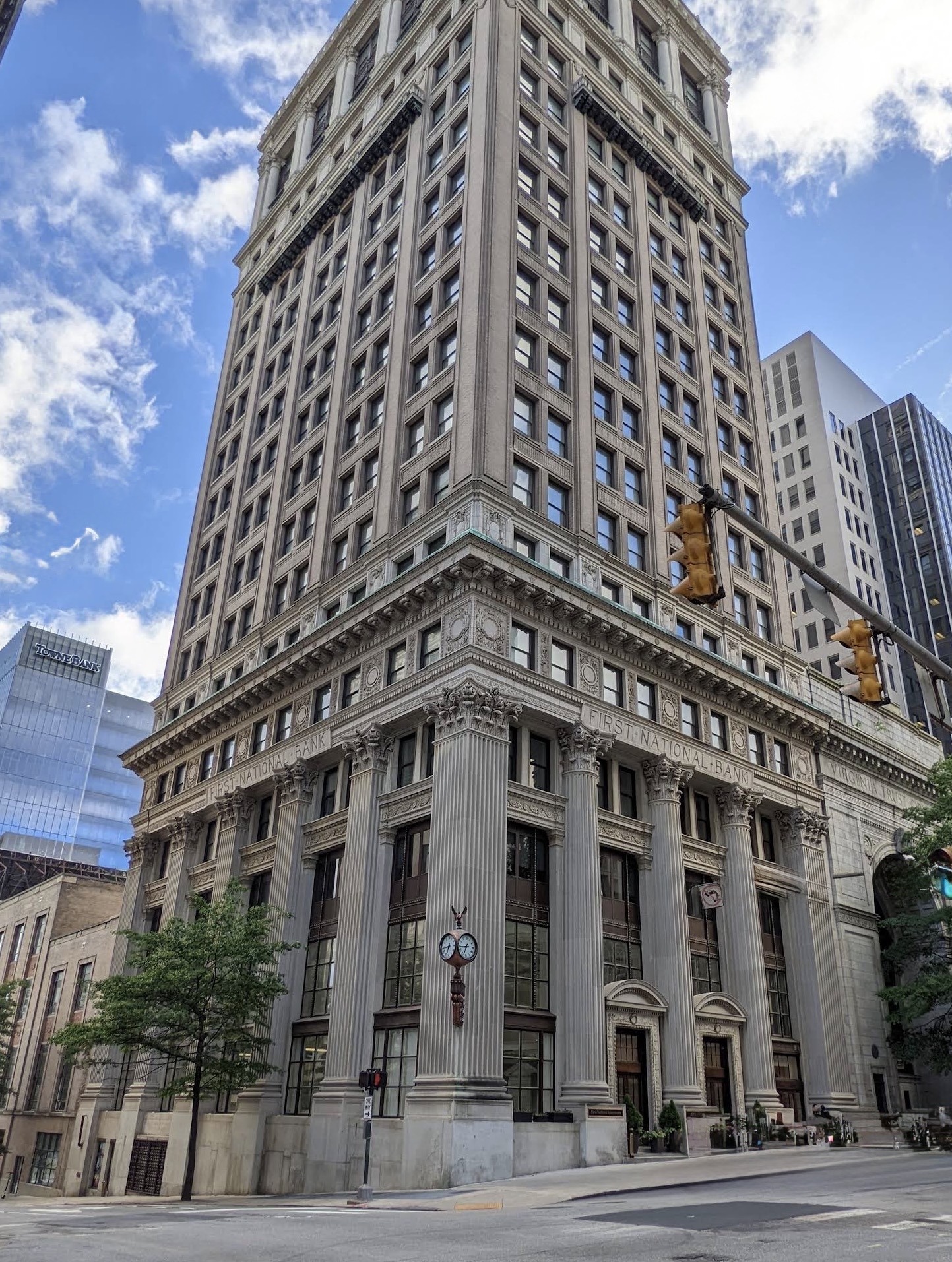
Walking through historic downtown Richmond resembles stepping into a living history book – one where the past and present share the same streets. The uneven brick sidewalks and cobblestone streets slowed my pace and that was a good thing. They made me pay attention to where I walked and, more importantly, to what surrounded me: beautiful historic buildings, graceful old trees, plaques and monuments, and architectural gems representing the many eras that shaped Richmond.
(Left: the beautiful First National Bank Apartments)
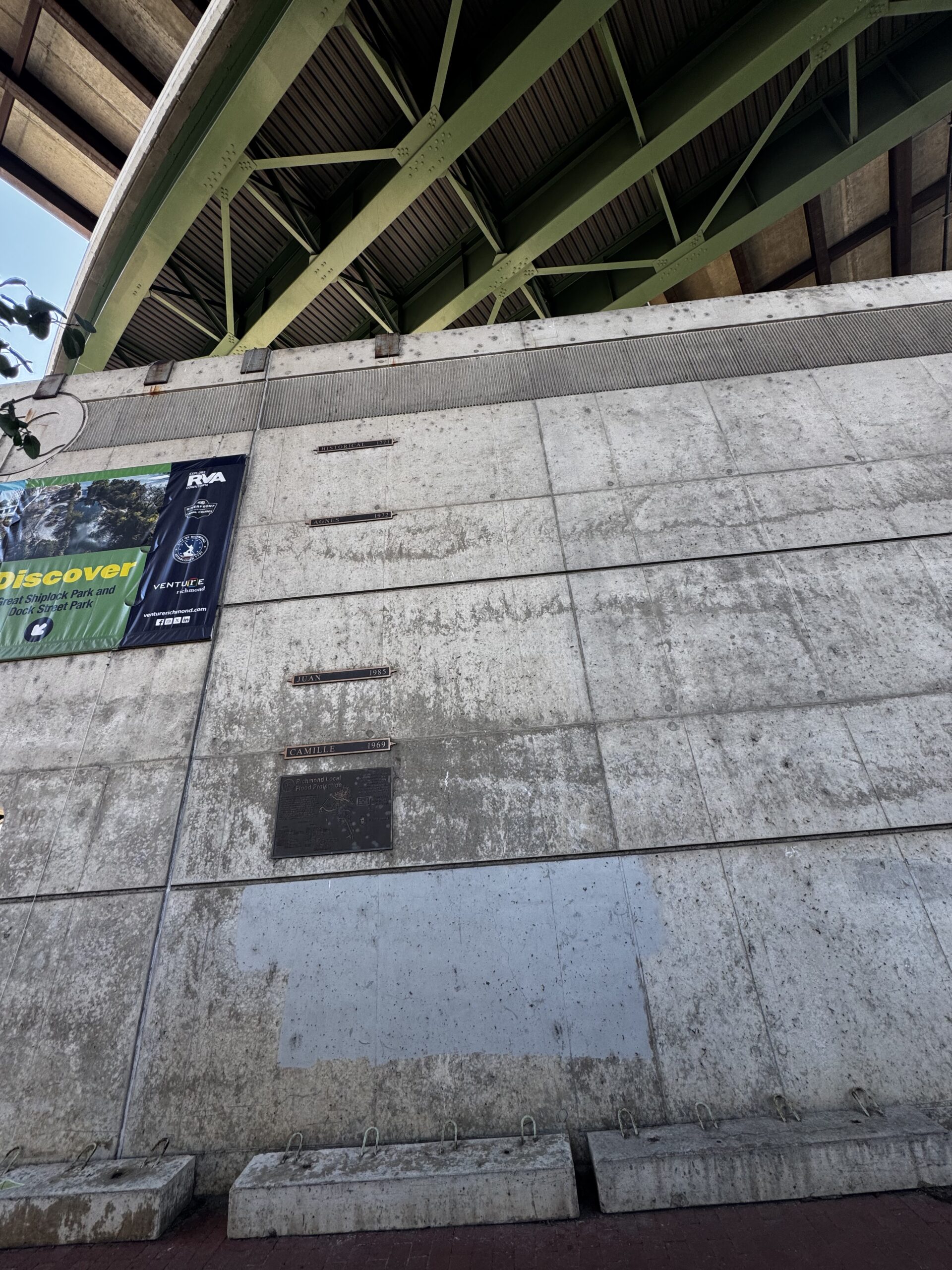
Graceful trees spread over the streets, beautiful old architecture, monuments that prompted reflection, historic buildings, a massive flood wall, or a view of the James River. Around nearly every corner, something catches my eye. What I especially enjoyed was the way Richmond’s history and present-day life exist side by side. A historic building might now be a restaurant, and around the next corner there usually sat another monument or architectural detail worth stopping to examine.
The same streets that witnessed important chapters in American history now teem with people living, working, dining, and enjoying the city. This mix of old architecture and contemporary life gives the downtown a distinctive energy. Yet, following the worn brick beneath my feet, I am soon in the arms of the charming old district amid a plethora of restaurants and pubs.
(Right: 1894 Old City Hall)
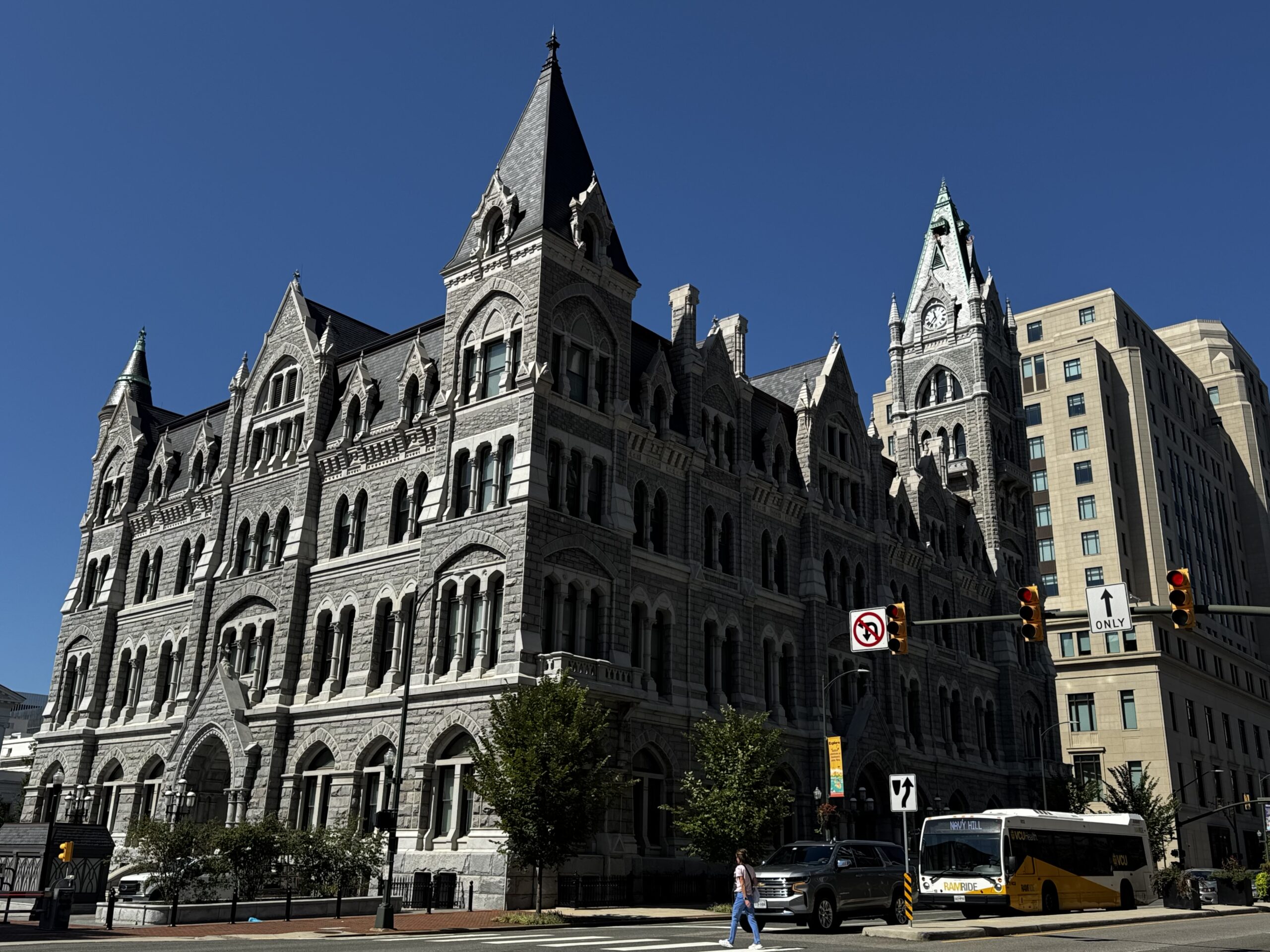
There is something wonderfully unhurried about exploring the city on foot. The brick walks are not always easy, but they encourage you to slow down, look up, and take in the surroundings rather than simply getting from one place to another.
I Tried to Like Richmond
I really tried to like Richmond – and, as a whole, I succeeded. There is much to like about the city, starting with its manageable size, walkability, friendly people, excellent dining options, and some very good local craft beers.
Of course, there are pros and cons to every city, and Richmond is no exception. While I found plenty to appreciate and enjoy, there were also some things that didn’t quite work for me.
Richmond’s Celebrated Canal Walk
The Riverfront Canal Walk consists of a 1.25-mile paved path through downtown Richmond that follows the James River, and Haxall and Kanawha Canals. If one follows the loop over and around, up and down the stairs and bridges, the path is twice that long.
This Canal Path sounded like the perfect place for a quiet, peaceful walk along the James River and canals, perhaps even with the chance to watch a canal boat glide by. That was not quite my experience. Instead of peaceful, I found myself surrounded by the sounds of Richmond’s transportation history – most notably the famous Triple Crossing.
Crossing is a Gross Understatement
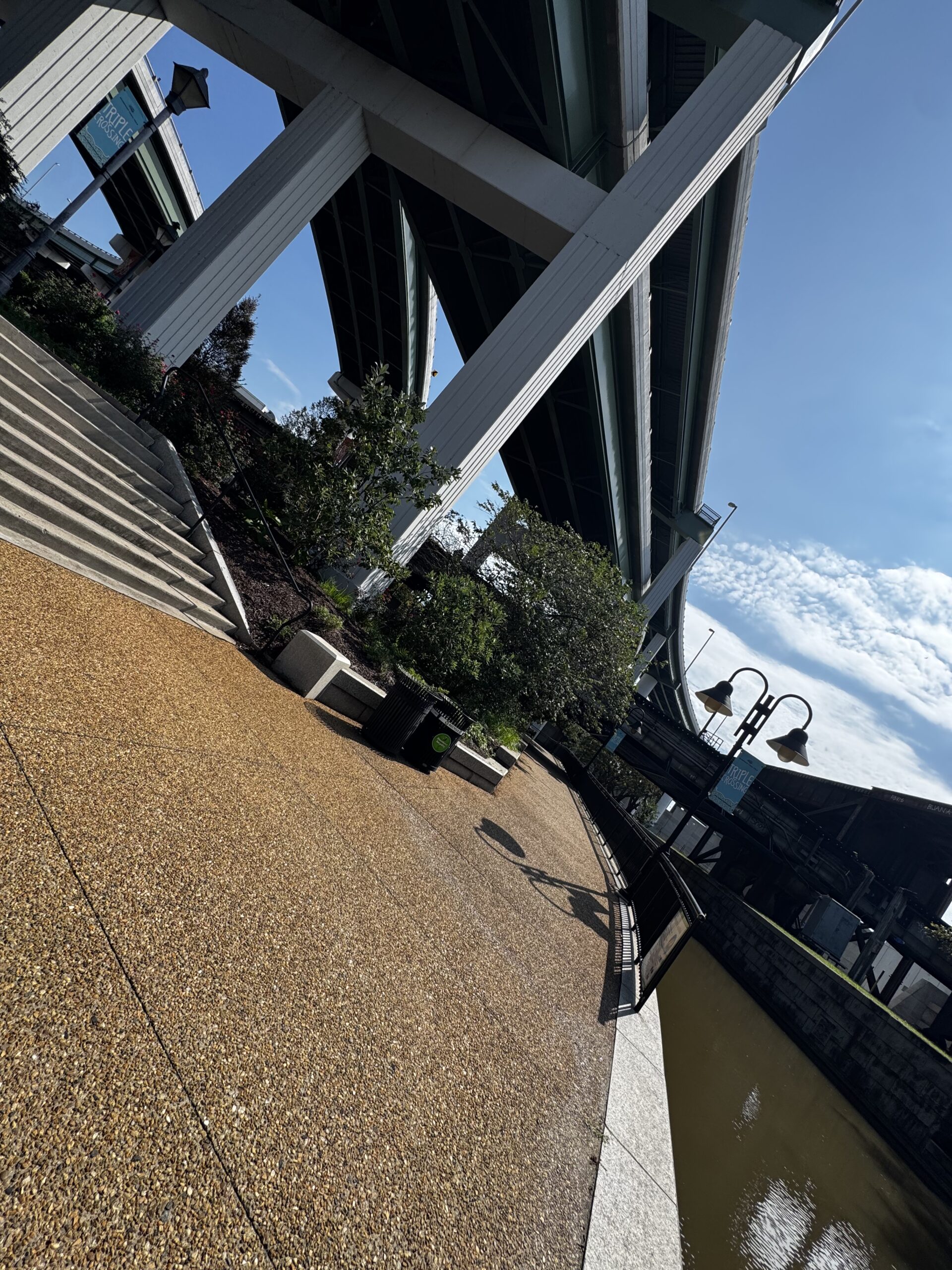
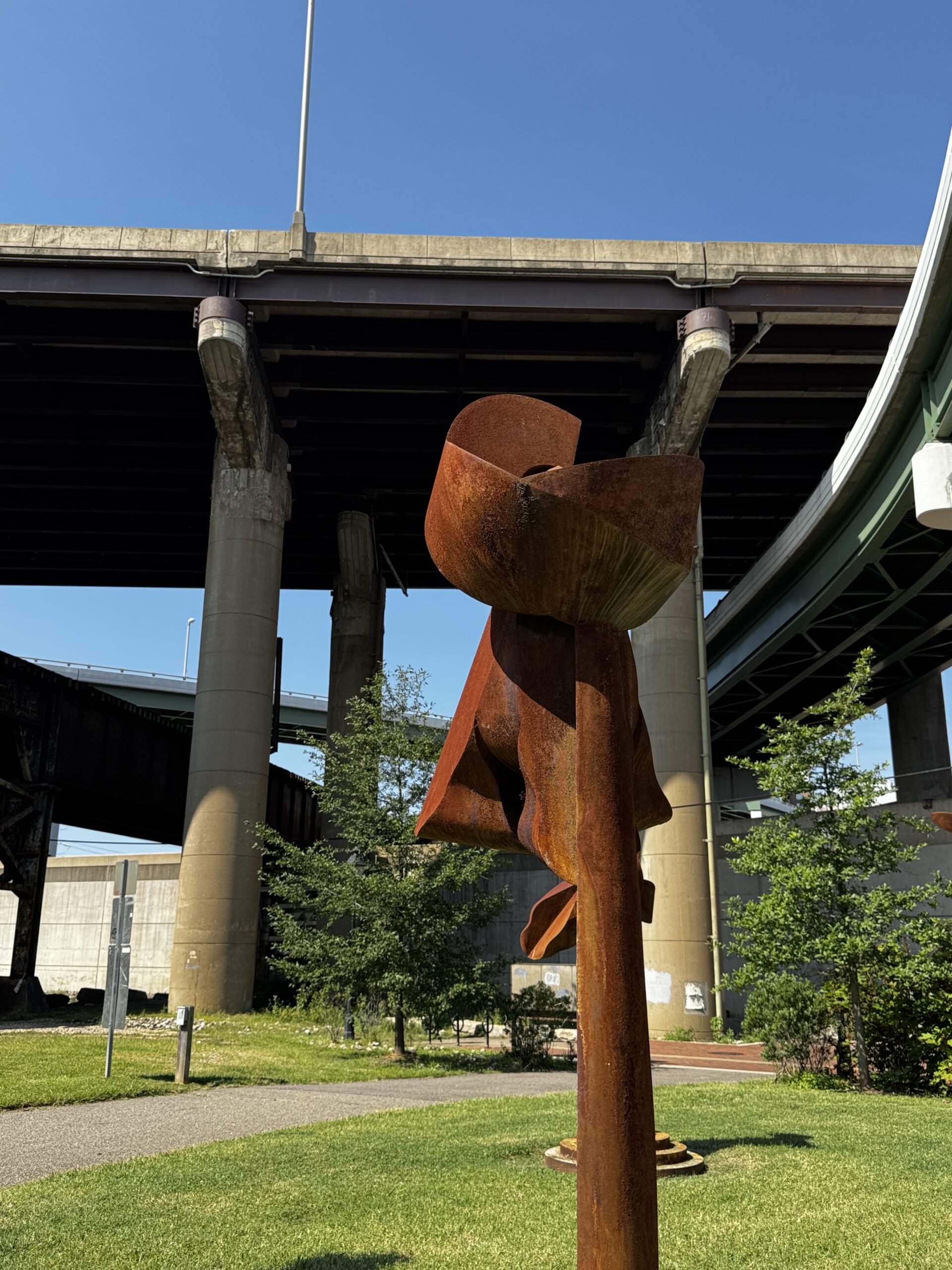
Now, “crossing” fails as a true descriptor. This is where three sets of railroad tracks pass over one another at three different levels, making it the only place in North America where three Class I railroad lines cross at different elevations in the exact same location.
The lowest level dates to 1859, originally built for the Richmond and York River Railroad. The middle level, built between 1897 and 1900, rises about 18 feet above it. Constructed in 1901 by the Chesapeake and Ohio Railway, the topmost level towers about 36 feet above the lowest tracks.
And if three levels of railroad tracks weren’t enough, there’s more. The site is essentially a vertical stack of Richmond’s transportation: the 18th-century Kanawha Canal at the bottom, the 19th- and 20th-century railroads above it, and modern I-95 soaring overhead.
I love the sound of trains hootin and tootin their presences. A train lumbered thru pulling scores or coal cars. I’m sure the Amtrak passed at some time as the train station sits below the I-95. But the Triple Crossing was a whole lot more. Perhaps the only shade on a hot day came from the huge interchange of highways towering above. This is where the 195 and the I-95 looping interchanges.
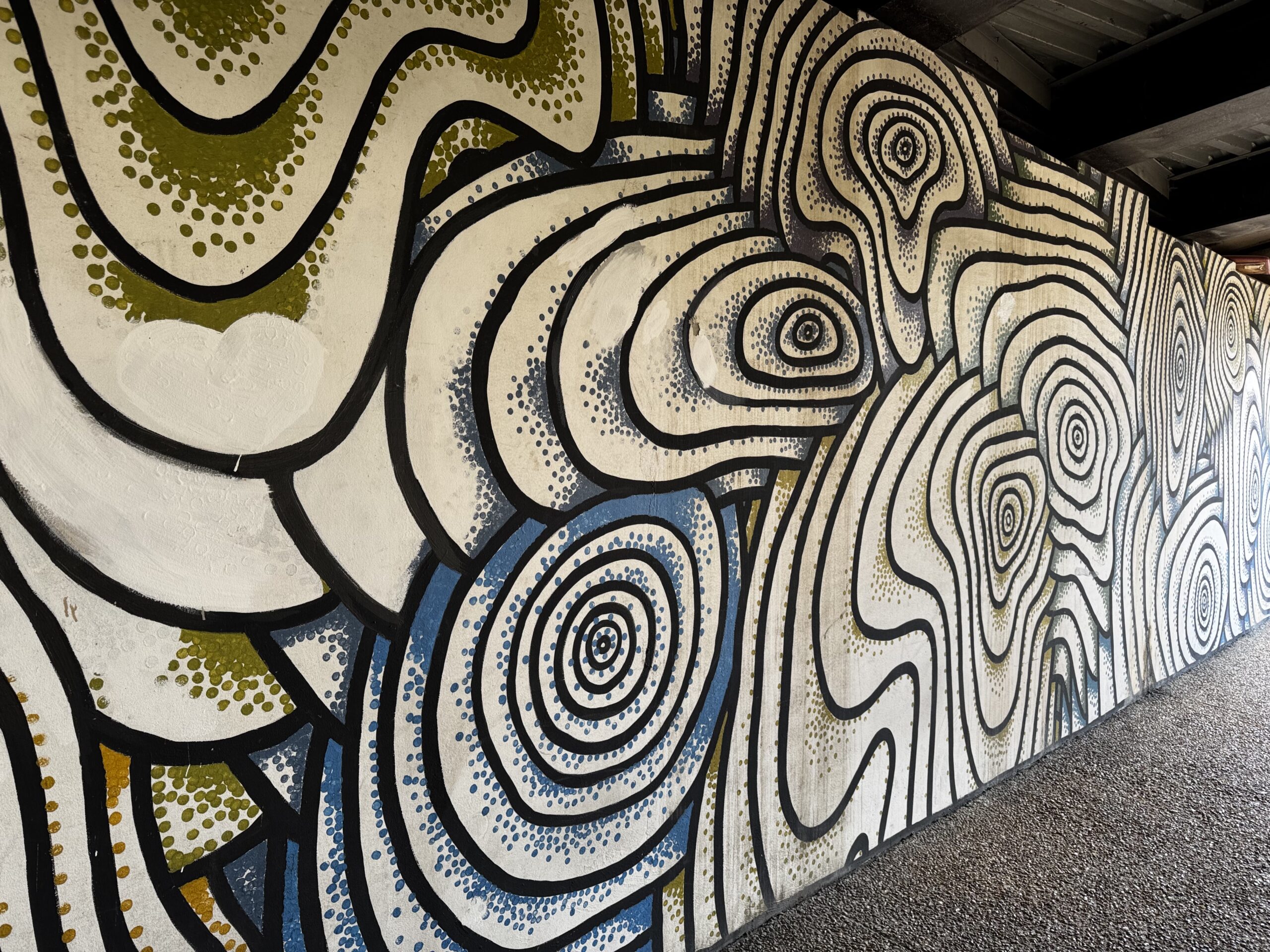
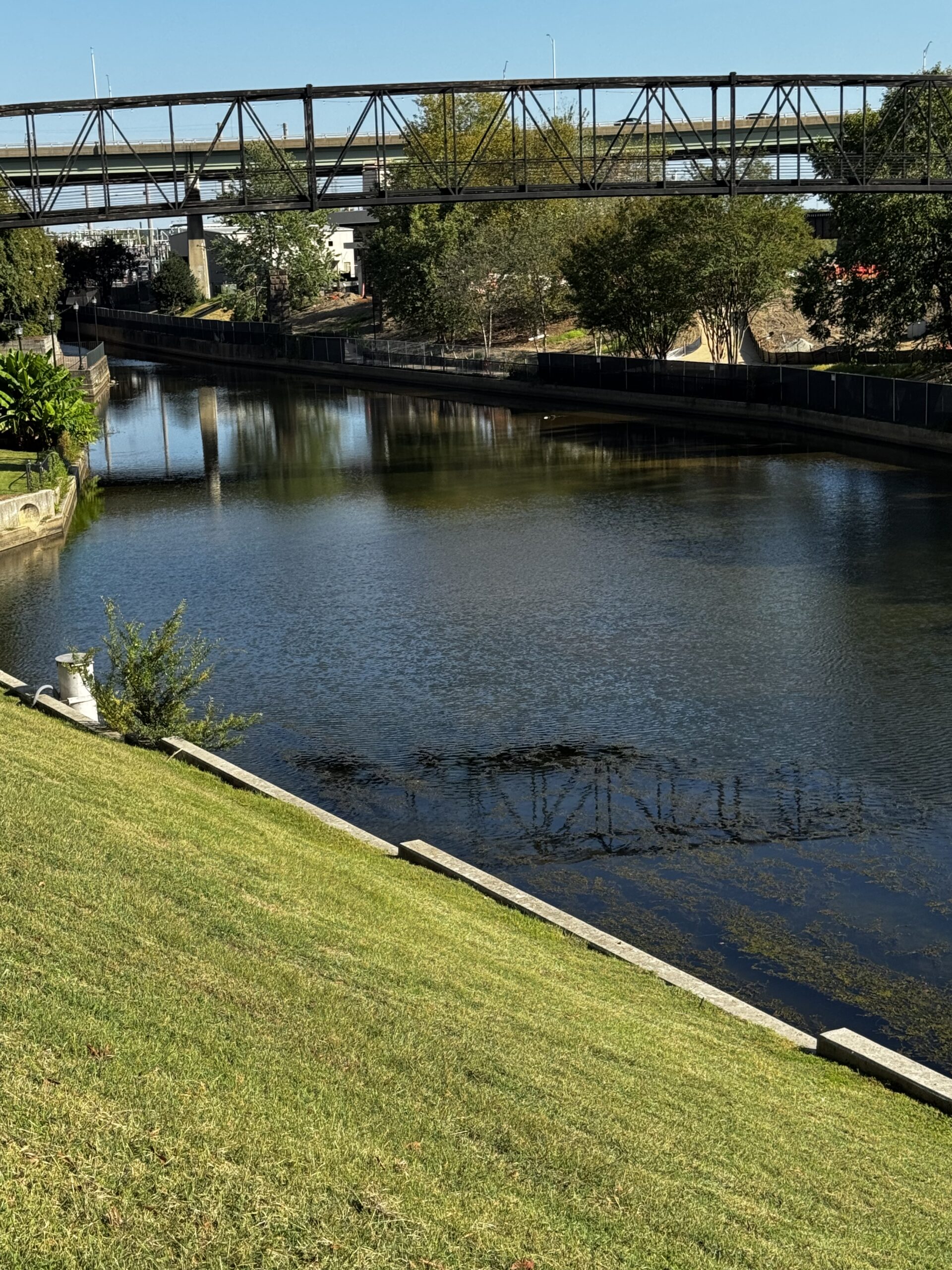
So much for a quiet stroll among art and nature along the canal. Instead, I got trains, bridges, parking lots, traffic and a fascinating lesson in transportation history all at once. Richmond certainly knows how to layer its history, even if it doesn’t always do so quietly. And P.S.: the construction was annoying but worse, they need to clean up the river and canal. I didn’t see a living thing on the water, even the ducks have found better homes.

Humidity Enters the Chat
Okay, the humidity was deadly. Bring a towel. I fled west in 1968 to escape the humidity of the Chicagoland area. My choice of home was the desert weather of Bakersfield. Yes, it was hot but the jokes were correct – it was a dry heat. Little humidity and even less rain.
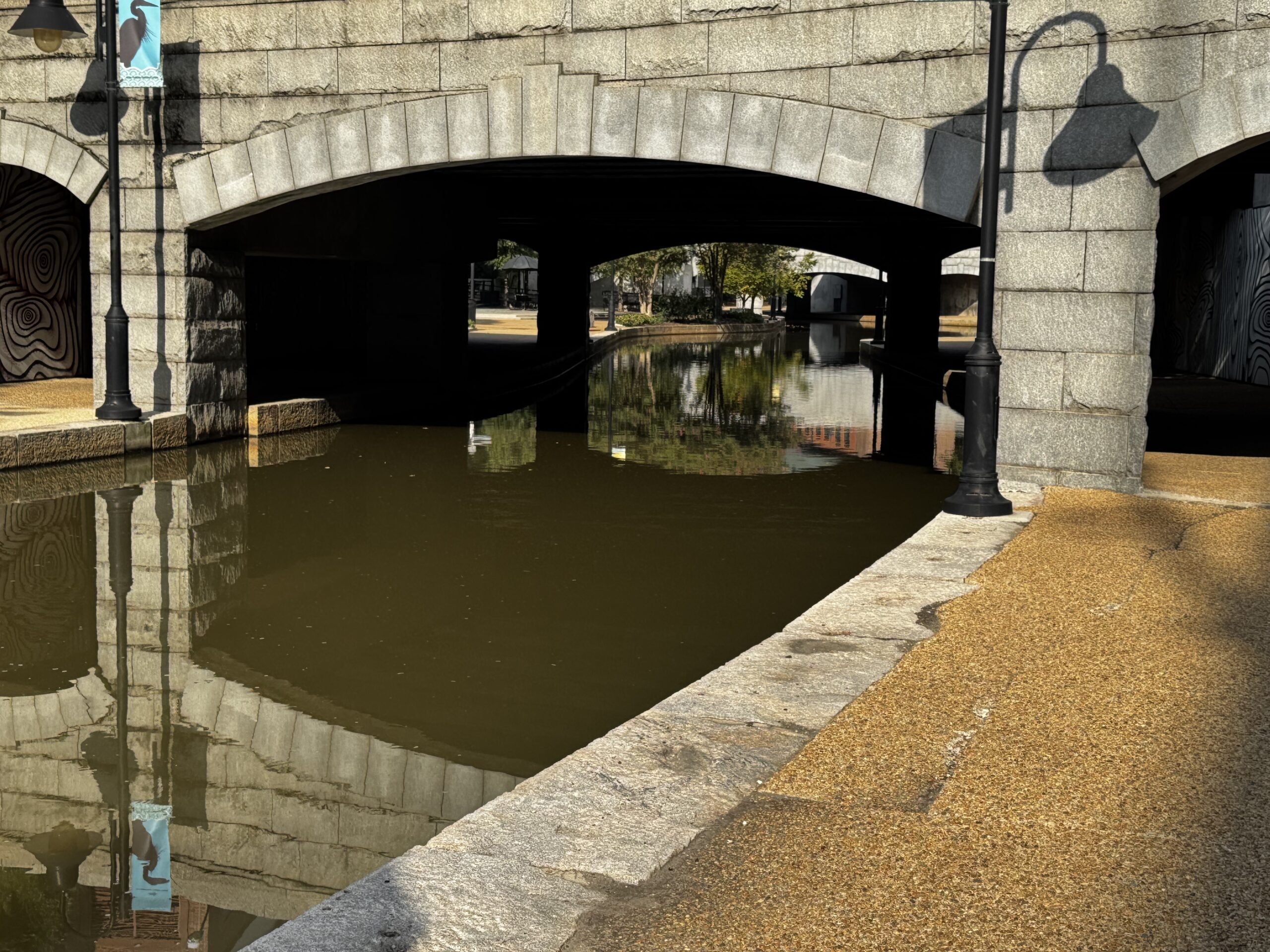
Walking around Richmond in the summer is an experience all its own. But, it is the middle of September! The thermometer might say something manageable, but the humidity makes it feel like 95. The air itself seems to have weight. It clings to me, wrapping around my face and body like a hot, damp blanket
(Left: along the brown, fish-less, duck-less canals)
Within minutes, I sweat in places I didn’t know could sweat. My shirt sticks to my back, my hair becomes increasingly irrelevant, and every breath is ladened with warm, wet air. There is no escaping it. Every step feels like an uphill climb and adds another year to my age. Shade helps only slightly because the humidity follows me there. And how long do I want to stand under a freeway overpass?
What began as a pleasant walk quickly turned into an endurance test. The sun beats down, the pavement radiates heat, and the air refuses to move. One isn’t just walking through the humidity, one wears it. Clothes stick, hair drips. The thought of air-conditioning becomes less of a luxury and more of my basic human right.
Eventually, there is only one sensible solution: find a pub. Fortunately, Richmond has plenty. The goal is no longer sightseeing; it is survival. And once safely inside my neighborhood Irish Pub, there is really only one appropriate reward – a cold Triple Crossing Falcon Smash. That first sip is glorious. Cold, crisp and refreshing, it cuts through the heat like a little piece of salvation. After being marinated in Richmond’s humidity, a Falcon Smash isn’t merely a beer. It becomes my escape plan.
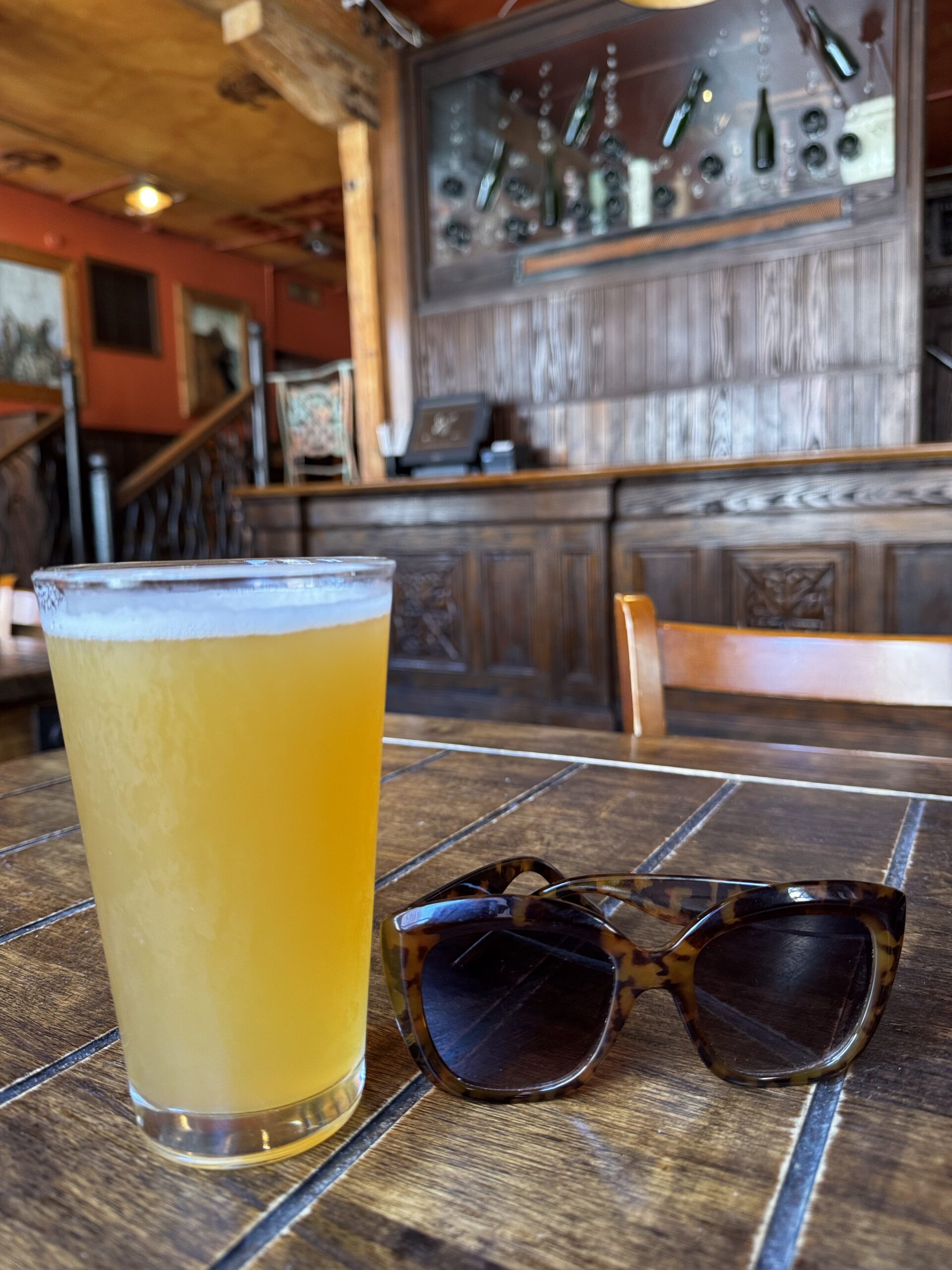
In Richmond, you don’t necessarily beat the heat. You simply walk until you can’t take it anymore, find a pub, and surrender gracefully to a craft draft.
Richmond Reflections
Still, overall, Richmond left me with a positive impression and a much better appreciation for what the city has to offer. The people were friendly, the selection of restaurants was impressive, and I was pleasantly surprised by the variety of ethnic foods. The local craft beer scene also deserves credit—especially when the humidity made a cold beer feel less like a beverage and more like a survival tool.
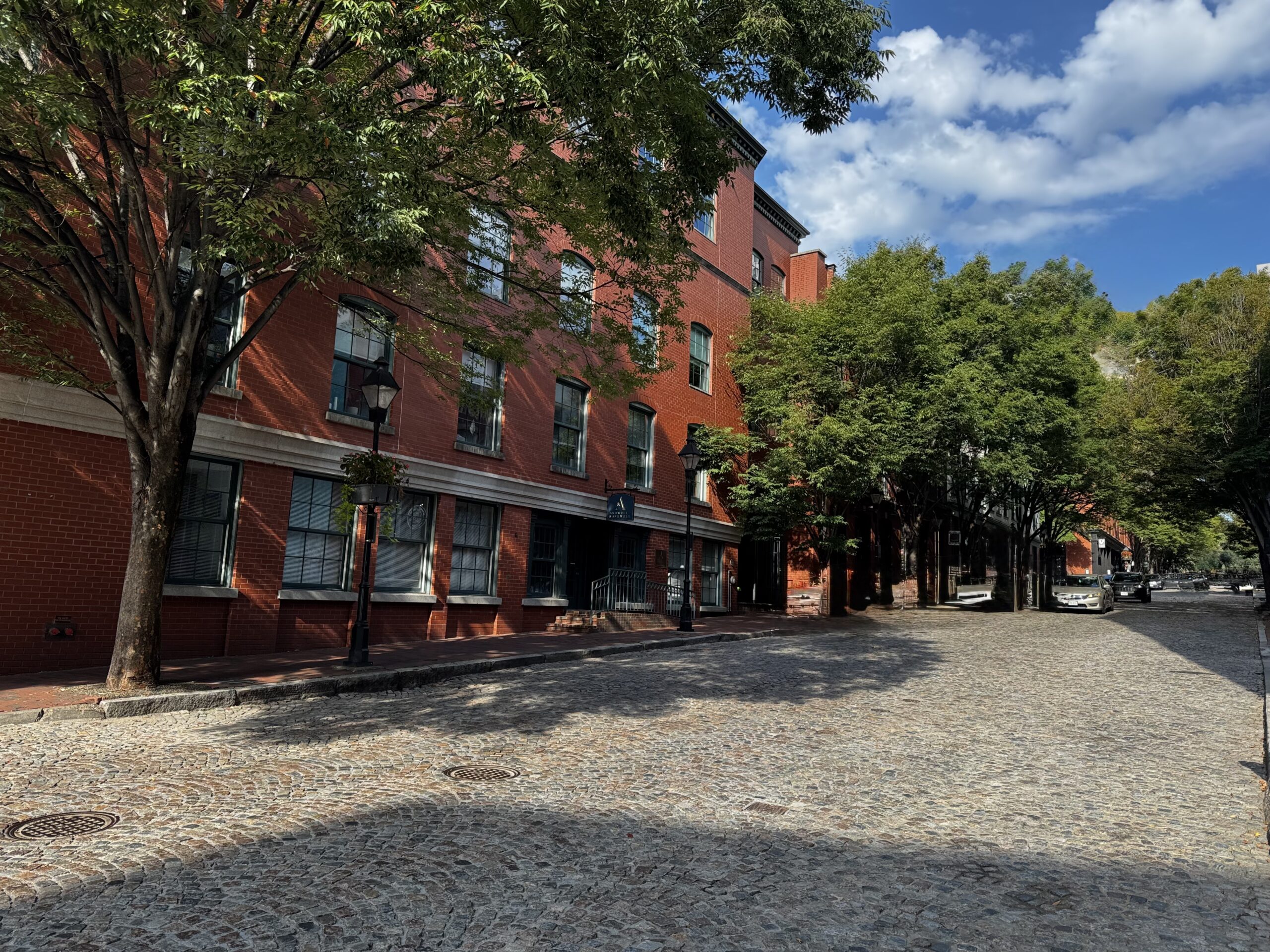
I enjoyed Richmond’s old-town atmosphere, where history seems to be everywhere you turn. There is a nice mix of historic buildings, interesting neighborhoods, good food and just enough city energy without feeling overwhelming. And one thing more cities should have: free bus transportation to the airport. That is a wonderful perk and makes getting around a little easier on the wallet.
Of course, Richmond International Airport deserves a mention. And I use the word International loosely. Don’t get me started on how such a small, rather unassuming airport earned that title. Let’s just say that after experiencing Richmond, I had plenty of time to contemplate whether “international” might be more of an aspiration than a description.
So, despite the humidity, the traffic noise, and a few other quirks, my days in Richmond were a success. I arrived determined to like the city—and, for the most part, I did. Richmond may not have won me over completely, but it certainly gave me plenty to enjoy, plenty to eat and drink, and more than enough stories to take home.
Library of Virginia
Finally, after hours of digging about tomes and treatise, what genealogy results or clues revealed themselves? Not much. While confirming names, dates and relationships, I found nothing new. In fact, there continues to be a real absence of my family’s surname. Some of this could be attributed to pacifism and an avoidance of fighting, some to newly arrived Germans minding their own farms and leading a simple life among themselves.
Mystery surnames keep popping up and DNA connections made, but who is our common ancestor? Connections exist in the east: NE New York, Virginia, West Virginia and Maryland. Names like Poffenberger, Montour, Cross, Stoutenburg, Hilts, Agan, Hartin. We share DNA but what ancestor do we share? And, does one of these families produce the grandmother who marries into my Shinaberry family?
I believe I see a return trip to Maryland in my future.
“1700s Parents: ‘We need to name our son.’
‘What about John?’
‘We already have three Johns.’
‘But what about another John?’
‘Perfect.'”

0 Comments