September 2026
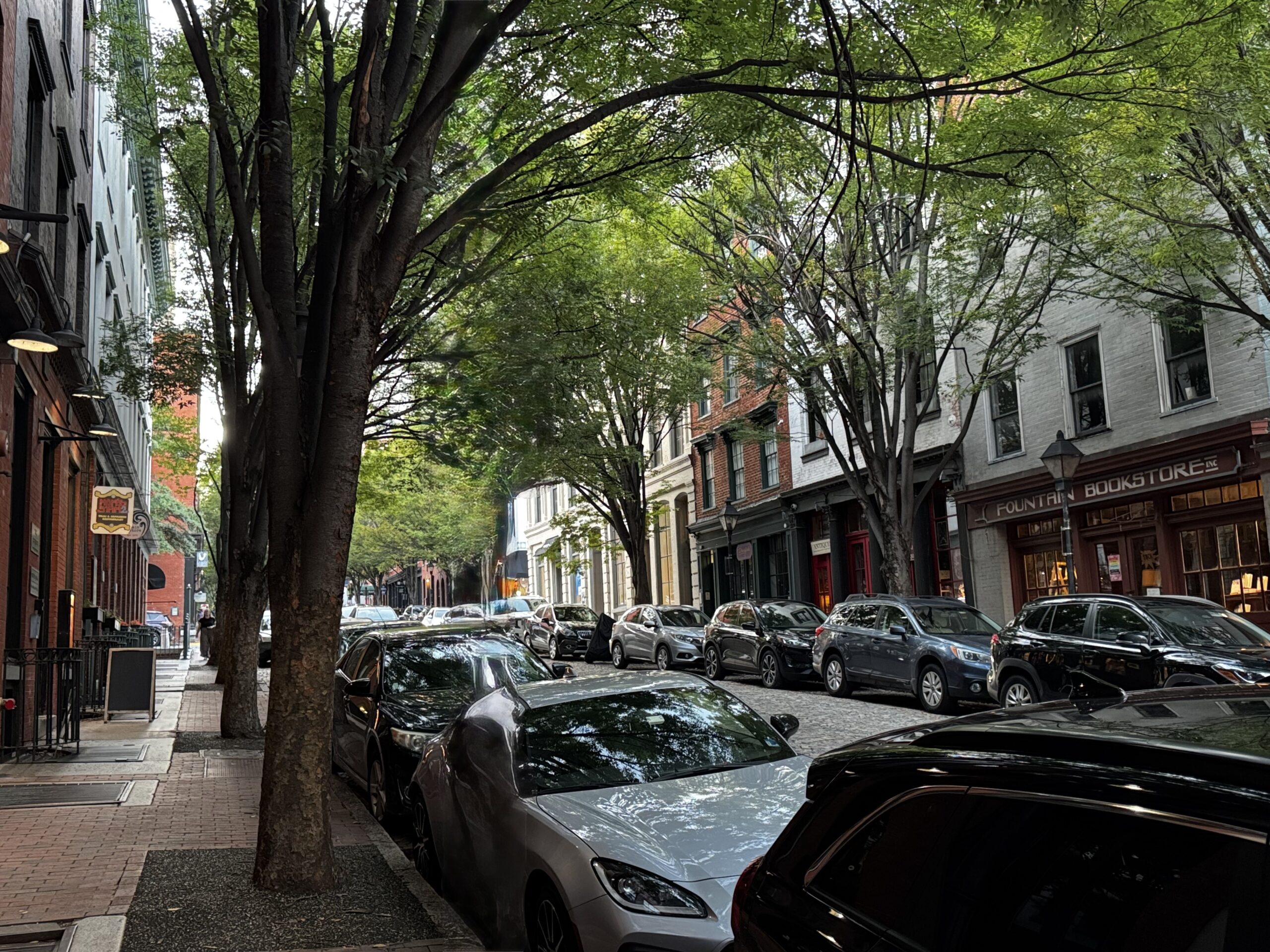
I visit Richmond expecting one large history lesson rather than separate attractions. How closely do power, economics, race, government, religion, memory, and the physical landscape connect.
Historic Richmond with its brick and cobble streets and facades couldn’t look lovelier. However, under the surface and historically, Richmond proves slavery and the Confederacy were not abstract ideas.
Each represented systems built into a real city and its businesses, government, streets, cemeteries, banks, churches, warehouses, railroads, and people’s lives. So, I explore Richmond and keep asking: Who had power here? Who benefited? Who suffered? And what happened to those systems after slavery ended? There are always lessons to learn. My goal becomes not simply to understand Richmond as the Capital of the Confederacy, but as a city where enslavement, resistance, religion, medicine, the Civil War, and confederate history all intersected.
After Washington, D.C., Richmond becomes particularly meaningful because it moves me from the museum interpretation seen in D.C. into the actual heart of the Confederacy.
Richmond Slave Trail
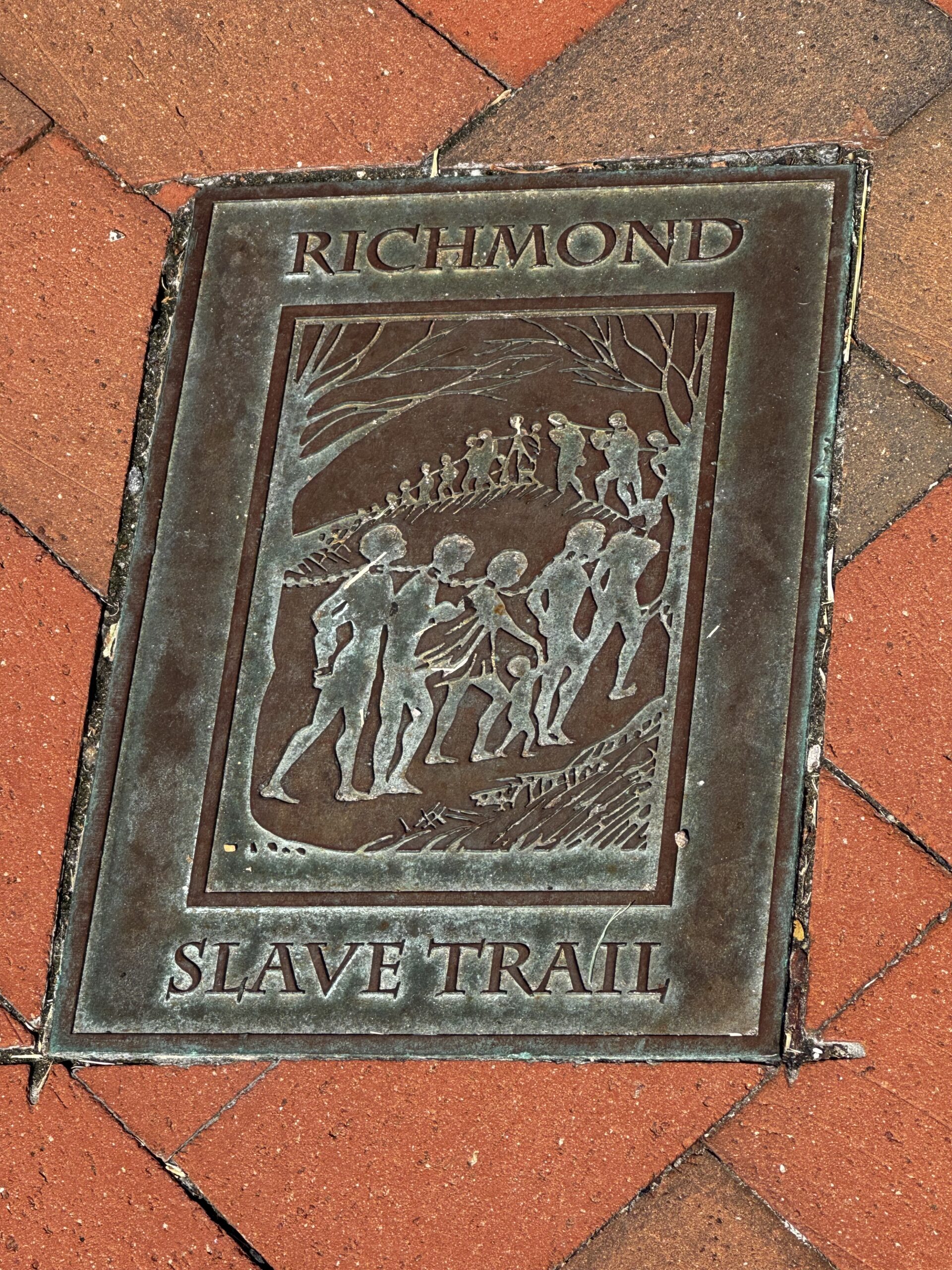
The Richmond Slave Trail, even if one only walks a portion of it, ties several important historic sites together geographically and historically. This interpretive walking route follows the path associated with Richmond’s role in the trafficking of enslaved people from port to jail to sale. It runs from the Manchester Docks on the south side of the James River, across the river, through Shockoe Bottom, and toward Lumpkin’s Jail, the African Burial Ground and First African Baptist Church. The current trail has 17 interpretive markers.
I stand in a landscape that looks completely ordinary today, but people once passed through here under circumstances that were anything but ordinary. I believe my 4Xs great grandfather arrived under laws of servitude direct from London’s Old Bailey around 1764. While my ancestor was an indentured servant rather than an enslaved African, and the systems were very different, both groups experienced exploitation, harsh working conditions, separation from family, and limited freedom within a society that depended heavily on bound labor.
Yet my ancestor’s story dramatically changed: after completing his period of servitude, he went on to experience freedom, opportunity, and eventually wealth. For enslaved Africans and their descendants, that path was deliberately denied. Their enslaved status remained hereditary, their freedom legally denied, and the wealth they created was taken from them.
There are those still waiting for their “40 acres and a mule.”
Shockoe Bottom
The Shockoe Bottom sites are especially important. Richmond became the center of a huge domestic slave-trading network. The city estimates that roughly 300,000–350,000 enslaved humans were sold south from Virginia between about 1830 and 1865, with much of the activity concentrated in Shockoe.
Lumpkin’s Jail
One of the most important sites for understanding Richmond’s domestic slave trade, this represented Richmond’s business district. Enslaved people were held at Lumpkin’s while being bought and sold. Richmond’s economy included people who directly and indirectly profited from this trade. The surrounding, modern city of Richmond once represented a major commercial center for human trafficking.
Lumpkin’s Jail remains as an archaeological site rather than a preserved building. The original foundations were excavated and then intentionally reburied for protection while the jail itself rests largely underground. Archaeologists found the foundations and other remains, then the site was deliberately reburied to protect them. After the Civil War, Mary Lumpkin, Robert Lumpkin’s formerly enslaved wife, helped to transform the property into an educational institution for newly freed Black people. That institution, the Colver Institute, became an early predecessor of Virginia Union University.
Slavery survived because it was profitable and because an entire economic network supported it. It vanished because others saw injustice, voiced moral objections and stated: “This is wrong!” Today, we should ask “What institutions, economic incentives, laws, or ordinary transactions allow any injustice like this to continue?”
Shockoe Bottom African Burial Ground
Richmond’s early African burial grounds interred both free and enslaved Black people (right). But, where are the graves? Much of the landscape has been subsequently altered by development, roads and infrastructure. Why do some people’s historical landscapes remain beautifully preserved while other people’s burial places disappear beneath roads, parking lots and development?
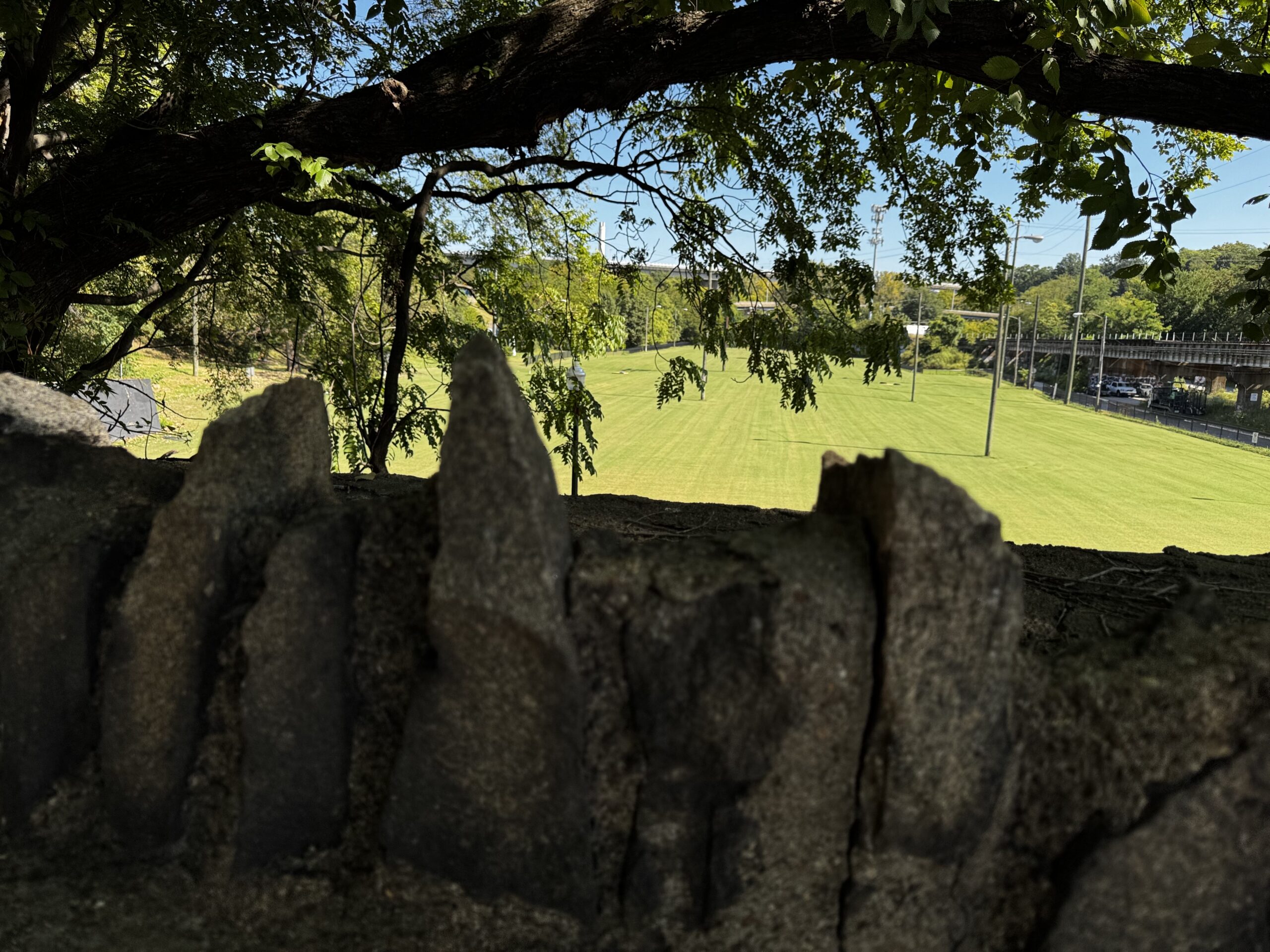
Shockoe represented the hallowed ground of a municipal burial cemetery since 1799. Little is preserved. Few monuments and markers remain as most of Shockoe became intentionally covered over. The winner eventually writes and rewrites history.
However, African Burial Ground and Lumpkin’s Jail remain powerful symbols precisely because the landscape has been altered, buried, paved over, or otherwise obscured. Thankfully, the Shockoe Project attempts to reclaim and interpret these places and history.
Egyptian Building
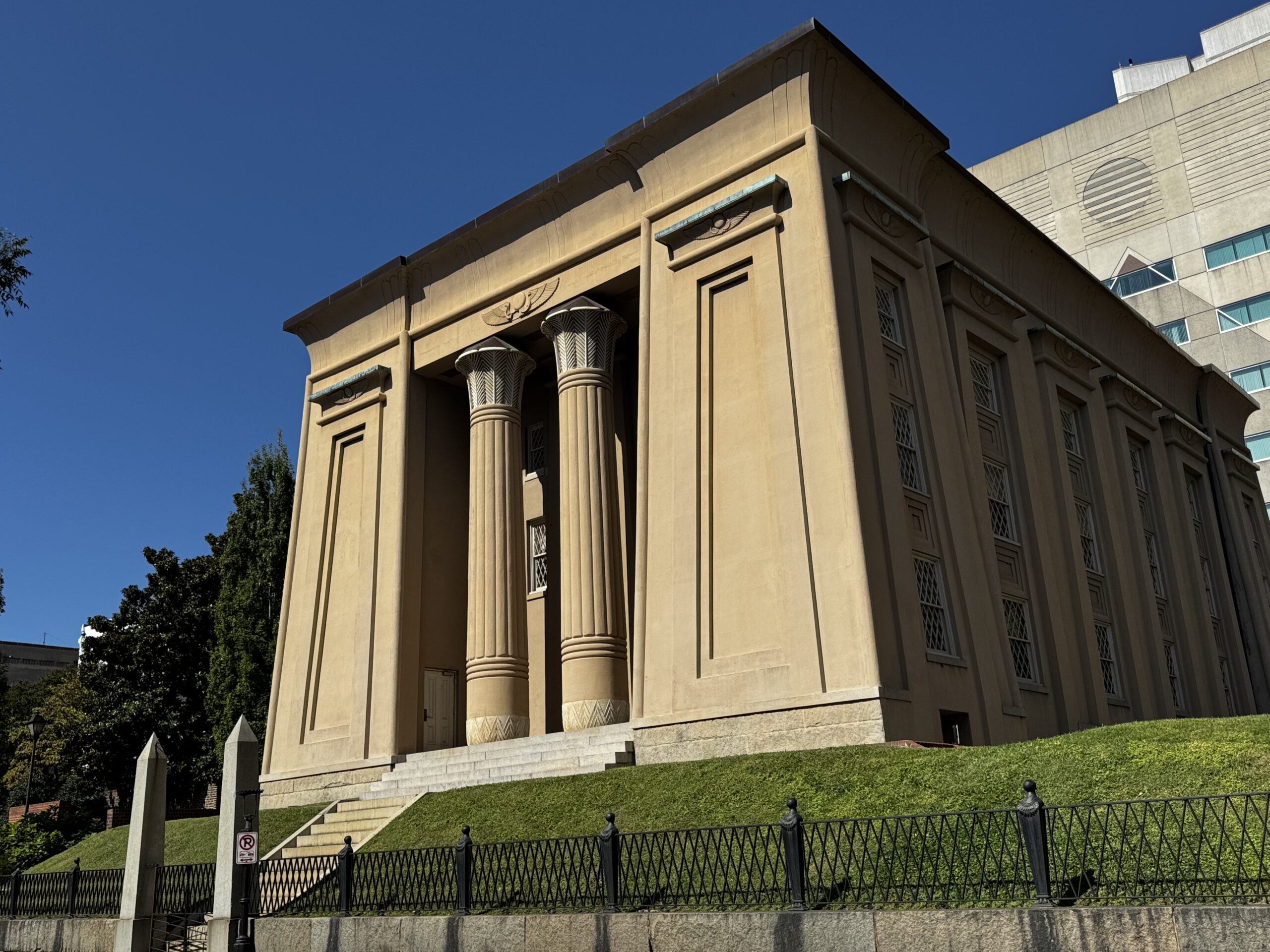
The Egyptian Building stands out because it looks completely different from the surrounding historic buildings. It is an example of Egyptian Revival architecture, designed by architect Thomas Stewart and completed in 1845 as the Medical College of Hampden-Sydney.
With massive, fortress-like walls, the building has a heavy, almost ancient appearance rather than the lighter appearance of Greek Revival buildings. Egyptian-style columns have unusual capitals inspired by Egyptian plant forms rather than the familiar Greek Doric, Ionic or Corinthian designs. Sphinxes sit at the entrance.
I came past this building for its remarkable architecture. But, part of its history reflects upon 19th-century medical education. Its original function as a medical school included anatomy/dissection. But, I remind myself who had access to education, medicine and professional authority in the 19th century—and who didn’t. Who had the opportunity to become a doctor, and whose bodies were available for doctors to study?
Poe Museum
As a young reader, I favored Edgar Allen Poe. Often recognized as a Father of the Short Story, Poe did more than give us chills with his dark story plots. His writings helped pioneer detective fiction, science fiction and other literary forms.
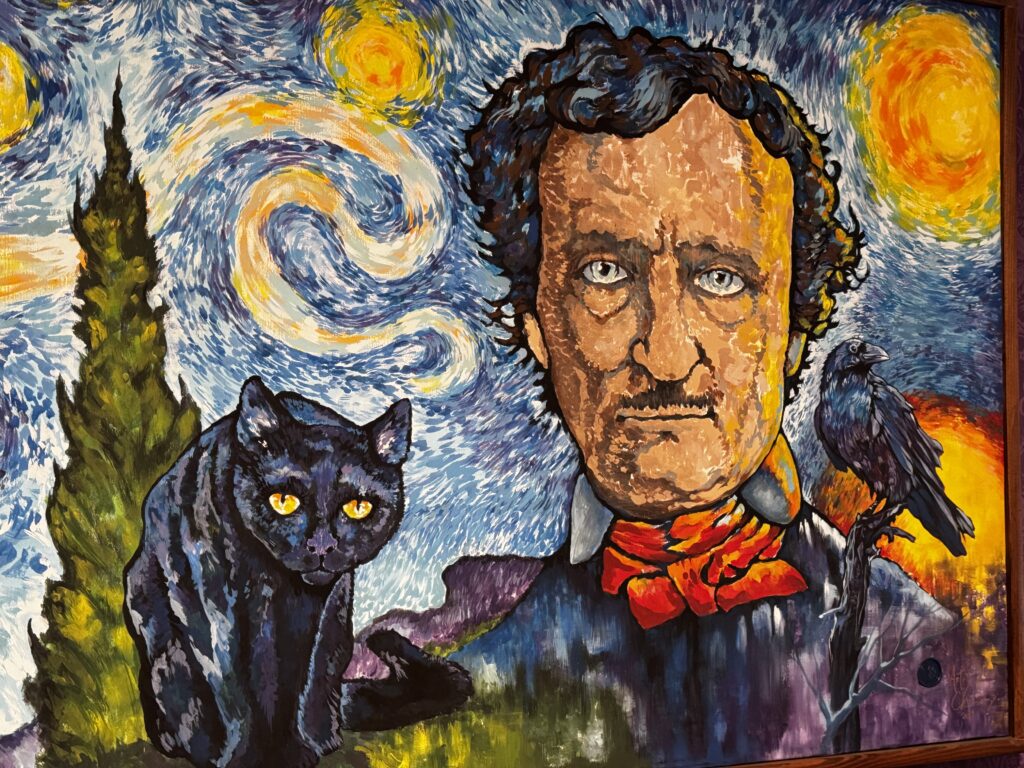
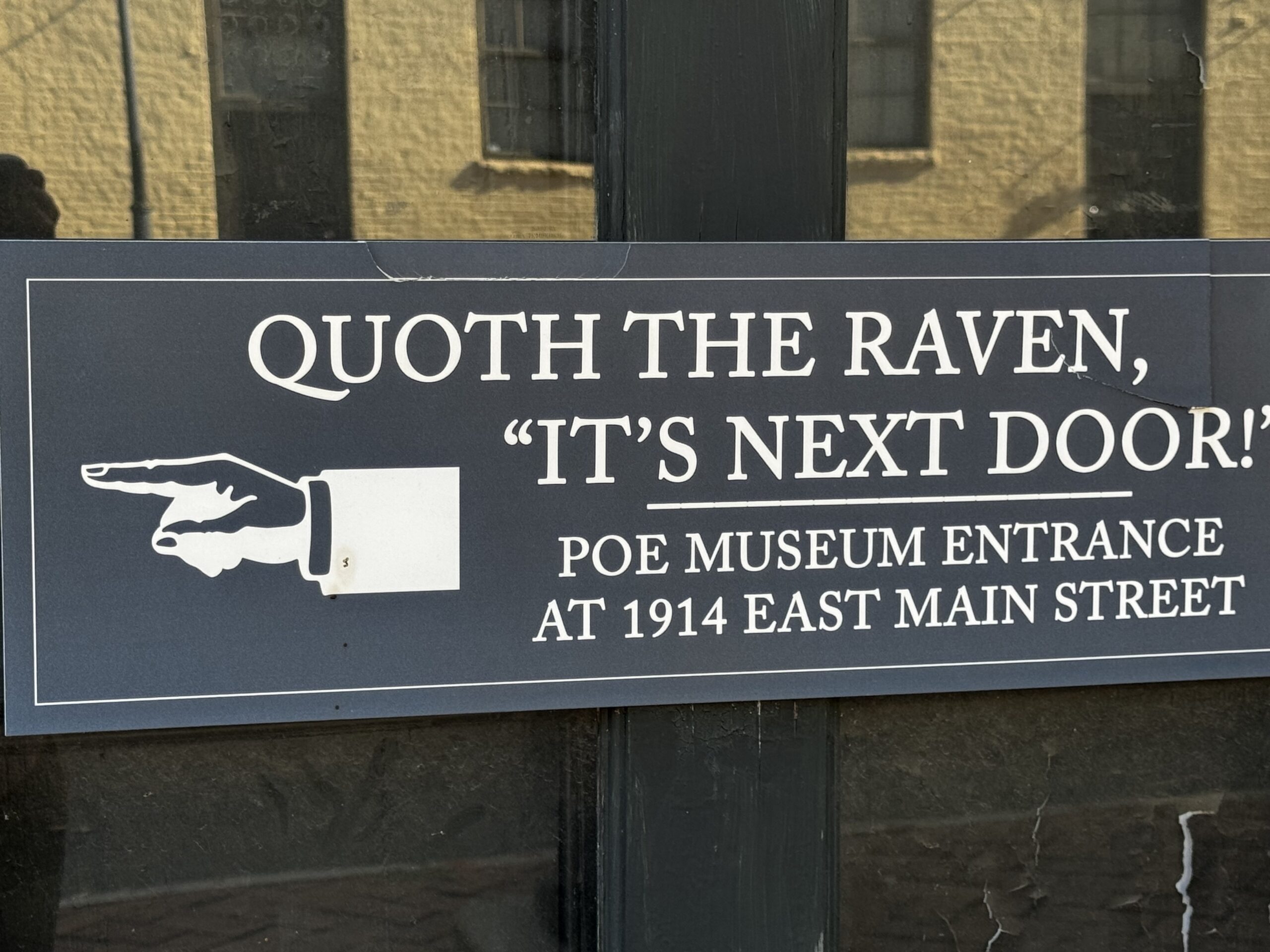
Poe lived in Richmond for 13 years. Here he experienced childhood, developed his writing, worked as a newspaper editor, found love and developed his literary identity. This Old Stone House represents Richmond’s oldest surviving residence. Interestingly, Poe never lived here.
Instead, the museum uses it to tell the story of Poe’s childhood and his connections to Richmond. It houses the world’s largest public collection of Poe artifacts, including manuscripts, letters, photographs and personal possessions. Particularly memorable are his childhood bed, waistcoat, pocket watch and a fragment of his coffin.
The city created the garden as a Poe memorial inspired by his poem “To One in Paradise.” Some of its physical elements reflect direct connections to Poe’s life, including stone benches from a boardinghouse associated with Poe and ivy taken from his mother’s grave. The wandering cats live free. And I definitely want to check out Der Rabe with Jack Nicholson!
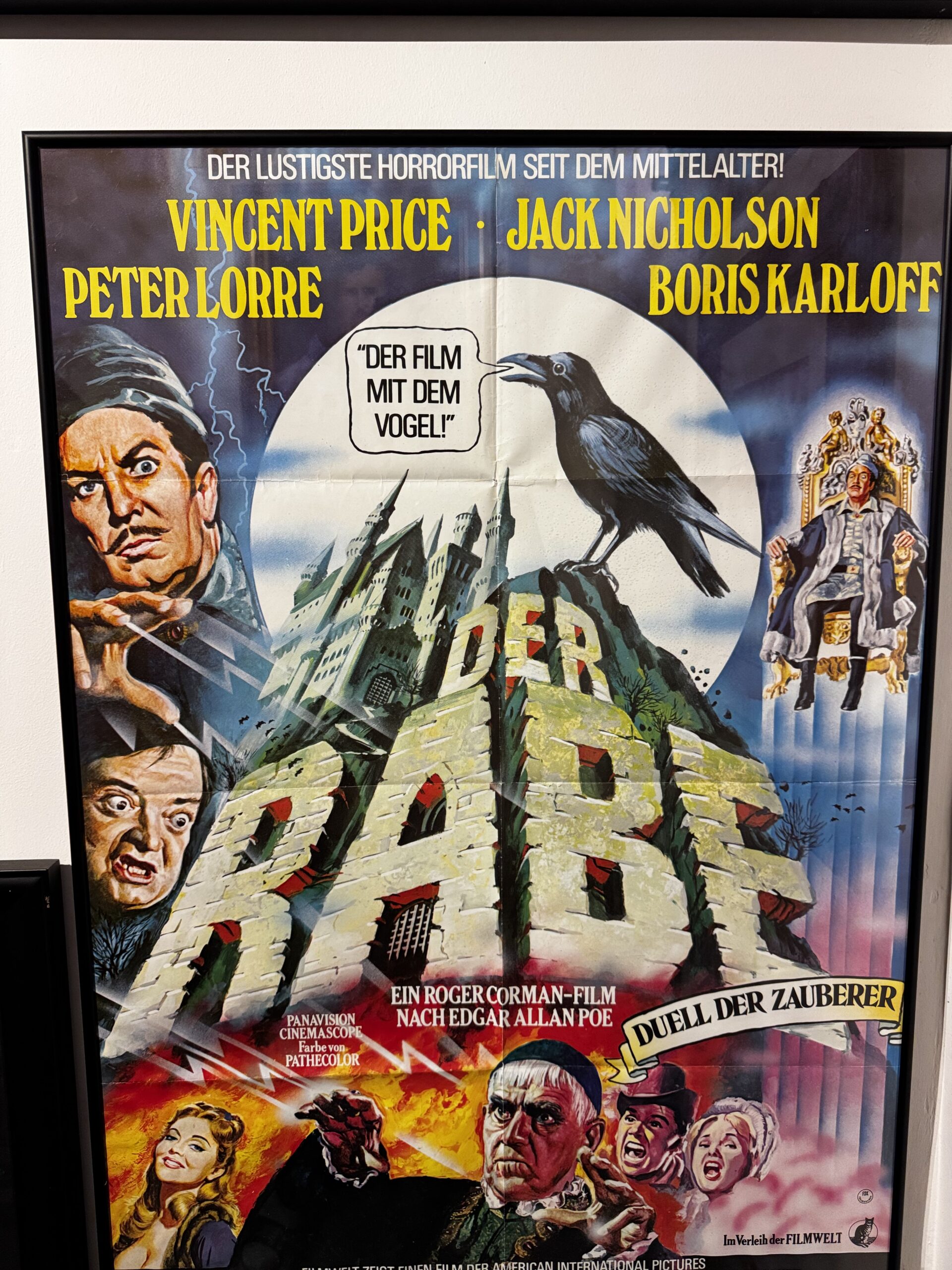
While Poe died in 1849 in Baltimore, his personal connection to Richmond remained. Poe’s writings remind us that individual experiences—fear, grief, love, ambition, loneliness and loss—are part of history, too. Perhaps his Raven could truly see the future and continues to predict “Nevermore.”
Early Quakers in Richmond
Not all people in Confederate Richmond thought alike. There were religious, moral and political challenges to slavery long before emancipation. The early Quakers, Puritans, Mennonites, Amish, Germans and French Huguenots came seeking religious freedom and opposed slavery. My early German relatives were among them.
America always hosted people resisting, questioning and challenging the dominant system. One should know they don’t have to wait until the majority agrees with you before recognizing something as wrong. Some of my ancestors continued to flee West or into Canada to escape persecution; others journeyed deeper south to embrace this dark history. But, no living person is required to repeat the wrongs of history.
Virginia Holocaust Museum
This well-organized museum chronicles the Holocaust through the experiences of survivors, including survivors who eventually made Virginia their home. Its permanent exhibits follow the progression from the rise of Nazism through persecution, Wannsee Protocol, the Holocaust, liberation, Nuremberg Trials, and creation of a Jewish homeland. Its exhibits creates a powerful 20th-century perspective on persecution, genocide and memory.
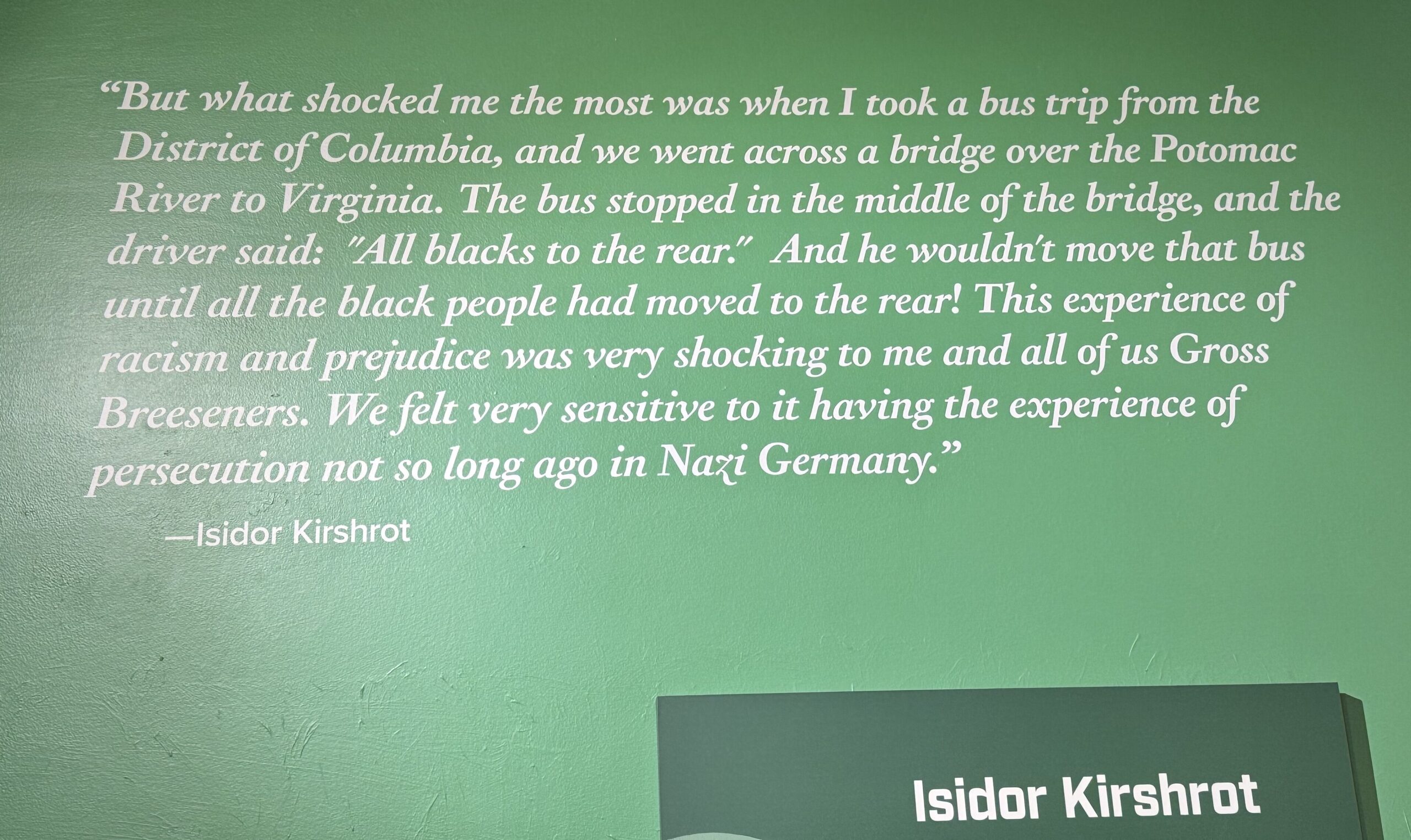
I thought I had had my limit of Holocaust museums while recently traveling through Berlin and the Balkan countries. However, it is always a good thing to witness testimony and the connection between individual stories and larger historical forces. The universal signs of genocide: dehumanizing others, scapegoating, divisive “them” and “us”, propaganda, stripping of peoples’ rights, institutions participating and supporting injustice.
The history lesson? Extremes of oppression rarely appear overnight. They develop through a progression of smaller decisions and increasing acceptance. Silence and indifference. Encountering prejudice, discrimination or dehumanizing language, the question becomes: “What happens when a society becomes comfortable with treating a group of people as less deserving of rights or dignity?”
White House of the Confederacy
This building represents far more than Jefferson Davis’s house. What was Davis and the Confederate government trying to preserve here? People of today can construct elaborate political arguments to defend an existing economic and social order. Can deflect with arguments about state’s rights. My thoughts still return to questions of how someone can support what seems morally wrong. Be it people in Germany in the 1940s, in countless countries around the world, or in our own backyard.
Virginia State Capitol
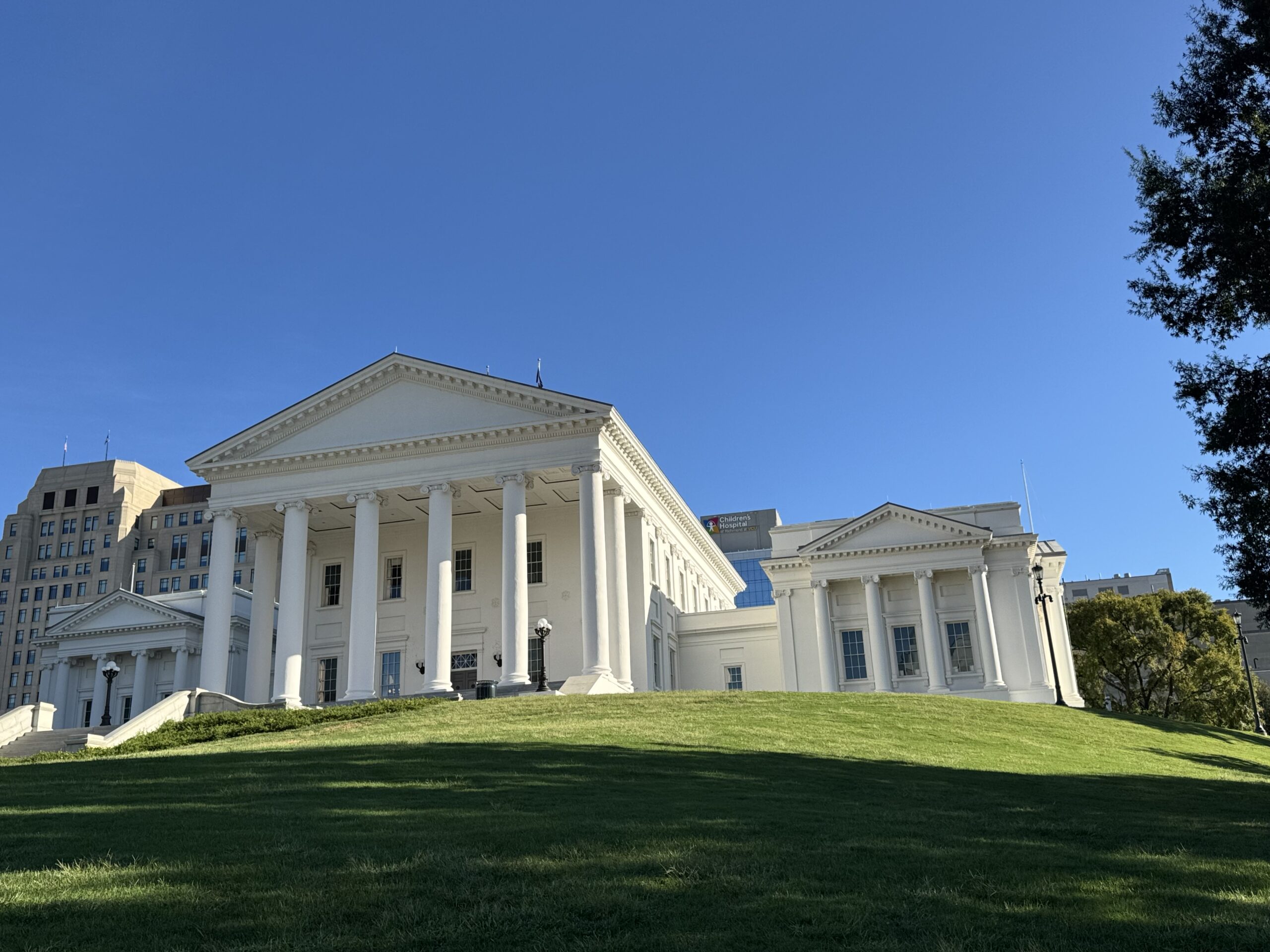
Thomas Jefferson designed the Capitol as a symbol of republican government and democracy. Yet from 1861–1865, the building also housed the Confederate Congress. Here, Virginia’s legislature and Confederate Congress met during the Civil War. The building and surrounding gardens are beautiful. However, during the Civil War, it became the meeting place of a government which represented only white, landed interests who fought to preserve slavery and secede from the United States in order to maintain it.
The words “liberty,” “equality” and “democracy” have been proclaimed throughout American history. Meanwhile, millions of people remain excluded from these promises.
And while standing on the Capitol grounds, I recall my family’s genealogy. On a paternal side of the family, a 4Xs great grandfather arrived possibly into this very port, given 7 years servitude complements of England’s King George. It beat the hanging that others received. However, within this man’s Will dated 1817, he gave the woman Amony to his wife. It does not require a lawyer to understand one cannot give people as property unless they are owned. Ancestors represent a part of one’s history which descendants need to explore and admit to: many of our ancestors owned slaves. It might make Americans, in general, a bit humbler about their own origins and histories.
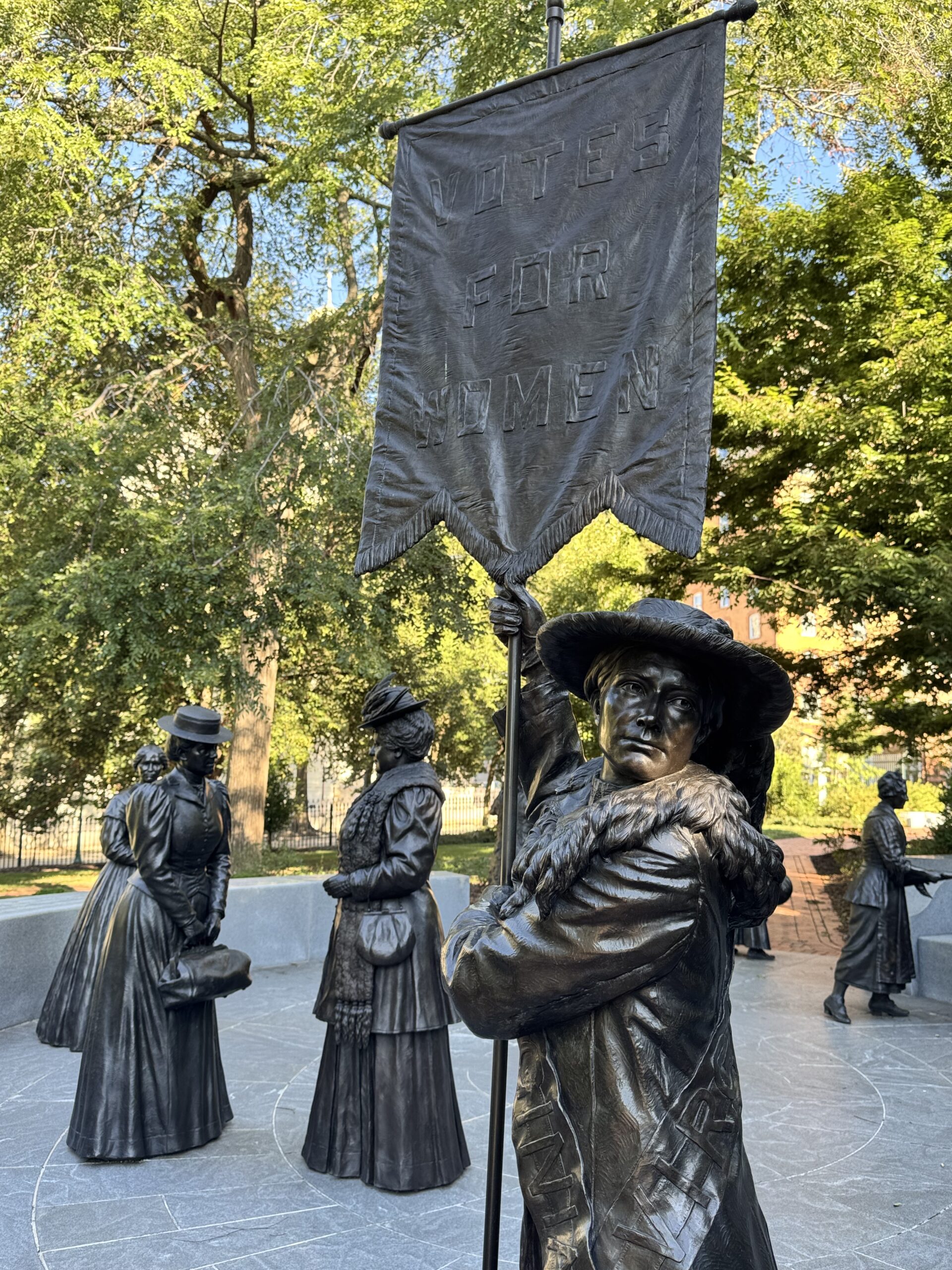
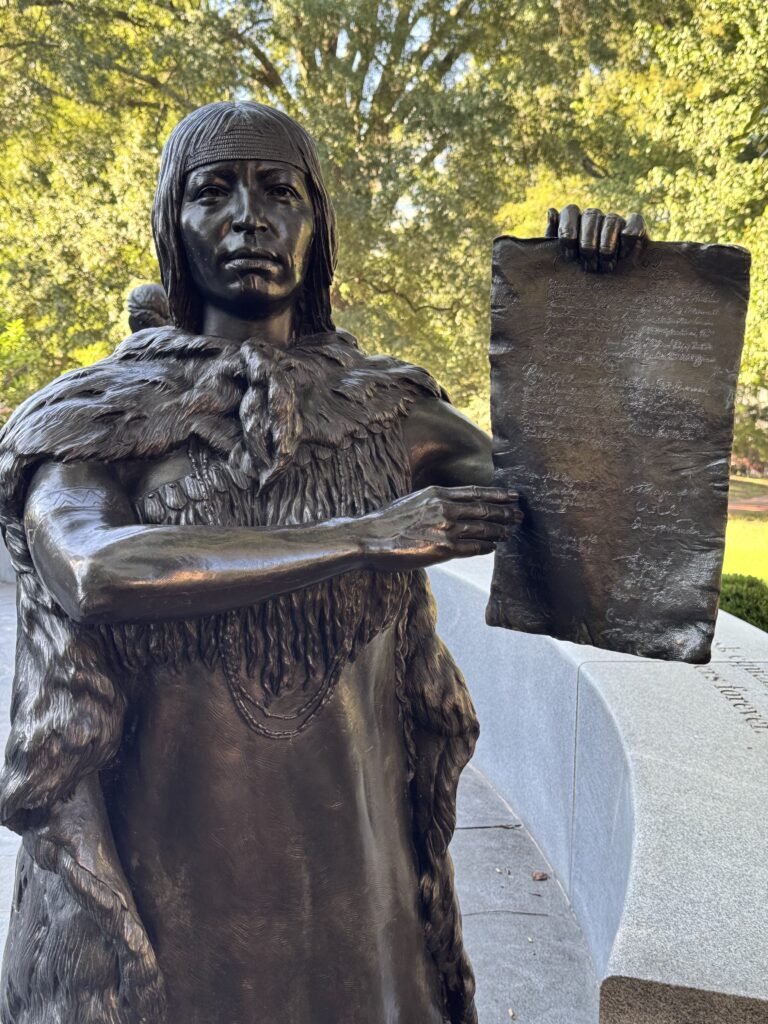
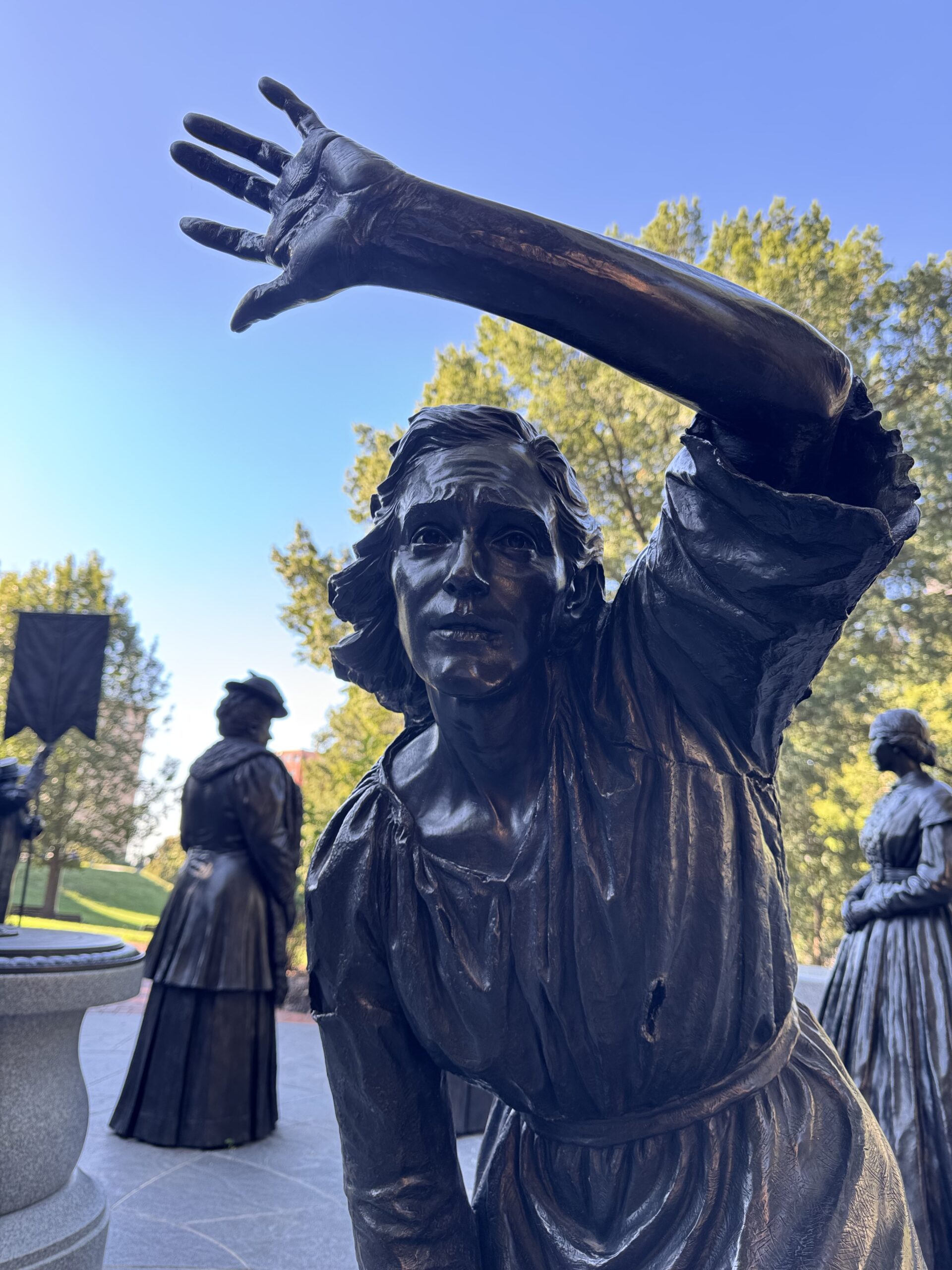
Removed are the Civil War statues. In their place is a wonderful bronze collection of statues representing Virginia Women’s Monument : Voices From The Garden.
My Day in Richmond
Who gets to be free, who gets to have power, and who gets remembered?
Today’s exploration brings up important questions:
Quakers: Who challenges the system?
Lumpkin’s Jail: Who is treated as property?
African Burial Ground: Whose lives are remembered?
Egyptian Building: Who has access to education and professional power?
White House of the Confederacy: Who controls government?
State Capitol: Who defines democracy?
Holocaust Museum: What happens when government and society strip a group of its humanity?
Poe Museum: What does the darkest side of ordinary human life look like?
America’s present is not separate from its past. As a person who studies history, I know this. As a citizen, I am saddened humans continue to fight a Civil War in this country over these same issues.

0 Comments