2 Nov 2026
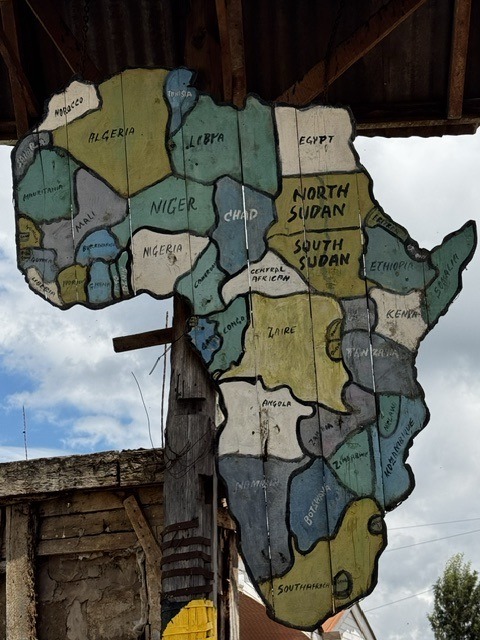
Today, it’s the drive. We depart the Mara Triangle for the Serengeti. Though it seems all the same to the untrained eye, the southern edge of the Mara Triangle directly shares an international border with the northern Serengeti, but is not considered part of the Serengeti.
They share one ecosystem and one migration herd. However, while millions of wildebeest and zebras freely cross the international boundary between Kenya and Tanzania – I cannot.
Roads of Tanzania
A bit of explanation about drives. ElderTreks states “We travel in safari-style 7-seater land cruisers where everyone has a window seat for good wildlife viewing….some roads are in poor condition – they can be rough and bumpy.”
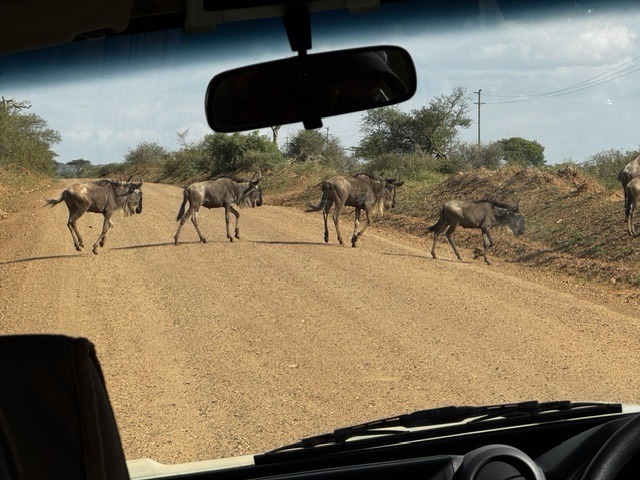
Today, I ride in that Land Cruiser. Yes, I sit at a window seat – but there is no road. Our route is a dirt track with occasional stretches of gravel. One short stretch of tarmac had more pot holes than asphalt. We bounce and swerve, dip and rise on these roads for about 160 miles. It requires stamina, a firm grip, and almost 8 hours! One hopes for the occasional spotting of a local habitant, be it village or animal.
Leaving the Mara
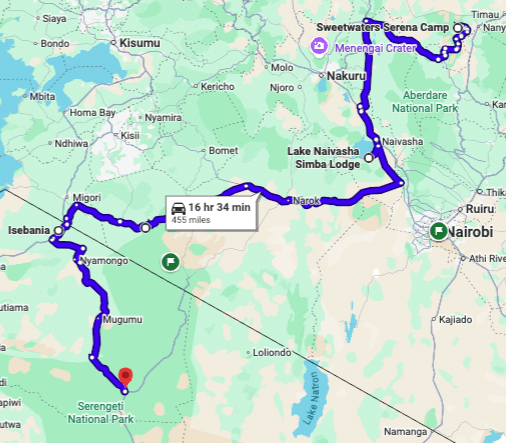
Our route takes us out of the Maasai Mara and across western Kenya toward the Isebania Border Crossing. At first, the drive travels through the familiar landscape around the Mara, but gradually the scenery changes as we leave the safari area behind.
Our first introduction to the border is the surrounding community of Isebania. As we approach the border, the quiet landscape gives way to a surprisingly busy and bustling community.
Businesses and roadside stalls line the streets overflowing with colorful displays of fruits, vegetables, clothing and everyday household goods. Motorcycles and bicycles weave through the traffic, while people walk along the roadside carrying packages or balancing loads on their heads. Small shops, food stands and other businesses cater to the steady stream of local residents, traders, truckers and travelers passing through.
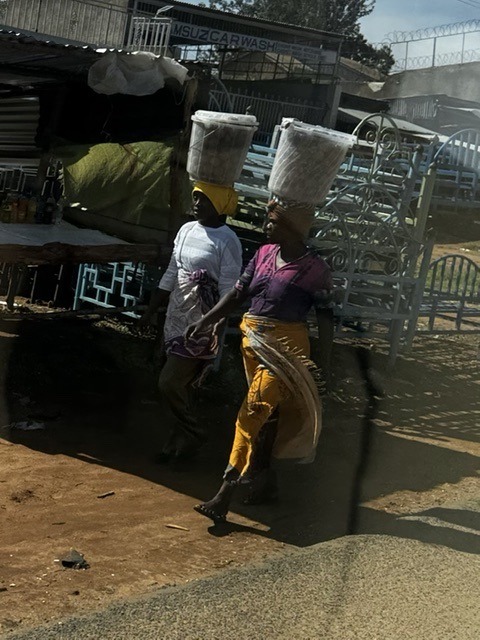
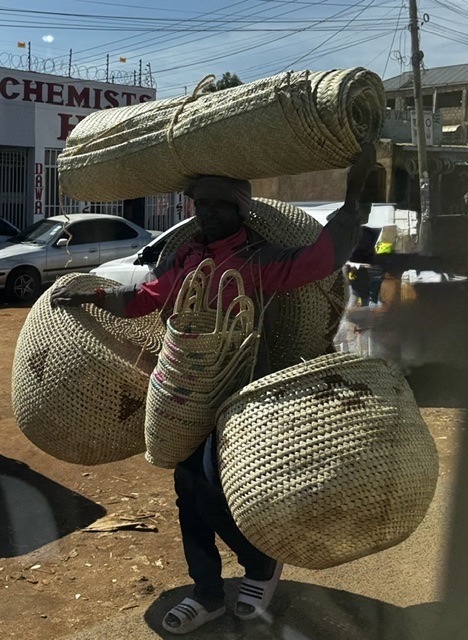
The people are part of a community that has long had close connections across the boundary. The Kuria people live on both sides of the Kenya–Tanzania border. Their cross-border trading and family connections are part of life in this region. For many of the people around Isebania, crossing the border is not an extraordinary event as it is for a tourist. It becomes part of the rhythm of earning a living, transporting goods, visiting relatives and getting from one community to another.
There exists a sense of constant movement here. Or, maybe organized chaos. For the people who live in this area, the Kenya–Tanzania border is part of everyday life. Goods move in both directions, people come and go for business and family reasons, and the motorcycles and bicycles provide an important means of transportation. What looks to us like a chaotic collection of stalls and traffic is actually a working commercial community, built around the activity generated by the border.
Isebania: Where Two Countries Meet
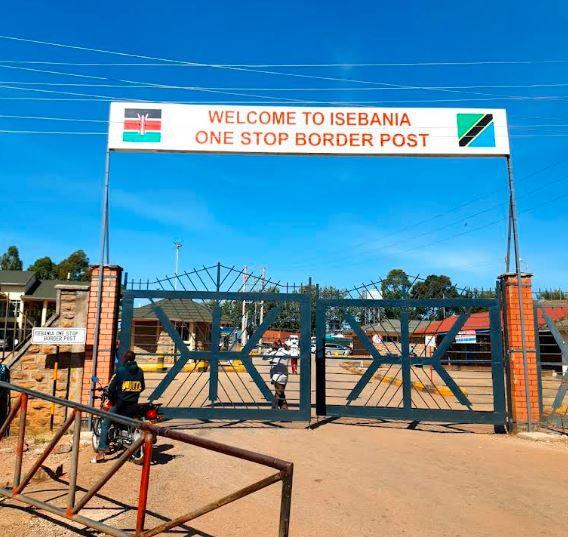
Isebania is a very busy border crossing, used not only by safari vehicles but also by trucks, buses, and local travelers. We leave our Kenyan van and take our passports, visas and proof of health insurance. We scan a bar code, fill out a confusing form, then go thru security as we enter immigration.
Because Isebania and Sirari operate as a one-stop border post; Kenyan and Tanzanian immigration authorities are located within the same complex. There, the typical paperwork, passport checks, luggage inspection and waiting happens. It is not intimidating, but also not a quick drive-through. No one person does all – one individual for each step of the process – entry form, security, health, visa, passport. I walk through immigration and enter Tanzania on foot.
There are 54 countries in Africa. I enter my 19th – and my 110th country traveled.
In Tanzania, we change vehicles and drivers. Kenyan safari vehicles generally do not continue into Tanzania. Again, we are on our way. Within a relatively short time, the busy streets, shops and stalls of Isebania are left behind and the landscape begins to change. Paved tarmac quickly reverts to the gravel and dirt we know and love in a direct challenge to our cruiser’s suspension.
The Road to the Serengeti
As we approach the Serengeti, zebras, wildebeest and even elephants begin the appear just outside the villages. Our driver explains the poaching which occurs as locals and wildlife struggle to eat and coexist.
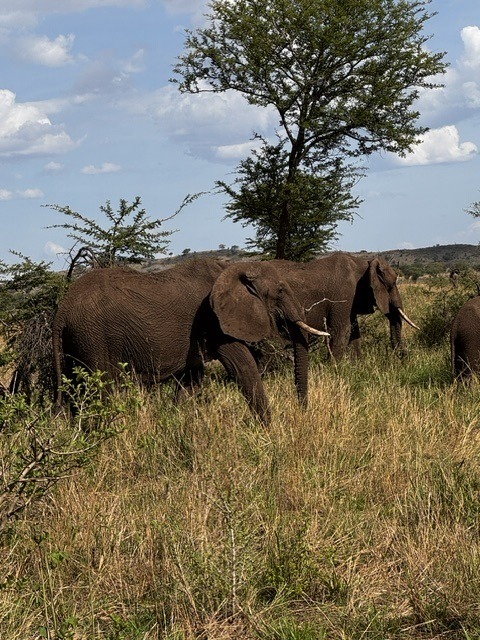
We enter the Serengeti through the Ikoma Gate. Dust, bumps, corrugations and stretches of even rougher road greet us. This does not represent the kind of trip where we cover miles quickly. But, the landscape and changing scenery soften the bouncing experience. As do the animals.
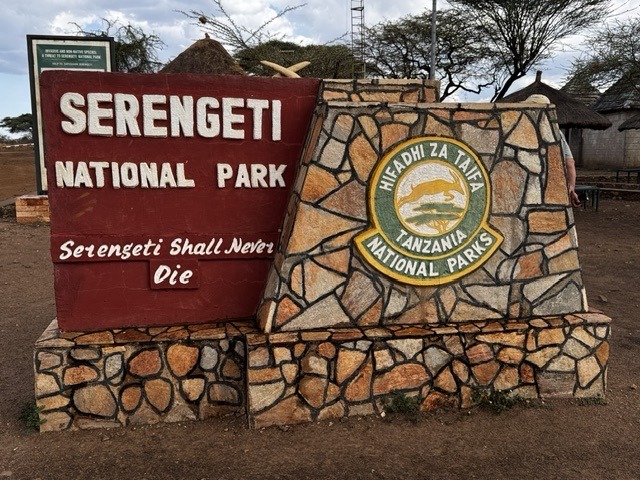
We head toward the central Serengeti and the Seronera area, where Land of Nature Camp sits. This feels like our first Tanzanian game drive. The landscape gradually transforms into the vast plains of the Serengeti. We start seeing wildlife along the way, and the driver slows down or stops when there is something interesting to see. Interesting to us – not particularly to him. We find ourselves back in safari country!
Five Hours According to Google, Eight Hours According to Reality
Don’t believe what Google Maps tells you.
Before leaving home, I plotted our routes using Google Maps. I could even call on my Golden Man to check out road conditions. I knew dirt roads were in my future. What Google failed to tell me, and what I discovered, was just how erroneous its travel-time estimates could be. Google calculates distances based on speed limits, assuming that roads are reasonably drivable and that vehicles can actually travel at something approaching those speeds. Apparently, nobody had informed Google about Tanzania.
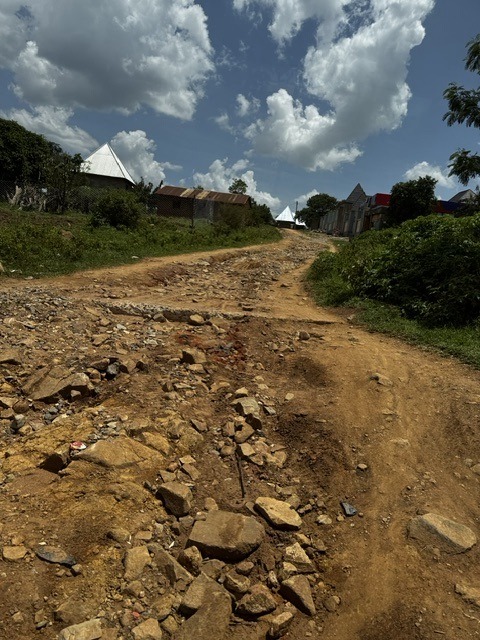
A journey Google says will take five hours? Better plan on eight. And that assumes nothing falls off the vehicle along the way. Tanzania takes potholes and poor roads to an entirely different level. We’re not talking about the occasional dip in the pavement. We’re talking craters that could swallow a small car, canyons stretching across the road, rocks to dodge, and an endless series of bumps that test both your suspension and your dental work.
If Maasai Mara is beyond description, then Tanzanian roads are even more so.
Here, speed limits are more of a theoretical suggestion than a practical consideration. There exists a speed limit but the only ones to achieve them are elephants and four-legged associates. So, when in Tanzania, recognize that the word roads is a misnomer. There are no roads. One 7-year-old schoolboy ran faster than us.
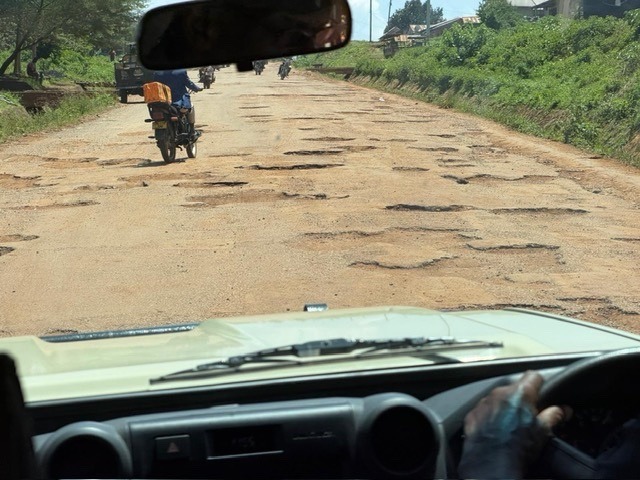
You spend more time watching the road than enjoying the scenery, while silently wondering how many bolts are loosening underneath you. By the time you arrive, you haven’t simply traveled the distance; you’ve survived it. Google may know where you’re going, but it clearly has never ridden in a safari vehicle in Tanzania.
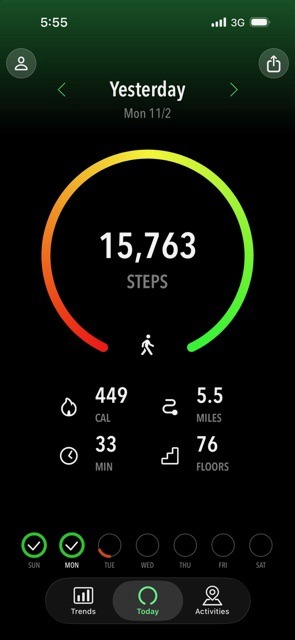
I easily earn my steps today without leaving my custom-built Land Cruiser.
We might have been more easily served by one of the available short Mara to Serengeti flights – but it wouldn’t nearly be as interesting.
Reward at the End of the Road – Beer, Bush and Bliss
Reaching our lodging, Land of Nature Camp, feels like a blessed reward after the journey from the Mara and the border crossing. After hours in the van, on roads that have become increasingly rough and dusty, arriving at a small camp in the middle of the Serengeti represents a dramatic change of pace. The camp sits in the Central Serengeti, close to the Seronera Valley, and built deliberately small and intimate.
Land of Nature is an unfenced camp, so there isn’t a wall separating me from the surrounding bush. The communal area has open-air dining, lounge and campfire. The tents sit on wooden platforms with private verandas looking out toward the plains. The setting is very much the star of the accommodation.
The safari tents are very spacious walk-in canvas structures with a real bed, an ensuite bathroom, flush toilet and a hot safari shower. There is solar-powered lighting, a charging point, mosquito netting more for tsetse flies, and a private veranda. But – no wifi. My cellular works. But as they say, “Who you gonna call?”
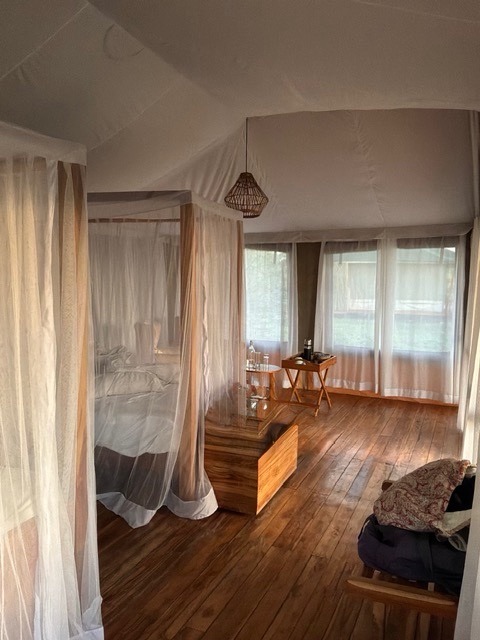
(Hint: I stayed in tent Hyena and the lodge wifi reached me. Also, there sits a watering hole directly behind the deck where elephants and zebra came for refreshments.)
The best part may be having a cool drink while sitting outside and realizing how completely different my surroundings are. No hotel lobby, no traffic, no city noise. Just the open Serengeti, the evening light, birds calling in the distance and wildlife moving within feet of the tent.
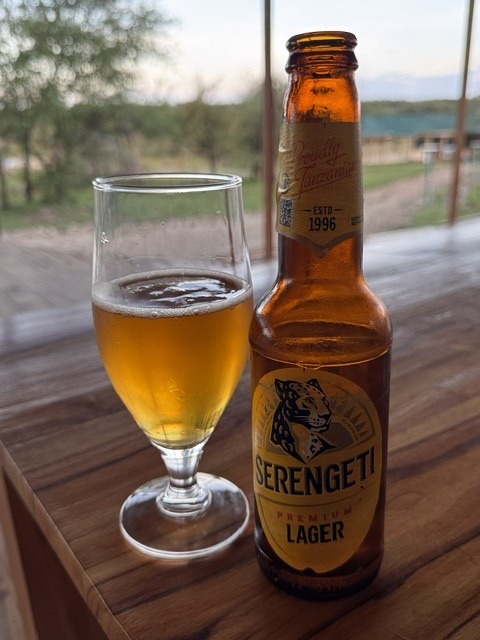
I order a Serengeti Premium lager, nicknamed Chui (leopard) and kick back. Sitting down to dinner with a cold Tanzanian beer, watching the last light disappear over the plains, creates one of those moments when the day’s discomfort suddenly seems completely worthwhile.
And after dinner, the Serengeti does not become quiet. Sounds of the nocturnal bush intrude upon the silence – lion, jackals, hyenas, frogs and other nighttime grunts I can’t identify. When it becomes dark, staff escort me to my tent – because the camp is unfenced! Animals lurk out there!
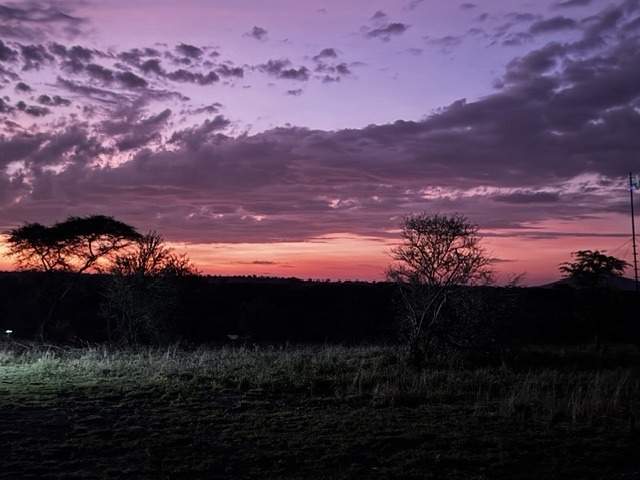
I rest behind my flappy, thin canvas walls. The sounds of the Serengeti echo outside. Where they need to remain!

0 Comments