3-4 Nov 2026
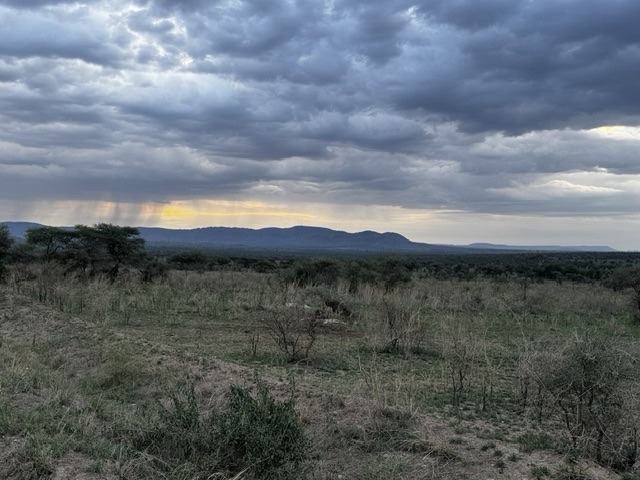
The Serengeti proves a very different safari experience from the Mara. The Serengeti is enormous, about the size of the state of Connecticut, and its defining feature becomes space. The plains seem to stretch forever, broken occasionally by rocky kopjes, acacia trees, patches of woodland and low hills.
There is a feeling that the landscape goes on beyond what you can see. The park represents part of an ecosystem of roughly 13,514 square miles, with the national park itself covering about 5,700 square miles.
Following the Herds
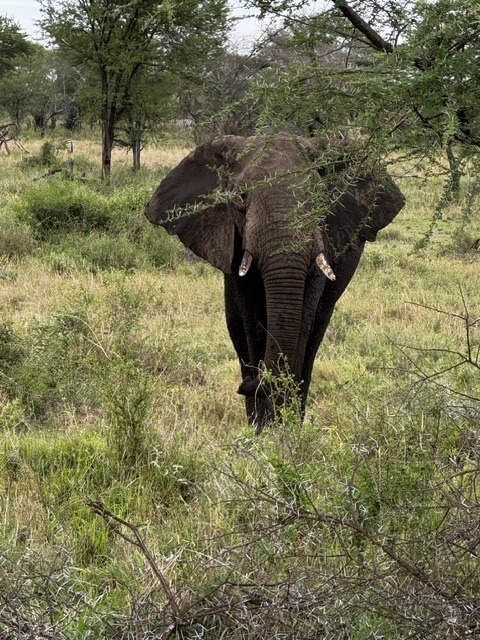
What makes game drives so enjoyable? I don’t have to be constantly searching for something spectacular. Sometimes the spectacle is simply the landscape: a herd of zebras scattered across the grassland, hundreds of wildebeest grazing together, giraffes moving slowly among the acacias, or a lone elephant crossing the plain. The wildlife adds color and movement – but it is the endless vistas that impress.
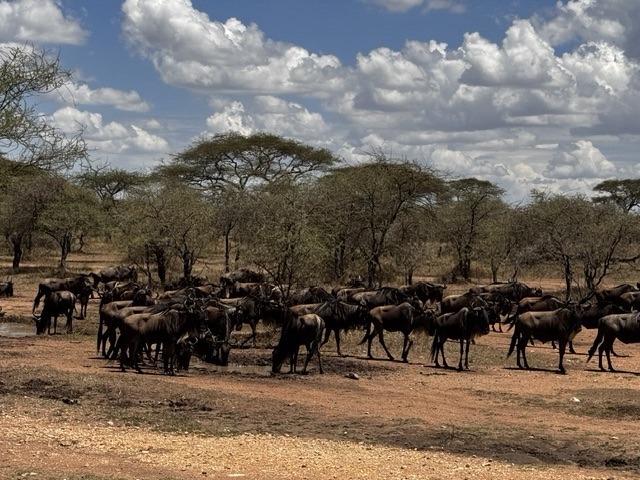
Wildebeest – like the Great Maker ran out of ideas and just slapped a few essentials together.
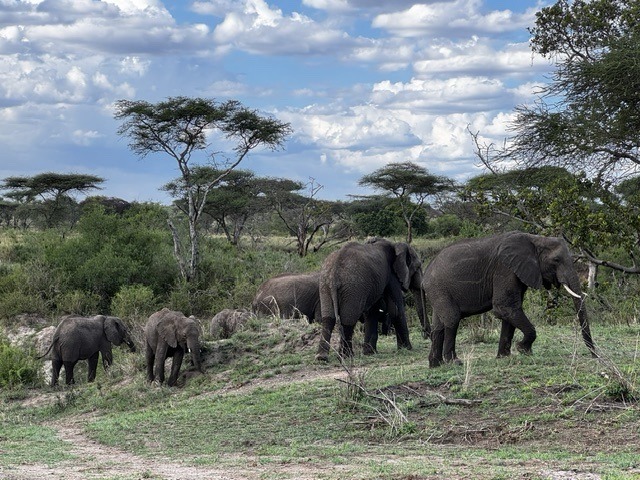
Serengeti has an extraordinary variety of herbivores, including wildebeest, zebra, buffalo, giraffe, gazelles, eland and hippos. But, then there are the predators! The Serengeti is particularly known for its large concentration of carnivores. Lions are often the easiest to find, stretched out in the shade or lying completely unconcerned as safari vehicles gather nearby. We encountered several lions, some resting in shade and several sleeping after a meal.
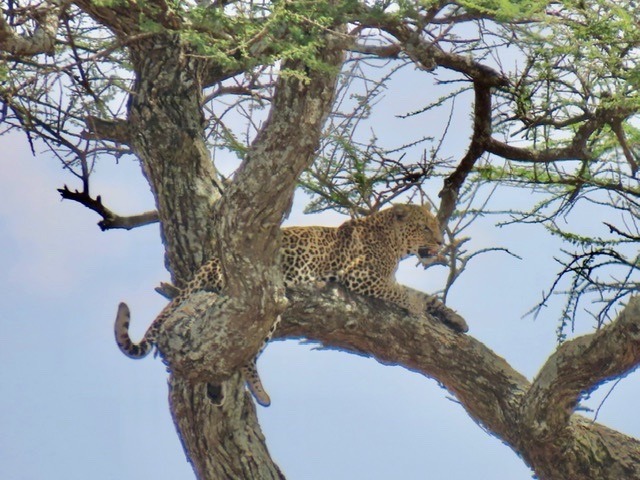
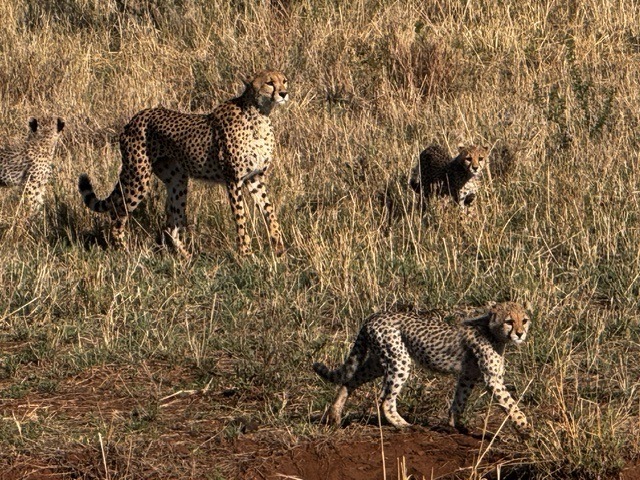
Leopards are more elusive, often tucked into trees or vegetation, while cheetahs are usually associated with the open plains where their speed gives them an advantage. We were fortunate to see a leopard in a tree with its kill. And twice, we watched, fascinated, as a cheetah raced after its dinner.
Spotted hyenas were more elusive but a fascinating sight as they teamed up in search of food. Or to steal it from others.
The Hippo Social Club
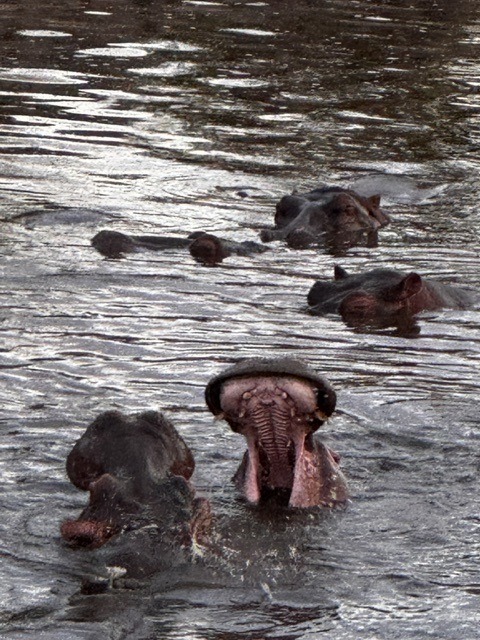
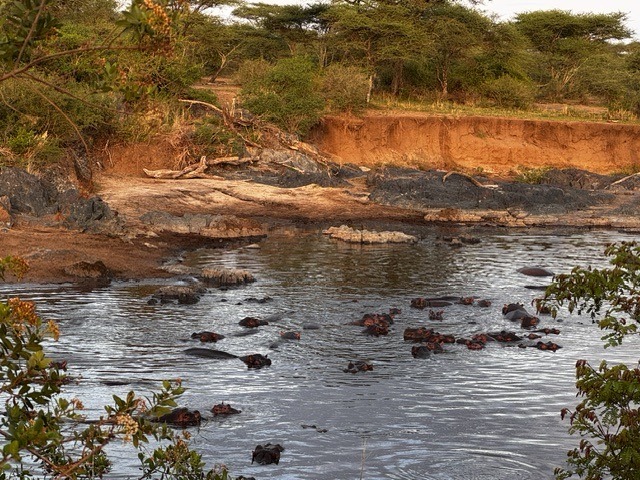
Rising early, we drove to a section of river where scores of hippos gather, returning from their nighttime grazing excursions. These enormous creatures spend much of the night out of the water, sometimes walking several miles in search of grass.
As daylight approaches, they make their way back to the safety of their pool, where they will spend much of the day submerged, occasionally surfacing to breathe, yawn, grunt and bellow at one another.
The pool becomes something of a neighborhood gathering place. They spend hours socializing, arguing or simply keeping tabs on the neighbors. Whatever they’re discussing, it’s clearly a conversation we’re not invited to join.
The Ugly Five – Africa’s Less Glamorous Celebrities
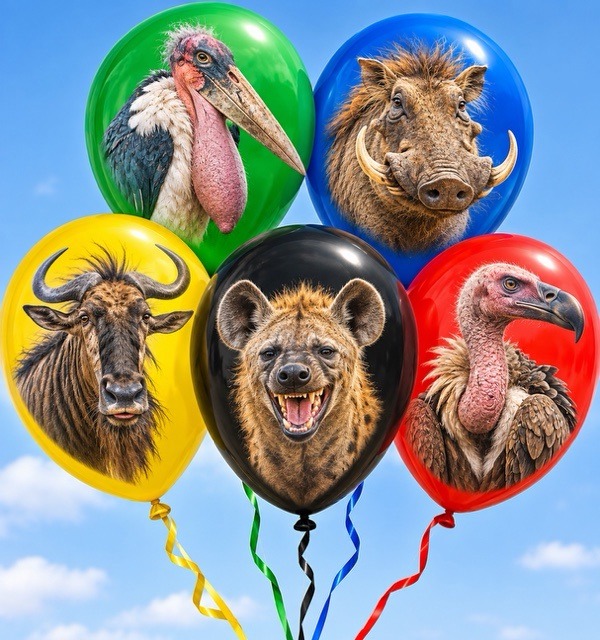
Every safari has its Big Five: the elephant, lion, leopard, Cape buffalo and rhino. They are the superstars of the African bush, the animals everyone hopes to photograph. But Africa has another, somewhat less prestigious collection of wildlife celebrities: The Ugly Five.
This is the humorous, unofficial counterpoint to the Big Five, celebrating those creatures who clearly didn’t win the genetic lottery. They may not grace the cover of a luxury safari brochure, but they have earned their own place in the African bush.
Leading the lineup is the Marabou stork, a bird that looks as though it was assembled from leftover parts, with a bald head, enormous bill and a dangling throat pouch.
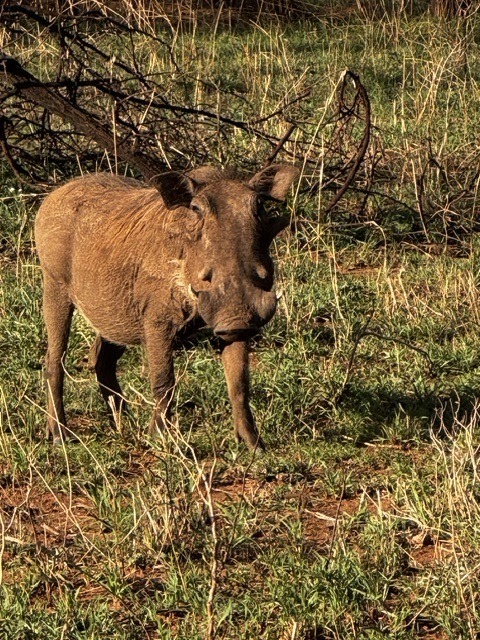
Then there’s the warthog, born as cute as can be but as an adult the face appears to have been designed by someone who had never actually seen a pig, complete with tusks, warts and a rather impressive set of nostrils.
The wildebeest looks like a confused cross between a cow, a horse and something that escaped from a prehistoric museum.
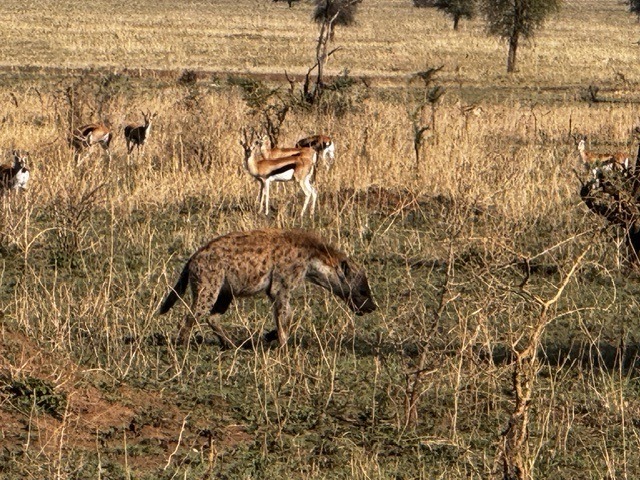
The hyena, with its sloping back, oversized head and rather unsettling grin, looks as though it is permanently up to no good. And finally, the vulture, nature’s cleanup crew, with a naked head and a rather unfortunate dining preference.
Not exactly a collection of beauty queens.
And then there is the baboon, who deserves an honorable mention, if only for sheer attitude. Baboons may not have the naked-necked elegance of the marabou or the unfortunate facial features of the warthog, but they make up for it with an expression that suggests they are judging you, plotting against you and quite possibly planning to steal your lunch. They are not necessarily the ugliest, but they are certainly among the most obnoxious.
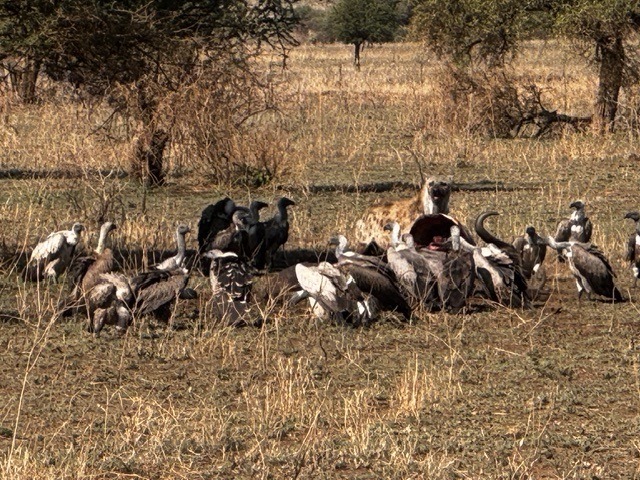
Of course, beauty is in the eye of the beholder. They may not inspire the same awe as the Big Five, but they certainly provide their own entertainment. Sometimes, the best safari photographs aren’t of the most beautiful animals, but the ones that make you laugh.
The Magic of the Plains
We never really know what will happen next. Our driver may spot something almost invisible to us – a movement in the grass, an unusual concentration of birds, or a shape underneath a tree. Suddenly everyone looks through binoculars and cameras. iPhones up!
We seem to bounce madly across the savannah until we find a lion or leopard. Then, we sit quietly and see what the animals are actually doing. The vehicle stops, the engine goes quiet. Birds call, the wind moves through the grass, and animals act like animals.
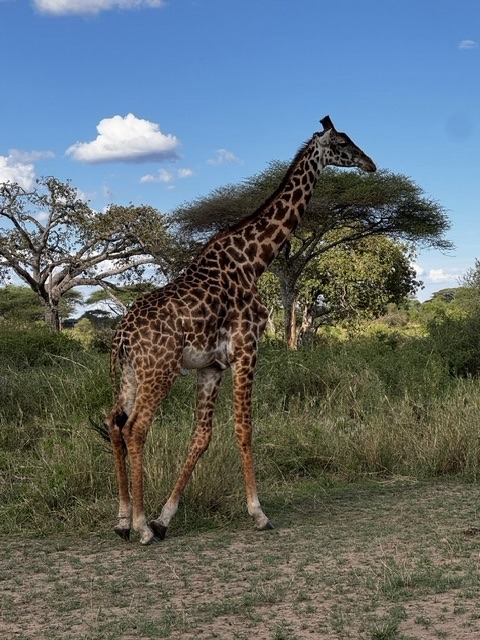
We watch plenty of elephants, zebras, wildebeest, giraffes, buffalo and gazelles. Looking closer, one sees the lions, cheetahs, leopards and hyenas. There are more than 500 recorded bird species, so the birders are in heaven.
Ostriches Do It, Lions Do It, Even Hippos Do It
Cole Porter had it right. Ostriches do it, lions do it, even big elephants do it. And judging by what goes on across the Serengeti, just about everybody is doing it. Students might develop a whole new appreciation for biology if their lessons included a few live-action videos from the African plains. Forget the diagrams and complicated terminology. This is nature’s classroom, and the lessons are considerably more entertaining.
Of course, you have to be in the right place at exactly the right time. The male ostrich puts on quite a courtship performance, spreading and fluttering his magnificent wings in what looks like an elaborate dance routine. The male actually has a penis, unlike most male birds, and mating can be surprisingly brief. When done, he just walked away leaving the female behind. So much for love.
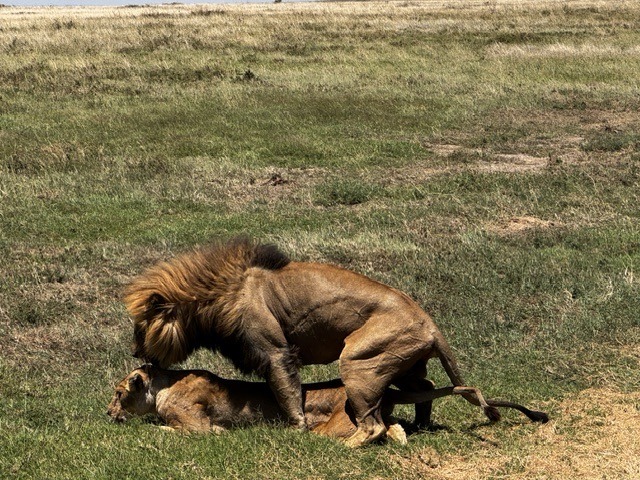
The lion, on the other hand, takes a more persistent approach. When a female is receptive, the pair can spend several days together, mating repeatedly at intervals that would exhaust most people.
Romance on the Serengeti has its own timetable, and apparently nobody has told the lions that less can sometimes be more. After a very brief bit of passion, both male and female collapse and sleep it off until the next time.
Hippo courtship is not likely to inspire a romantic novel. The male begins by making the rounds, sniffing the females to determine who might be receptive. Once he finds a willing prospect, the courtship can become a rather forceful affair, with chasing, nudging and plenty of noisy wheeze-honking.
Mating takes place underwater, adding another complication to an already unusual courtship. And if you thought the male’s habit of flinging dung around with his tail was unattractive, just imagine having to endure that as part of the dating ritual. Forget flowers and chocolates. In the hippo world, romance is definitely an acquired taste.
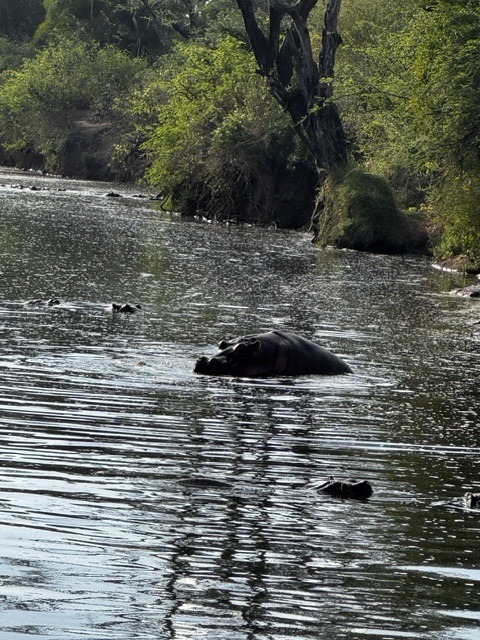
The Serengeti offers a biology lesson that no classroom, however well equipped, could quite replicate.
Neck and Neck: A Serengeti Showdown
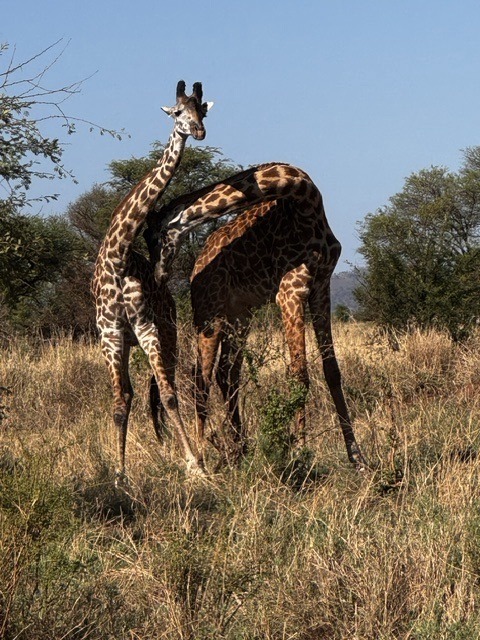
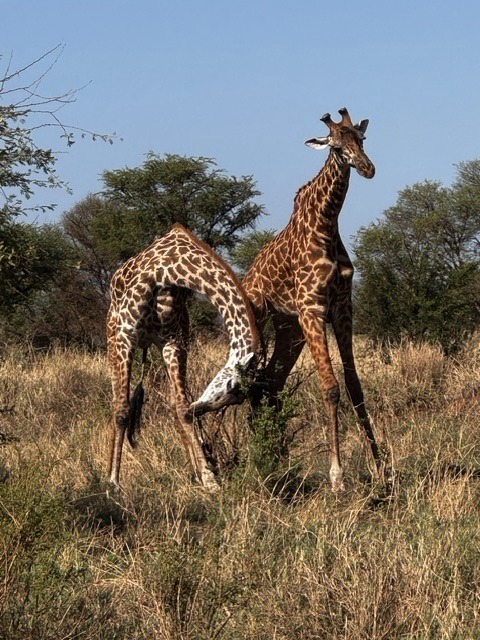
I had sworn I would not snap any more giraffes, wildebeest or zebras. Surely I had enough photographs by now. A giraffe silhouetted against the morning sky, however, is an entirely different proposition from one with its head buried in a tree. Rules, apparently, are made to be broken. And broken almost immediately.
We came upon two giraffes engaged in what appeared to be a serious disagreement. Male giraffes settle their disputes through a ritual called necking. They stand alongside one another, swing their remarkably long necks like enormous pendulums and bring their heavy heads crashing into each other’s bodies. They may twist, shove, step away and come at each other again, using their thick skulls and horn-like ossicones as weapons. The blows can be surprisingly powerful, and the contest may continue until one finally backs down.
It is quite a spectacle. Imagine two creatures standing nearly eighteen feet tall, using their necks as medieval battle axes. There is no referee, no time-out and apparently no interest in settling their differences over a quiet drink. I broke my photography vow again. Some things are simply too good not to capture.
When the Rains Return
Being early November, we arrive just as the Serengeti is changing seasons. The dry golden landscape is beginning to green, the short rains are returning, and the wildebeest are beginning their long journey south.
So far, we encounter mainly dry, sunny days with only an occasional shower. The short rains generally aren’t prolonged. Animal viewing has been superb.
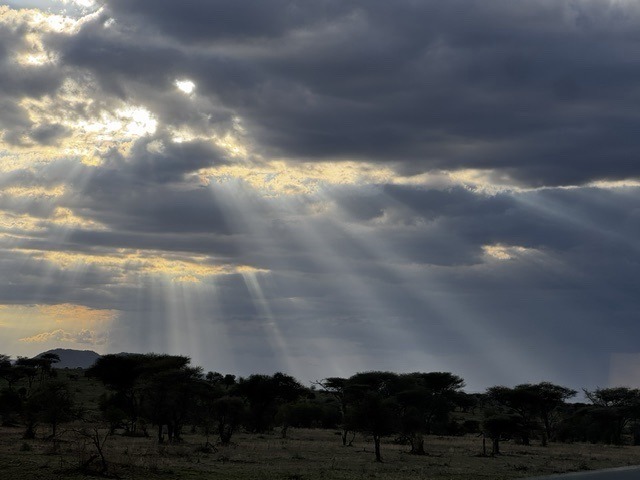
After months of dry weather, these first rains begin to bring the grass back to life. The landscape gradually changes from the golden, dusty appearance of the late dry season to fresher greens. Dramatic November skies feature towering clouds and brilliant sunshine following a brief shower.
While not the big stampedes one sees in nature shows, the wildebeest generally head south. The great migration is just beginning its return journey from the northern Serengeti and Kenya toward the central and eventually southern Serengeti. The short rains produce fresh grazing, and the herds follow the new grass. Herds spread over a huge area. In early November, animals don’t seem to be in a rush. We don’t need the migration to have a spectacular game drive. In fact, as the herds move through, they can attract predators, adding drama to the game viewing.
Any Then Comes Nighttime in the Serengeti
Dinner at Land of Nature Camp consists of a mixture of Tanzanian and international cuisine using fresh ingredients from local suppliers. While meals include grilled meats, Tanzanian dishes, salads and fruit, chefs do not serve the wildlife. While there exists a legal game-meat industry, it is regulated. The wildebeest, zebra, impala, giraffe, or buffalo we see on safari does not end up on our menu.
Africa looks completely different after dark. With a spotlight sweeping across the bush, our escort searches for animals that are active at night. A pair of eyes suddenly appears in the darkness, and for a moment I have absolutely no idea what I’m looking at. Or what watches me!
The camp is unfenced, so the night doesn’t end when dinner does. Somewhere beyond the camp’s solar lights there may be buffalo, hyena or lion moving through the darkness. The sounds of animals become part of the evening. I am happy for the alert guards.
Awake in the night, under a black sky made brilliant with stars, the noises of the bush echoes in stereophonic sound. Was that a Cape Buffalo crunching on grass out there? Has my elephant friend returned? A hyena passes our tent, his whoop, a long, rising, ghostly sound, calls out to his mates. Is he calling others for a kill or just marking our tent as his territory?
Watching America from Africa – A Very Welcome Wave of Blue
It is evening here. I stare at my iPad as election results come in from home. Blessedly, the map begins turning blue. Not just a little blue – a glorious, reassuring, I-can-finally-breathe-again kind of blue. I sit here in Tanzania, thousands of miles from home, watching the results roll in and feeling an enormous wave of relief.
Democracy has given me something to cheer about. Had the map gone the other way, I fear I would need considerably more wine.
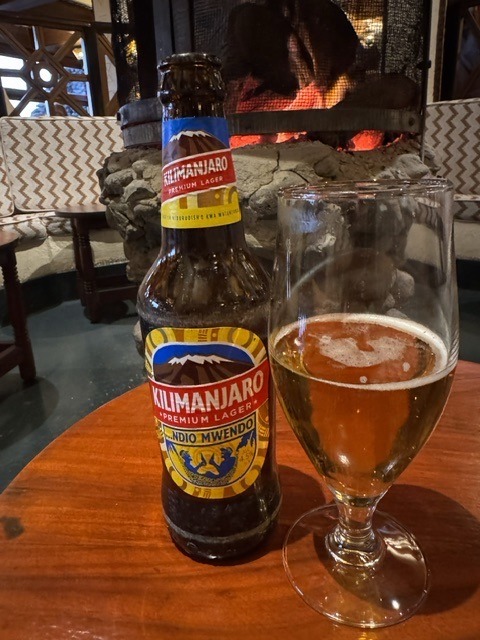
Overhead shine stars and more stars. As I sip a Kilimanjaro Premium Pale Lager, or Kili, this is a pretty wonderful way to celebrate my country and to end a day in the Serengeti.

0 Comments