11 Nov 2026
After breakfast, we travel one of the last legs of our tour with two stops along our final safari route. We see another giraffe, a few birds, and an end to dirt roads. The yellow brick road leads us northeast to Arusha.
Our tour operator, Lucas Mhina, sponsors the Hope public school in Arusha and has invited us to visit. We briefly stop to tour. Once again, the school and children are amazing. The school has over 1000 students from age 3 thru primary. The tiny ones proved to be adorable, masterful huggers and eager to say hello.


The school is colorful and well-organized. The young students are not only bussed to school but receive four nutritious meals daily.
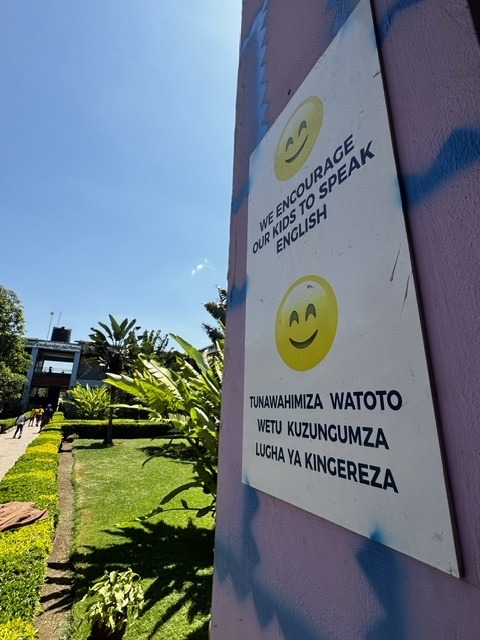
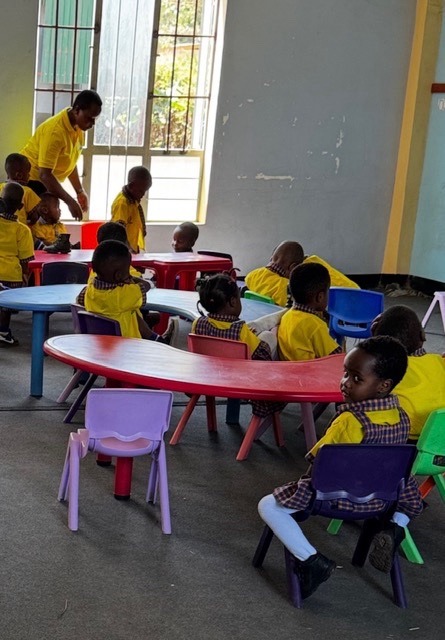
The students’ questionnaire impressed us all with its search for honest opinions on everything from books to bullying. Improvement and success are priorities.
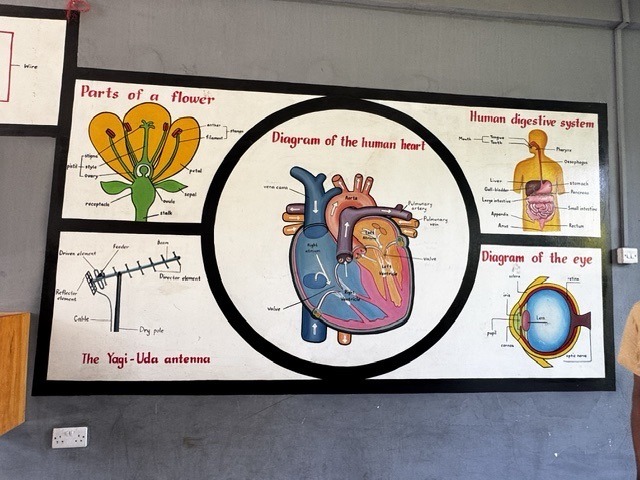
I loved that every inch of the exterior was brightly painted, containing educational graphs, maps, and phrases.
After the tour, we drove the short distance to Lucas’ home for lunch, hosted by his wife and young son. Lovely home and gardens, delicious food and warm welcome. Lucas started out as a safari guide. His hard work and kindness has benefitted many children and the people of this region.
Somewhat Typical Flight Day
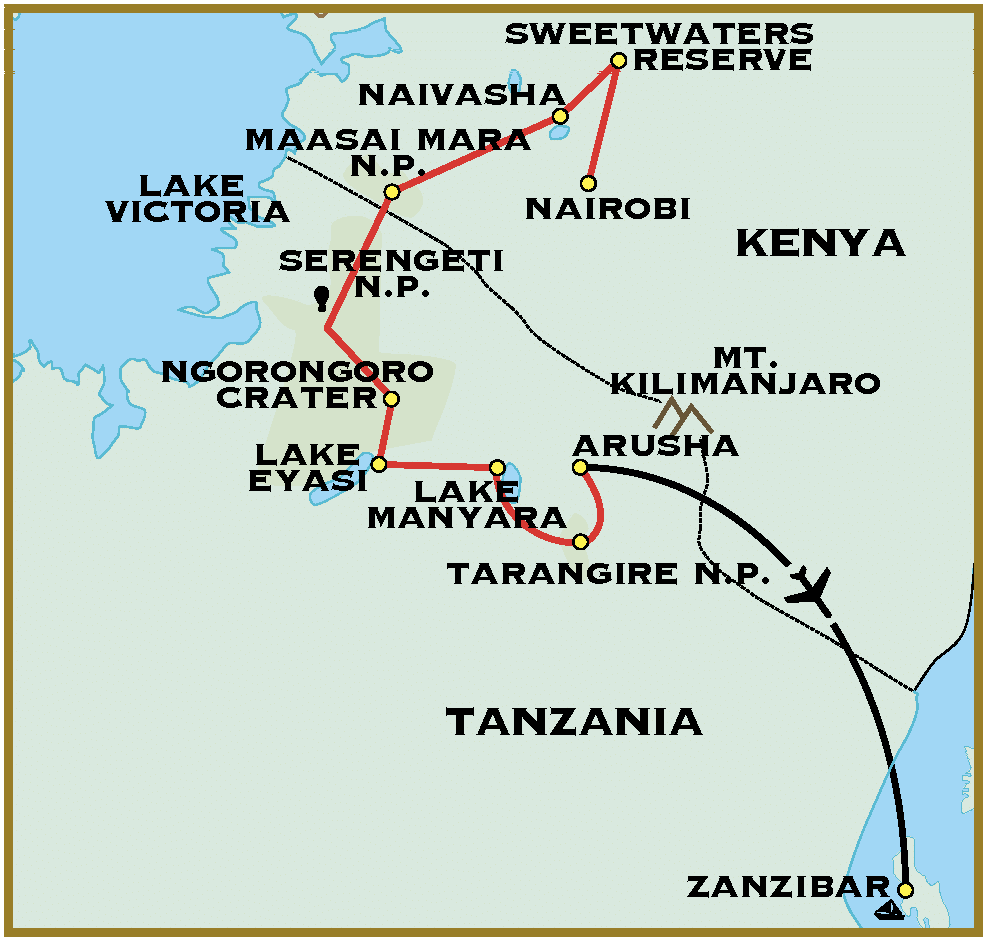
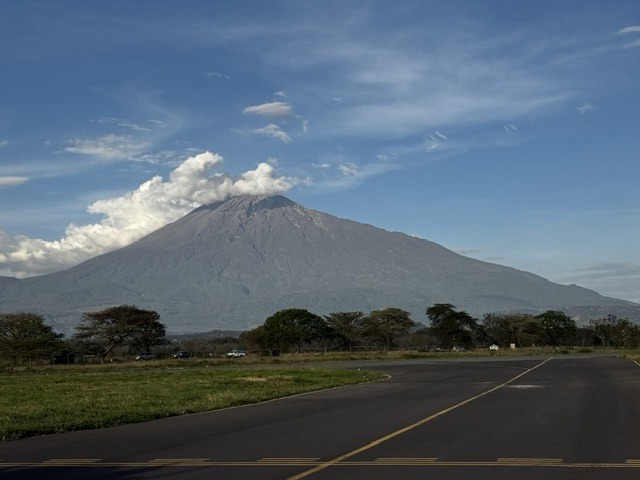
We drive to Arusha’s domestic airport, ARK.
Small, pleasant but typical chaos. Some of the waiting rooms are actually outside along the tarmac. There, I can watch the prop planes buzz off. A cold beer awaits at the Bao Café. Shock! Cost is less than $3.
Then we sit and wait. I see little propeller-powered puddle jumpers and some six-row flying sardine cans. I am hoping for something a little larger which looks bigger than a breadbox.
Our luck is a 72-passenger Flightlink. Problem is, the engine cowl is up and confused maintenance men scratch their heads as to what to fix. We wait with hopes of just a two-hour delay and better mechanics.
Suddenly, we are told that we join a now-departing flight going our way. We drag ourselves across the tarmac for loading to find “any seat”. Settling in the final seat of the plane, our flight attendant amuses us after his long day and this full plane of tired tourists:
Let’s hope there’s no problems. You want to get to Zanzibar and not end up God knows where.
Exactly! As we rumble down the runway and climb into the air, I’ll be watching out the window for a glimpse of Mount Kilimanjaro on my left.
Kilimanjaro Sightings
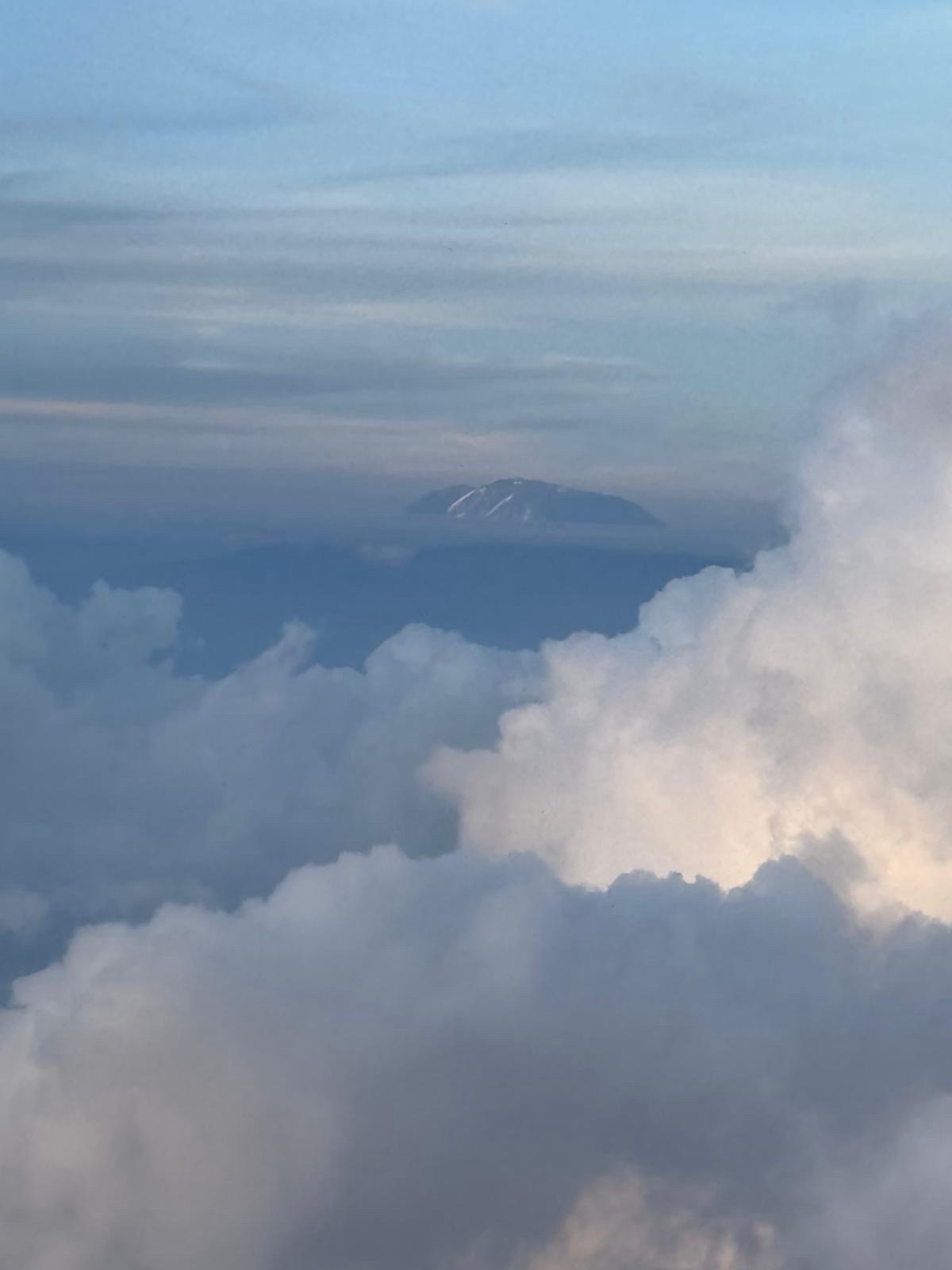
Kilimanjaro is Africa’s highest mountain, rising to 19,341 feet above sea level. It is actually a volcanic massif made up of three cones – Kibo, Mawenzi and Shira. Kibo contains the summit, Uhuru Peak. It stands alone above the surrounding plains in northern Tanzania, which is part of what makes it so spectacular. Despite being just 3 degrees south of the equator, its summit can be covered with snow and ice, although I can see the glaciers have dramatically diminished over the past century.
Kilimanjaro sits about 50–60 miles north/northeast of Arusha, so relatively close to our flight path. On a clear day, the mountain can be spectacular from the air. It frequently has clouds around its summit, even when the weather looks beautiful at ground level. Because of our later departure, the clouds have thinned. Seeing that enormous snow-draped peak from the air offers a wonderful glimpse of a towering icon.
Next stop: Zanzibar
Our trusty Flightlink flying bus flys nonstop roughly 265 miles. In a little over an hour, we do a bouncy landing at ZNZ, Abeid Amani Karume International Airport. It is dark, late, hot and humid. They check our health insurance papers.
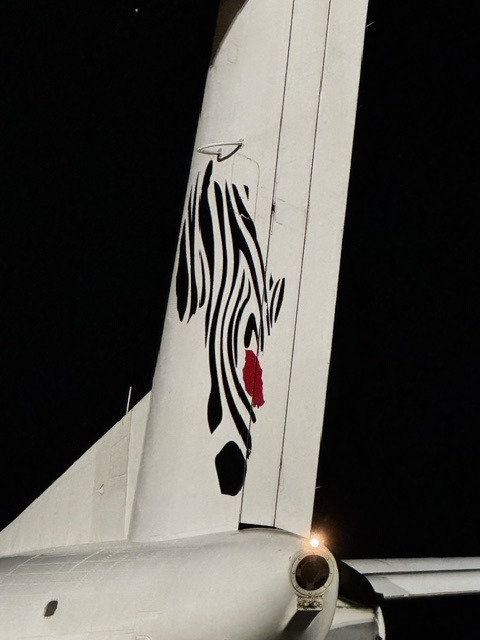
Everything now operates in reverse as we deboard and I wait for everyone to get their bags. Always with me is my 32-liter travel pack – small enough to look innocent, but somehow containing everything I need for any journey. Most of the bags are still in Arusha.
Eventually, we trudge off, mostly bagless, to climb aboard our transport. We head to the north coast and the Indian Ocean. Even in the dark, I immediately notice the changed landscape – from Tanzania’s dry interior to the hustle of commerce and the tropical weather of Zanzibar.
From Safari to Sea – Chaos, Color and Coconut Palms
We are driven toward the north coast and the Indian Ocean. The roughly 35-mile journey whisks us from one world into another. The quiet of safari country transforms into miles of cars, commerce, color and chaos.
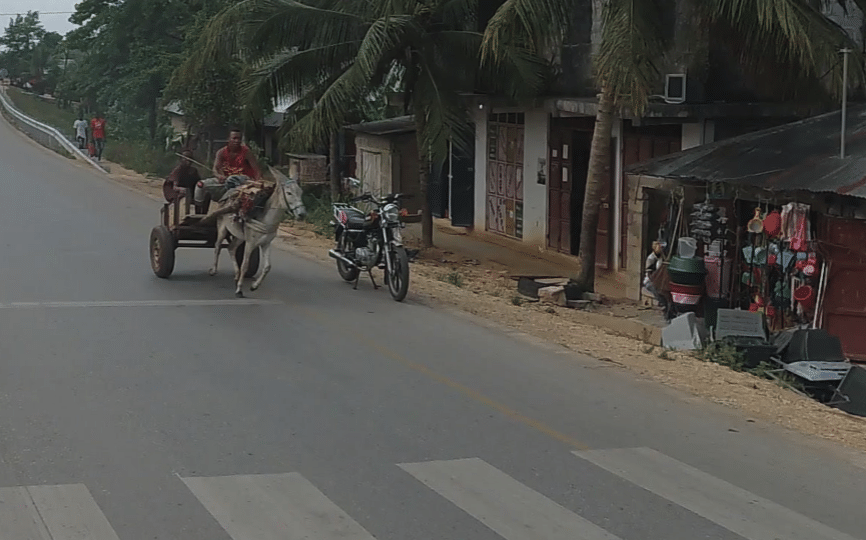
Palm trees and banana plants line the road, while motorbikes weaving through traffic and pedestrians seem to be everywhere. Small kiosks sell everything imaginable – shoes, bananas, spices and household goods. An occasional beast of burden appears, along with bicycles – all piled impossibly high with goods.
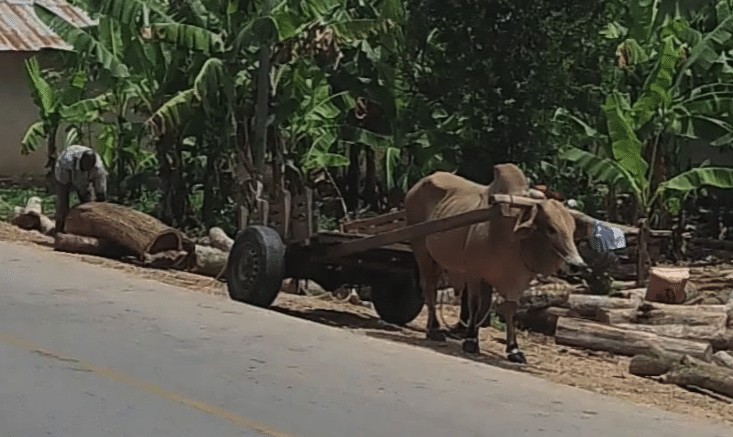
It’s almost 10pm, yet the roadside continues to be a moving marketplace. Tables are heaped with potatoes, tomatoes and brightly colored fruits.
Buses and open trucks carry what seem like endless numbers of people, with some passengers hanging onto the back. Buildings are mostly brick or concrete with corrugated metal roofs, and some look as though they might have trouble standing up to a serious tropical storm. It is crowded, noisy and endlessly interesting.
Supported by Tourism and Spices
Zanzibar feels economically different from the Tanzania we have explored. Here, the ocean becomes the highway, tourism a major engine, and agriculture and fishing dominate everyday life. The island seems to be balancing two worlds – an old economy of farms, fishing and spices and a rapidly growing economy built around travelers from around the world.
Unguja, known by us simply as Zanzibar, represents the largest of the 62 islands in its archipelago. It also contains the capital, Zanzibar City. Once known around the trading world as the Spice Islands, Zanzibar transformed into a small island economy with tourism playing an unusually large role. However, while Zanzibar is part of the United Republic of Tanzania, it has its own government and statistical system.

Hotels, restaurants, transportation, tour operators and other visitor-related businesses represent major sectors of its economy. Zanzibar received about 750,000 international visitors in 2025. Our guide explained the island has grown from a handful of properties in earlier decades, to over 1,500 hotels, resorts, and guesthouses today.
However, agriculture, fishing and livestock remain extremely important to local livelihoods. The Zanzibar agriculture ministry says agriculture supported about 70% of the population directly or indirectly in 2024. Cloves, spices, fruits, seaweed and fishing are particularly associated with the island.
Along Crowded Roads to Coastal Breezes
I’m struck by the amount of plastic along the roadside. Tanzania has restrictions on bringing plastic bags into the country, yet bottles and refuse appears in surprising amounts along the highway. It tells a complicated story of a country developing rapidly while still struggling with the consequences of that growth.
Much of the road is a narrow but paved two-lane highway, with occasional stretches where dirt/gravel seems to be the only option. But improvements are clearly underway. Road construction appears in places, promising a smoother and perhaps safer journey in the future.
Note: Zanzibar is officially confirmed as a host venue for the African Cup of Nations in 2027 (jointly hosted by Tanzania, Kenya, and Uganda). This competition represents the premier international men’s association football competition on the African continent.
Then, almost imperceptibly, the crowds begin to thin. There are fewer buses and motorcycles, more trees and more green. We leave the bustle behind and turn onto increasingly narrow roads.
The noise fades, the landscape opens up, and suddenly I know we are getting close.

0 Comments