22 March 2026
After breakfast, we board our bus for the 300-mile drive to Tozeur, Tunisia. There are 12 of us on a 29-seat bus so very comfortable. Thankfully, we enjoy a few interesting stops along the long route.
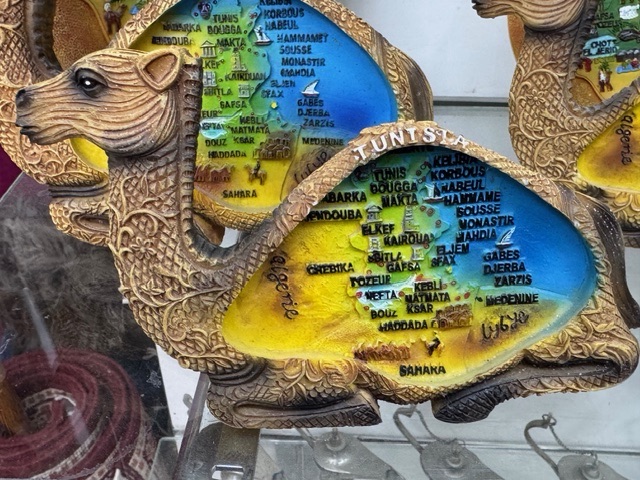
The drive also allows me to observe the Tunisian driver. It appears they took their lessons from the same driving school as the Egyptians. However, it seems drivers here were better students.
Tunisians and Egyptians appear to follow the same driver’s handbook, possibly taught by a traveling instructor who believed lane lines were merely decorative. On wide highways lanes may be absent, faded, or cheerfully ignored. Traffic flows in a fluid, interpretive approach where cars drift like schools of fish. Rules—signals, speed limits, right of way—are treated as polite suggestions: bent regularly and broken creatively. The style blends aggressive maneuvering with moments of patience.
Roads swing from sleek modern highways to rural routes that seem to have been sketched in pencil. Don’t miss one of hundreds of large speed bumps spread along the highway! Found frequently at village entrances, in towns, and sometimes on main roads, speed bumps, known as dodane or dodanet, are widely used for traffic slowing but are often steep, poorly marked, or unmarked, making them dangerous for unsuspecting drivers.
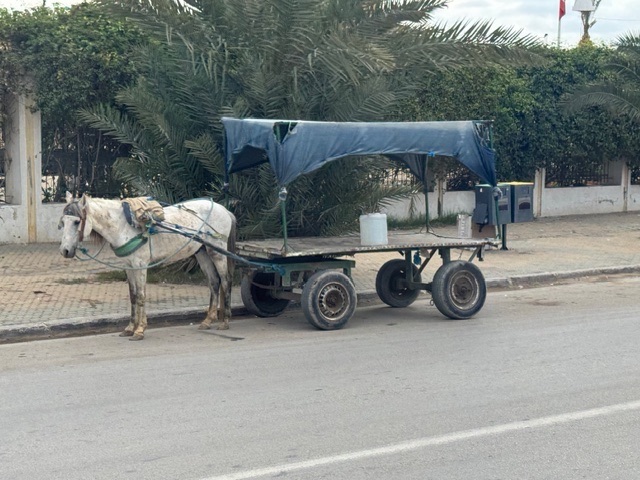
City traffic seems chaotic but oddly efficient, governed by a universal me first philosophy. Honking remains surprisingly restrained. Turn signals are rare, defensive driving is mandatory, especially in towns where signage is optional and logic flexible. Police checkpoints are common, so our driver keeps his photo ID and insurance/permit handy. He fastens his seat belt if police ahead. Just sitting in the bus, watching Tunisians zip past requires faith, patience and a sense of humor.
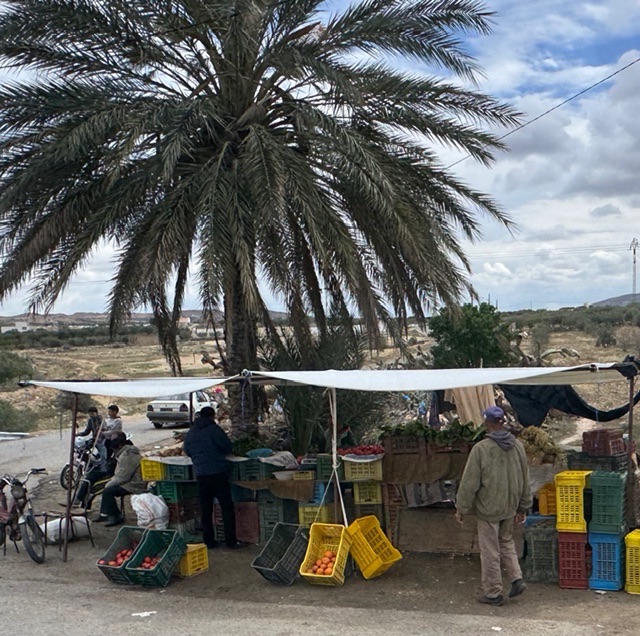
Under cloudy skies, we drive a modern and empty road out of Tunis this Sunday. Trash and road construction line our path. In fact, trash lies everywhere on highways, but still a far cry from Egypt. Out my window, I see vineyards and large olive groves. The landscape remains flat but at least it is green as we drive toward the eastern end of Atlas Mountain Range.
Occasionally, we slowly pass thru a Berber village. They seem to be clinging to a simple life. Little roadside tents and makeshift stands sell foods, teas, household items.
Bedouin homes mean 4 walls of something and a door propped in front. Endless fields of fallow ground and rock are enclosed with massive twisted fences of cactus. Occasionally we slow, hoping no one will dash across the road or to avoid hitting a goat. Roadside family businesses sell greens, household tools and stuff. Not much in the way of beauty but very interesting.
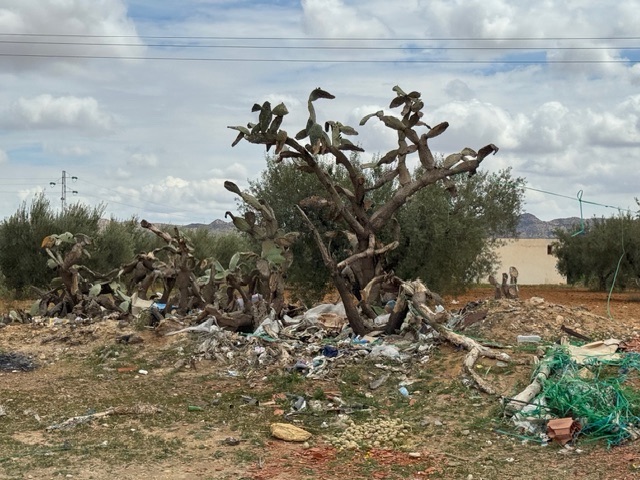
Trash is everywhere. I am told that Tunisia is beginning a plastic campaign to pay for people to collect and then recycle. In a few years, I expect the roads to be much improved.
Our drive is very long. Sites along our route:
Holy City of Kairouan
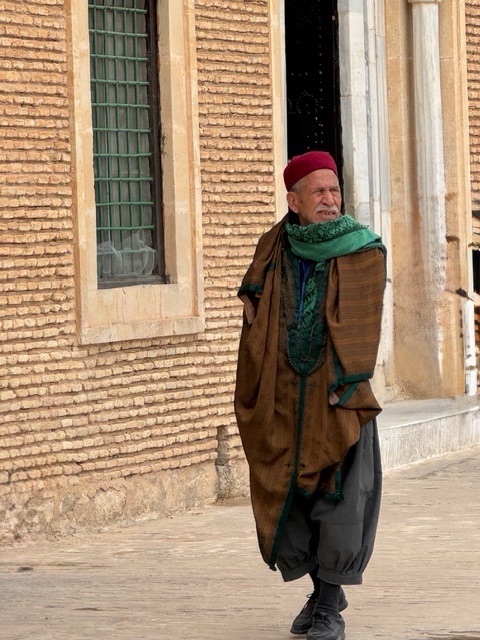
Kairouan represents one of Islam’s holiest cities and a spiritual center of North Africa. Founded in 670, it became a leading hub of scholarship and architecture. The city is recognized as a UNESCO World Heritage town. Two important sites are the mausoleum and Great Mosque.
Mausoleum of Sidi Sahbi
The Mausoleum of Sidi Sahbi honors Abu Zama’a al-Balawi, a companion of the Prophet Muhammad. Revered in Tunisia as Sidi Sahbi, “the Barber,” he carried hairs of the Prophet in his beard. Expanded and embellished over centuries, particularly during the Ottoman period, the complex became both a pilgrimage site and a statement of devotion, blending spiritual reverence with refined Islamic architecture. Tilework, calligraphy, and serene courtyards all reinforced its sacred status.
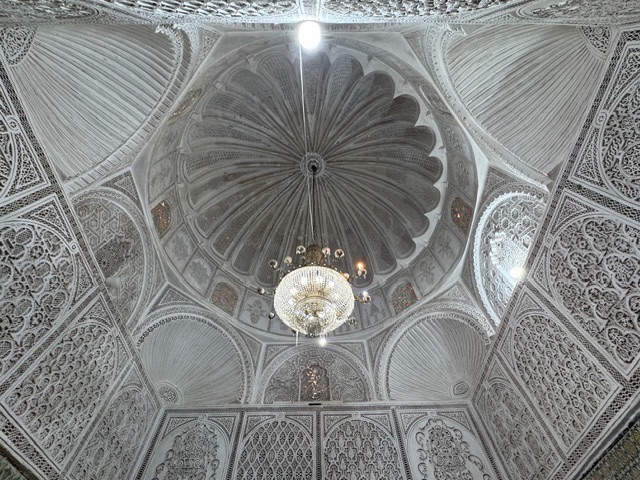
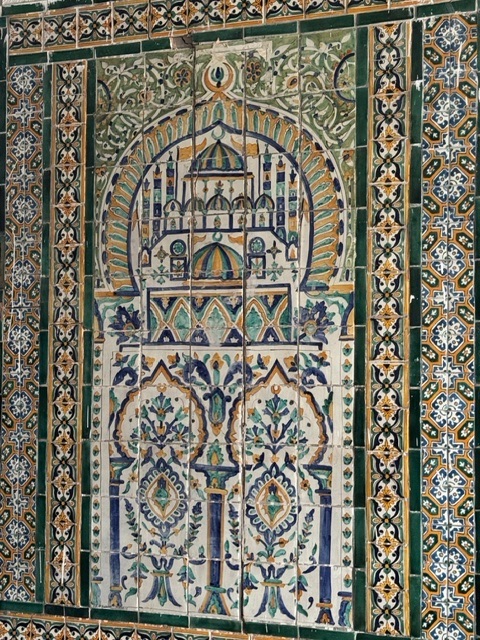
Visiting today, the mausoleum feels intimate rather than grand. Muted light filters across worn stone floors and simple arches. Geometric tilework and carved details quietly frame the space. The tile decorations inside are stunning but the mausoleum is restricted for non-Muslims. It is less about the tomb itself than the centuries of belief, memory, and daily devotion woven seamlessly into the present.
The Great Mosque of Kairouan
The Great Mosque of Kairouan, also known as the Mosque of Uqba, stands at the heart of Kairouan. It ranks among the most important, and largest, Islamic monuments in North Africa. Founded in the 7th century by Uqba ibn Nafi, the mosque grew alongside Kairouan itself as the city emerged as a religious and intellectual center of the Islamic world. As fortunes rose and fell, the mosque was rebuilt and expanded several times, particularly during the 8th century, reflecting both the city’s prosperity and its spiritual authority.
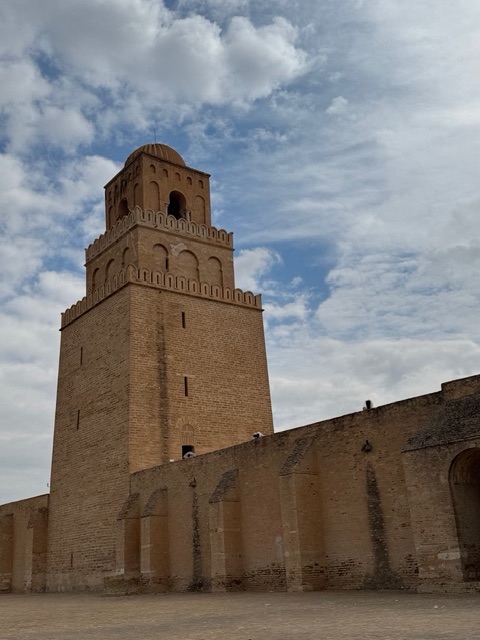
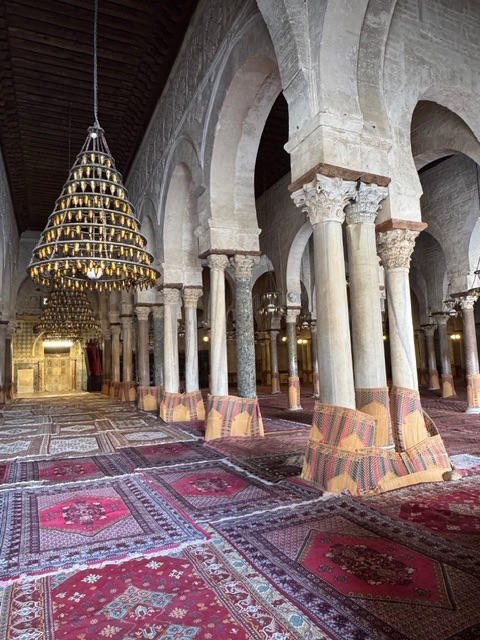
What I see today is largely the result of a major 9th-century reconstruction under the Aghlabids. The vast courtyard reflects worn stone paving and a sense of calm. Careful engineering collected rainwater and channeled it into underground cisterns – a blend of faith and practicality in an arid land. The massive square minaret, the forest of columns in the prayer hall, and the restrained decorative details give the mosque a sober, monumental presence and a testament to Kairouan’s lasting influence.
Kairouan Medina
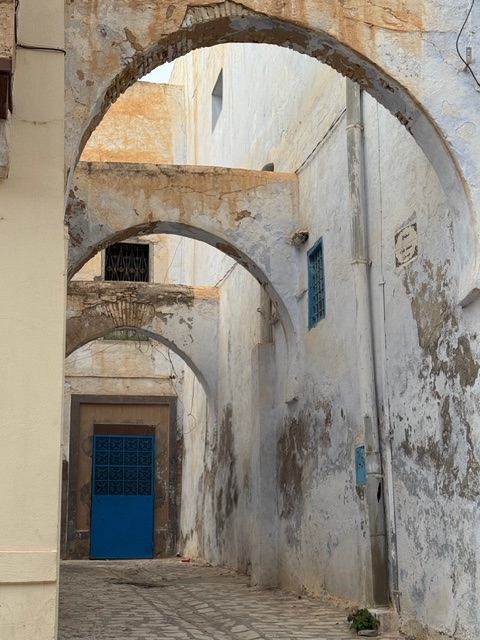
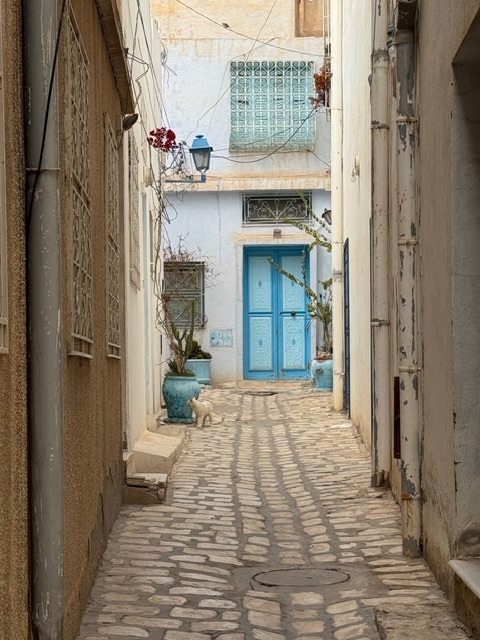
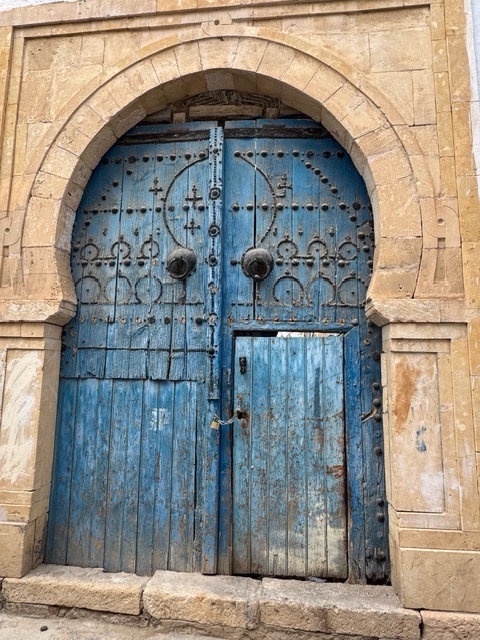
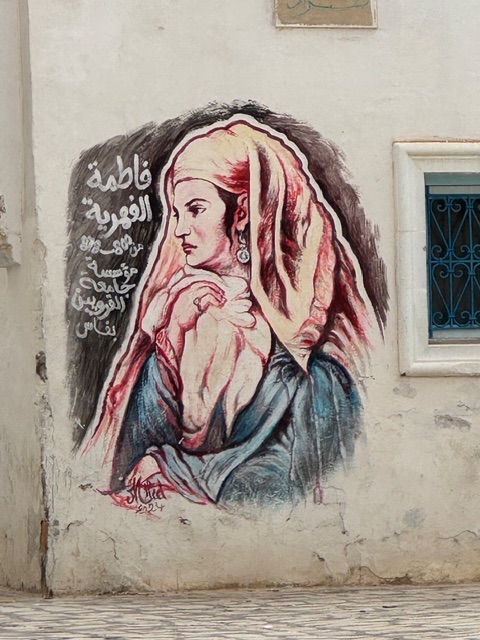
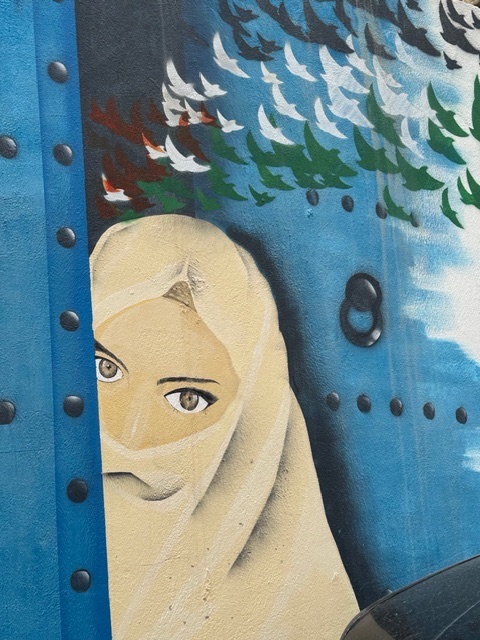
We enjoy a pleasant stroll within the city’s historic Medina. Without the constant hassle of voices to come in and see, I am able to appreciate the architectural and artistic touches along the narrow streets. The Medina hums with everyday activities. Always, use the color of blue for doors and windows.
Sbeitla Archaeological Site
We continue to the Archaeological Site of Sbeitla, known in antiquity as Sufetula. From Diocletian’s Arch of Triumph to the Roman Forum and Grand Baths, this site is impressive. (Diocletian never slept here.) These dry deserts have given a remarkable assist in preserving these Roman temples and ruins.
Sbeitla offers a window into the transition from pagan Rome to Christian Byzantium. Founded in the late 1st century CE as a military and administrative settlement, Sufetula flourished thanks to olive oil production and its strategic inland location. The city later became an important Christian center.
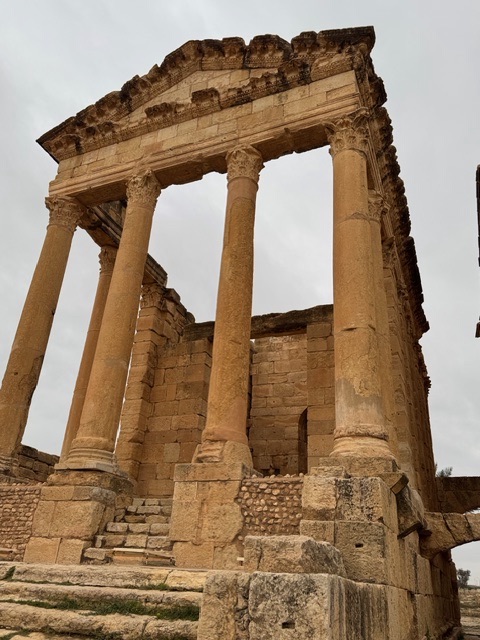
In the 7th century, it became the site of a pivotal battle between Byzantine forces and the early Arab armies. This marked a turning point in the Islamic expansion into North Africa.
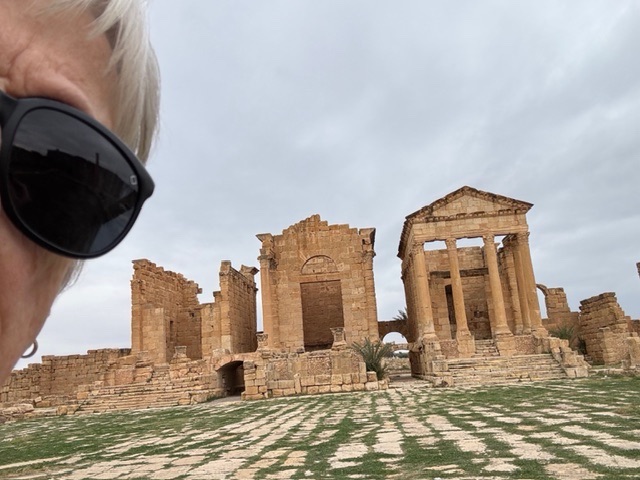
Today, Sbeitla is a site with wide streets and monuments rising dramatically from the plain. The most striking feature is the Forum, unique in the Roman world for its three separate temples dedicated to Jupiter, Juno, and Minerva. They stand side by side against a mountainous backdrop.
We explore well-preserved triumphal arches, grand baths, basilicas, and olive presses, evidence of both civic life and later Christian worship. The site remains uncrowded, allowing time to linger among fallen columns and mosaics, where Roman greatness, Christian devotion, and the silence of abandonment coexist in a powerful way.
Battle of Kasserine Pass
During our visit to the Roman archaeological ruins at Sbeitla, it is impossible not to notice how close modern history lies to the ancient world. Just 23 miles to the west lies the Kasserine Pass, a narrow two-mile-wide gap in the Dorsal Chain of the Atlas Mountains. Here, one of the most significant early clashes between American and German forces in North Africa unfolded.
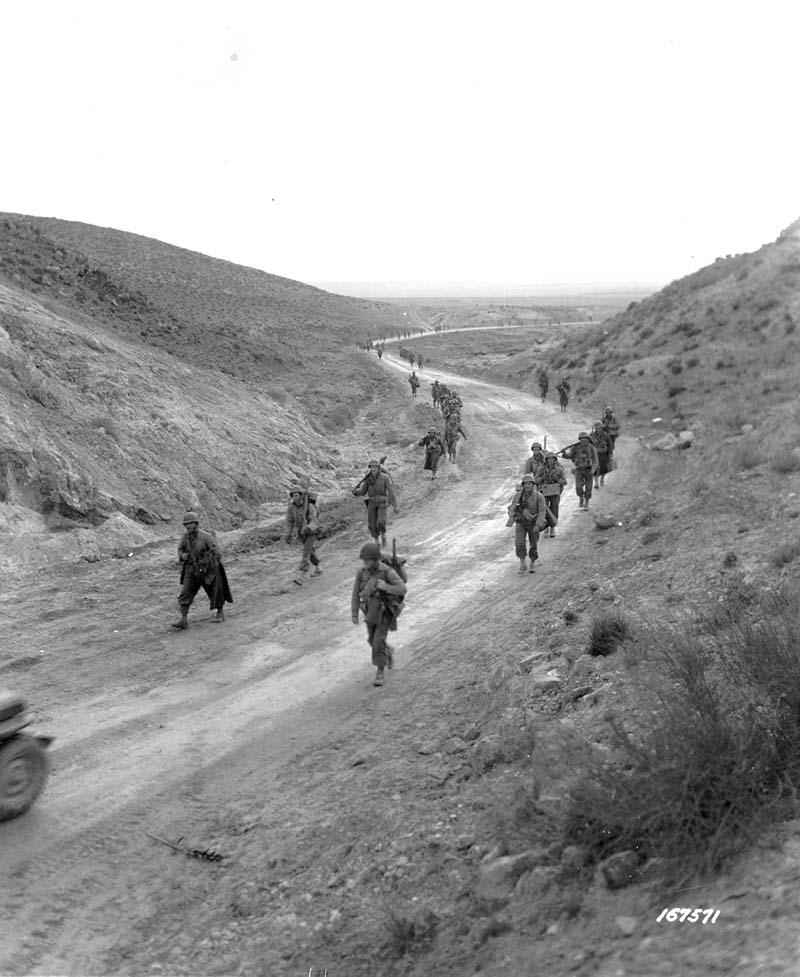
Allied landings in North Africa, known to Americans as Operation Torch, had brought U.S. troops to Africa only months earlier. In February 1943 those inexperienced American units, many fresh from training in the United States and led by ineffective leadership, faced the battle-hardened German Afrika Korps commanded by Field Marshall Erwin Rommel, a tactically brilliant and widely respected commander. Rommel had little respect for American troops criticizing their inexperience and clumsy.
Yesterday, during our visit to the American Cemetery in Carthage, Gabrielle and I visited the site of just one of the heroes who died in this battle. Foy Draper and his bombing crew flew from Tunis destined for Kasserine Pass. They never arrived.
German forces first struck American positions near Sidi Bouzid, about 25 miles southeast of Sbeitla, and then pushed through the Kasserine Pass, dealing the inexperienced American troops a sharp and sobering defeat. Yet the setback forced the Americans to regroup, rethink their strategy, and prepare more carefully for the battles ahead.
As our route follows the road south through Sidi Bouzid toward Gafsa, passing near El Guettar, we near another historic battlefield. There, on March 23, 1943—eighty-three years ago—the U.S. 1st Infantry Division again met German forces in the Battle of El Guettar. By then the situation had changed dramatically. Dwight Eisenhower had appointed a new commander, General George S. Patton, who arrived on March 6 and quickly reorganized American forces with stricter discipline and improved tactics.
Allied Turning Point
The fighting that followed marked a turning point in the North African campaign. Therein followed a maneuver called The Run for Tunis. Allied forces rushed north toward Tunis before German and Italian reinforcements could arrive. By May 7, Allied forces captured Bizerte near Tunis, and shortly afterward German and Axis troops in Tunisia surrendered, leaving roughly a quarter million prisoners.
Needless to say, Field Marshal Rommel’s opinions on American forces changed dramatically. Rommel no longer regarded them as a soft opponent and recognized that they were learning at an unusually rapid pace. He later noted that Patton’s forces in France achieved a most astonishing achievement in mobile warfare.
These battles paved the way for the arrival of the 363rd Infantry Regiment, 91st Infantry Division in spring of 1944. My great uncle was one of those soldiers who trained there before deploying into Italy in June of that year. A year later, in the spring push north through Florence, he was to die. His burial occurred at the American Cemetery outside Florence, Italy.
Standing among the ancient stones of Sbeitla while traveling through these nearby landscapes, history becomes more immediate; exploring such small geographic connections to major events only deepens the texture and meaning of my journey.
Tozeur, Tunisia
After lunch, we continue our drive for another 135 miles toward Tozeur. Outside Bou Alem our reputation precedes us. For miles to Gafsa, we have what seems a police escort, flashing red lights in the night. We zip along unbothered by speed limits. This helps a lot as we are now looking at a long, busy 12-hour day.
To add icing on the cake, as we say, it rains.
We check into our Hotel Ras El Ain. Surrounding the hotel are several resorts that sit abandoned. Ras El Ain should consider this business model. Room offers no bottled water, no water pot, dark room, towels and linens poor. Sorry we suffer two nights here.
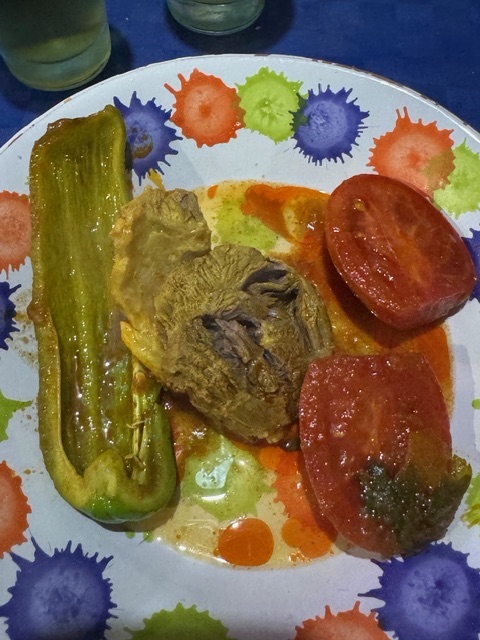
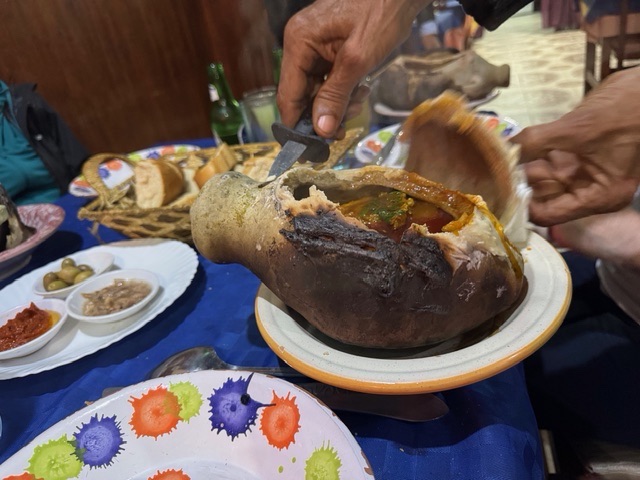
But, I look out at an amazing, interesting countryside. Situated in the middle of the desert, we are surrounded by sands, chotts (salt flats), oases, and date palms. Our dinner is at a local restaurant with wonderful food. I’m tired but eager to explore this region tomorrow.

0 Comments