9 April 2026
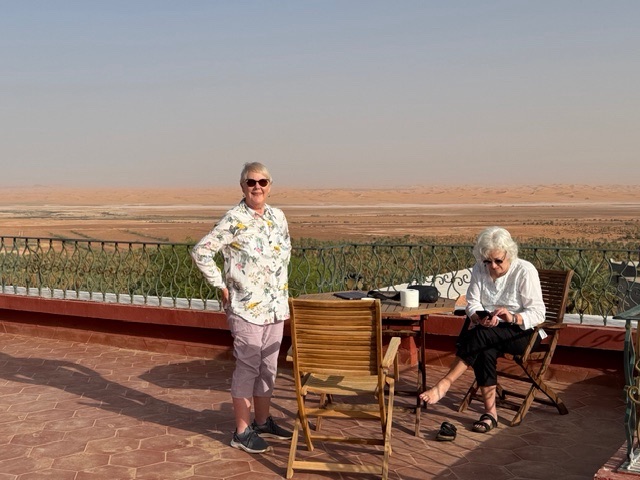
The day begins slowly, air is still relatively cool. We enjoy a coffee on our terrace overlooking the palm groves and dunes. Unfortunately, the coffee is Nescafé and the view is marred by haze and dust.
However, it is new day and we will explore the region. It will be a hot day in the Red Oasis. Sort of reminds me of a typical summer in Bakersfield.
Timimoun
Timimoun feels like a mirage made permanent. The town sits deep within Sahara’s Gourara region. It represents a small oasis area known for its striking red-ochre architecture, palm groves, and an atmosphere that’s slow, almost glacial when compared to Algiers or Oran.
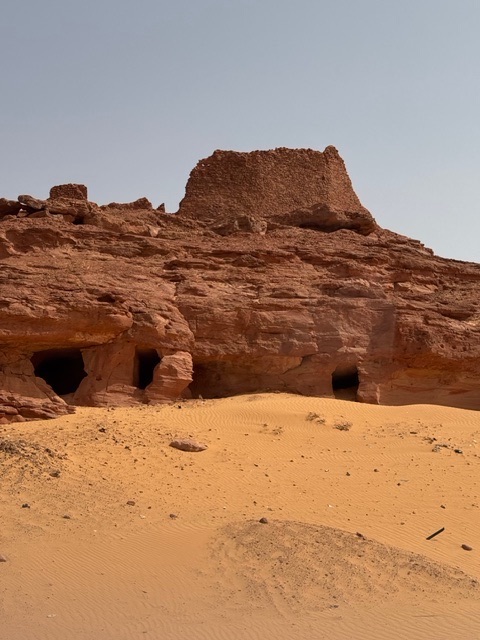
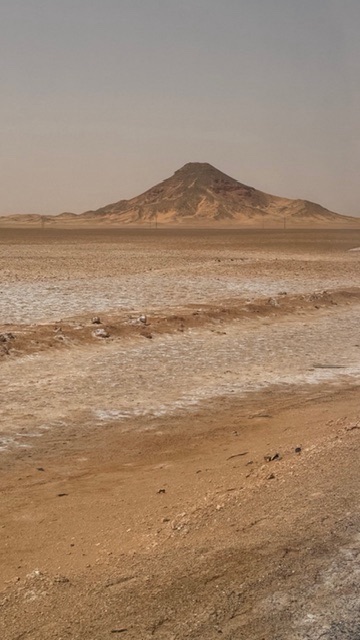
Historically, Timimoun was an important caravan stop on trans-Saharan trade routes, linking sub-Saharan Africa with the north. It’s also known for its dunes, sebkhas (salt flats), and foggaras (irrigation channels) which attract tourists like us.
The modern Timimoun is not notable. It is the Gourara region and old historic buildings for which one comes all this distance.
The architecture is unique. Workers press mud into wooden molds. Local soil rich in clay and iron oxide (which gives the deep red color) mixes with water and often straw or palm fibers. The fibers act as a natural binder, helping prevent cracking as the brick dries. Kneaded by foot or shovel, the mixture reaches a thick, workable consistency. Then they lift the material out and leave it to sun-dry for several days to weeks. No firing involved.
The intense desert heat hardens the bricks, while the lack of rain makes them durable. Once set, the bricks are stacked and bonded with the same mud mixture, and walls are often coated with a mud plaster for extra protection. These thick brick walls absorb heat during the day and release it slowly at night, keeping interiors cool.
Houses, mosques, and walls are all built from red mudbrick that glows at sunrise and sunset, giving the town a unique look. If there is something not in short supply here, it is red sand for making bricks.
Plant a Palm Tree and They Will Come
The city is also famous for its vast palm groves and its traditional foggara irrigation systems.

Culturally, Timimoun reflects a strong Saharan identity, influenced by Arab, Berber, and Sub-Saharan African traditions. About 41k people live in the city. There is an abundance of mining in the region which also attracts illegal immigrants from Niger and Mali.
I don’t see camels randomly wandering through its main streets like stray animals. However, it is not hard to imagine the random dromedary stroll into the markets. Camels and their owners work in the surrounding desert areas. So, one commonly sees them on the outskirts of town, near palm groves, or as part of organized desert excursions. In the nearby dunes and oases, or across the great salt flat, they remain part of traditional Saharan life and tourism, even though the ATVs seem to be taking center stage.
A native of the Sahara, the one-humped camel stores water in their massive hump. (Two-humped camels are found in Central Asia.) The one-humped camel were introduced to the Sahara because they adapted well to its extremely hot and dry climate. Their single hump holds about 80 lbs of fat which produces energy thus allowing them to walk long distances without food nor water.
Speaking of Climate
They brag HOT here. Actually, research proves many statements of record breaking heat are inaccurate.
The hottest recorded temperature in Algeria occurred in Ouargia, 470 miles northeast of Timimoun. In July 2018, it reached 51.3°C or 124.3°F. In July 2023, the city of Hassi Messaoud reached 50.3°C. Weather sources did admit to “feels like” 55°C.
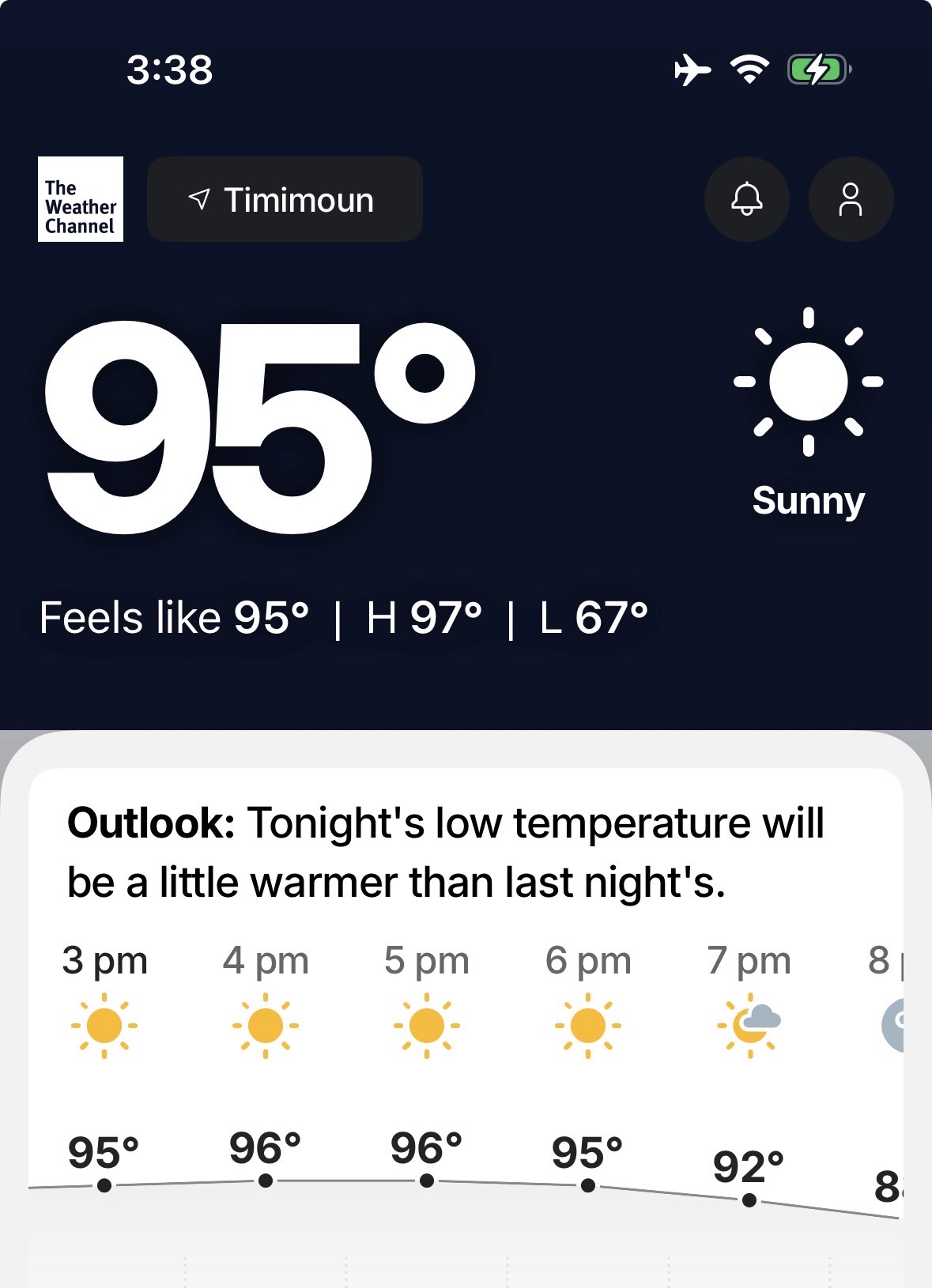
However, Furnace Creek in Death Valley, California recorded 134°F or 56.7°C in July 1913. This is also recognized by the World Meteorological Organization (WMO) as the highest official air temperature recorded on Earth. Bakersfield, California hit a high of 118° in 1908 and over the 35 years I lived there, it reached 114° in 1976. I still remember my backyard thermometer registering 117° that day!
However, the dry, brutal heat of summer in the Sahara is real. They deserve that siesta in the afternoon hours. I am told “not even darker Africans will be out in the heat of the day.”
Grotte d’Ighezar and Ighezar Citadel
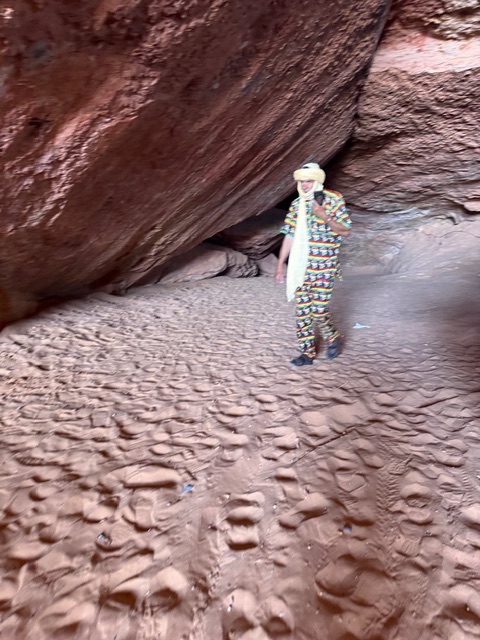
Our first stop this morning is Grotto d’Ighezar, a natural cave located near Timimoun. The cave is carved into soft sandstone and extends roughly 262 feet into the hillside beneath an historic ksar (fortified village).
Its interior remains relatively cool year-round, which made it a practical refuge from desert heat and seasonal winds. Archaeological traces suggest long human use of the area, and the cave’s position near ancient irrigation systems and caravan routes indicates its importance as both shelter and waypoint in a harsh environment.
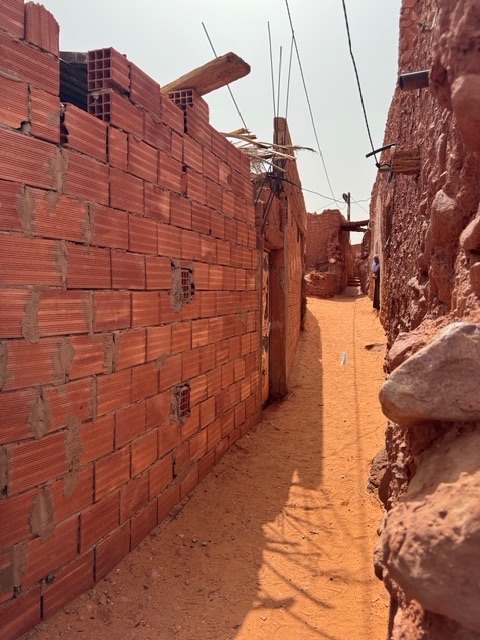
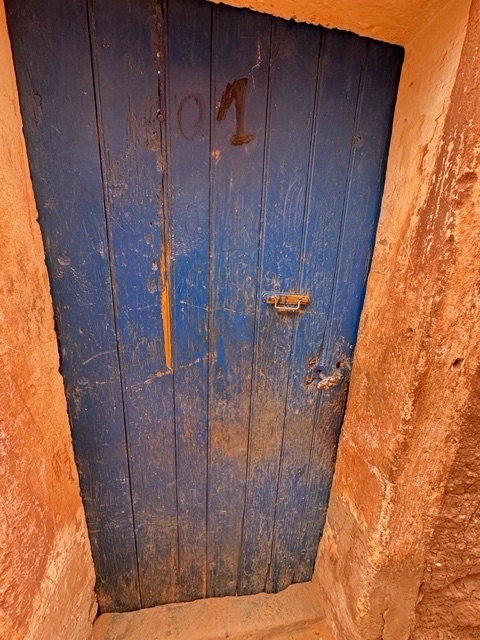
Above the cave sits Ighezar Citadel overlooking palm groves and the surrounding desert landscape. Founded by Berber Zenete tribes and later associated with Sidi Mansur in the 15th century, the ksar is an example of Saharan defensive architecture built from local materials such as stone, gypsum, and palm trunks. The elevated position allowed inhabitants to monitor caravan routes and potential threats. Narrow lanes, defensive walls, and integrated irrigation systems (foggaras) reflect the ingenuity required for survival in an arid climate.
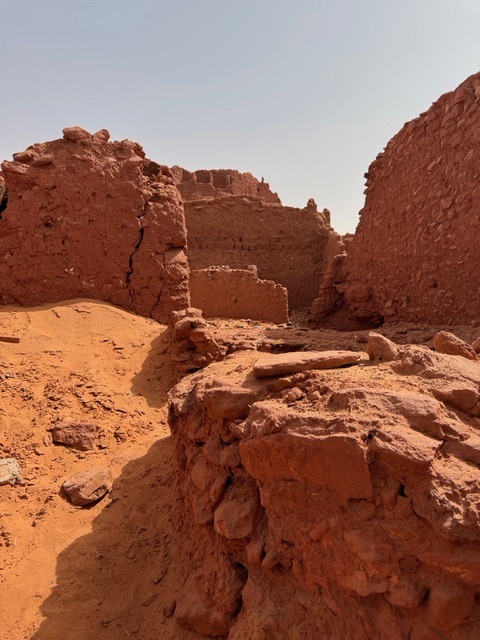
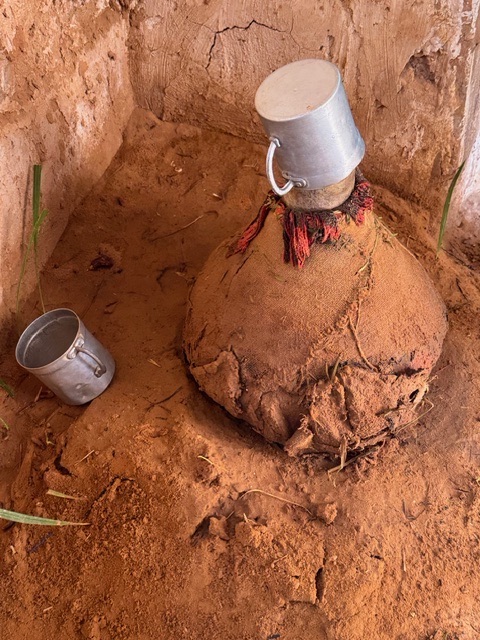
Together, the cave and citadel illustrate how communities adapted to extreme desert conditions by combining natural shelter with fortified settlement design. The site remains a cultural and historical reminder of traditional Saharan life, where water management, defense, and trade shaped settlement patterns across the Gourara region.
Foggaras – Fougart Baadgha
Foggaras are ancient underground irrigation systems that have sustained Saharan oasis life for well over a thousand years, especially in regions like Timimoun and the Gourara. Historians trace their origins to techniques introduced from Persia and adapted locally by Berber and Saharan communities between the early Islamic period and the medieval era. In a landscape with little surface water, foggaras made permanent settlement possible, allowing agriculture, trade, and towns to survive deep in the desert.
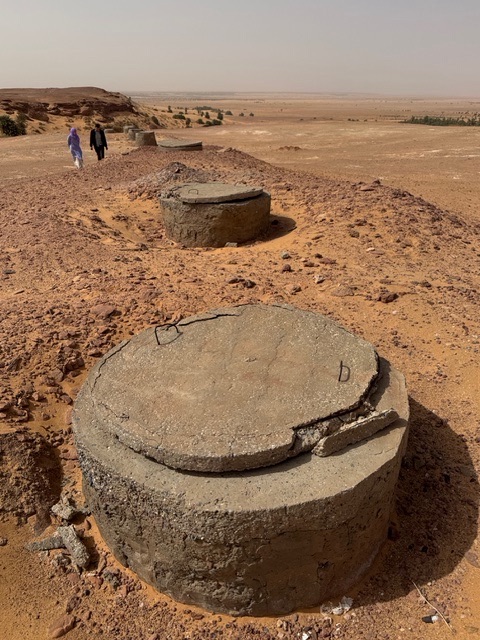

Their construction reflects gently sloping underground tunnels that tap into groundwater or aquifers. Gravity carries water from higher elevations to palm groves and fields. Vertical shafts, dug at regular intervals, serve multiple purposes: removing excavated soil, providing ventilation, and allowing access for maintenance. The water flows slowly and continuously, protected from evaporation by remaining underground until it reaches the oasis.
The water feeding these foggaras comes from deep fossil groundwater aquifers beneath the Sahara, primarily the Continental Intercalaire, one of the largest underground water systems in the world. This aquifer filled thousands to tens of thousands of years ago during much wetter climatic periods. Then, the Sahara looked greener and received regular rainfall. Today, there occurs little to no recharge from rain; the water is essentially ancient. Foggaras are carefully aligned on order to utilize this groundwater where it naturally rises closer to the surface, often at the edges of plateaus like the Ighzer.
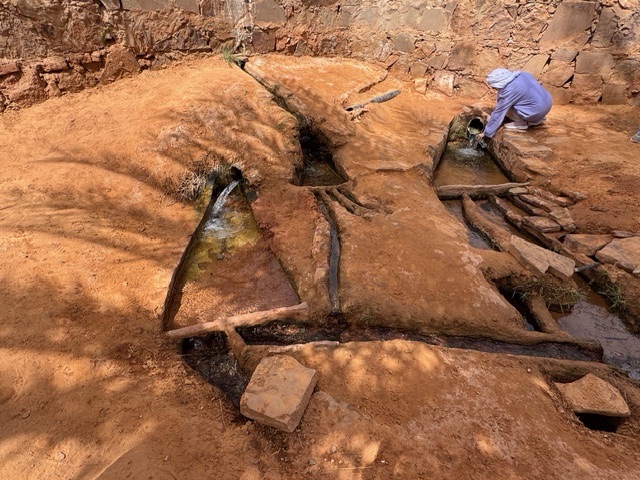
Today, some foggaras are still in use, though many have fallen into disrepair due to modern pumps and declining communal maintenance. Those that survive are valued not just for irrigation but as cultural heritage. They remain examples of sustainable engineering, collective water sharing, and deep environmental knowledge perfectly adapted to desert life.
I can’t help but wonder how long this source can last. This system worked for centuries because it matched extraction to natural limits. Modern wells and pumps draw from the same aquifers but at much higher rates, which is why maintaining traditional foggaras today has become both technically and environmentally challenging.
Medina and More
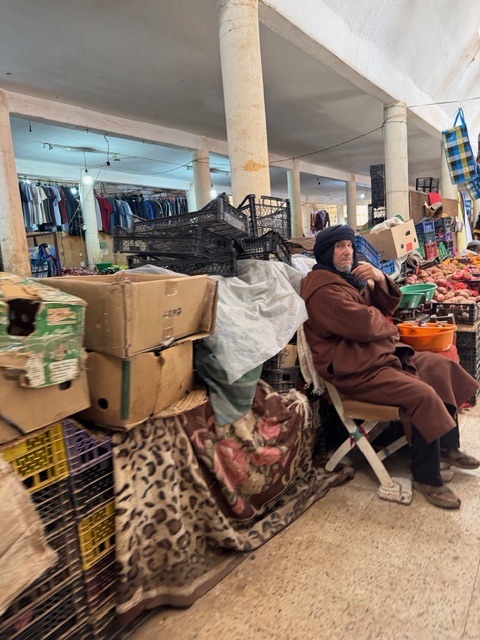
As markets go, the Timimoun market was for locals only. Foodstuffs from veggies to sheep’s head were for sale. Trinkets and souvenirs adorned many a table. All in all, the market was noisy and dirty. But, as Al, markets, they offer plenty of photo opportunities. Locals must wonder why these tourists want a photo of a melon or spice shop.

Of much more interest was the clay house. Gourari houses are made from earthen blocks, stone, and palm wood, with an angled entrance and narrow inner courtyard. These houses provide excellent thermal insulation, and are resilient to the desert climate.
The uniqueness of these structures is further enhanced by their distinctive ornamentation, with geometric patterns carved into the clay, and a form of plastering of entire walls involving balls of clay, which increases shading and reduces sun exposure. However, the best part if the beauty and uniqueness of the patterns.
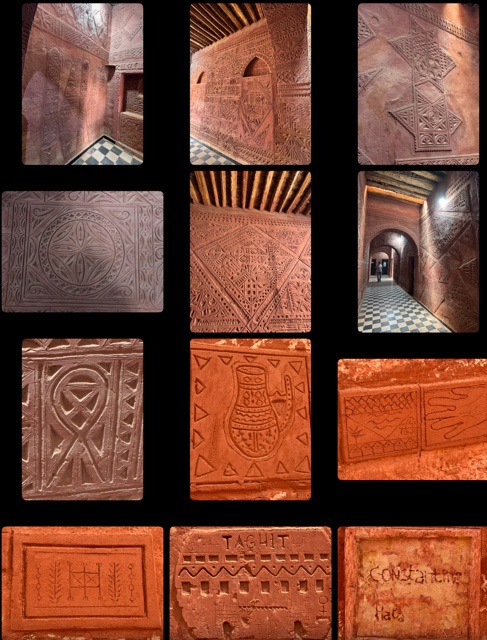
The house we toured was actually an architectural school which teaches students from around the world how to make these carvings. They teach in order to keep this art live. And it is amazing construction!
Lunch
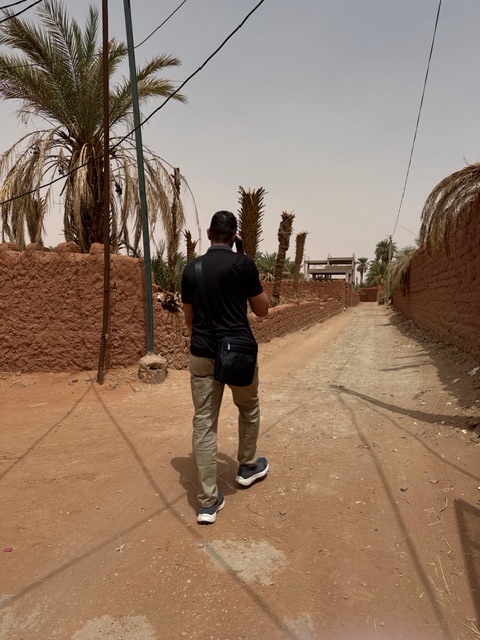
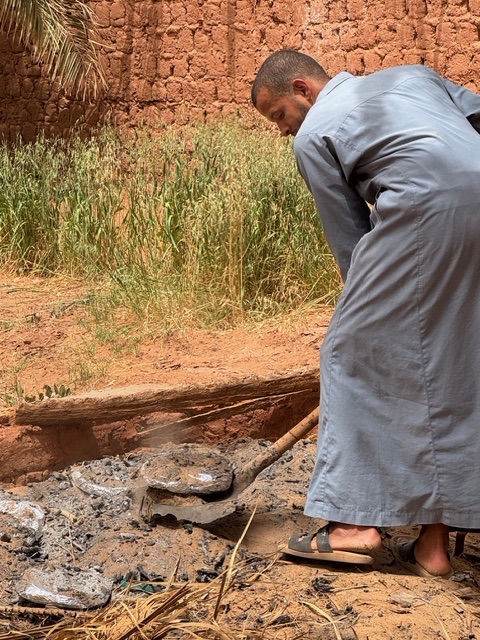
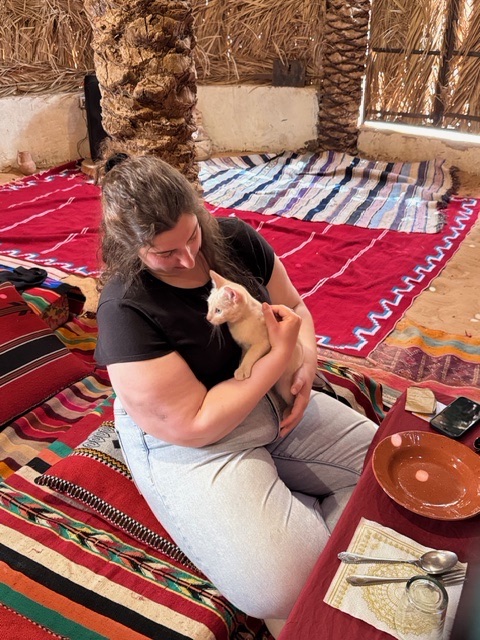
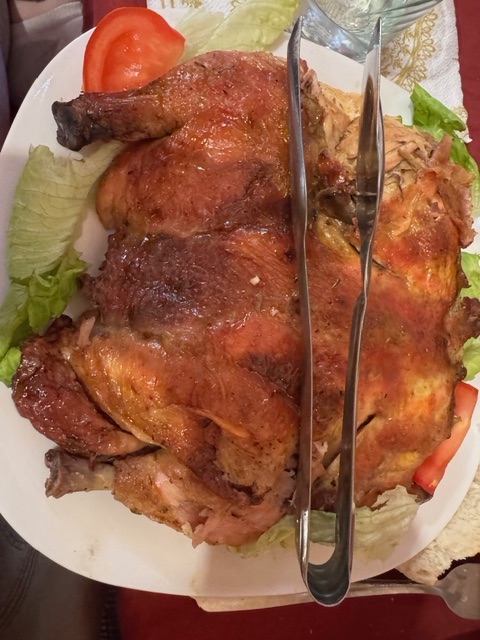
We walked from our hotel to our lunch spot. Down dirt roads and deteriorating red brick walls to a fire pit where our men was prepared. Inside, We found traditional Gourara dining, a charming resident cat, and wonderful food.
Ighzer Plateau
Beyond the town itself, Timimoun serves as a gateway to the Grand Erg Occidental, one of the Sahara’s great dune seas. We, like all tourists visiting here, seek dramatic sand landscapes, desert sunsets, and the quiet immensity of the Algerian Sahara.
The Grand Erg Oriental remains one of the largest sand seas in the Sahara Desert. It stretches across eastern Algeria and southern Tunisia. Erg means a vast area of wind-blown sand dunes. The Grand Erg deserves the distinction. It appears as an endless expanse of rolling, towering dunes that shift and change with the wind. In some areas, dunes can reach 400 feet high!
We set out in 4×4 vehicles to explore this remarkable landscape. We begin with the Ighzer Plateau a stark, expansive, and dramatic Saharan landscape stripped to essentials. It’s a broad, elevated plain of stone, gravel, and hard-packed earth, stretching toward a low, hazy horizon with very little vegetation. Muted pale tans, rusts, and grays change constantly with the light, especially at dawn and late afternoon.
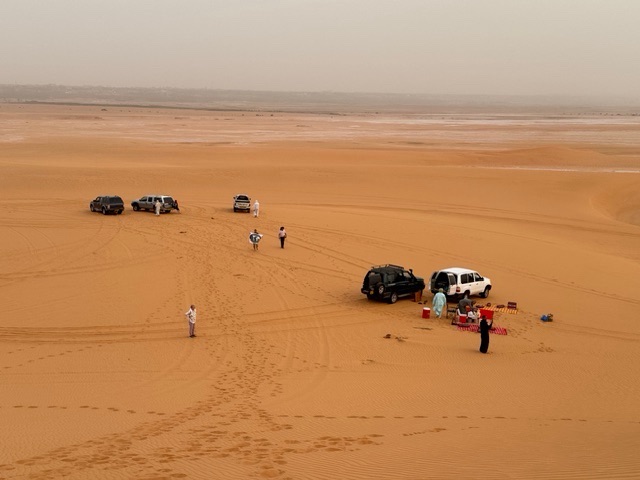
The plateau gives off a sense of vast openness, one of flat expanses broken by shallow wadis, rocky outcrops, and distant escarpments. The sky feels even more expansive here, often the most dominant feature. Except during a storm, skies remain still and clear. The silence is striking. When wind moves across the plateau, it carries fine dust rather than sand, giving the place a raw, elemental feel.
What makes the Ighzer Plateau memorable isn’t spectacle but scale and stillness. It feels ancient and unhurried, a landscape that invites reflection, where human presence seems temporary against geology and time.
Sunsets in the Sahara
I’m promised a “breathtaking sunset over the desert dunes; a truly unforgettable experience.” I remain skeptical. Travel has a way of humbling expectations — snow monkeys fail to show, clouds swallow constellations, pollution dull the light. Mother Nature makes no promises.
What produces a breathtaking desert sunset? First, one needs a clear western horizon. The air must be dry and clean; too much dust dulls the colors while small amounts can enhance the reds. Actually, high, thin Cirrus clouds reflect colors dramatically. Finally, the ability to witness a sunset requires an open landscape. No problem as the dunes streatch on forever. They also provide shadow and scale. All should be good, right?

We ride our 4-wheel truck into the nearby dunes. I am told the sands are scorpion and viper free. We scale the dunes for the best views. The sunset draws us to the crest.
In the Sahara, the region sits in one of the driest zones of North Africa, and clear skies are common. So, we sit. The time is 7:15. I enjoy the peace of the desert. Slowly, the sun lowered into a vast, uninterrupted gray haze of dust. No shadows, no orange to crimson, no afterglow, no sun as it becomes one with the haze. Mother Nature wins again. But, She says, you saw a good one last night so don’t complain.
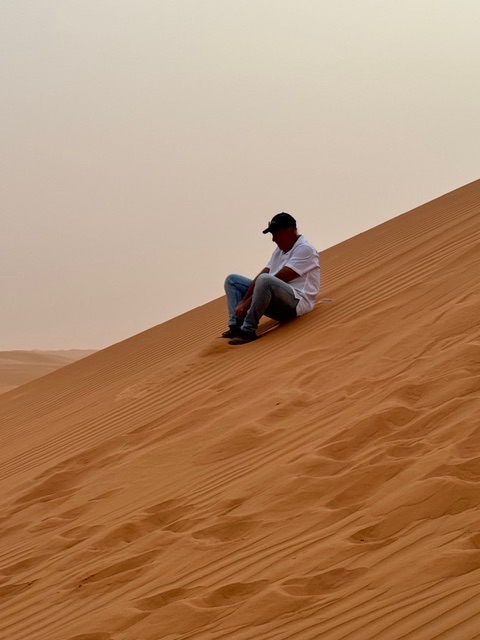
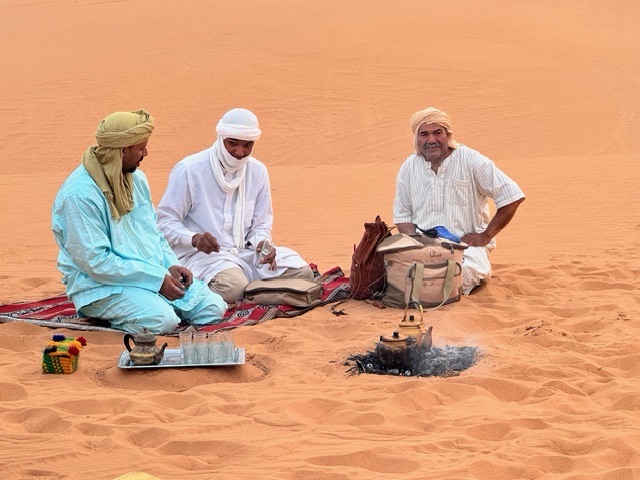
But then — the temperature drops.The Plateau may be hot during the day, but as the sun disappears, all that changes. Little heat is retained in the landscape and it becomes much cooler. The desert, and I, exhale. Gabrielle is doubly relieved; this Minnesota girl has little love for the heat.
Even if the sun hides behind thin haze, the Sahara still performs. The scale alone — the silence, the immensity — often makes the moment unforgetable.
Our sunset ranked right up there with Japan’s Snow Monkeys.
Overnight in Timimoun
We remain for another night at the Gourara Hotel. Dinner reflects local trends here, slow or non-existent. The beer bus still has not arrived, nor does our soup or dinner for an hour. The three of us who wanted something to eat finally gave up and went to our rooms.
Clearly, one comes to Timimoun for the scenery.

0 Comments