31 Oct – 1 Nov 2026
Today, we travel about 140 miles southwest through Kenya’s fertile highlands before descending the Rift Valley Escarpment toward the legendary Maasai Mara National Reserve. As the landscape opens into vast green grasslands, I glimpse the abundant wildlife that makes the Mara a renowned safari destination.
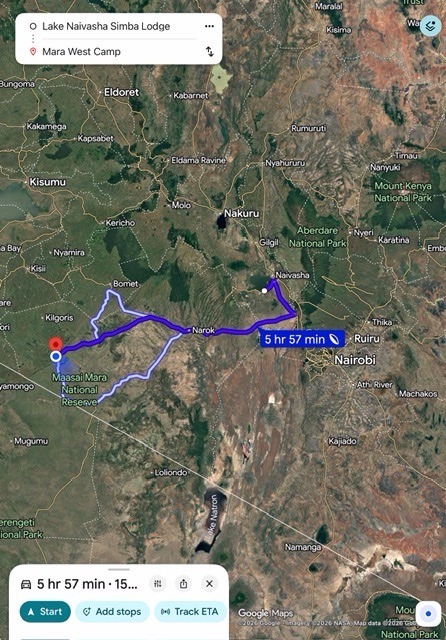
The Maasai Mara lies in southwestern Kenya, where the Great Rift Valley opens into a vastness hard to comprehend. A vastness only interrupted by Acacia trees dotting the plains, some wooded hills, and animal herds. Established as a wildlife sanctuary in 1961 and expanded and listed as a national reserve in 1967, the Mara has become one of Africa’s most celebrated wildlife destinations.
Maasai Mara – Land, People and History
As we descend from the Rift Valley, the landscape begins to stretch endlessly ahead. Kenya seems to open into another world. The roads give way to golden grasslands hosting herds of zebra and wildebeest by the thousands .
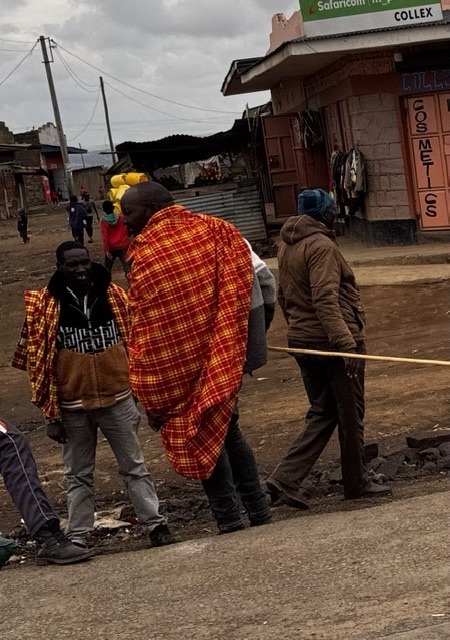
Occasionally, I spot a Maasai herder watching over his cattle. Long staff in hand, most wear the traditional bright red shuka over the shoulders.
Maasai Mara – a place where the boundaries between landscape and wildlife disappear.
The Mara’s extraordinary wildlife is inseparable from its landscape. Its endless savannah provides ideal habitat for elephants, giraffes, zebras, wildebeest, lions, cheetahs, leopards, hyenas, hippos and countless other species. The Big Five reigns supreme here.
The Mara River cuts through these plains, sustaining wildlife through the dry seasons and becoming part of the spectacular annual migration of millions of wildebeest, zebras, and gazelles between Tanzania’s Serengeti and the Mara.
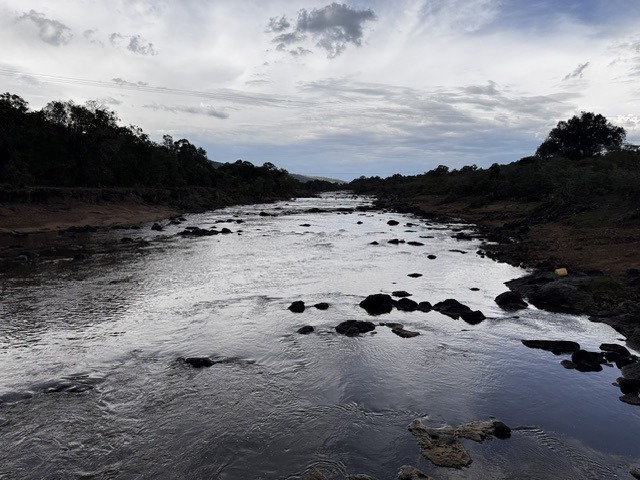
Today, the Maasai Mara is a place where wildlife, ancient migration routes, pastoral traditions, and modern conservation come together. Every bend in the track brings the possibility of another encounter – a giraffe rising above an Acacia, elephants slowly grazing the grasses, or a pride of lions resting beneath a bush. The plethora of animals and birds is beyond comprehension.
Before the Maasai
The Maasai are not generally considered descendants of the Cushitic peoples who lived in this region a 1,000 years ago. For centuries, the Rift Valley and surrounding highlands were home to a mixture of peoples. Cushitic-speaking communities established themselves in parts of East Africa, while other Nilotic and later Bantu-speaking peoples lived here. These were not empty lands awaiting the arrival of the Maasai; they represented landscapes of farming, herding, hunting, and trade.

The term Cushitic refers primarily to a branch of the Afroasiatic language family rather than to a single ancient tribe. Some Cushitic-speaking peoples became pastoralists, raising cattle and other livestock, while others farmed or combined farming and herding. Over time, peoples moved, intermarried, traded, competed for grazing and water, and influenced one another. The Maasai themselves incorporated some cultural influences from earlier communities they encountered in the Kenyan highlands.
The Arrival of the Maasai
Migration into the Kenya–Tanzania region began around the 16th–17th centuries. The Maasai interacted with earlier Cushitic and Nilotic-speaking peoples already living in the area.
The Maasai are part of the Eastern Nilotic peoples and speak Maa, a Nilotic language. Their ancestors’ migration through East Africa occurred over several centuries before becoming established across the savannahs of what is now southern Kenya and northern Tanzania.
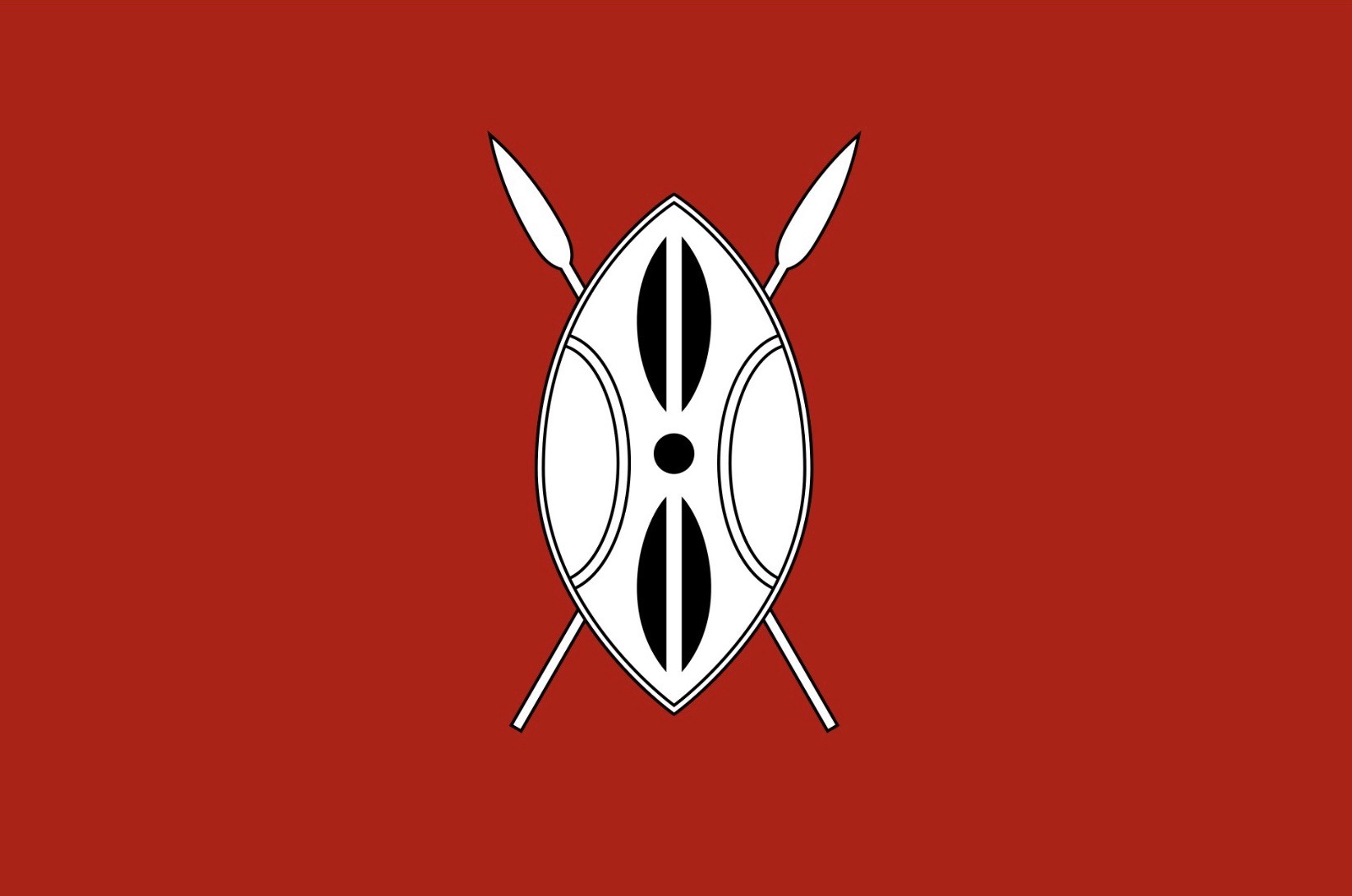
The environment shaped their way of life. The great open grasslands were ideally suited to cattle. So, cattle became much more than a source of food: they represented wealth, social standing, family relationships, and cultural identity. Maasai society developed around extended families, clans, elders, and warriors.
For generations, Maasai communities moved with their herds in search of water and fresh pasture. Warriors, known as morans, traditionally protected the herds and communities, while councils of elders guided important decisions. Their distinctive clothing, beadwork, ceremonies, music, and deep relationship with cattle became defining elements of Maasai culture
The Maasai Today
Today, the Maasai remain a distinct and vibrant people living primarily in southern Kenya and northern Tanzania. In Kenya, the 2019 census reported about 1.19 million Maasai.
The traditional image of the Maasai as entirely nomadic cattle herders is somewhat misleading. Many Maasai continue practicing semi-nomadic lives, moving livestock according to rainfall, water, and available grazing. Others have settled permanently or combine herding with farming, wage employment, education, tourism, and businesses. Their communities therefore contain both traditional and modern ways of life.
The creation of national parks and reserves also changed traditional patterns of movement. Areas once used for seasonal grazing became protected wildlife habitat. So, as I travel through the Mara, I see more than a wildlife reserve. I pass through a landscape shaped by generations of people and animals – a place where an ancient pastoral culture continues to exist alongside one of Africa’s most famous conservation areas.
Thankfully, the Maasai have not disappeared into the modern world; they remain part of this landscape. But has modern tourism changed them? Tourism provides income and political leverage for Indigenous communities, while also turning culture into a commodity and creating unequal relationships between visitors and hosts.
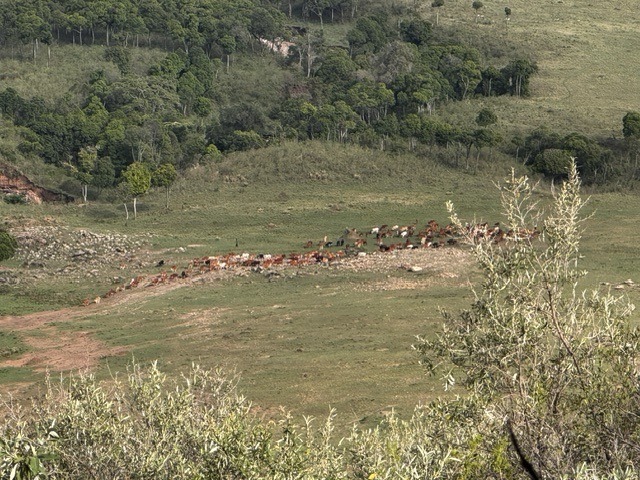
I have observed indigenous peoples in Ethiopia, Lesotho, Rwanda, other African countries and Brazil. Were these cultural encounters genuinely reciprocal or essentially a performance created for tourists? How do I describe what I watch without romanticizing the Maasai or treating them as a mere tourist attraction? This seems the reality – being a visitor without pretending that an arranged cultural encounter is an authentic window into Maasai life.
Beyond the Tourist Experience
There is a long history of researchers questioning what tourists are actually seeing when visiting a Maasai manyatta or cultural village. The performances are shaped by what tourists expect to see and what Maasai participants choose to present. “Staged authenticity” represents a controversial subject in tourism.
But staged doesn’t necessarily mean fake. There are real economic benefits. One ethnographic study found that Maasai participants incorporated tourism into everyday life. They mixed traditional and tourist-generated images and narratives in order to pursue practical goals – like feeding families, educating children, and supplementing pastoral livelihoods. “This is a role I have chosen to play because there is money to be made from it, and that money matters to my family.”
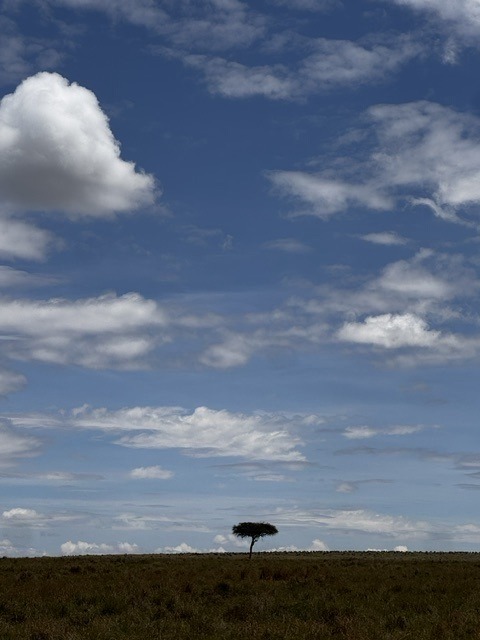
The really difficult issue becomes land. The Mara isn’t simply a wildlife park sitting in an otherwise empty wilderness. The surrounding rangelands are Maasai land, and tourism and conservation have changed how that land is owned and used.
The tourism industry needs the Maasai landscape to remain open and undeveloped. That attracts the wildlife and tourists. Under the conservancy model, landowners receive regular payments from tourism operators in exchange for setting aside land for conservation. But preserving land requires restricting the traditional activities of the people who live there.
Tourism has created opportunities for Maasai women that weren’t necessarily available through the traditional pastoral economy. Tourism provides Maasai women with opportunities for income, social networks, education, and greater standing within their communities. However, researchers caution that the economic gains are not yet large enough to transform most women’s lives.
Food for thought. My experience has been the local Maasai and other Kenyans represent some of the nicest people I have met while traveling. A niceness that cannot be faked.
Wildebeest and More Wildebeest
A wildebeest looks like nature couldn’t quite decide what animal it wanted to make, so it combined a cow, a horse, and a bad hair day. The wildebeest – literally the “wild beast” – has another name, gnu, which is almost as strange as the animal itself.
With its shaggy mane, beard, enormous head and rather bewildered expression, it looks as though evolution was experimenting. Yet every year this unlikely-looking creature sets off on one of nature’s greatest journeys.
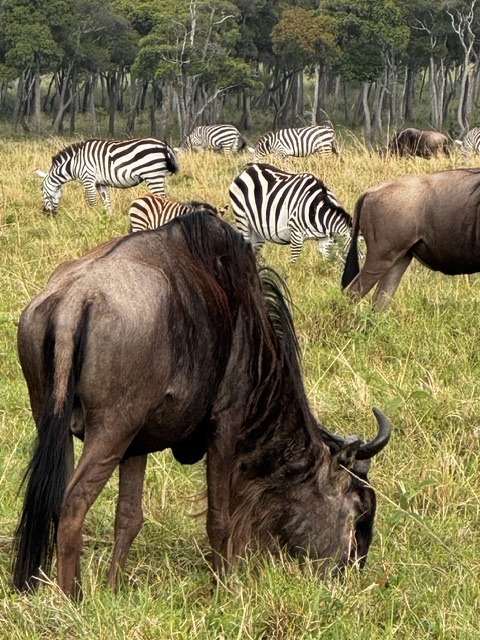
We miss the dramatic spectacle of the Great Migration, which typically reaches the Maasai Mara between July and October. Then, more than a million wildebeest, along with hundreds of thousands of zebra and gazelle, move between Tanzania’s Serengeti and the Mara in search of fresh grass and water. The crossing of the Mara River, with crocodiles waiting below and predators nearby, has become one of Africa’s most famous wildlife spectacles.
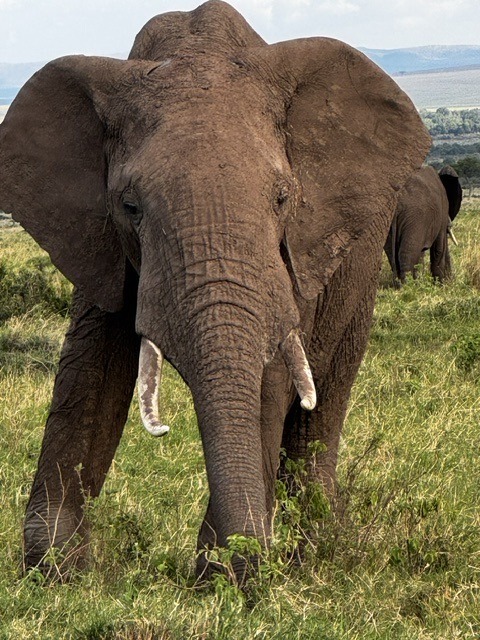
But November brings its own sights. With the great herds beginning their return south, the Mara settles into a quieter rhythm. Resident wildlife remains abundant, and the short rains bring fresh green growth to the plains. This acts as home to elephants, giraffes, zebras, buffalo, hippos and numerous antelope, while lions, cheetahs and leopards follow this abundance of food. Enormous herds dominate the landscape.
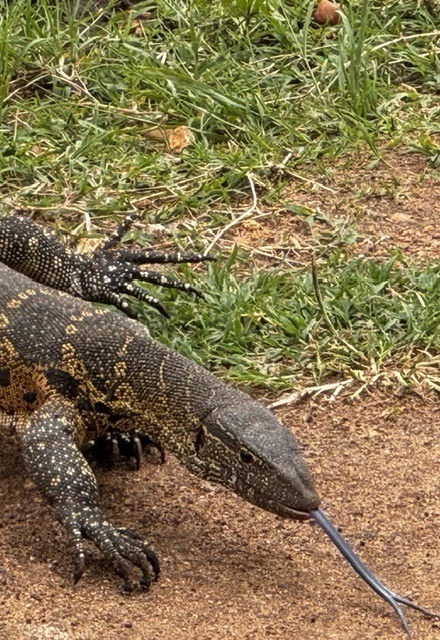
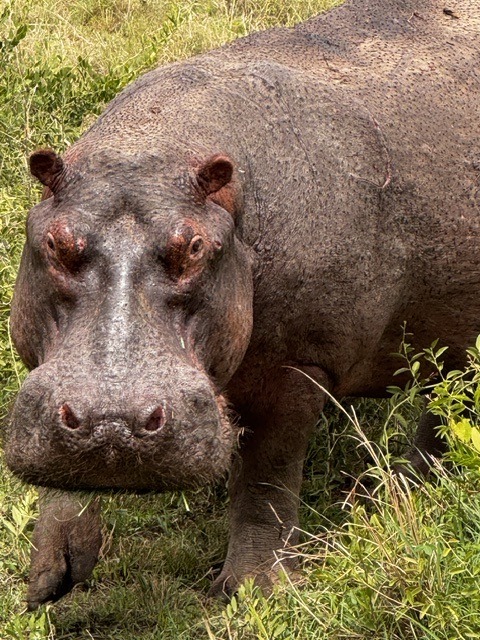
Also, Hippos gather in pools and ponds. They spend much of the day submerged, with their eyes, ears and nostrils just above the water. But they do emerge to graze. Our path can include a two-ton hippo or a 20-pound Monitor Lizard.
The Game Drive — Where We Don’t Actually Drive Game
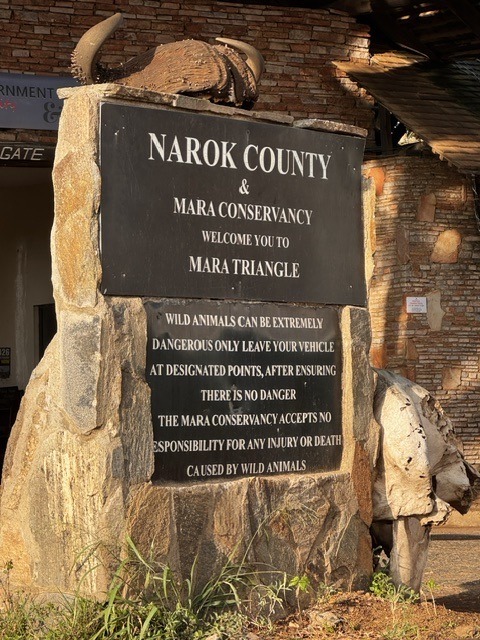
At Mara West, our drives are in 4×4 safari vehicles, with the Mara Triangle beginning only about five minutes from camp. The western Triangle is generally quieter and has less vehicle traffic than some other parts of the Mara. So, I watch while the animals carry on with their lives, allowing me to witness the proceedings.
The term “game drive” is misleading. We will not be driving game. The experience involves a knowledgeable guide, a great deal of bumping, and the realization that Africa has not paved its wilderness. The roads and tracks can be rough and rutted, although our driver knows how to negotiate them. And when the rains come, November adds mud to the adventure.
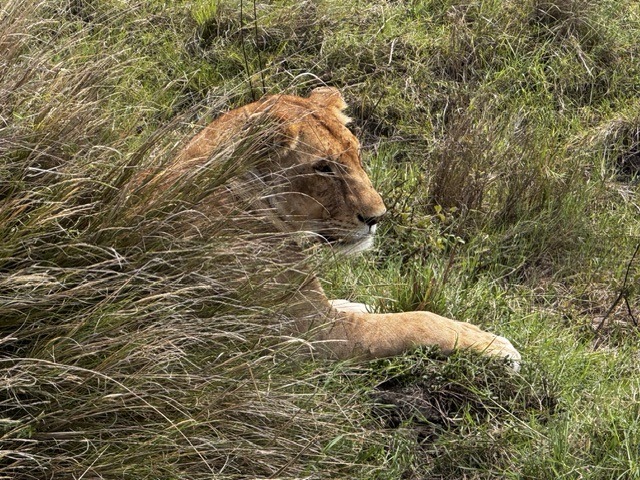
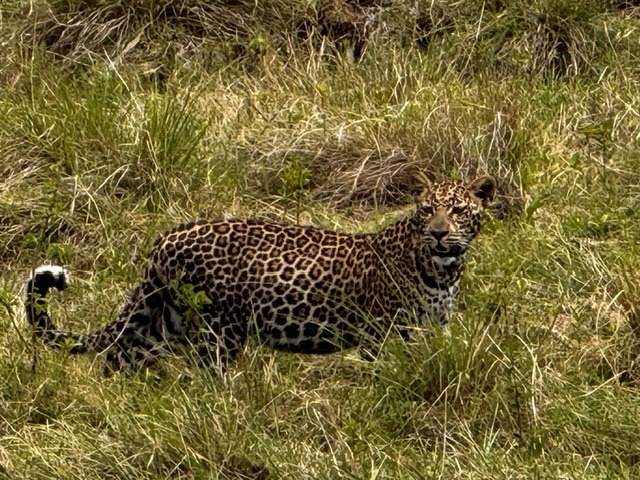
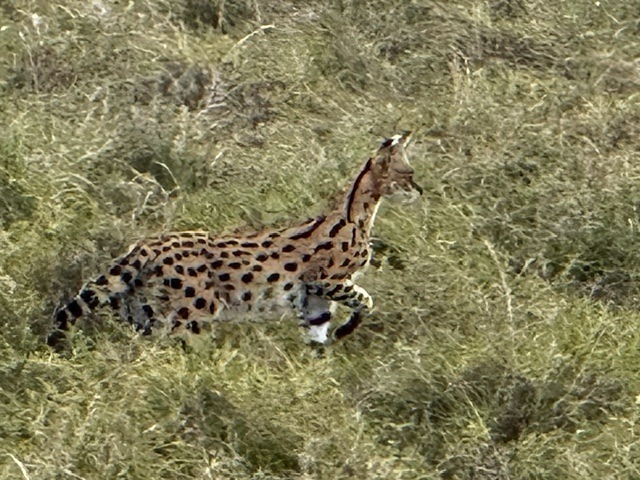
In Mara West off-road driving is permitted in certain circumstances. However, the rules are much more controlled than “drive wherever you see an animal.” Off-roading is prohibited in high-use zones. The reserve also requires drivers to maintain distance, limits the number of vehicles around major predators, and prohibits chasing or harassing animals. And you must leave the park by 6:30. Rangers make their watchful presence known.
There will be some jostling. Dust floats and chokes. There may be a sudden lurch as the driver spots something everyone else has missed. At some point someone will undoubtedly say, “There! Over there!” I will stare dutifully into a sea of grass wondering whether there means the tree, the rock, the lump, or the invisible leopard apparently sitting behind a bush.
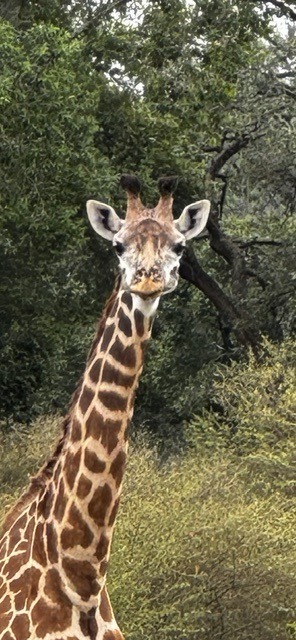
I have also decided that I am perfectly happy to see the animals with my own eyes. I don’t need binoculars powerful enough to determine whether an elephant has been moisturizing. If a lion is close enough that I can see him, I will look at the lion. If he is too far away to see without binoculars, I shall accept that he is probably still a lion. I enjoy the fact that I am sitting in Africa looking his way.
Could a leopard jump into the jeep?
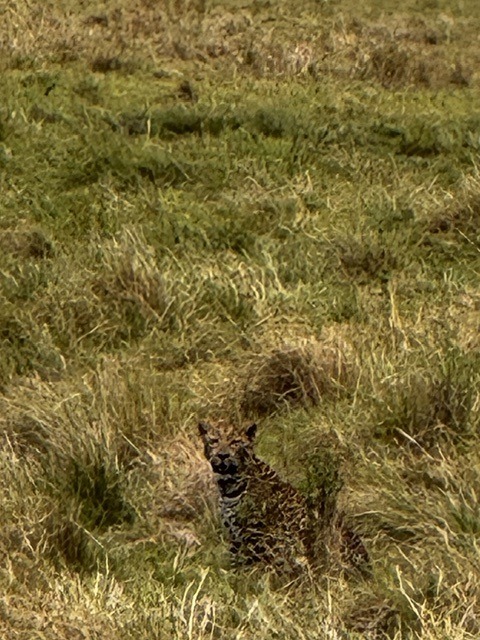
And that brings up the question someone eventually asks: Could a leopard jump into the jeep?
Wild animals are accustomed to safari vehicles, but they are still wild animals.
The rules are designed precisely to keep it that way: stay in the vehicle, remain quiet, give animals room, and never interfere with their movements. I’m reminded of the lioness who laid in the shade of our vehicle in South Africa. She appreciated the shade; I enjoyed a close-enough view.
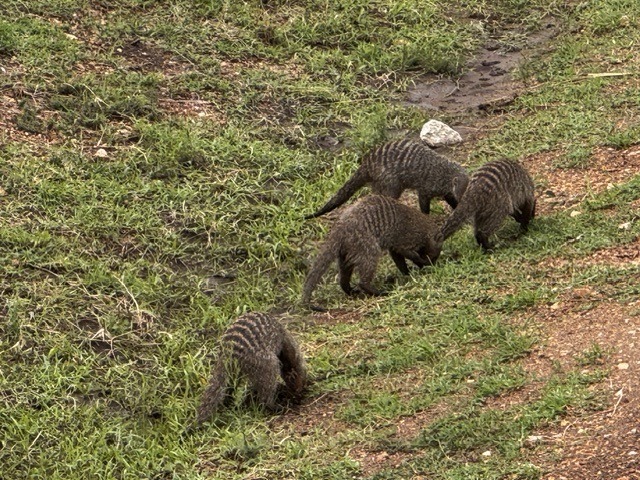
So, I am counting on the leopard remaining in the tree, the lion remaining on the ground, the elephant remaining outside the vehicle, and me remaining firmly inside it. Just viewing animals behaving like animals.
Immense – Wildlife – Protected
Three word description of an almost indescribable place. Imagination fails. One must see it to believe it. The Maasai Mara puts to shame the likes of the American plains.
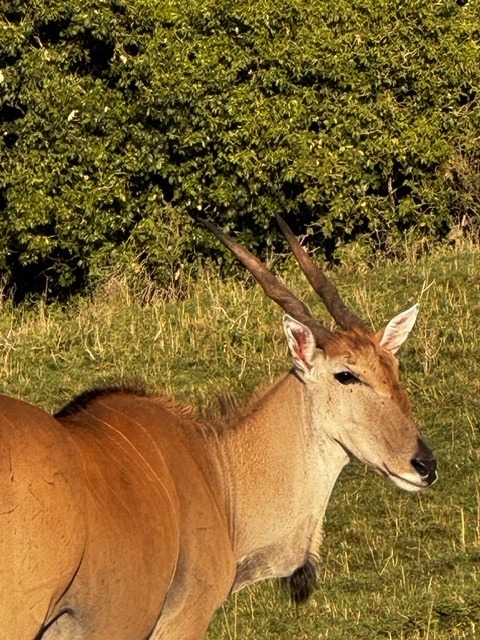
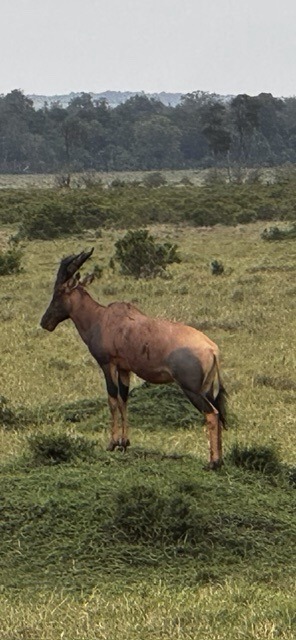
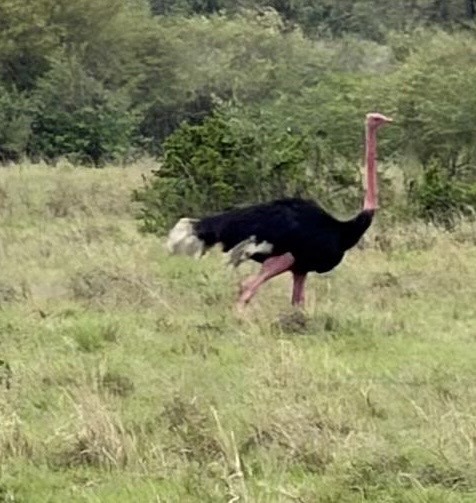
Perhaps a distinguishing factor becomes the plethora of species and their numbers. A herd of grazing animals does not number hundreds but thousands. A shoulder to shoulder eat wildebeest and zebra, gazelle and hartebeest. Ever watching them are lions and leopards. By the trees are the giraffes. Elephants lumber past.
And watching over everything – the rangers. Hunting is not allowed in Kenya and poachers severely dealt with. The animals of Maasai Mara live free and unmolested. The strongest and smartest survive. Conservation and protection comes first. The $200 entrance fee helps fund that purpose.
Lodging in Maasai Mara
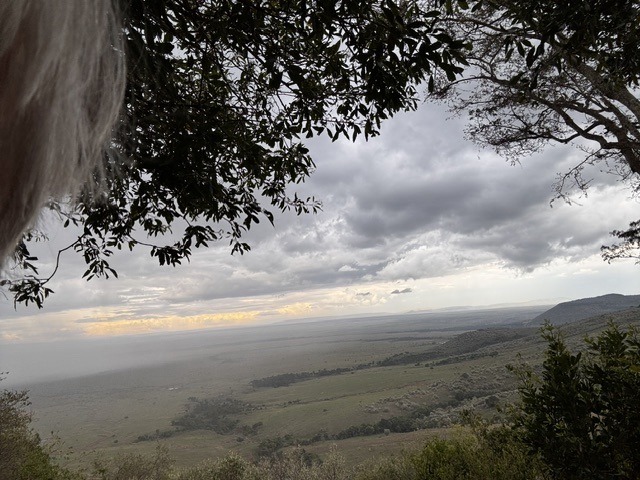
Orr lodging for two nights is at the Mara West. Surrounded by trees, the lodge sits high on the Oloololo Escarpment overlooking the Mara Triangle with broad views across the plains.
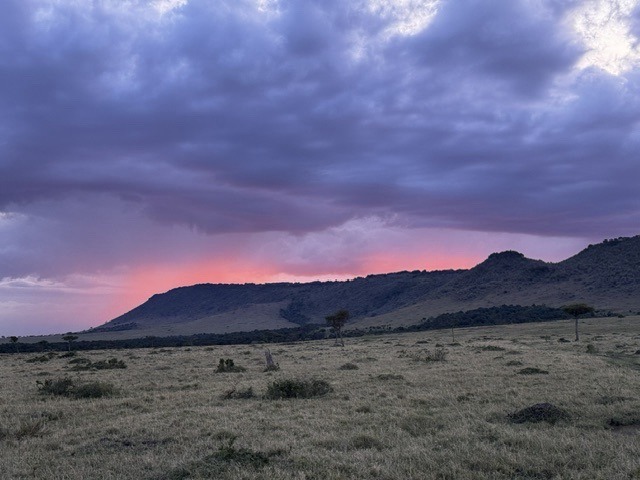
The location is lovely and sunrise/sunsets spectacular. Also, it sits by the Oloololo Gate and a less busy part of the reserve. Wildlife, from zebras to giraffes and wildebeest hang out on the property. It resembles a a safari on my doorstep.
Cool White Cap in hand, sun setting, big animals feeding on the Mara, grunts and whoops around our camp. What more could one want on a November evening in Africa?

0 Comments