9 Nov 2026
My kind of lazy day. “We enjoy a morning at leisure before we depart for Tarangire National Park.” After the excitement of the past few days, a leisurely morning itinerary sounds perfect. I linger over morning, enjoy the modern comforts of the farm, and treasure one last sip of the farm’s fresh ground coffee beans before we set off.
We leave coffee country behind to head further southeast toward the area of Lake Burunge and Tarangire National Park. It’s only about 75 miles – three hours by African road. However, as I’ve learned, mileage here doesn’t necessarily tell the whole story.
But today seems blessed. We drive an asphalt road for part of our trip. The temperature is in the mis-eighties with high humidity. The sun blasts down upon us with a vengeance.
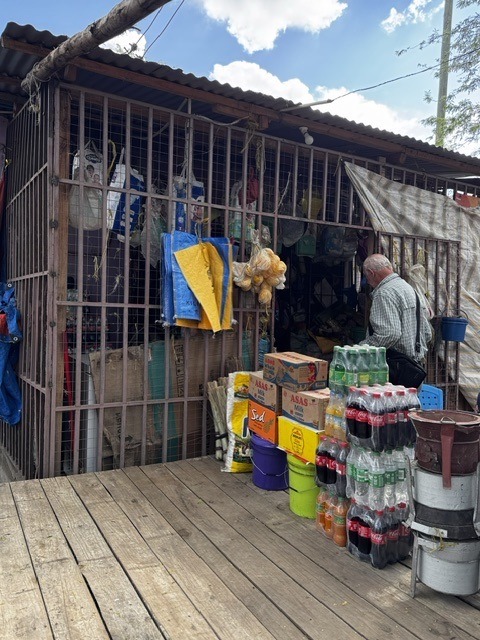
We make a brief stop to grocery shop for some bread, rice and sugar.
This seems one of those days when our destination cannot be found on Google Maps.
I’ll know where I am when I get there.
Maybe.
A Visit to a Maasai Boma
We returned to near the shores of Lake Eyasi to visit a Maasai community. The Maasai have maintained a largely pastoral way of life for generations, with cattle at the center of their culture, economy and identity.
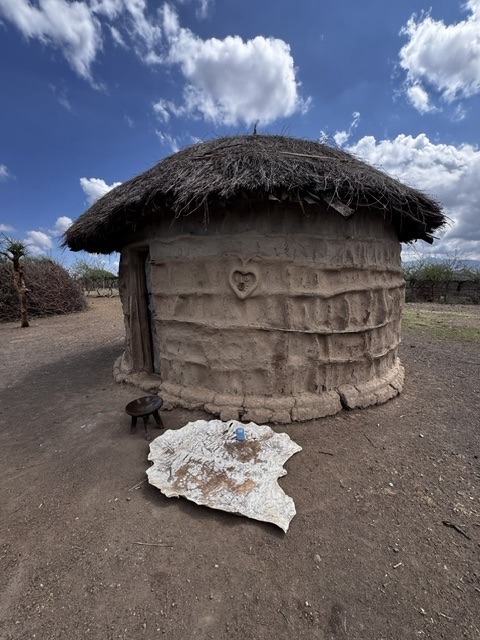
Round and small starter home serves until one can improve their position. No windows and built of mud and dung. This would be living and sleeping quarter for four of five.
Cattle provide milk, meat, hides and, perhaps most importantly, wealth and status. Their lives revolve around tending herds, finding grazing land and water, trading livestock and protecting their animals. It is a life deeply connected to the land, but not an easy one.
The chief of this community has two compounds. In the one we visited, he has two wives; at his other compound, another three. Children are plentiful, and most appear to be his. Clearly, family planning practices the more the merrier.
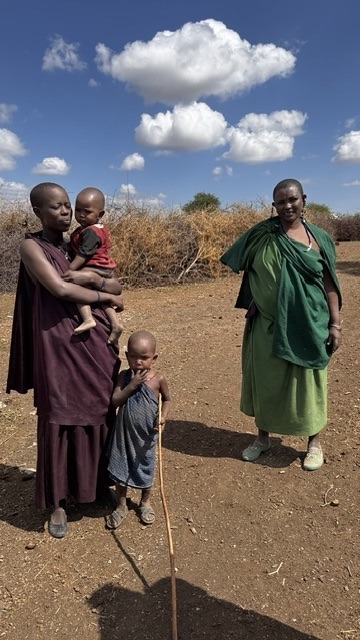
The women’s lives struck me as particularly demanding. Some marry as young as fifteen, and childbirth may follow every 18 to 24 months. Add to that the daily responsibilities of raising children, preparing food, collecting water and firewood, maintaining the home and tending to household needs.
It is a workload that would kill most of us. The men tend the livestock, often spending long hours away from the settlement, while much of the domestic responsibility falls to the women.
We were invited inside one of the traditional homes. It was round, constructed from branches and other locally available materials, with walls and a roof covered in mud and dung. The floor was dirt, and the interior was pitch-dark, hot and remarkably airless.
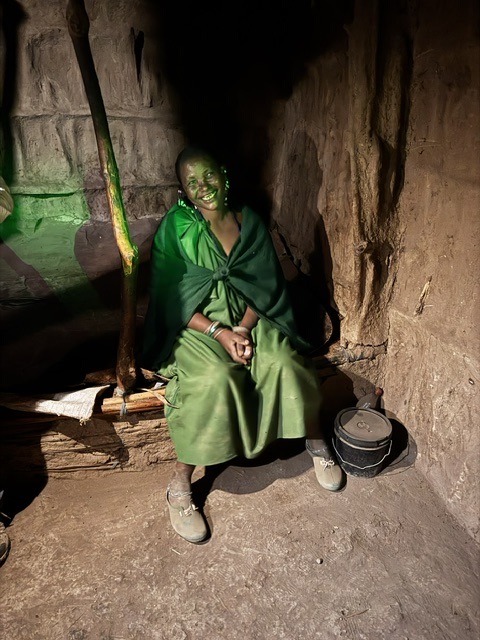
A small opening served as both entrance and ventilation. It was difficult to imagine spending an entire day, let alone raising a family, in such conditions. A more modern rectangular structure stood nearby. I could only hope the wives and children had moved into that one.
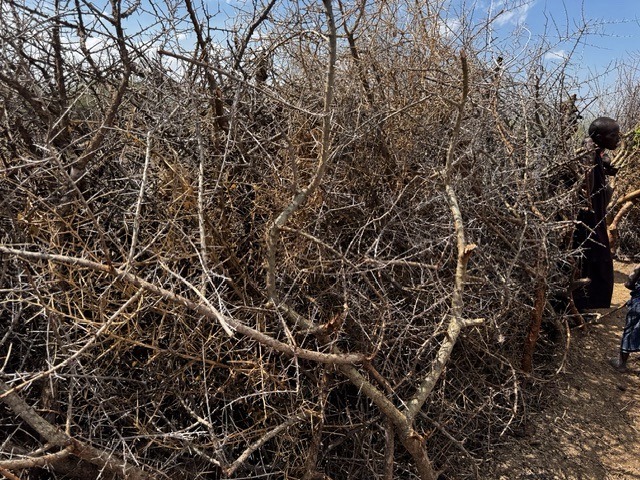
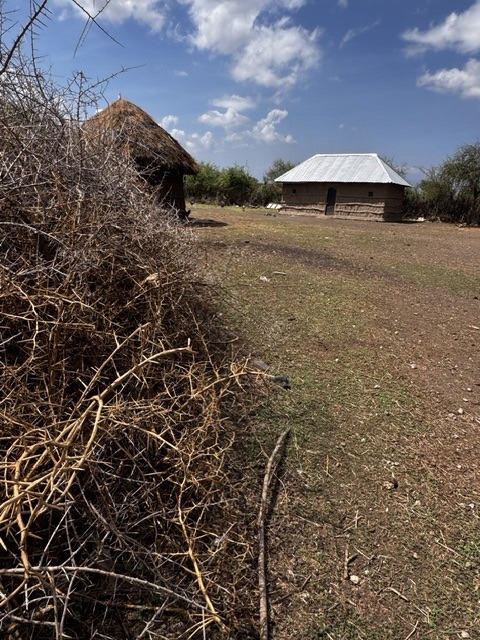
Nearby was a large, circular boma, an enclosure built from thorny branches to protect the cattle and goats at night. Lions still hunt in this area, making livestock an attractive target.
The animals are brought inside the enclosure after dark, where the thorn barriers offer some protection. Somewhat reassuring, perhaps, although I suspect a determined lion is not easily discouraged by a fence made of branches.
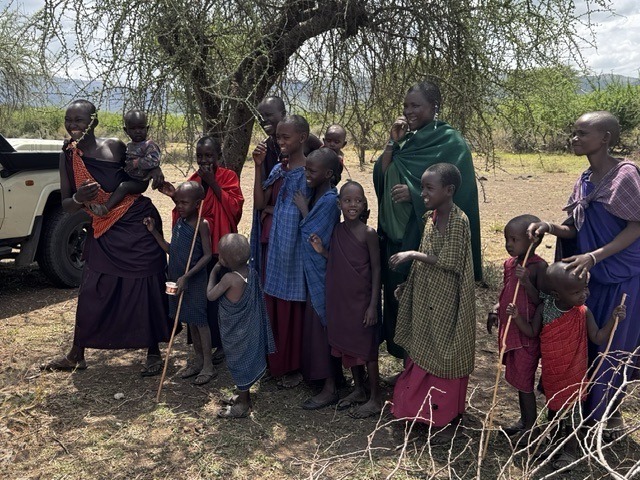
For the Maasai, cattle represent wealth, social standing, security and tradition. Their movements are dictated by the availability of pasture and water. Drought can threaten the survival of an entire family’s livelihood. Children grow up learning the responsibilities of herding and caring for animals, while elders pass down customs, stories and knowledge of the land.
It was an interesting glimpse into a culture that has endured for generations, though one that is also changing as modern education, health care, land pressures and new economic opportunities increasingly influence Maasai communities. I left with admiration for their resilience, but also with a renewed appreciation for the rather comfortable circumstances in which I live.
Five Miles to School, Five Hundred High Fives
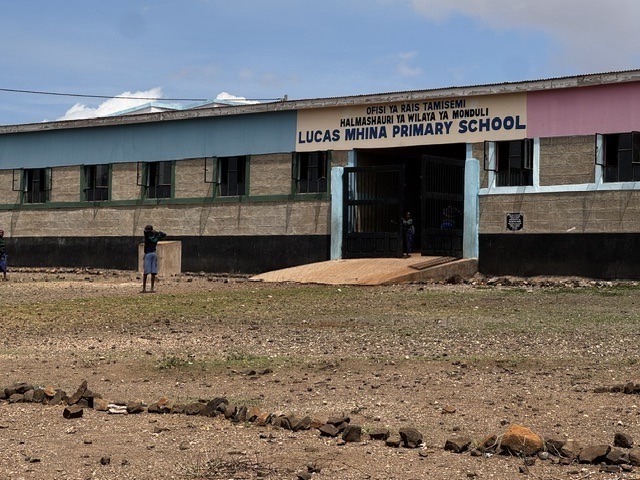
From the village, we walked, much as the students do every school day, to the nearby Lucas Mhina Primary School. The school, along with one other in the area, was built by Lucas Mhina, the owner of our local tour operation.
It was a wonderful opportunity to see another side of village life and get a glimpse of the educational opportunities being made available to the children.
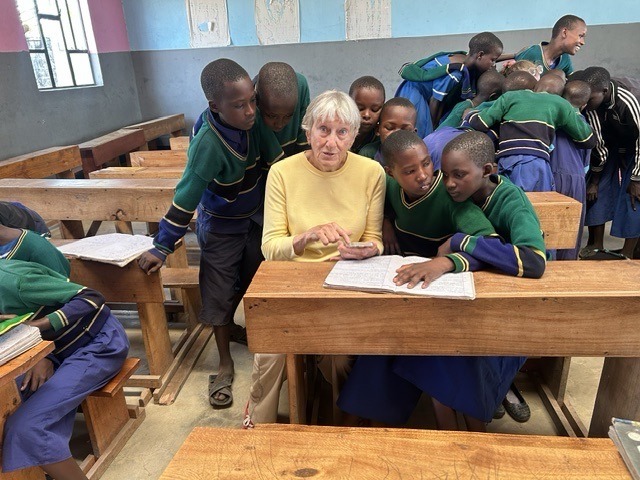
To describe the students as exuberant would be a serious understatement. The moment we arrived, we were surrounded. They came at us from every direction, eager to introduce themselves, shake hands, exchange high fives and offer fist bumps. Apparently, we were quite the attraction, and judging by the enthusiasm, they were delighted to have us there. The feeling was mutual, although keeping up with the requests for high fives was becoming an athletic event in its own right. It was a little overwhelming, but impossible not to smile.
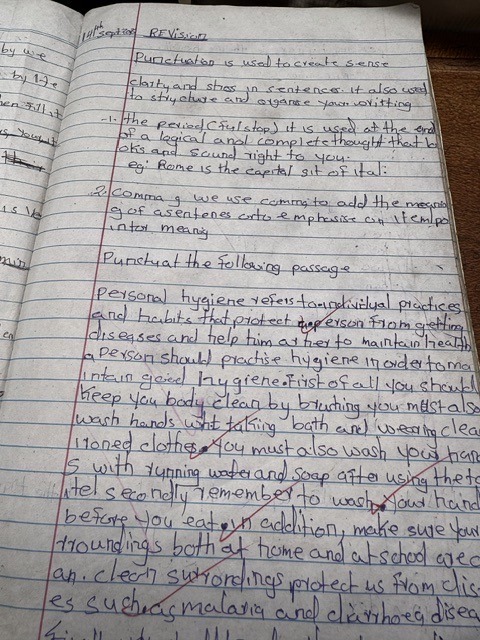
The school has 428 students and just 13 teachers, making for some rather large classes. Introductions were made, songs were sung, and students proudly shared their workbooks and schoolwork with us.
Their enthusiasm and willingness to engage were infectious. For many, school represents an opportunity to learn, expand their horizons and perhaps pursue possibilities beyond the village. Some children walk five or six miles each way to attend. That’s a considerable commute for anyone, particularly when your transportation consists of two feet and whatever energy you can muster before and after a school day.
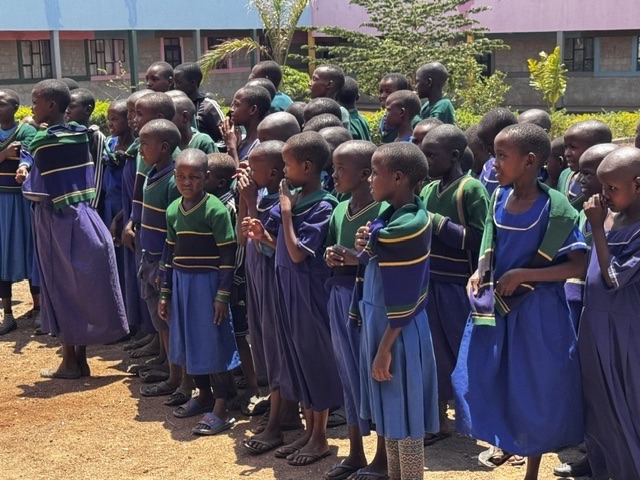
Behind the school, beneath the shade of a tree, several parents were patiently waiting for an upcoming parent-teacher meeting. Their presence was a reminder that education is not simply the responsibility of the teachers.
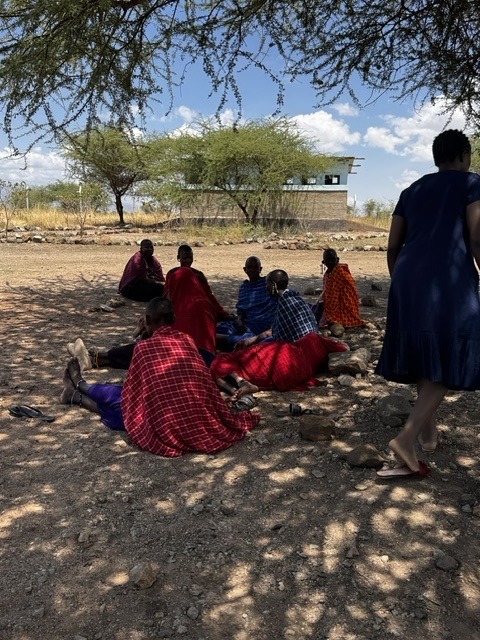
These families were making an investment in their children’s futures, despite the distances and demands of daily life.
We arrived as visitors, but the children made us feel like celebrities. There were smiles, laughter, songs and enough high fives to last us the rest of the trip. I was glad they liked us. Their exuberance was overwhelming, their welcome genuine, and their enthusiasm infectious. It was one of those encounters that required very little language but left a lasting impression. We may have taught them nothing that day, but they certainly gave us a lesson in enthusiasm.
Horns, Hides and Udderly Uncooperative
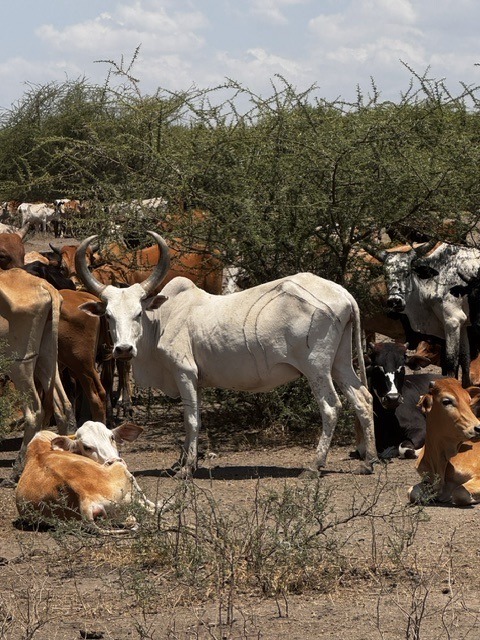
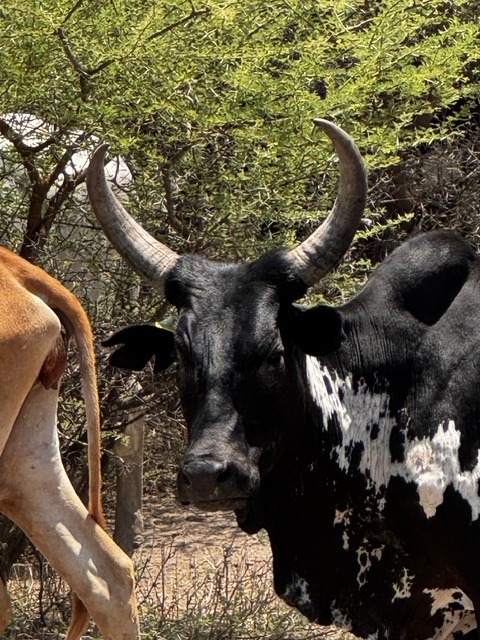
One of the most striking sights in a Maasai community is the African cow, particularly the Ankole-Watusi breed. These magnificent animals are known for their enormous, sweeping horns, which can span several feet. Their distinctive appearance is matched by their importance to Maasai life. Cattle are much more than a source of milk and meat; they represent wealth, status, security and cultural identity. Their beauty is almost regal, and against the African landscape, those impressive horns make quite a statement.
One black-and-white beauty paused long enough to pose for me before deciding he had better things to do. We asked if he might turn around for a selfie, but he wasn’t having any part of it. The best entertainment of the day came when our guide grabbed his tail and attempted to persuade him to reconsider. There was some tugging, some coaxing, and absolutely no cooperation. The cow had made up his mind, and apparently, no amount of persuasion—or tail pulling—was going to change it.
Hey Map – Where’s my Blue Dot?
Today begins slowly, with coffee and leisure, and ends somewhere out in the African bush.
Our destination: the Tarangire Nature Camp, tucked into the Tarangire landscape, address Mawer Ninga, wherever that is. Soon the comfortable farm setting gives way to dry woodland, enormous baobabs and the wildlife country of Tarangire. This is elephant country – a very different landscape from the parks I’ve already experienced.
More Than Just Where We Sleep
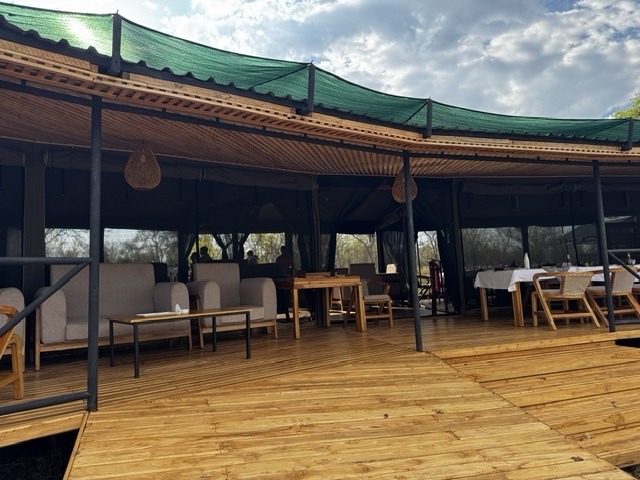
The Tarangire Nature Camp is another property owned by Lucas Mhina, our tour operator. It just opened this year.
It provides very comfortable and large elevated canvas-and-wood structures positioned along the riverbank, all angled to provide unobstructed views of the Tarangire flood plain. The location is secluded and quiet. My room features large windows and a veranda designed for wildlife viewing. Some have told me they have have seen elephants and giraffes from bed. I’m looking!
My deck faces open jungle so I might have an opportunity to spot some wildlife.
However, the best place to relax, and watch for peeping elephants or hyenas is the outdoor shower. After hours bouncing through the dusty bush, it feels like one of the best showers I’ve ever had.
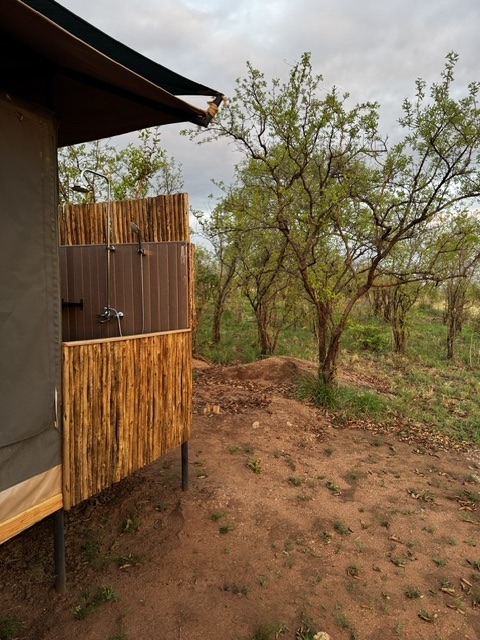
The spacious bathroom features a second shower. Handy as you cannot shower outside once darkness comes.
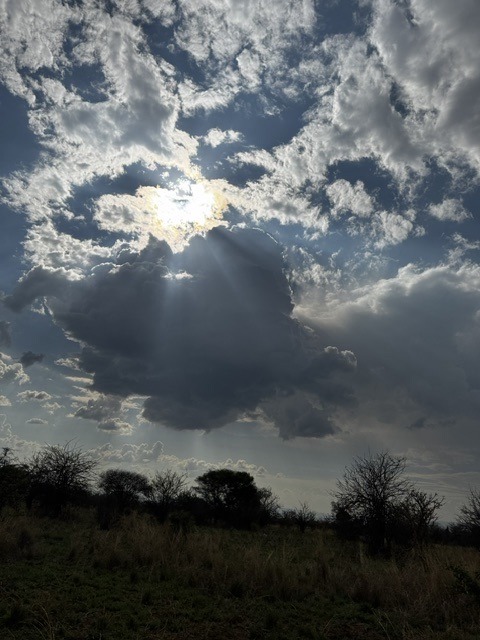
Our open dining and views include the spectacular African sky. There exists a special feel about sitting with a refresher and watching a thunderstorm come in, thunder in the distance, breeze increasing, temperatures cooling.
Dinner can be buffet or off a menu. Local markets provide the produce, the forest provides fruits. Food is good as is the cold Serengeti. I expect a monkey or larger to walk in and join us at any time. But, he doesn’t.
After dark, a Maasai escort accompanies us along the paths back to our rooms. Somewhere out there, animals are moving through the darkness. Every moment, every walk feels like part of the safari. The views from my veranda are quiet and spreads over wild bush. I sit, beer in hand, waiting for an elephant to stroll by.
And Then Comes Sunset and Nighttime
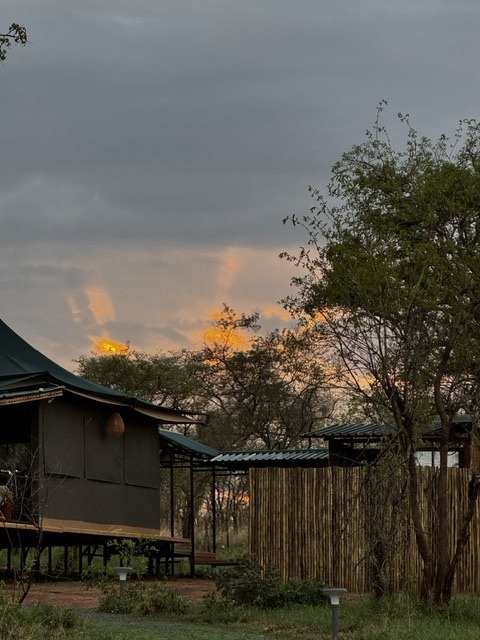
Sunsets are brilliant most evenings and Africa looks completely different after dark.
After dark, we become the hunted. We call for a guide to walk us to our cabins.
With a spotlight sweeping across the bush, one searches for animals that are active at night. A pair of eyes suddenly appears in the darkness, and for a moment I have absolutely no idea what I’m looking at. Or what watches me!
Awake in the night, under a black sky made brilliant with stars, the noises of the bush echo in stereophonic sound. Was that a Cape Buffalo crunching on ugrass out there? Has my elephant friend returned? Is he calling others for a kill or just marking our tent as his territory?

0 Comments