10 November 2026
Tarangire One Cool Serengeti at a Time
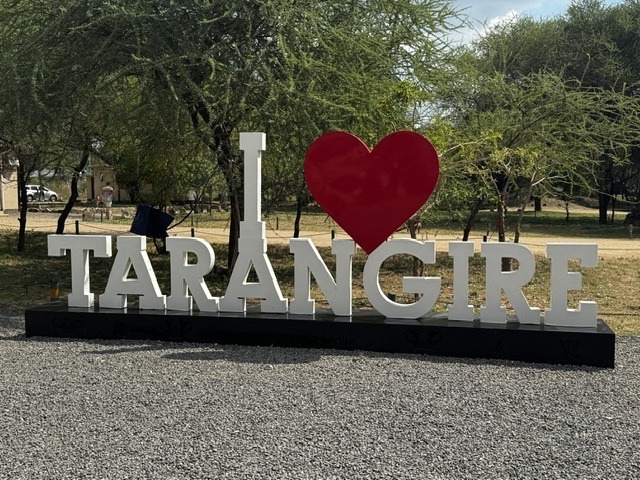
Tarangire National Park covers about 1100 square miles (just slightly smaller than the state of Rhode Island), but what makes it memorable is the combination of elephants, ancient baobabs, the Tarangire River, swamps and woodland. The river becomes a magnet for wildlife and the trees seem to have been here forever.
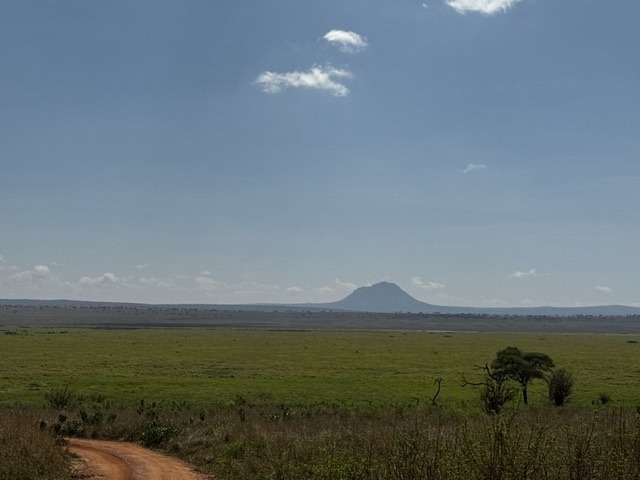
The park is especially known for its large elephant herds and baobab-dotted landscape. The huge, almost prehistoric-looking baobabs stand among the animals. Some have enormous trunks and can be centuries old. They give the park a much more sculptural appearance than the wide-open grasslands of the Serengeti.
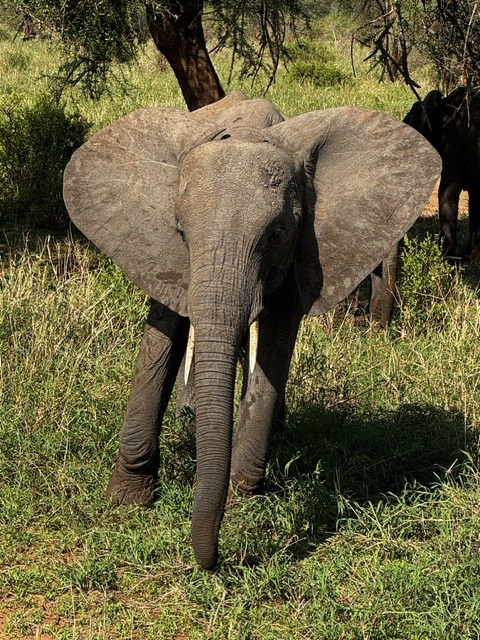
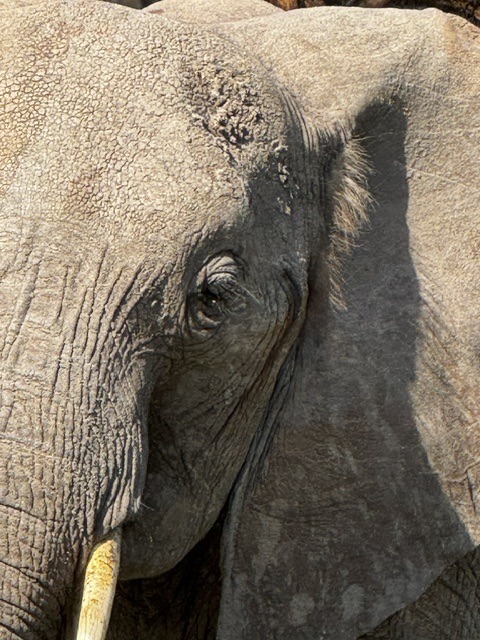
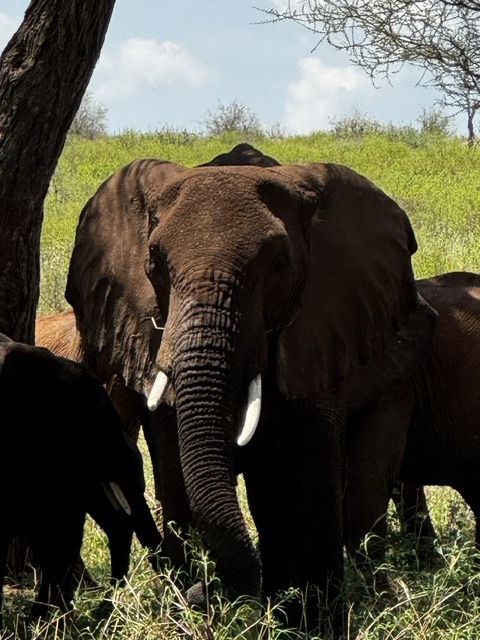
Tarangire is rightly famous for its elephants. The park supports an estimated 2,500 elephants, and during the dry season this number grows as herds migrate from surrounding areas. Beyond elephants, Tarangire harbors lion, leopard, cheetah, wild dogs, kudu, oryx, gerenuk, and large herds of buffalo.
Its Silale Swamps in the southern reaches of the park attract hippo and waterbirds in abundance. With over 550 species recorded, feathered friends include several Tanzanian endemics such as the Yellow-collared Lovebird and the Ashy Starling – species found nowhere else on Earth.
And of course, tsetse flies. Our fearless guides tell me to avoid wearing blue or black. And unfortunately for them, they also explain that the tsetse prefers darker skin.
A Tree Built for Survival
The baobab looks almost as though it has been planted upside down, Its massive branches resemble roots reaching into the sky. Its enormous, swollen trunk can store thousands of gallons of water, helping it survive Africa’s long dry seasons. In fact, the baobab is considered a succulent!
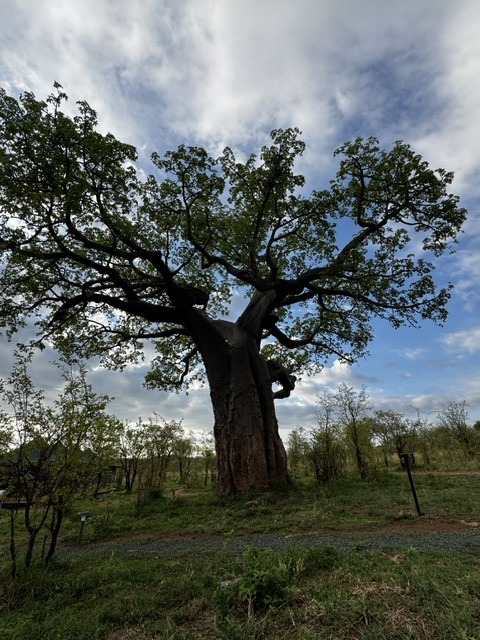
Some baobabs live for many hundreds of years, becoming landmarks in the landscape. Their smooth, pale trunks and strange silhouettes make them one of the most recognizable symbols of the African bush.
Elephants May be the Stars
I have seen elephants elsewhere, but seeing them in Tarangire ranks special. This region represents one of Tanzania’s great elephant strongholds. Large family groups can be encountered around the river and swamp with lots of little ones among them.
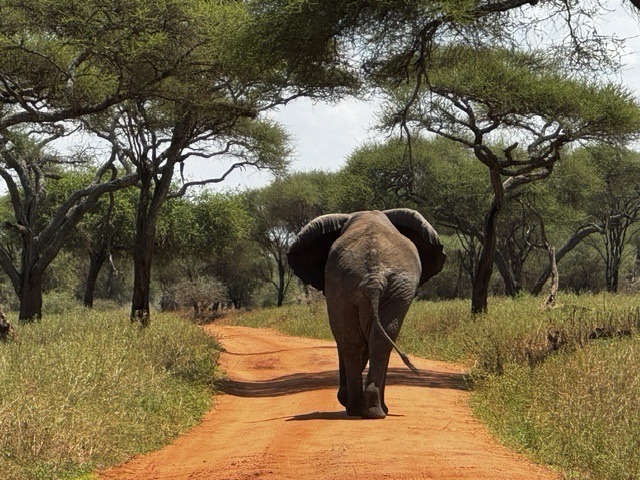
The largest herd we saw included at least 60. Drama was included when one Hugh, strutting bull entered the scene. Another bull charged him to leave. The challenge did not last but minutes when the smaller bull realized the enormous size and tusks of the interloper. The chase was on. Both males left with a partial herd of women and babies.
Tarangire isn’t just about the famous animals. Many giraffe, eland, gerenuk, fringe-eared oryx, kudu, tortoise and mongoose roam the area, as well as lion, leopard, cheetah and hyena. Some of the drier habitats support species that are particularly well adapted to this environment. More bird species include kori bustards, ostriches, lovebirds, bee-eaters and numerous raptors that hang out in Tarangire.
The Day Belongs to the Wild
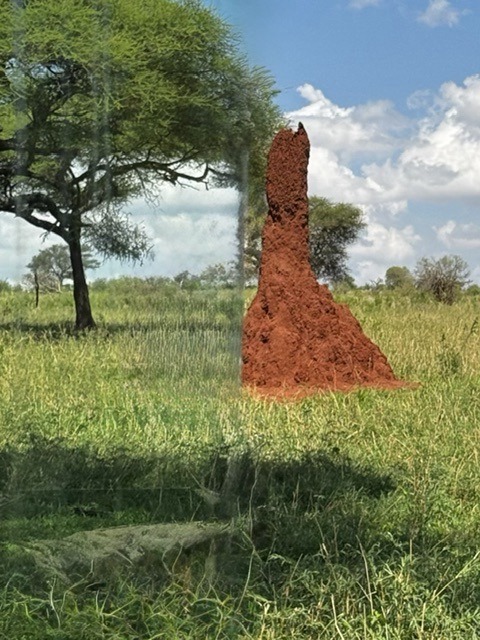
We drive Tarangire for a full day of exploration. I’m hoping for a different safari experience from the parks I’ve already visited. This park represents a very different landscape. A landscape of ancient trees, green grass and towering g red termite hills. But what of animals?
We spend most of the day in our safari vehicle. There are few others around us and most of the time we are alone on the roads. We follow the wildlife and the changing landscape. Elephants, giraffes, zebra, wildebeest and buffalo graze around us. Lions and leopards – they range out there and we continually look for them.
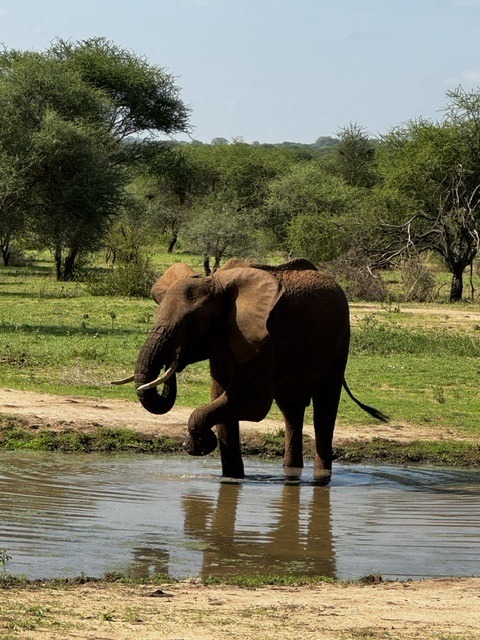
The herds of elephants are large. Many gather at mud holes wallowing in the mud as a way to keep cool and to protect their skin from bugs. The babies are adorable, some as young as a few weeks and still learning how to use their trunk.
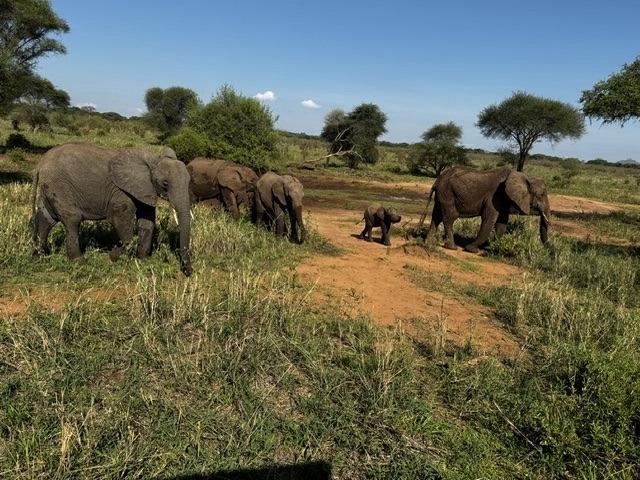
The sun is intense, humidity high. Even though we leave early, many animals are under stress and in shade. There is much more bush nere and animals harder to spot, like the kudo and the big ole warthog. Under the shade of a baobab, a lion pair was passed out and super relaxed. They weren’t moving for anyone.
Beneath the Baobabs
The enormous baobabs fascinate, the Tarangire River gurgles. Our quiet and often humorous drama revolves around watching animals gather around water and mud holes, drink and wallow, and basically ignore one another.
Evidently, carnivores are fed for the moment. The lone lions are too content in the shade to chase anyone. The elephants seem the exception as they continue to graze and move about.
I can’t miss the baobabs. Their enormous, swollen trunks and strange, spreading branches give the landscape an almost otherworldly appearance. (Great markers for giving directions! Turn left at the 50’ dead baobab tree.) I imagine how many generations of elephants, people and other critters have passed beneath its branches.
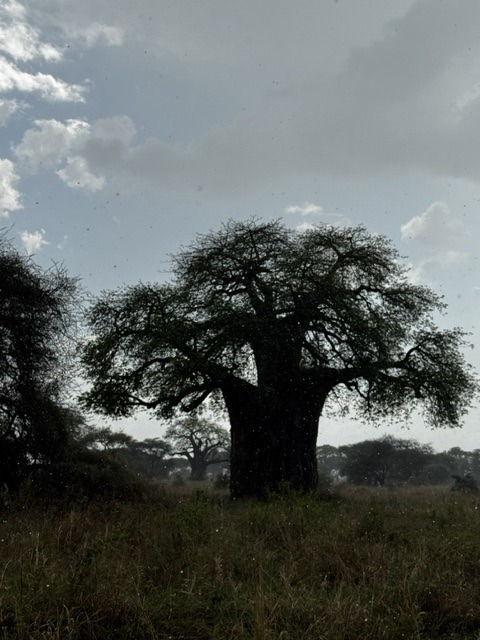
The elephants may be the stars of my day here. This park remains famous for its large herds. During the dry season hundreds of elephants gather around the Tarangire River and other remaining sources of water. I saw family groups traveling together, with small calves protected in the middle. Watching so many elephants moving through the bush, sometimes beneath the baobabs, becomes one of those unforgettable African moments.
The Animals Never Become Ordinary
I can’t begin to count the museums, cathedrals, medieval walls, fortresses, and monuments I have visited. They tend to blend together. Become generalized. That never becomes the case with nature and animals. Vistas don’t photograph well but they remain in my mind’s eye. Most elephants look pretty much alike but I won’t forget watching these majestic animals in the wild.
Years have passed but I remember the lioness who rested within the shade of our safari jeep in 2006. I vividly remember the elephant who charged our jeep telling us to move along. Or the personalities of the mountain gorillas I watched in Uganda and Rwanda, even though it was a decade ago.
After several game drives, “another giraffe,” “another zebra,” or “another elephant” can begin to blur together. But then one animal does something unexpected – the elephant calf playing in the mud, the massive bull tusker strutting his stuff in the middle of the road, a giraffe silhouetted against a baobab, a lion sleeping on her back legs up dead to the world – and those become memories that last.
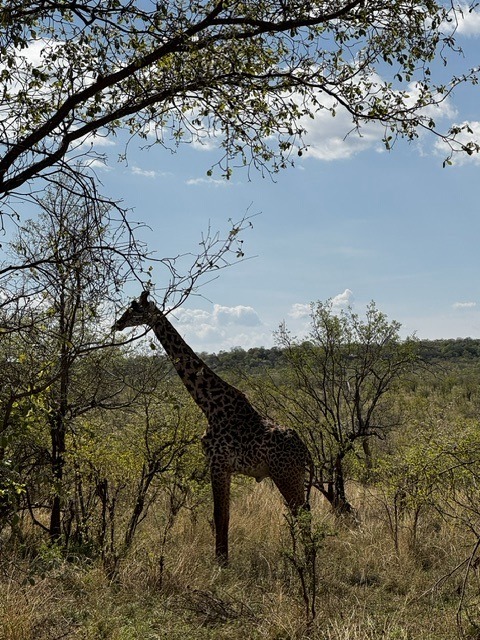
Maybe that is the wonderful thing about seeing so much wildlife: I may forget the details of some sightings, but I won’t forget what it felt like to be here appreciating the wonder of these animals acting like animals. Each giraffe is an exciting sighting.
82 Years and Still Traveling
Tonight, I take a moment to reminisce. I turned 82 today, and I can’t help but think about the extraordinary good fortune of having seen so much of the world. From one journey to the next, I’ve collected places, people, experiences and memories (and key chains!) that have made my life richer than I could ever have imagined.
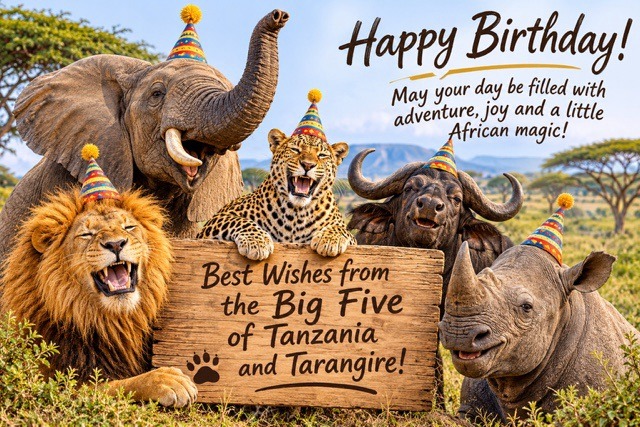
And yet, sitting here in Tanzania, chilled Serengeti in hand, the African night settling around me, the distant sounds of the bush remind me exactly where I am. And I’m not thinking about slowing down. Quite the opposite. I feel incredibly fortunate to be here and determined to enjoy more travel, more adventures and whatever corner of the world comes next.