5 April 2026
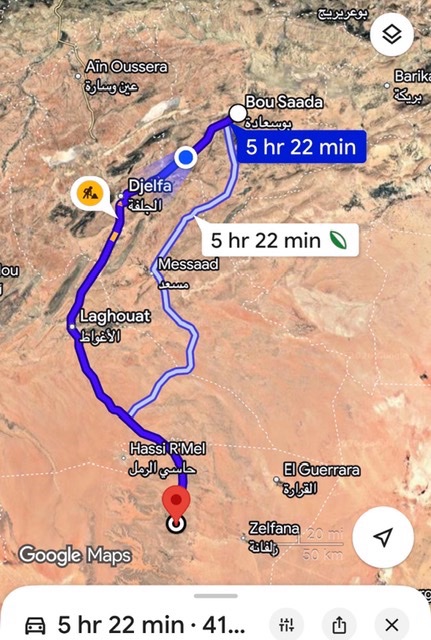
This day is all about DISTRACTIONS from the long road ahead. We will travel about 260 miles to our next destination, Ghardaïa. Our route, while on paved road, meanders through the Sahara. And there is not a whole lot to distract as we motor along on N46 and N1.
Leaving Bou Saâda, the scenery is classic red Saharan desert—flat stony plains, cactus and palms, occasional low hills, and long horizons under an enormous sky. Temperatures have warmed and I finally can wear a short sleeved shirt. The land feels empty, broken only by scattered village, palm clusters, and the faint geometry of foggaras.
As we approached Djelfa, the desert intensifies. Palm groves disappear, the soil lightens in color, and agriculture becomes less visible, signaling the absence of water and oasis life. It is time for some historical distraction about what lies ahead in Ghardaïa.
Mozabite People of the Sahara
Instead of trying to remember the history lesson and watch the desert at the same time, I asked Skippy who the Mozabite people are and their importance in history. She tells me:
The Mozabite people were an Amazigh (Berber) community of the northern Sahara, centered in the Mʾzab Valley around the town of Ghardaïa. They speak Mozabite (Tumẓabt), a Berber language. Known for their strong communal traditions and distinctive religious identity as followers of Ibadi Islam, this branch of Islam differs from both Sunni and Shia traditions.
Their history in the Sahara dates to the 11th century, when Ibadi communities, seeking security after political upheavals in North Africa, established fortified settlements in the Mʾzab Valley. Over time they built a network of carefully planned towns designed for defense, religious life, and communal solidarity. These settlements developed a unique architectural style adapted to the desert environment, with compact houses, central mosques, and protective walls.
Religion has played a central role in Mozabite society. Ibadi teachings emphasize piety, equality within the community, and moral discipline. Social life traditionally organizes around collective decision-making, mutual aid, and strict ethical codes that regulate trade, marriage, and daily conduct.
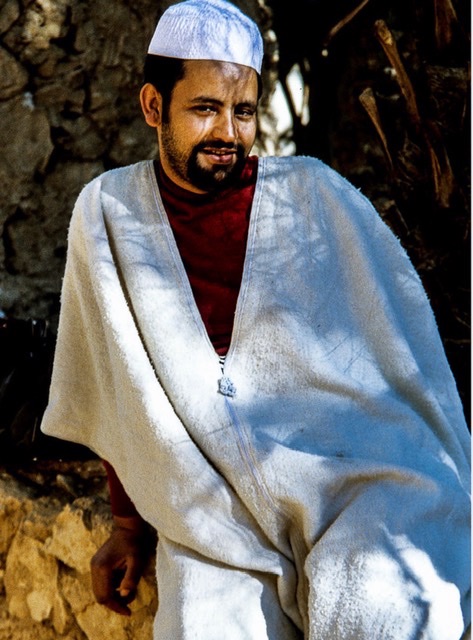
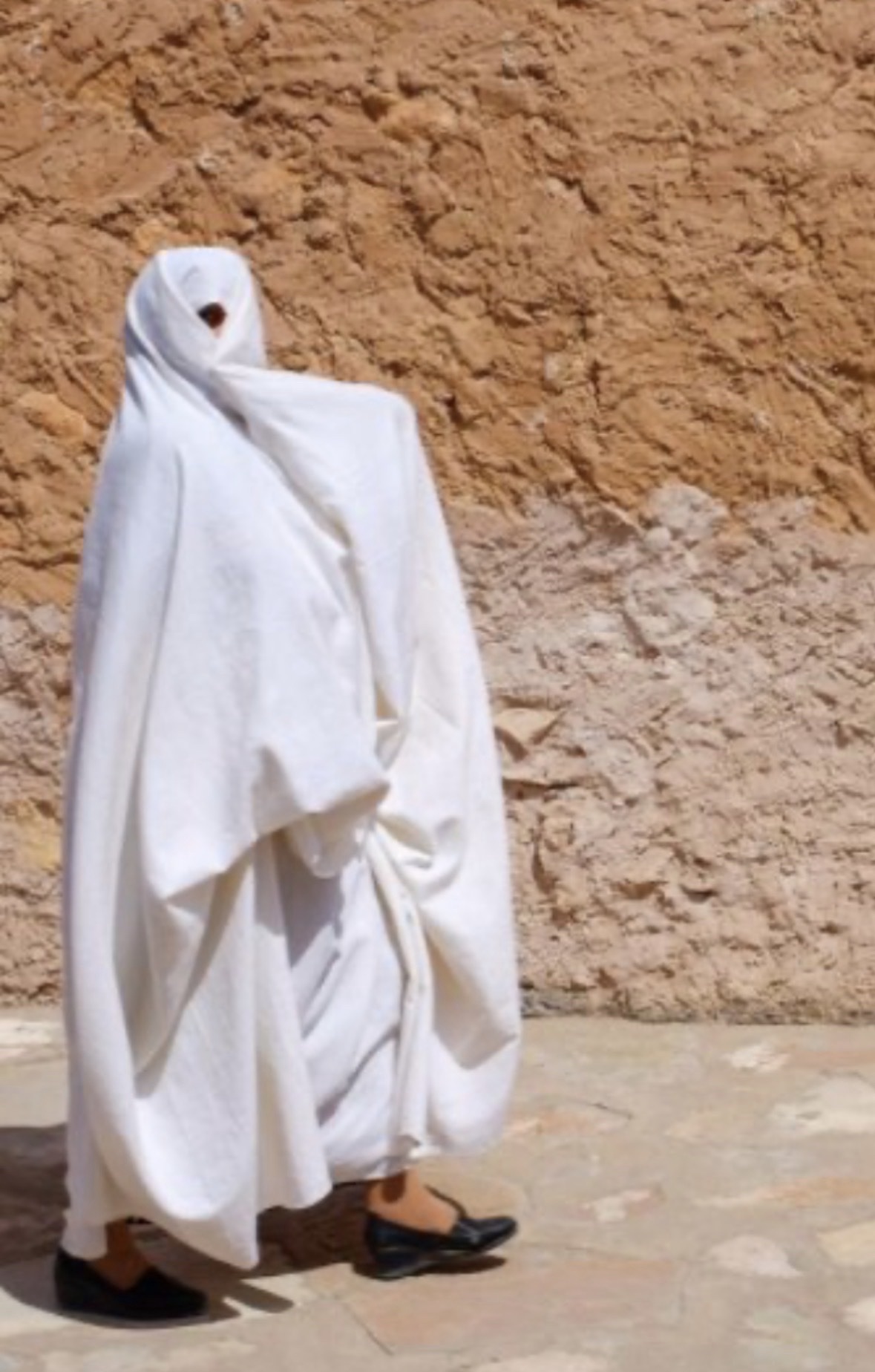
Amazigh wear distinctive jewelry and often braided hairstyles. Men often wearing simple white robes and skullcaps. The people adapt their clothing to this Sahara environment. Women traditionally wearing a white haïk veil, sometimes covering most of the face except one eye.
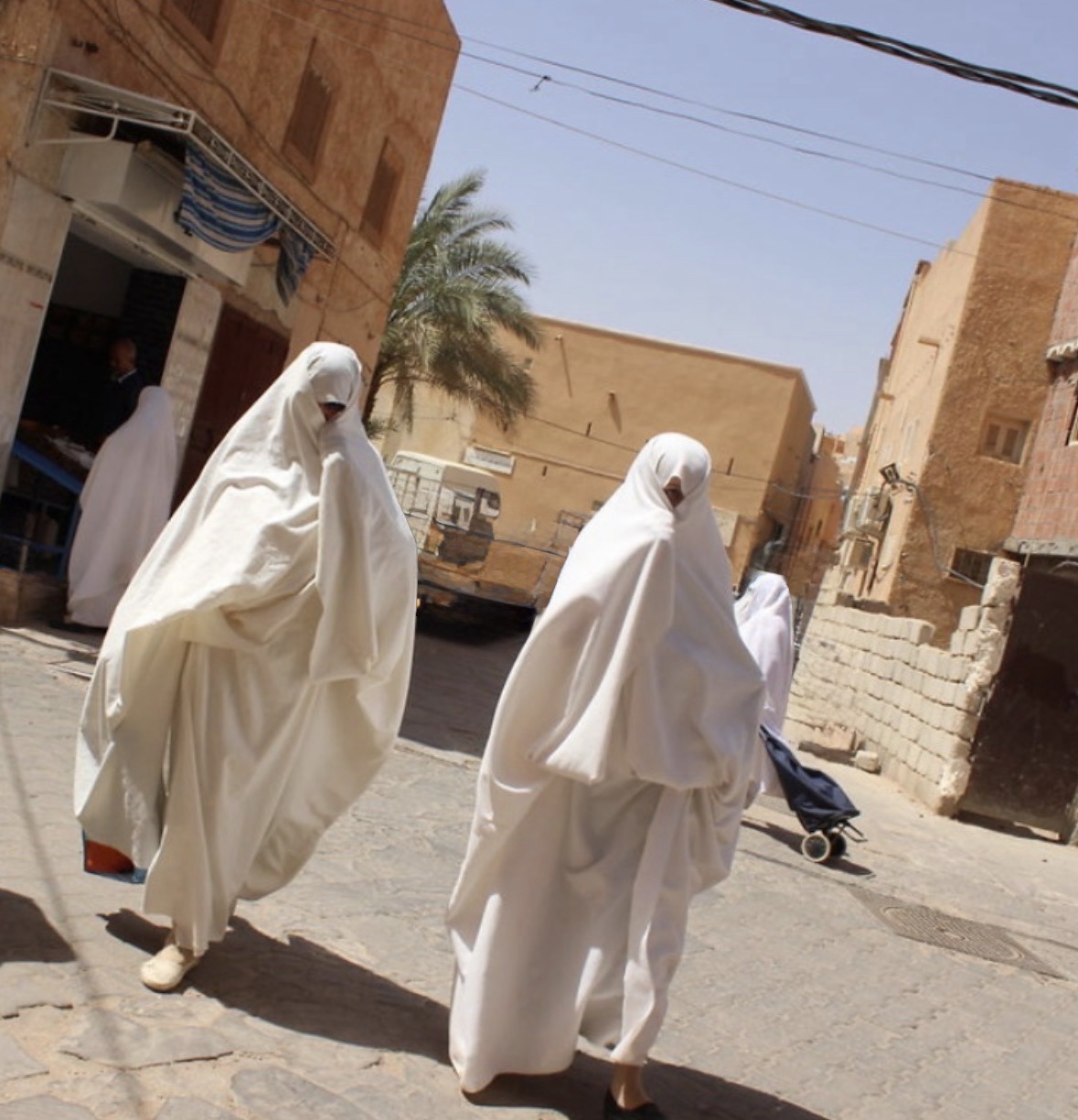
Economically, the Mozabites became renowned traders. For centuries they established commercial networks that extended across Algeria and into other parts of North Africa, while maintaining strong ties to their home valley. Even today, many Mozabites are active in commerce and business throughout Algeria.
The Mʾzab Valley’s architecture and urban planning are internationally recognized for their cultural importance. The historic ksour (fortified towns) are considered an outstanding example of human adaptation to a harsh desert environment and remain a symbol of the Mozabite people’s resilience, faith, and communal identity in the Sahara.
Other Distractions
At Least They Didn’t Cuff Us
Our distractions for the day became one museum and approximately every border checkpoint in our known universe, transforming what should have been a six-hour, 260-mile drive into an endurance sport requiring a multitude of snacks, patience, and a sense of humor that grows weaker with every mile.
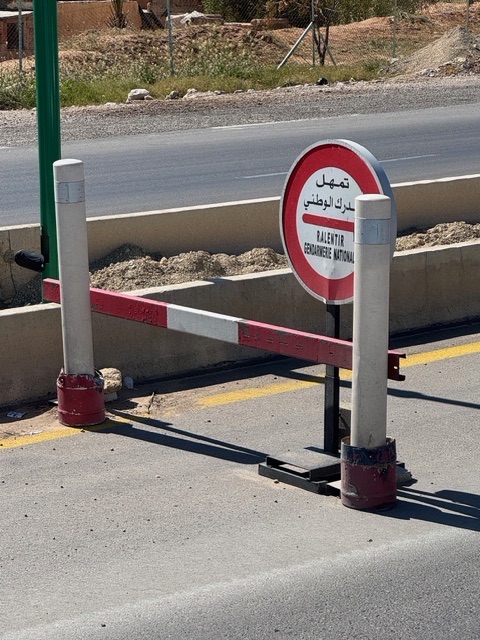
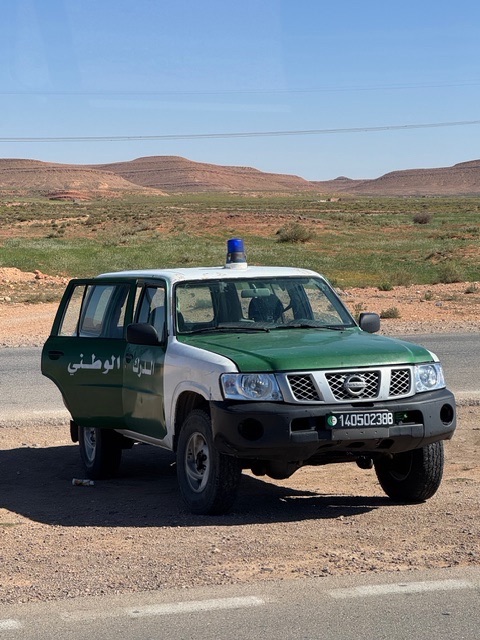
Because of Algeria’s thoughtful system of tourist security, each time we cross into a new province — and there are 58 of them — we are ceremoniously handed off from one set of police to the next, like a relay baton no one particularly wants to run with.
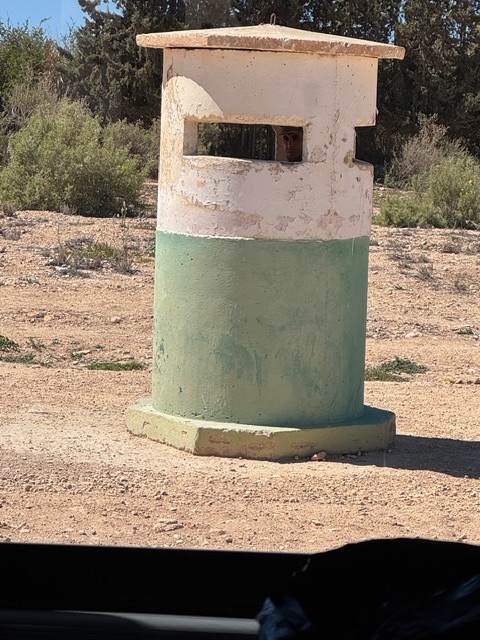
While Algeria shares only seven international borders (and only the Tunisian one reliably functions), internally it retains an enthusiastic commitment to stopping at nearly every provincial boundary, intersection, village entrance, and suspiciously scenic stretch of empty highway.
I will let you do the math on how many potential handoffs one can experience in a single day when a plethora of provinces are involved.
We begin counting.
One. Two. Three. Then Lunch!
Lunch offers grilled meats, which sounds promising until one realizes many grillers here appear dedicated to ensuring the animal’s spirit never, ever returns. Medium rare is an unknown. Whether beef or chicken, the goal seems to be “cook it again just in case.” Moisture is considered a security risk.
We depart for the next escort. Our mistake: we puttered along slowly, assuming the police would catch up. Around 3 pm, with many miles yet to go, flashing lights roared past us. Finger wagging. Pull over!
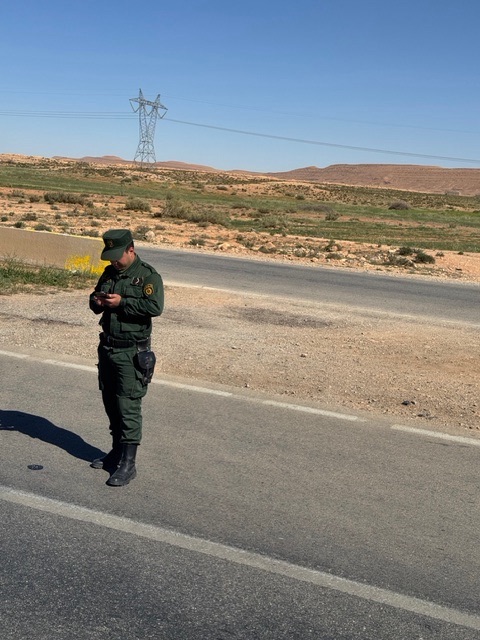
Driver, guide, company owner — all receive a lively lecture in a language we do not understand but whose meaning is unmistakable: “Why are you wandering about unsupervised like free-range tourists?” Fortunately, no guns were involved, only expressive eyebrows.
We learn that by moving ahead instead of waiting exactly where instructed, we unintentionally insulted the local officers, who belong to an Amazigh (Berber) community in the region. We showed a lack of respect for the policeman and he was angry. Cultural lesson noted. Enemy possibly created.
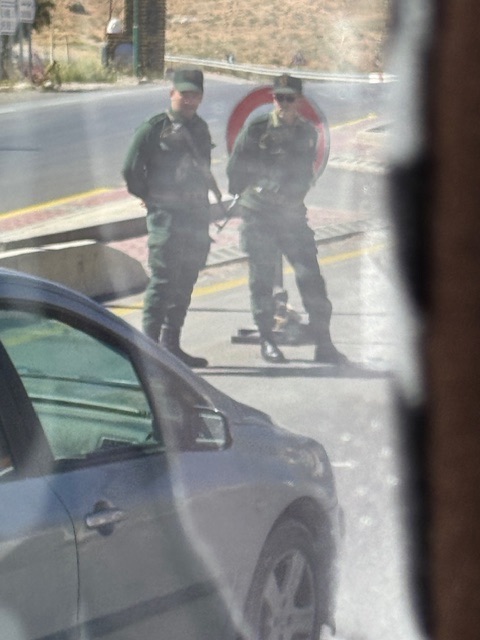
At the next police barrier, Passports and Visas are inspected with possible enthusiasm. Don’t complain, eat more chocolate and peanuts.
Take that you naughty children!
Then comes the standoff near Laghouat. We are directed into the town of Bellil, allegedly to meet our next escort. Instead, we meet a police station, some chairs, and time itself slowing to a crawl. Our escort, we learn, is coming from Ghardaïa, located at least an hour away and apparently in no particular hurry. This, we assume, is a character-building exercise.
Some brave members of our group attempt the station bathroom in a building where women do not work, visit, or perhaps officially exist. It’s a man’s world here. Anthropology continues.
After an hour and a half, our escort finally materializes. Victory? Not quite.
One more stop awaits. At the final boundary, we wait on the roadside as the sun sets and the stars begin their shift. Eventually we are rewarded with flashing lights and a couple of celebratory woo-woos as we roll into our hotel at 8:30 pm, veterans of the Great Provincial Relay.
Surely there must be a more efficient way to provide security — perhaps fewer handoffs, or maybe a passport stamp that says “already supervised, please proceed.” Until then, we remain well-escorted, thoroughly grilled, and extremely familiar with the concept of desert patience.
Flat Nothingness with a Side of Sand
Seriously, don’t skip an opportunity for a bathroom.
The Algerian truck stop bathroom is less a facility and more an extreme sport. One enters with optimism and exits with character.
Most times there is a squat toilet thoughtfully equipped with molded footprints to guide your aim like a yoga instructor who has given up on words. Other times, there is simply a hole and a philosophical question: how committed are you, really?
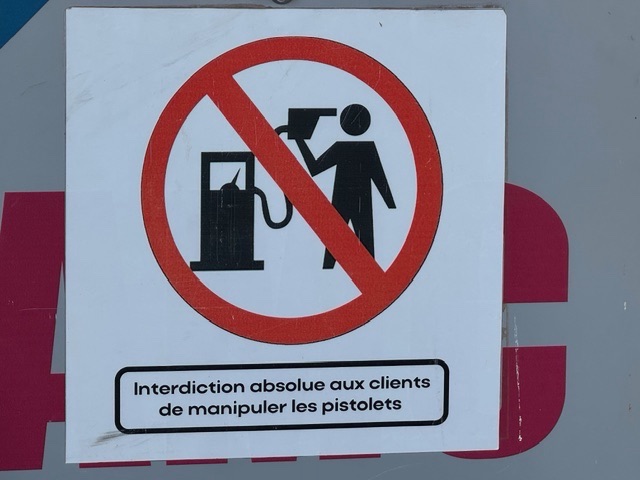
Still wondering what this graphic means: no self-serve or shoot for the head.
Toilet paper is considered a luxury item best imagined rather than expected, and the hand-washing situation becomes a scavenger hunt. One begins to eye nearby rocks with newfound appreciation, wondering if geology might offer a more comfortable seating plan.
Yet experience teaches humility — no matter how rugged this stop seems, the next one may raise the bar for creative discomfort even higher. Gambling on something better is a risky sport.
Desert roads stretch straight through a lot of nothing—flat desert, red sand, and the occasional scrubby palm or stubborn shrub. The drive becomes a straight shot through Sahara real estate mostly unclaimed by anyone alive. One might spot afortified town appearing on a distant ridge. Clearly, the life of the desert nomad tended to be a simple and challenging one.
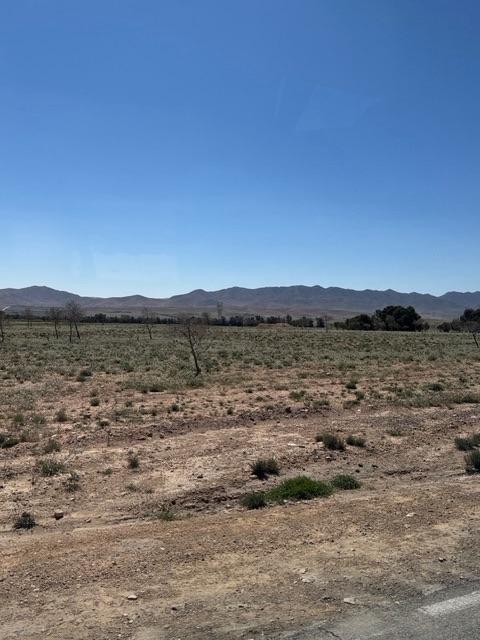
In general, highways stretch ahead like a 190-mile-long ribbon, generally paved and in decent condition, designed for long-distance desert travel. Traffic is light, views are expansive, and the rhythm is meditative. This region remains all about scale, silence, and the slow emergence of civilization as we near the M’Zab Valley.
Ghardaïa Lodging and Dinner
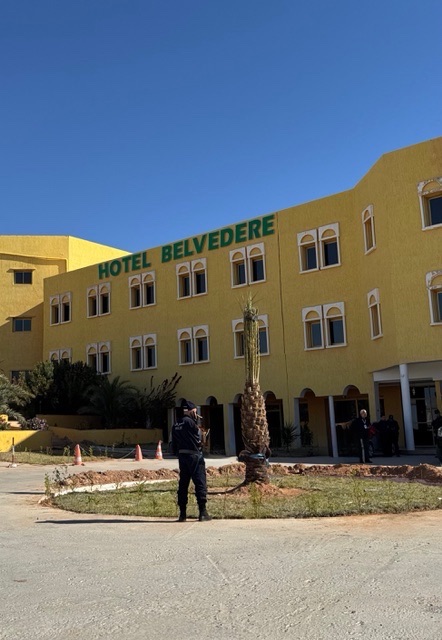
We lodge for three nights in Ghardaïa at the Belvedere Hotel.Entering its elegant lobby, all ideas of roughing it or desert hardships fly away. This is a far cry from what the desert nomads had to endure.
It is late so we go directly to the restaurant. Unfortunately, after the long 12-hour transit, endless snacks, and the late hour, there remains little interest in food.
Tṣbaḥ ʿla khir, rtaḥ مليح، nšufek ġodwa
(Sleep well, rest well, see you tomorrow.)
A useful phrase after surviving another heroic Saharan adventure.

0 Comments