28 May 2026

Today, I walk past the Gate of Dawn in the direction of Bastion Hill and the panorama found atop Three Crosses Monument. In between, I explore the quirky spirit seen in Užupis, a self-declared republic of Vilnius. But first, a look at the food of Lithuania.
Beer, Bites, and Baltic Delights
When traveling, I enjoy sampling local craft beers. People who develop craft beers are commonly called brewers or brew master. In the craft beer world, you’ll often hear the term used for someone working in or leading a small, independent brewery. When they specifically design recipes and flavor profiles, they may be called brew masters. The US may be the global leader in modern craft beer, but the likes of Germany, Belgium, Czech Republic and UK cannot be ignored. Nor should the craft brewers of Lithuania.
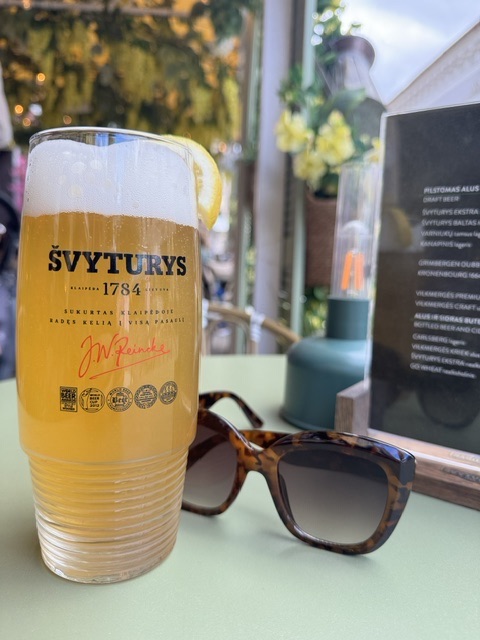
Lithuania’s top beer is generally considered to be Volfas Engelman, followed closely by Švyturys Ekstra, which is renowned for its balanced, classic lager taste and its hefeweizen Švyturys Baltas. For a more traditional experience, farmhouse ales like Jovaru Alus are highly regarded. Craft beer enthusiasts favor Basker Brewing Company’s Origin IPA.
Over my next few days in Lithuania, I want to try them all. In general, I favor IPAs but for a lager, the Švyturys Ekstra tastes crisp and refreshing. I liked the hefeweizan Baltas, also. Volfas Engelman, Lithuania’s oldest brewery, pours as a pale golden lager with a light, frothy head. Perhaps my favorites were Baltas and Basker’s Origin IPA, a rather hazy ale brewed in Vilnius.
Lithuanian Cuisine
Lithuanian food proves hearty, potato-heavy, and rich in dairy and pork. Stick-to-my-ribs meals that I love even in warmer weather. The best traditional dish seems to be cepelinai, delicious meat-stuffed potato dumplings. I’m not too crazy for the cold beetroot soup called šaltibarščiai but I will look for kepta duona (fried rye bread with garlic).
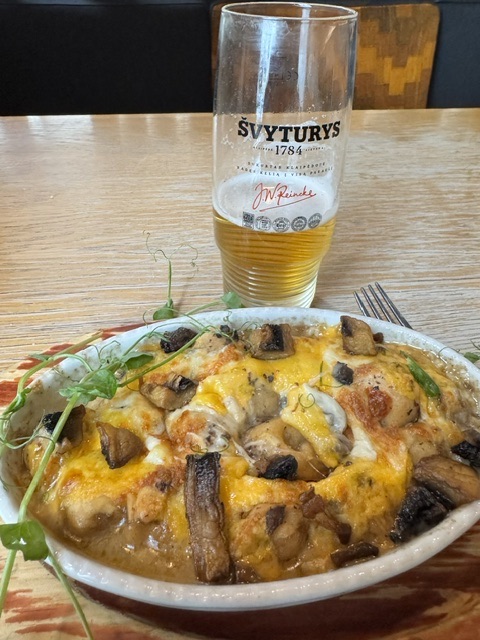
Dined at Katpėdėlė on Vokiečių g. Wonderfully delicious meal of Lithuanian Cesar Salad and Cepelinai stuffed with pork with mushrooms. Beer of choice is the refreshing Švyturys Ekstra.
Cepelinai is considered the national dish of Lithuania. These potato dumplings are usually filled with seasoned pork and served with sour cream and pork rinds. Another meal I have enjoyed is the kibinai which is a crescent-shaped savory pastry filled with lamb or mutton. I love lamb and pork when roasted so both dishes suit me perfectly. Add a craft beer and I am good to go.

Another dish I enjoy is the balandėliai which refers to cabbage leaves stuffed with minced meat and rice, sort of like the pigs in a blanket that as a midwesterner I enjoyed as a kid. Here locals call them Pigeons. Whether a pig or a pigeon in a blanket, they are good to eat.
I Don’t Ignore Desert
I’m not one who orders desert. The exception is when I see anything caramel of vanilla. The strudels are excellent. But perhaps the crème della crème of Vilnius become the pastry and coffee shops. Even after a big meal, I look for one.
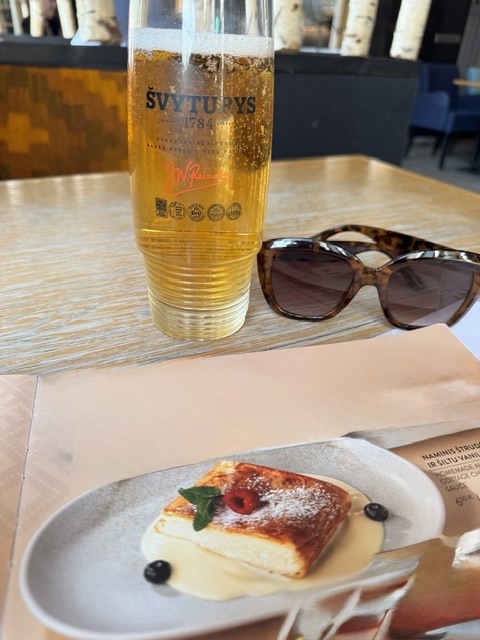
For a sweet treat, menus range from Sūrelis, a sweet curd snack covered in chocolate to Varškės Spurgos – cottage cheese donuts fried crispy. I could not resist the Vanilla Strudel. I don’t care what country claims its origins.
A.J šokoladas across from the Picture Gallery became a fast favorite. Here I succumbed to their chocolate temptations. A cappuccino and cheesecake did not suffice. I topped both off with a caramel cheesecake to go. Decadent for sure!

Passport Optional: Entering Užupis – The Republic That Isn’t (But Is)

Užupis is a small, bohemian neighborhood just across the Vilnia River from Old Town. It reinvented itself after Lithuania regained independence. In 1997, local artists and free spirits half-seriously declared it the Republic of Užupis, complete with a constitution, president, and even an army of a handful of people. The constitution, etched on metal plaques in many languages, mixes humor and philosophy. It captures its spirit.

The constitution of Užupis represents a playful, philosophical set of short statements displayed along a neighborhood wall. Its wisdom is translated into 44 languages. It reads like a mix of poetry, humor, and quiet wisdom rather than law. Actually, it probably should be law:

Some of its most memorable lines include:
Everyone has the right to live by the river, and the river has the right to flow by everyone
Everyone has the right to be happy
Everyone has the right to be unhappy
Everyone has the right to love
Everyone has the right not to be loved, but not necessarily
Everyone has the right to be unique
Everyone has the right to make mistakes
Everyone has the right to be idle
Everyone has the right to celebrate or not celebrate their birthday
Everyone has the right to remember
Everyone has the right to forget
It ends with a gentle reminder that people are responsible for their freedom.
It’s less about rules and more about a worldview – tolerant, slightly ironic, but deeply human.
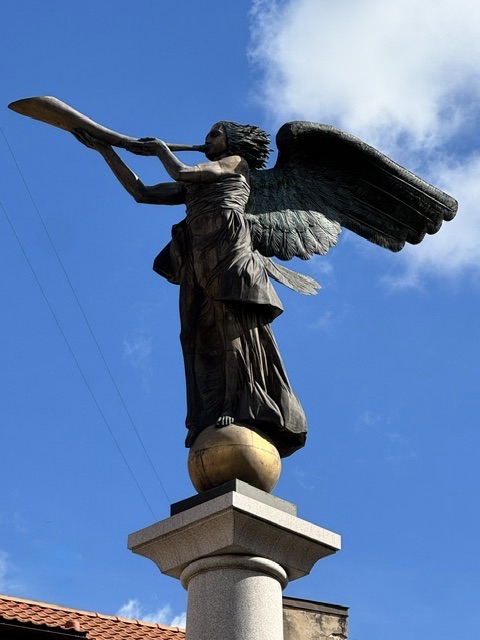
At the heart of the district stands the tall bronze statue of the Angel of Užupis, unveiled in 2001. The angel, blowing a trumpet, symbolizes artistic freedom and the neighborhood’s rebirth from a once-neglected area into a creative hub for artists, musicians, and free thinkers.
Created by Lithuanian sculptor Romas Vilčiauskas, the angel trumpets the awakening and call to creativity. I’d say the Angel ranks among the most photographed of public artworks, right up there with the mermaid in Copenhagen and that cheeky little peeing boy in Brussels.
A Nation of Poets and Practical Jokers – A Place Where Art Declared Independence
Walking around Užupis feels different from the rest of Vilnius. It’s less polished than Old Town, more playful and introspective. The appeal isn’t in major landmarks but in the atmosphere. Street art, galleries, quirky sculptures, and cafés with a slightly offbeat charm abound.

Art isn’t confined to walls as it spills into streets, courtyards, bridges, and even stairways, turning the whole neighborhood into an open-air gallery. Artists painted murals directly onto old plaster buildings with some poetic, some political, others whimsical. Small stencils tuck into corners, often humorous or quietly subversive.
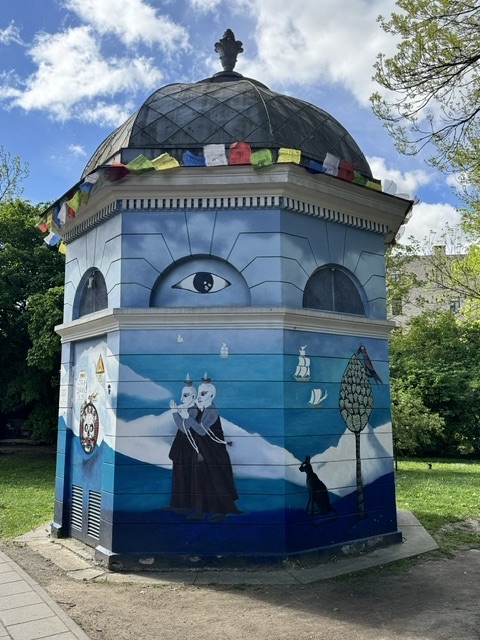
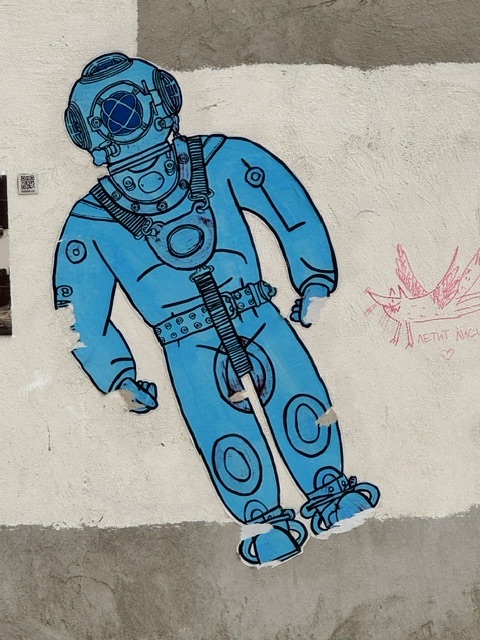

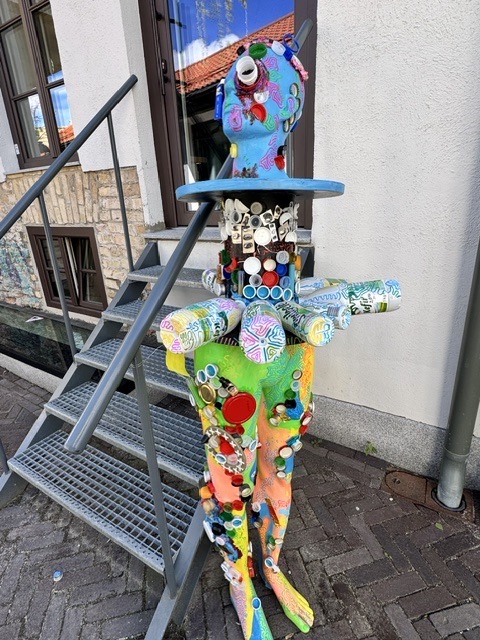
I walk along the river, a space filled with rotating installations, sculptures, experimental works and numerous cafes. Among they trees and riverside sit metal sculptures, unexpected installations under bridges, or even something as simple as a swing hanging beneath a bridge. Referred to the area of the Užupis Art Incubator, it is the perfect place for a warm afternoon.
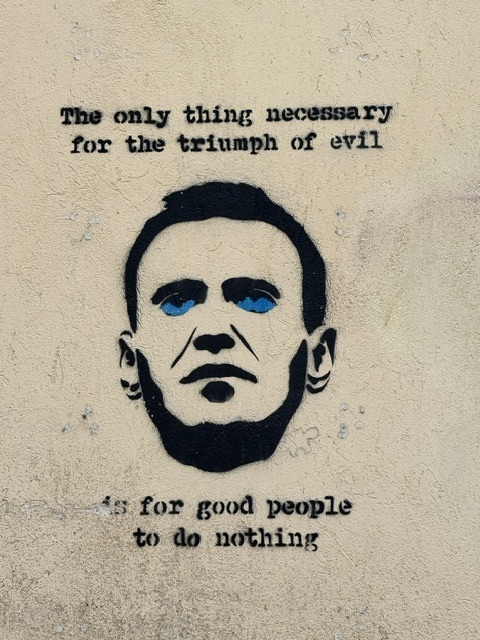
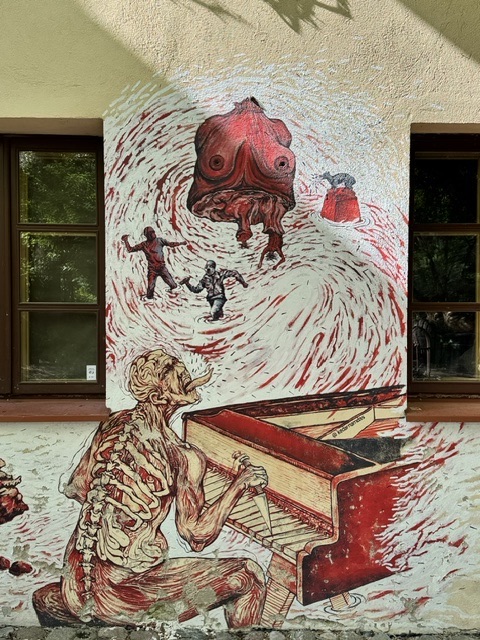
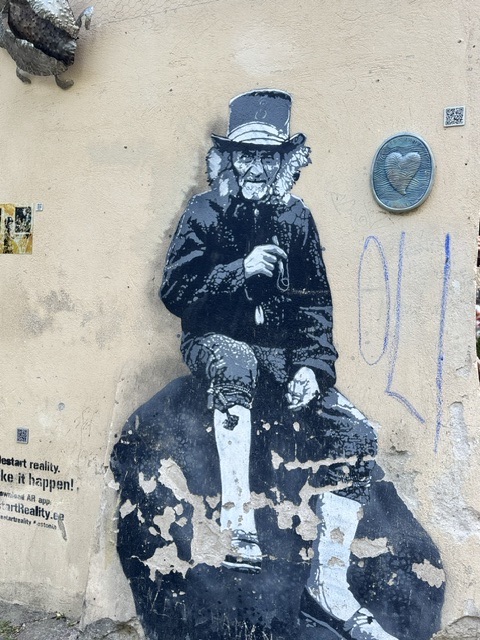

What makes Užupis special is that nothing feels fixed. Art appears, fades, and changes. The best approach is to wander without a map, peek into courtyards, and let the neighborhood reveal its small, surprising little splashes of creativity.
Bastion Hill
Bastion Hill marks the edge of the old city’s historic defensive wall. Built in the 17th century, it formed part of a larger wall and fortification system designed to protect Vilnius from invasion during a period of frequent wars, especially with Moscow.
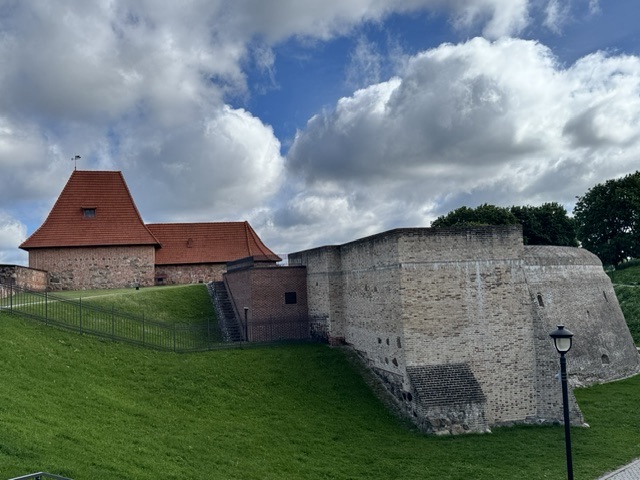
The bastion itself was an artillery stronghold, with thick walls, underground passages, and cannon positions aimed at defending the city’s vulnerable approaches. It could fire 24 cannons simultaneously. Despite these efforts, much of the defensive system became damaged or destroyed in later conflicts and eventually fell into ruin.
However, the massive walls of the bastion give a real sense of how fortified Vilnius once was. Walking there, I shift from the ornate, Baroque beauty of central Vilnius to a more rugged reminder that this elegant city was also shaped by conflict and the need for defense.
Three Crosses Monument
Atop a hill overlooking Vilnius stands Three Crosses Monument, one of the city’s most visible symbols. Its origins lie in legend: it commemorates a group of Franciscan monks said to have been martyred there centuries ago. Whether the story is actually historical or partly myth, the site became a site of remembrance and faith. The current white concrete crosses date to 1989, a reconstruction of an earlier monument destroyed by Soviet authorities in the 1950s.
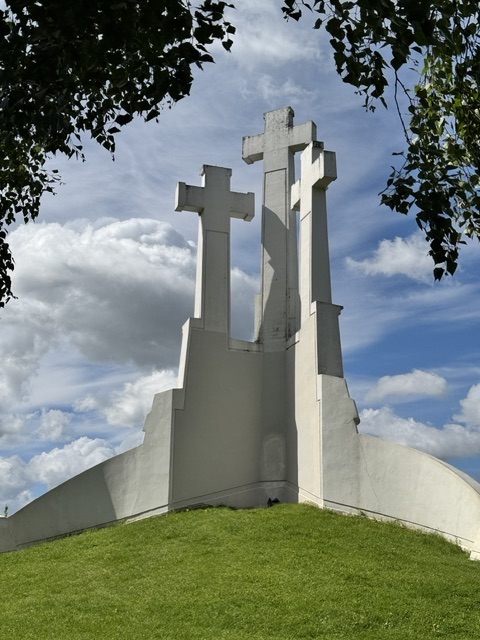
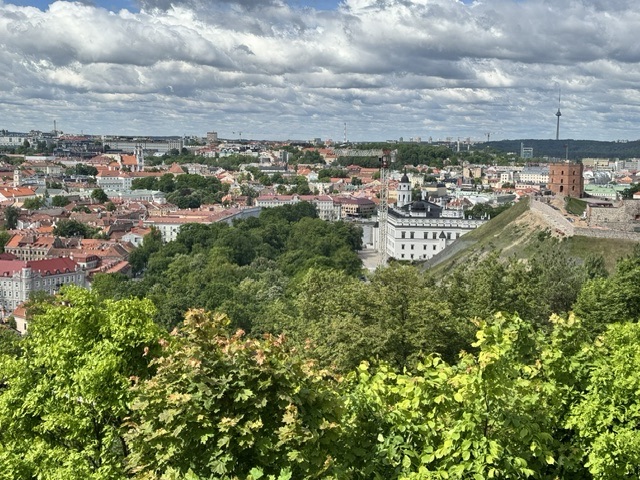
The walk up becomes part of the appeal. It’s a gentle but steady climb through Bernardine Park and along wooded paths. As I climb, panoramas of the city gradually spread beneath. From the top, I get one of the best panoramic views of Vilnius with its red rooftops, church spires, Bastion Hill, and the curve of the river.
The Smallest Republic with the Biggest Imagination
But, after my climb, it is Užupis which calls. Vilnius lingers as a city of baroque churches, hidden courtyards, and cobblestone streets. But Užupis represents the hum of cafés, playful and creative art, and a common-sense constitution. Overall, both leave a great impression.
Everyone has the right to be happy, to be unique, to be idle and to remember while the river has the right to flow by.

0 Comments