8-10 June 2026
My journey to Sweden began at Tallinn’s Bussijaam, where I boarded Bus No. 2 to the airport. True to Estonia’s reputation for efficiency, it departed and arrived exactly on schedule. Buying a ticket was a small adventure in itself. There were no ticket offices or machines in sight, so I simply tapped my credit card on the bus, received a reassuring green light, and took a seat, trusting that the system somehow knew I had paid despite providing no ticket or receipt.
Twenty minutes later I was at the Tallinn airport, and within another fifteen minutes, cleared security and settled into the lounge with a cappuccino in hand. Soon I was airborne, crossing the Gulf of Finland in little more than fifteen minutes before making a brief connection in Helsinki for my flight to Gothenburg.

Waiting for me at arrivals was my Swedish daughter, Maria. In 1987–88, Maria came to live with me in Bakersfield as an exchange student. I suspect the California heat that greeted her was at least 40 degrees warmer than anything she had left behind in Sweden.
We shared a wonderful year filled with adventures, and over the decades since, we have remained close, visiting one another in both the United States and Sweden. Arriving in Gothenburg felt less like the start of a new journey and more like the continuation of a friendship that has lasted nearly forty years.
I last saw Maria in 2019 when I stopped over in Gothenburg on my way back from Finland. During that visit, I explored some of the city. This time, we’ll embark on more adventures in this beautiful part of Sweden.
Muddy Paws Among Gardens and Lakes
Just a short walk from home takes us to , Gunnebo Slott och Trädgårdar, one of Sweden’s most elegant 18th-century manor estates, set in a carefully restored landscape of neoclassical gardens, orchards, and woodland paths.


The wooden palace sits on a rise above manicured lawns, while the surrounding gardens are managed using traditional organic methods, often with heritage vegetables, herbs, and seasonal flowers.
A short walk away, the atmosphere shifts into quieter nature. The area around Stensjön offers winding forest trails and lakeside paths that are ideal for a relaxed Sunday walk with our little white and fluffy dog Molly. The lake itself is calm and reflective, edged by pine forest and rocky outcrops, with openings where one can pause and look across the water. Some brave souls are swimming, but then this is summer in Sweden. Molly takes it all in stride as she rushes belly-deep into the cool waters.
The Creativity of Cars and More Cars
It feels appropriate to visit The World of Volvo. Volvo is not just a car brand in Gothenburg, but a huge part of the city’s identity, woven into its industrial history and its present-day confidence in design, safety, and engineering. The gorgeous building, inside and out, has a sculptural presence, all clean lines and sweeping forms that suggest motion even when one stands still.
Inside, the experience becomes less like a conventional automotive museum and more like an exhibition about how mobility shapes everyday life. Displays blend storytelling with design. Early Volvo models feel almost quaint in their simplicity, compared with the smooth, minimalistic interiors of newer electric vehicles.

There are interactive sections where I can explore how safety systems evolved, such as seatbelts, crash structures, and the quietly obsessive engineering behind protecting human bodies in motion.
One can climb aboard to operate a giant ditch digger, dirt replaced by colorful plastic balls.
Not just the cars stand out, but how they are presented as responses to human needs: winter roads, family travel, and urban congestion. There’s many interactive displays and, of course, many shiny and spotless vintage cars, experimental prototypes, and modern luxury models. Makes me covet the newest model – in only I had $80k to invest in a car.

Dinner Amongst West Coast Archipelago
We are the very last to board our dinner cruise aboard Strömma’s Carl Michael Bellman Kanalbolaget which gracefully navigates through Gothenburg’s southern archipelago.
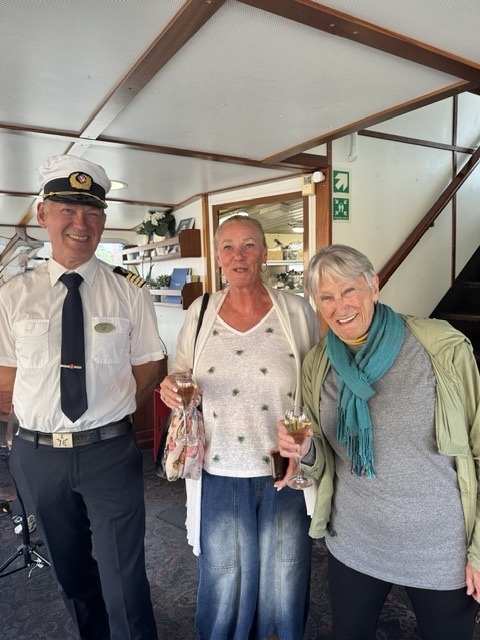
Just sit right back and you’ll hear a tale
a tale of a lovely trip,
that started from this Swedish port,
aboard this Strömma ship.
The mate was a mighty sailin’ man,
the Skipper brave and sure,
two passengers set sail that day,
for a three hour tour,
a three hour tour.
Gothenburg is located on the west coast of Sweden and is known for its granite shores, beautiful archipelago, and rich variety of fish and seafood. This makes it the perfect city to enjoy a 3-hour dining cruise in around the small islands of the archipelago. And Maria makes the perfect host as she explains what we pass and bits of history about our surroundings.
We sailed out the long canal past what used to be a thriving shipping and dry dock industry and now includes the gentrification and development of this part of the city. We circle popular islands like Brännö, Styrsö, and Asperö. It would be exceptional if we could witness a sunset here, however, even if 3-hours long, the sun is high and hidden in a gray sky until 10.07 tonight.
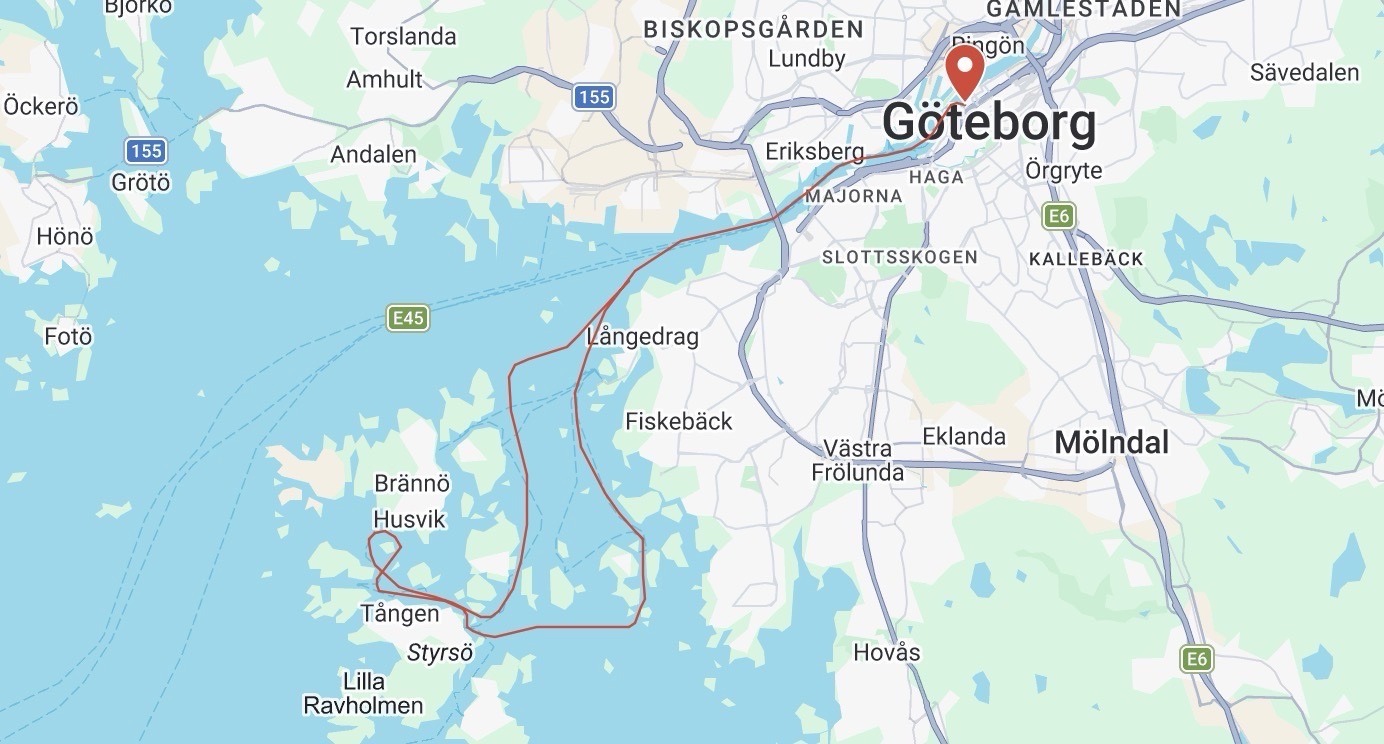
The Southern Archipelago represents a spectacular combination of sandy coves, private homes and boats, rugged granite cliffs, natural trails and endless sea views. This coastal region consists of around thirty islands, several of which are protected nature reserves. On the inhabited islands, charming turn-of-the-century homes stand alongside contemporary buildings, creating a blend of tradition and modern life.
Scattered along the shorelines, rows of bright red fishing huts add a splash of color and a reminder of the archipelago’s maritime heritage. Together, the islands offer a uniquely Swedish landscape where natural beauty and coastal culture exist in perfect harmony.
The seafood, champagne and wine and especially the company make it a special night to remember.
Along the Wet Cobblestones of Haga
With umbrellas unfurled as protection from rain, Maria and I walk toward an older rhythm in the city: Haga. This represents one of Gothenburg’s oldest neighborhoods. Streets narrow, wooden houses lean slightly into one another. Cobblestones, wet from rain, replace modern paving, and the scale of everything drops whether it be doors, windows, or storefronts. It creates a sense that the city has folded inward here rather than expanded outward.
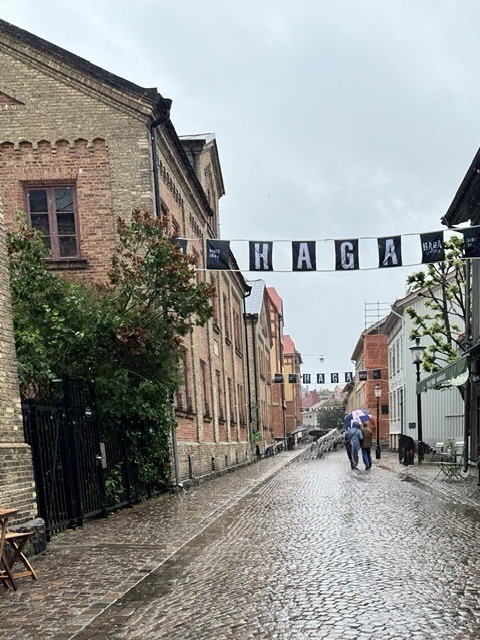
Haga is not a place for rushing. Wandering becomes the point. It’s quiet, most people seem to be either at work or just staying out of the rain. I pass cafés with oversized cinnamon buns, called hagabulle. Small shops sell crafts, books, antiques, and objects that feel chosen rather than stocked. I check for a Made in China label and see few. The pace of life here seems deliberately slower, as if the neighborhood has decided not to participate fully in modern acceleration.
The Haga neighborhood represents a pleasurable contrast to the modern city. The quaintness and quiet of Haga resists the sharper, modern and expanding edges of Gothenburg.
We pause for lunch. Found along the charming cobblestone street of Haga Nygata, the Sjöbaren restaurant offers traditional Gothenburg seafood.

The weather was gray and wet so rather than a table outside in their backyard, we opted for the cozy second floor area.
We serve ourselves at the salad bar and enjoy a wonderful bowl of seafood soup. Adding a glass of white wine from Espana, the wet afternoon was spent talking and enjoying each others company.
Trädgårdsföreningen – Amid Blooms & Scents
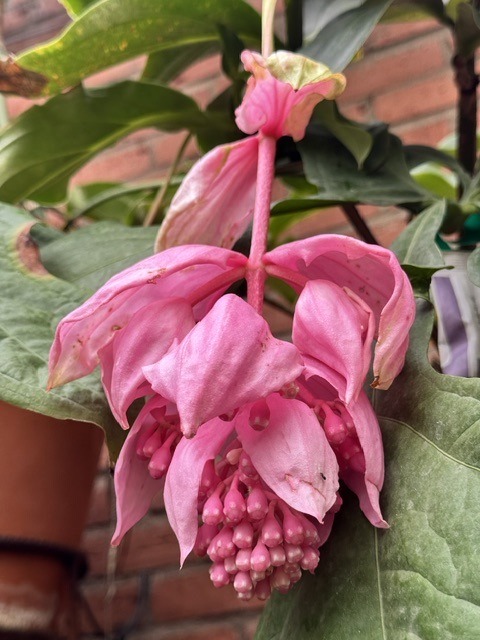
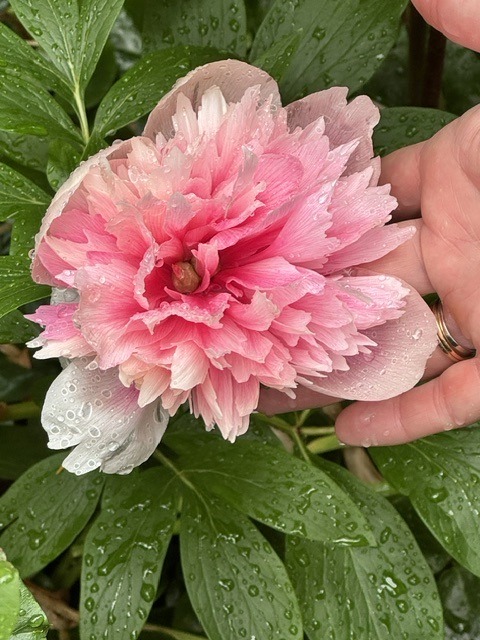
With Maria as my guide, we stroll through Gothenburg’s Trädgårdsföreningen (Garden Society), founded in 1842 by King Carl XIV. The rain had stopped so we wandered through the tropical garden houses and along winding paths that led through beautifully arranged gardens, blooming flowers and budding rose bushes.
Maria shared stories and pointed out details I might otherwise have missed, bringing the garden to life. The air carried the scent of summer blooms, while local feathered inhabitants provided a nice soundtrack to our stroll. We paused often to admire the carefully designed landscapes and the remarkable variety of plants gathered from around the world. Colorful photos were required.
Champagne and the Dorsia
The Dorsia Hotel, at first, appears a decadent blend of Belle Époque and modern comfort. For me, it appears to transport one back to the opulent era of the Great Gatsby or encourages visions of Monet in Montmartre.
From around 1871, after the Napoleonic era and the subsequent peace in Europe, a period known as the Beautiful Age emerged before the Great War of 1914. This era was characterized by a prosperous and carefree life for the upper and middle classes. There was significant growth in private possessions and in consumption, particularly of food and alcohol. For those who had money and experienced this era, it was seen as a glorious Gilded Age.
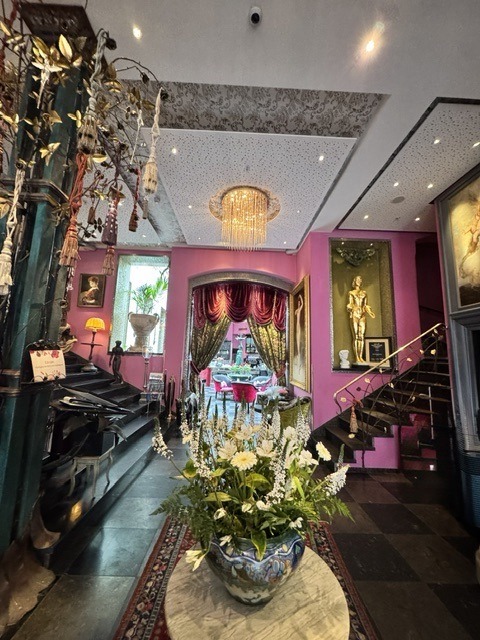

From the lobby to the multiple dining areas, the timely music, original paintings, statues of nudes, antique furnishings, and luxurious brocades and silks create an immersive experience. The roof terrace, offering panoramic views of the historic city center, is too wet for us. Instead, we settle into an upper lounge, surrounded by the opulence of luxury.

As we sip champagne, we belles of Sweden unwind and enjoy a relaxing afternoon.
Among Sheep, Sculptures, and Standing Stones
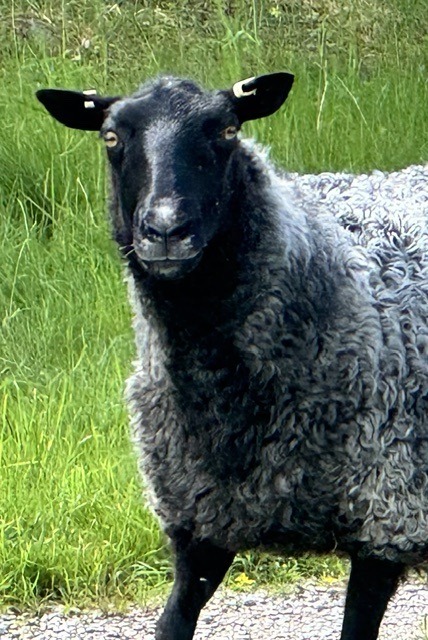
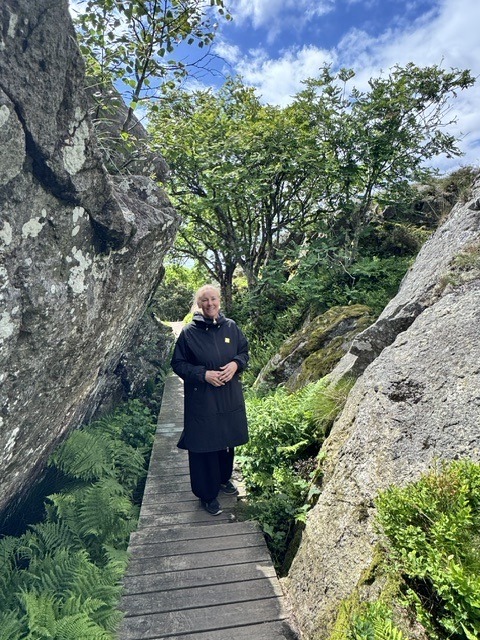
We loaded up the Volvo and set off north to explore a unique part of Sweden. Neither of us had been there before, so a bit of rain didn’t deter us. However, the weathergods cooperated. As we stepped from the car, intermittent rain transitioned to blue skies and fluffy white clouds. Mother Nature, and her sheep, smiled green and happy.
Skulptur i Pilane in Tjörn, some 45 north of Gothenburg, may be one of Sweden’s most unusual cultural sites. It combines archaeology, nature, and contemporary art in a single landscape.
The story of Pilane stretches back more than a thousand years. The area was an important settlement and burial ground during the Iron Age, roughly from 500 BC to AD 600.
Walking its green rolling hills, we pass ancient stone circles, standing stones, and grave fields that reveal how people lived and commemorated their dead long before the Viking Age. Archaeologists have found evidence of extensive habitation, making Pilane one of the most significant ancient sites in this Bohuslän region.
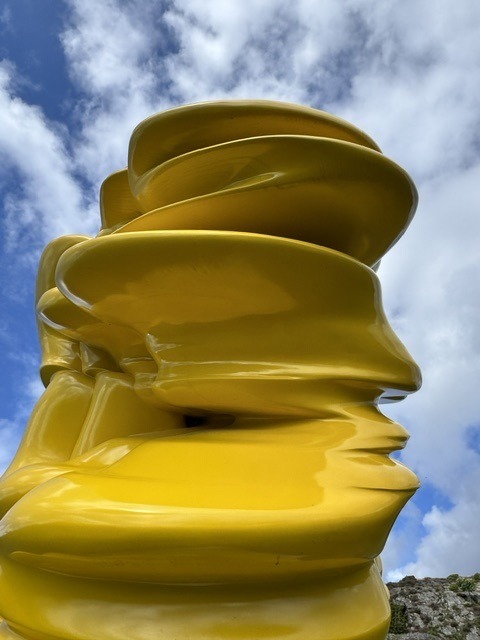
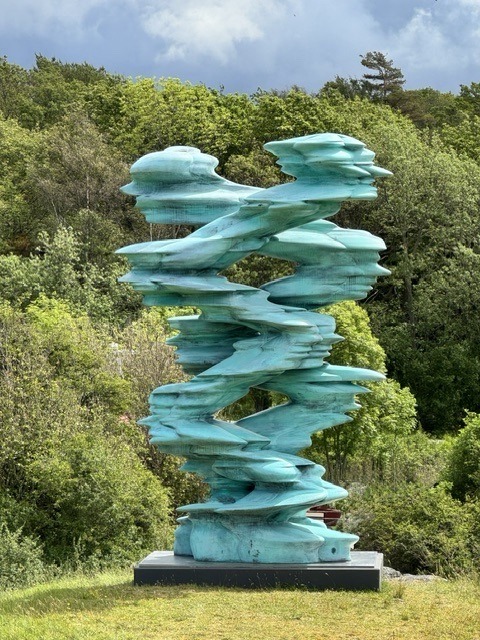
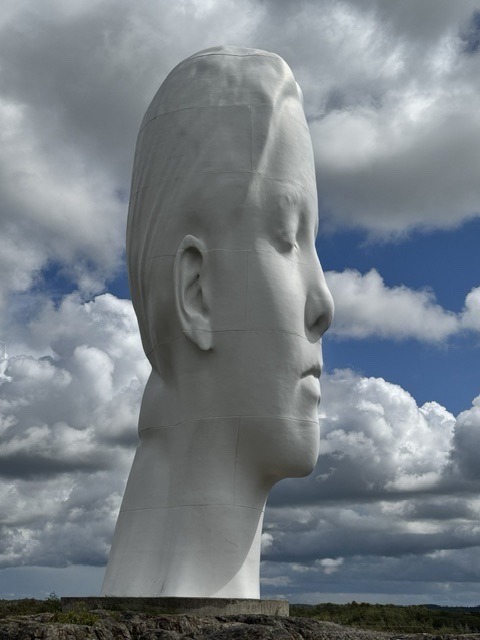
In 2007, the site took on a new dimension when it became an outdoor sculpture park. Each year, large-scale contemporary artworks are placed among the ancient monuments and grazing sheep. The most famous is Anna, the towering serene head created by Jaume Plensa, which gazes across the landscape and has become the iconic symbol of Pilane.
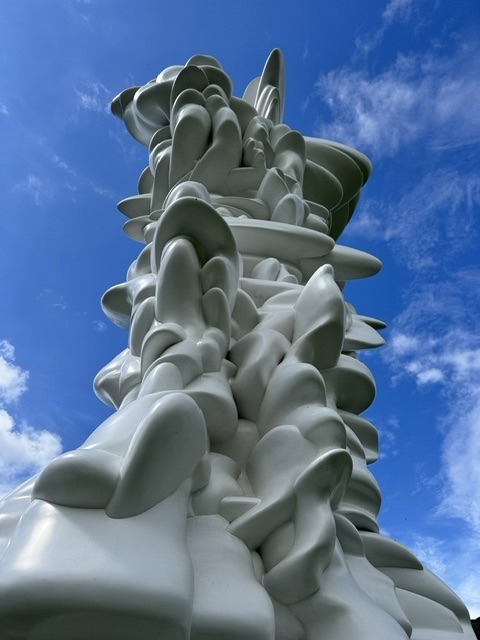
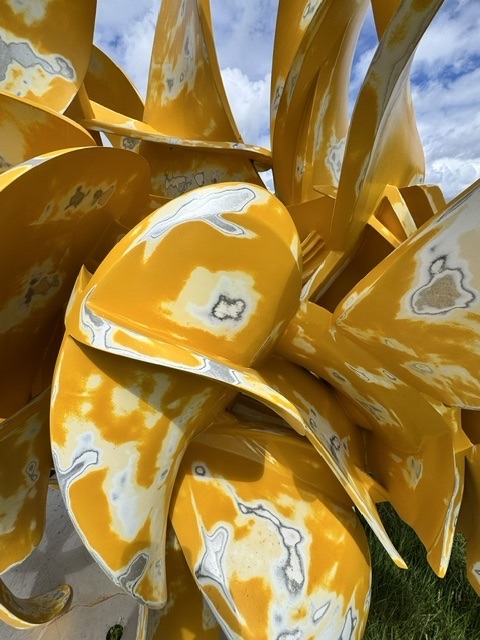
What makes Pilane special is the contrast: we can stand among grazing sheep, beside a 1,500-year-old burial monument while looking at world-class modern sculpture – all set amid windswept hills overlooking the North Sea. It results in a feeling of ancient struggles by long-gone Viking mariners. Ancient history and contemporary creativity share this same rugged landscape.
Get Thee to Gothenburg-Landvetter Airport
After a wonderful lunch at Salt & Sea in Koholmen, Maria dropped me off at the airport’s Scandic Hotel. The night seems short before it is time to rise and shine. From the hotel, it becomes a simple walk into Gothenburg’s airport, thru security and into the lounge for coffee and breakfast. Boarding at the ungodly hour of 5:35 am, I depart on-time for Frankfurt and ultimately home to California.
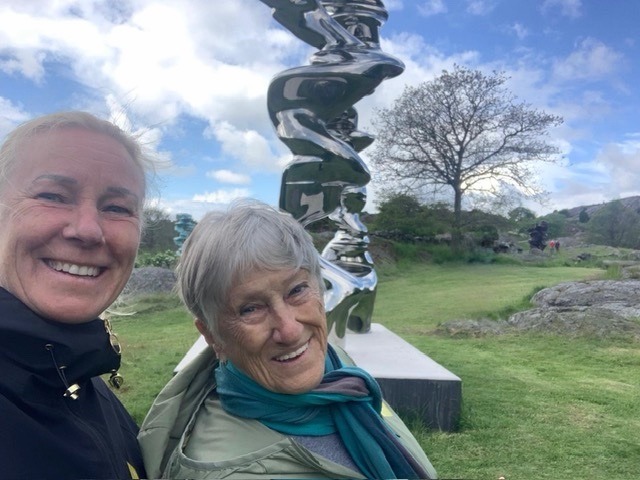
All travelers reach that moment when faced with going home. All trips draw to a close. Sadly, so too for my adventure. I face a very early flight in the morning so my plan is to stay overnight at the Scandic. I never want to ask someone to get up in the dark of night and drive me to an airport. Of course, in Sweden, it would already be after sunrise, even if at 4 am.

As I depart Gothenburg, I carry with me so many memories of my Swedish family. And I can’t help but think of possibilities of a return.
