27 May 2026
Time and distance suggest I fly. Fly in spite of threats of fuel shortages and cancelled flights. Taking the FEX train, I return to Berlin’s Brandenburg Airport for my short flight to Vilnius. I board Ryanair, a low-cost airline I hadn’t ever imagined a need for.
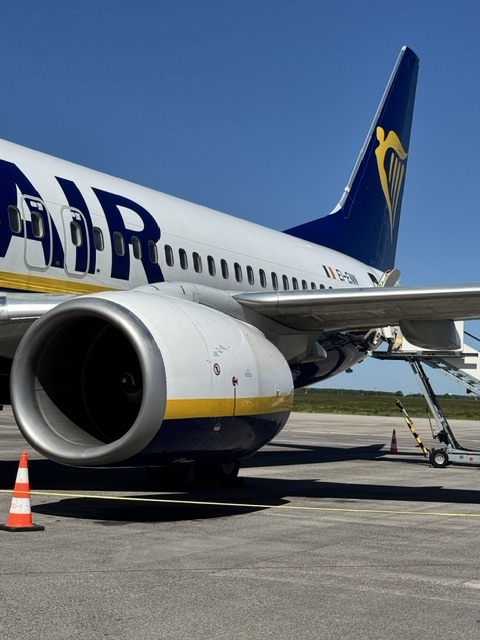
When I think of Ryanair, I immediately think of the wonderful British women, Fascinating Aïda, and their hilarious song Cheap Flights. It tells the woeful story of traveling on a low-cost airline. While the satirical lyrics fail to specifically mention Ryanair, there is no mistaking the song mocks the Irish-based airline.
Cheap flights, cheap flights, cheap as they can be… Well, we clicked on to the website and were mightily surprised To find the actual cost wasn’t quite as advertised….
I carry a small carryon bag and fly priority, not expecting any surprises. Cheap flights! I still pay less than what would be the cost of a taxi to my home airport. I am pleased, and relieved, as the flight performs as promised with no surprises!
For convenience, I exit Vilnius Čiurlionis International and board a bus into the city. Eventually, I arrive near Vilnius Train Station. I walk down the street to my lodging at Panorama Hotel. For the next days, I explore the capital of Lithuania and its largest city.
Vilnius
Vilnius is known for its baroque skyline, winding lanes, and layered identity. Its Old Town, a UNESCO site, mixes Catholic churches, Orthodox domes, and traces of Jewish heritage
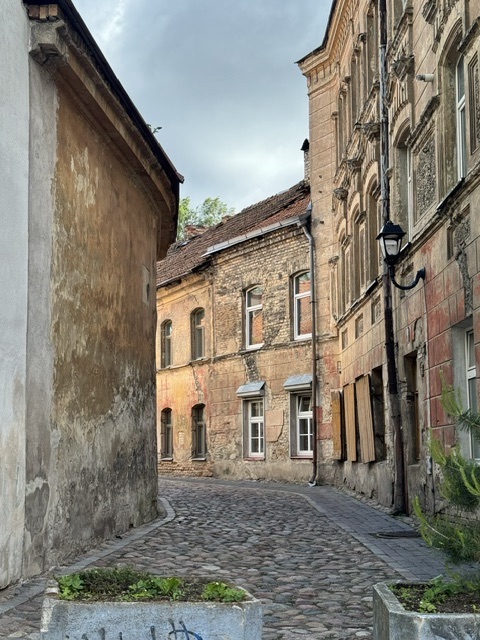
Historically, Vilnius was the capital of the Grand Duchy of Lithuania, once one of the largest states in Europe, stretching south all the way to the Black Sea. It later entered a union with Poland before being absorbed into the Russian Empire.
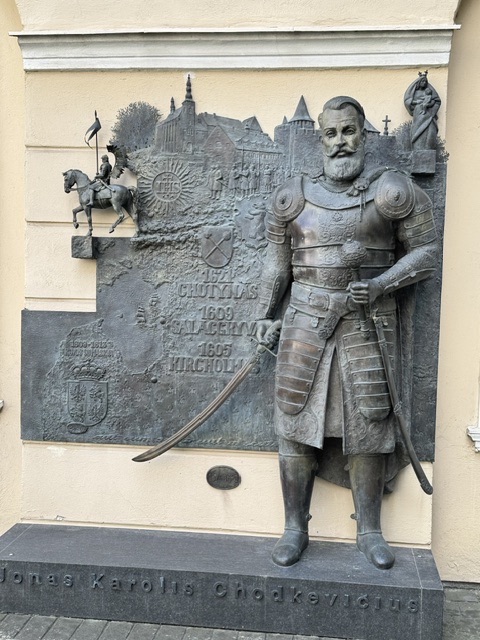
Jonas Karolis Chodkevičius (1560–1621)- military commander of the Grand Duchy of Lithuania and the Polish–Lithuanian Commonwealth.
The 20th century brought occupations by Nazi Germany and the Soviet Union, deeply shaping its population and memory. Before World War II, Vilnius was a major center of Jewish life, often called the Jerusalem of the North. The Holocaust devastated that community.
Lithuania regained its independence through a largely peaceful mass movement as the Soviet Union weakened in the late 1980s. Reform policies under Mikhail Gorbachev opened space for dissent. In 1988, a grassroots movement called Sąjūdis united intellectuals and ordinary citizens to demand sovereignty, cultural revival, and political freedom. Public rallies grew rapidly, and national symbols long suppressed reappeared.
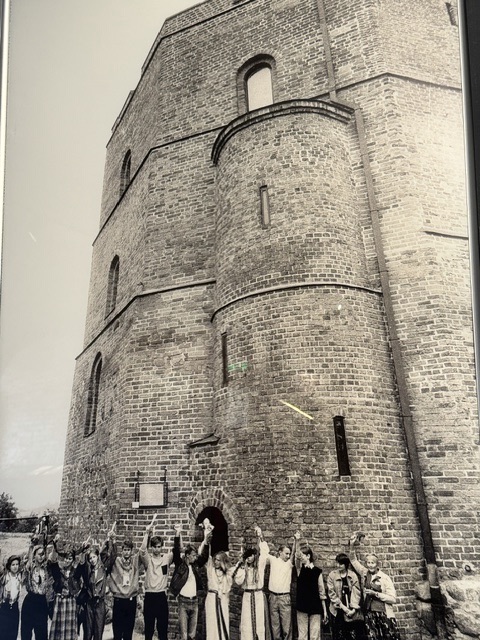
A defining moment came in 1989 with the Baltic Way, when about two million people across Lithuania, Latvia, and Estonia joined hands in a 375-mile human chain to protest Soviet rule.
On March 11, 1990, Lithuania declared independence—the first Soviet republic to do so. Moscow responded with economic pressure and, in January 1991, sent troops. During the January events, civilians defended key sites; 14 people died at the TV tower.
Despite this, resistance remained nonviolent. After a failed coup in Moscow later in 1991, the Soviet Union collapsed, and Lithuania’s independence earned wide recognition.
Today, in independent Lithuania, Vilnius feels youthful and creative. A quirky spirit blossoms in Užupis, a self-declared republic. The city appears compact, walkable, and a place where history sits among its cafes.
From Sacred Gate to Freedom’s Mark: A Vilnius Walk
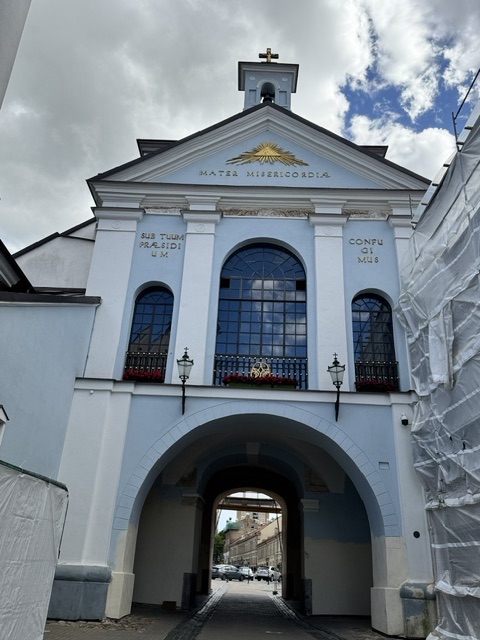
I begin at the Gate of Dawn, where a small chapel above the arch holds a revered icon of the Virgin. This represents the last remaining gate of the old defensive wall built in the 16th century.
Its icon of the Virgin Mary, believed by many to have miraculous protective powers, drew pilgrims even during tsarist and Soviet rule, when open religious expression was often discouraged. If you desire to visit, entrance is via a harrowing hallway which was packed with a long line of people when I walked in. I left
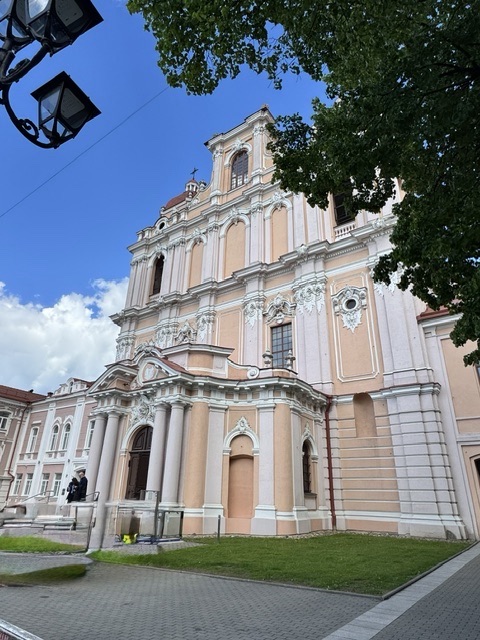
Ahead appears the spectacular pink façade and crown-topped dome of Church of St. Casimir. Its Baroque exterior is clean and symmetrical, favoring balance and restrained ornamentation that can be seen in later Baroque architecture.
The church reflects Vilnius’ role in the Counter-Reformation. Built by Jesuits in the early 1600s, it honors Lithuania’s patron saint, a prince who renounced royal life for piety. The church has been repurposed repeatedly, even used as a museum of atheism under Soviet control, before returning to worship.
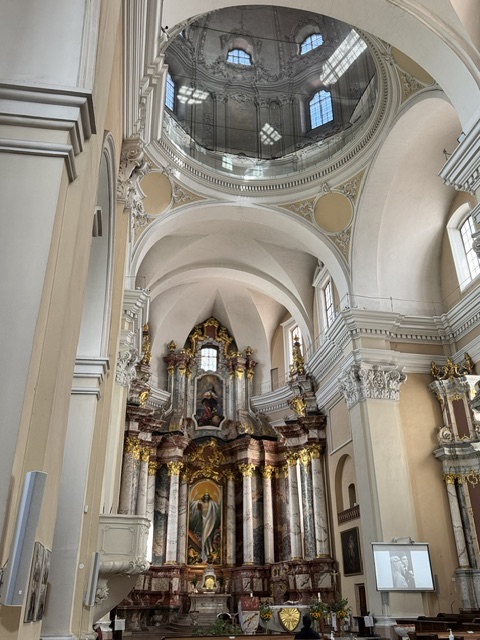
Inside, the space feels bright and harmonious, with white walls, gentle stucco detailing, and a sense of calm order rather than over-embellishment. The standout feature is the high altar, which draws your eye upward to a beautiful dome and anchors the interior with elegant columns and religious artwork.
Old Town Charm
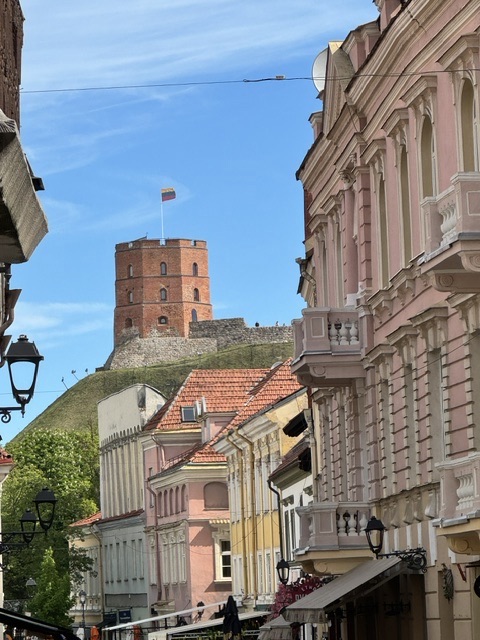
I stroll on into the heart of Vilnius Old Town and Town Hall Square. Beautiful cobblestone streets are lined with pastel buildings, church spires, and occasional Orthodox domes. Looming on the hilltop, Gediminas Castle, flag majestically responding to the ever-present wind gusts here. At Town Hall Square, the space broadens. Musicians busk, locals linger at cafes, while the neoclassical town hall anchors the scene.
Toward the end of a broad square is the Vilnius Compass, a modest tile set in the pavement. Tradition says if you stand on it, make a wish, and spin, it may come true, kind of like the Trevi Fountain but with no cost. This custom is modern rather than ancient. The tile marks one point of the Baltic Way, where people across the Baltic states joined hands in their call for independence from the Soviet Union.
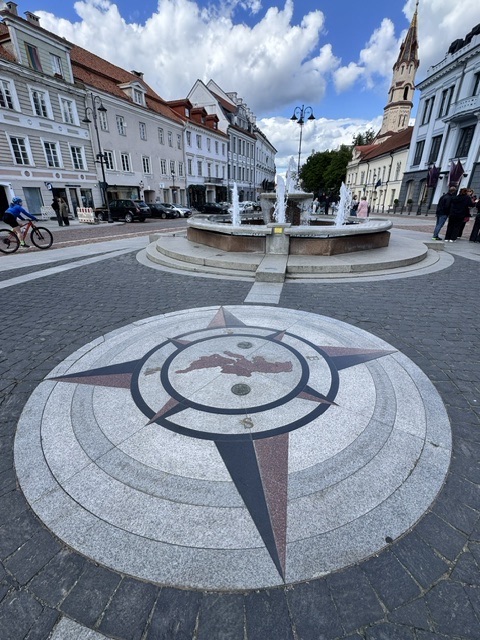
The spinning-and-wishing ritual grew later, informally, as locals and visitors began treating the spot as a symbol of hope and collective will. Most people informally call the compas Stebuklas. No labeling directions like north or south appear. Instead, it marks a circular pavement design that resembles a compass or dial.
The word Stebuklas means miracle, reflecting how unlikely independence once seemed. Turning in a circle while making a wish echoes older folk traditions of motion and luck, but here it’s really a playful, symbolic gesture tied to that moment of unity and change.
Gediminas Castle
I continue down Pilies Street, Vilnius’s very long pedestrian street running from Town Hall to the Cathedral. It is a pleasure to wander cobblestone streets past scores of shops, busy cafés, and green spaces. And if you want amber, this is the place to find it. Entering Bernardine Park, the Gediminas Castle Hill and tower rise on my left. This represents the symbolic heart of the city.
The hill represents the founding legend of Vilnius. According to tradition, Grand Duke Gediminas dreamed of an iron wolf howling atop this hill. Priests interpreted it as a sign to build a great city whose fame would spread far and wide. By the 14th century, a wooden castle stood here, later rebuilt in brick as part of the defensive Upper Castle of the Grand Duchy of Lithuania.
Its 65-foot brick tower is a surviving remnant of that complex. Over centuries it fell into ruin, especially after wars with Moscow, but became a national symbol during times of foreign rule. In the 20th century, hill and tower became a place where Lithuanian flags flew in defiance as independence movements grew.
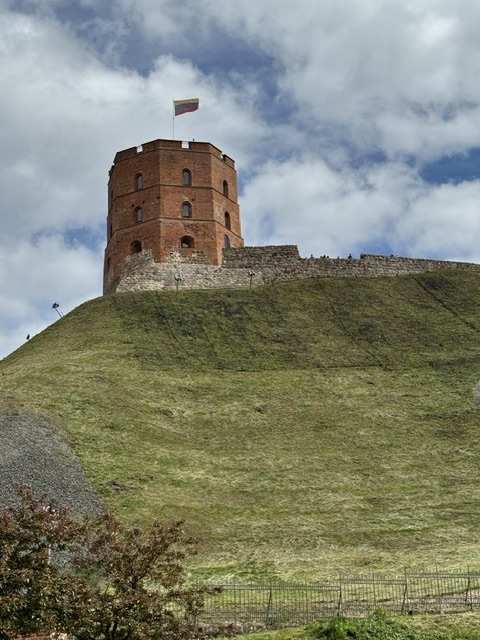
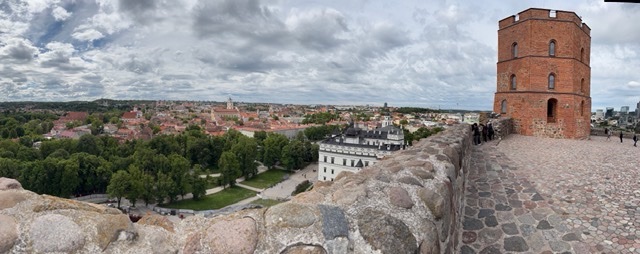
I climb to the top of Castle Hill, some 165-feet of cobblestone and stairs. One can also take a funicular. Views sweep over Old Town and nearby Neris River. Inside the tower, exhibits show models of the original castles and explain city history. The real highlight, though, is the panorama at the tower’s top some 230-feet over the city, with a sense of standing where legend, resistance, and identity meet.
Museum of Occupation
I try never to miss an opportunity to visit museums which highlight a people’s efforts to resist occupation and loss of their human rights. And as my own country falls into the same turmoil and injustice, these museums speak even more loudly to me.
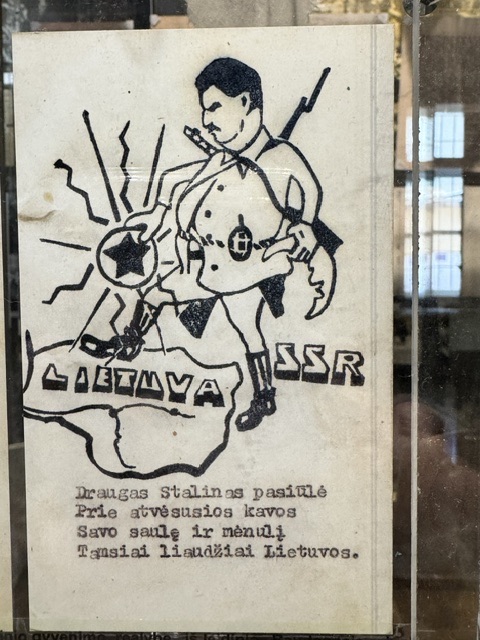
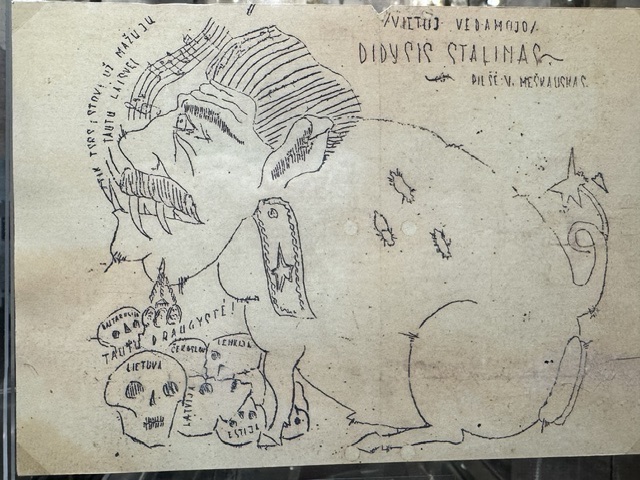
Inside, the museum traces Lithuania’s 20th-century occupations—first by the Soviets, then by Nazi Germany, and again by the Soviets after World War II. What makes it powerful is its focus on personal experience rather than abstract timelines.
Having “liberated” Lithuania from the Nazis in 1944-1945, the Soviet Union’s Red Army “forgot” to go back home.
Visiting the museum becomes less about distant history and more about living memory. Housed in the former Soviet security headquarters, the building itself becomes part of the story. For decades surveillance, interrogation, and repression occurred here under the Soviet Union.
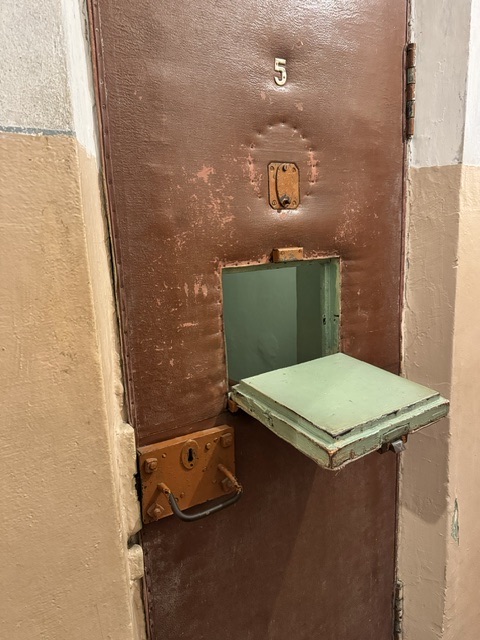
I see reconstructed prison cells and interrogation rooms in the basement, including isolation cells and execution spaces that are stark and difficult but important to understand the scale of repression.
Above ground, exhibits document deportations to Siberia, partisan resistance fighters hiding in forests, and the long underground struggle to preserve language, culture, and identity.
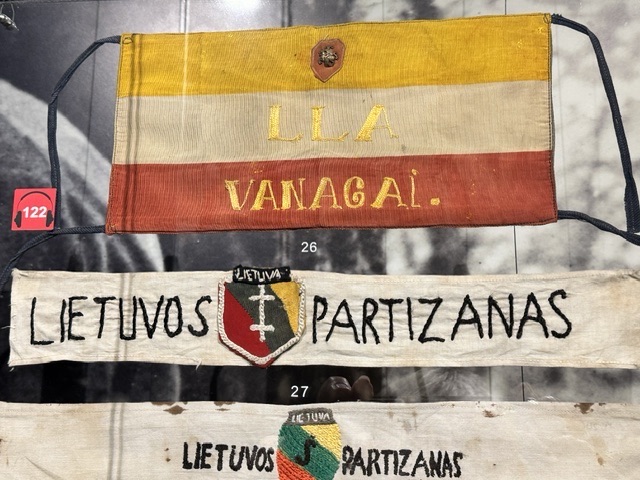
Particularly interesting is the section on the Lithuanian Forest Brothers, who waged guerrilla resistance for years after WWII. Displays include personal letters and photographs from families torn apart by deportation. Rooms are filled with names, objects, and testimonies that remind me this is not abstract history, but real endurance and resistance that ultimately led to independence.
This museum, as all such museums which document resistance movements, clearly shows visitors that every individual bears a responsibility to actively shape the present. Their struggles and successes leave me with a lesson of hope. And I really relate to that under my current corrupt government.
Picture Gallery and National Gallery of Art
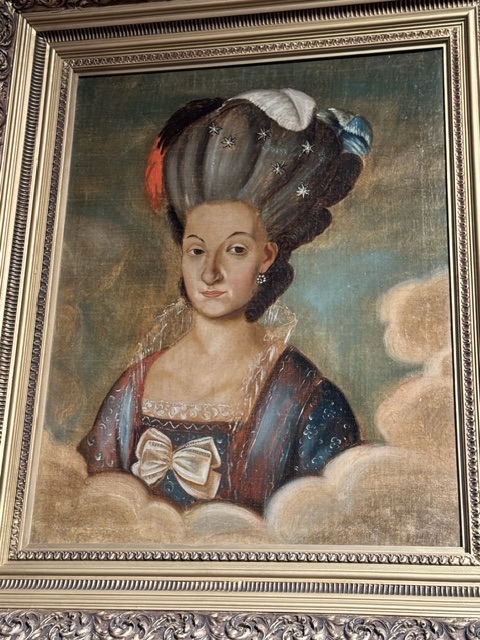
The Lithuanian National Gallery of Art and the Vilnius Picture Gallery together give a comprehensive view of Lithuanian art, from aristocratic portrait traditions to modern and contemporary expression.
At left, royal hairdo is eye catching.
The aristocratic palace that houses the Vilnius Picture Gallery dates back to the 17th century, with its main structure built in the early 1600s for noble families of the Grand Duchy of Lithuania. Over time, it expanded, especially in the 18th century. Baroque and later Classical influences were added as ownership changed among the Lithuanian-Polish aristocracy. Like many Vilnius buildings, it was adapted repeatedly and used for different administrative and cultural purposes under the Russian Empire and later periods.
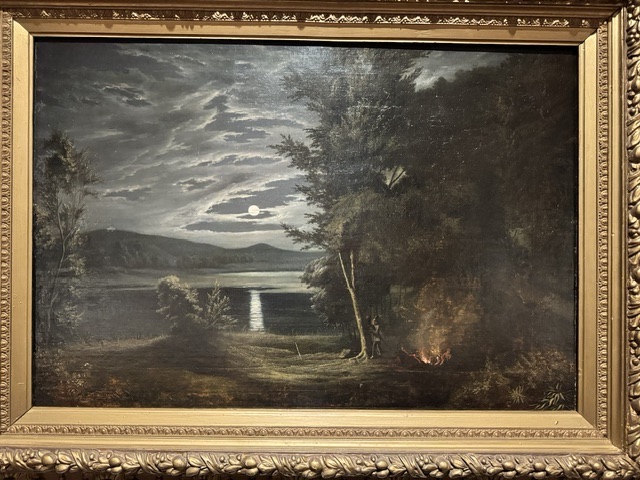
Displays incude art from the Grand Duchy of Lithuania and later the Polish-Lithuanian Commonwealth period. Elegant portraits of nobles, religious works, and interiors reflect how elite life once looked in Vilnius. The building itself becomes part of the experience, with ornate rooms, period furniture, and a sense of how power and culture were displayed before modern nationalism. The piano recital added to the royal atmosphere.
The National Gallery of Art is much broader and more contemporary. It covers 20th- and 21st-century Lithuanian art, including works shaped by Soviet rule, exile, and independence. Displayed are modernist paintings, conceptual installations, photography, and politically charged art reflecting censorship, identity, and transition. This focus on Soviet-era dissident art and post-independence installations often grapples directly with freedom, memory, and national identity.
Cobblestones and Cold Beer Decisions
At the end of the day, wandering Vilnius’ historic Old Town, every café seems to call out at once. Each exudes its own warmth, smell of food, and promise of rest. Yet my choices are oddly difficult as menus shift between languages, some unfamiliar. Pictures become guides and intuition does the rest.
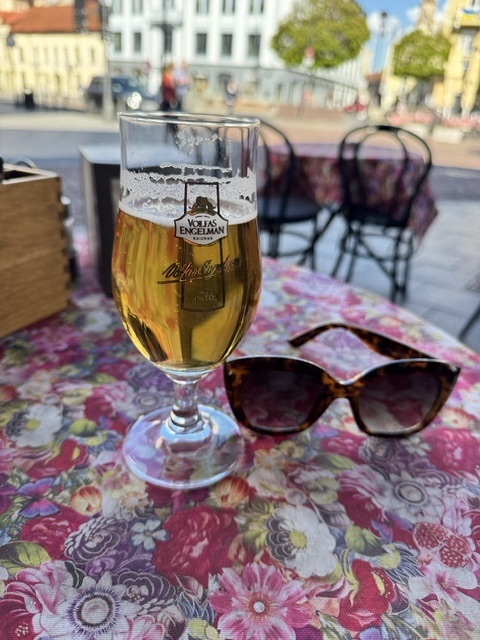
I linger, reading faces of passersby, checking views, glancing at chalkboards, searching for the place that feels right. Eventually, one table wins me over. I sit, order a Volfas Engelman and let the cobblestones cool.

0 Comments