24 May 2026

Berlin can overwhelm with beauty, culture, and energy, but today’s walk strips away all distractions. It is a journey through the physical remains of one of history’s darkest chapters, where ordinary streets became witnesses to dictatorship, persecution, war, and genocide. The power of this route is not found in grand spectacle, but in the contrast between modern Berlin and the fragments of horror still embedded within it.
Through the Shadows of the Third Reich
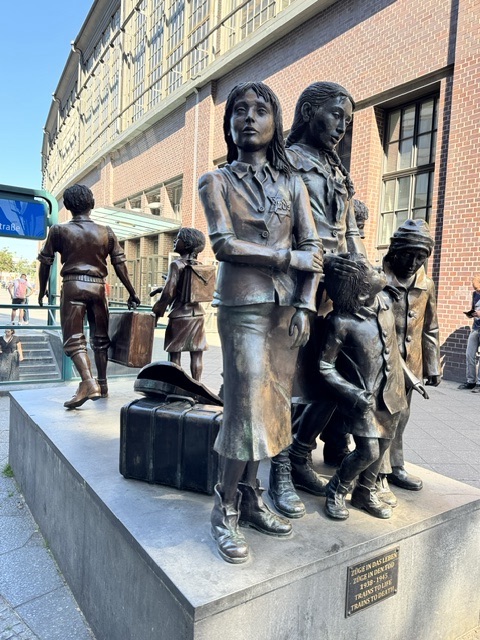
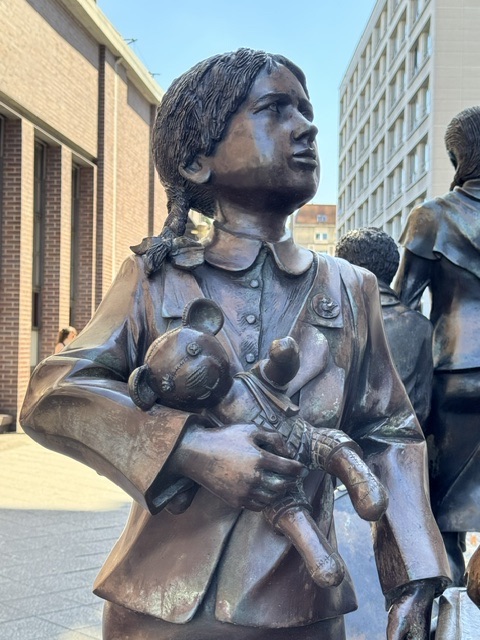
Beginning at the Trains to Life and Death Memorial, I am confronted immediately with the tragedy of children. The large bronze sculpture honors the Jewish children rescued by the Kindertransport, while the another remembers those deported eastward toward camps and death. Standing near a busy railway station, the memorial quietly reminds visitors how rail lines that symbolize connection and travel transformed into machinery for deportation and murder.

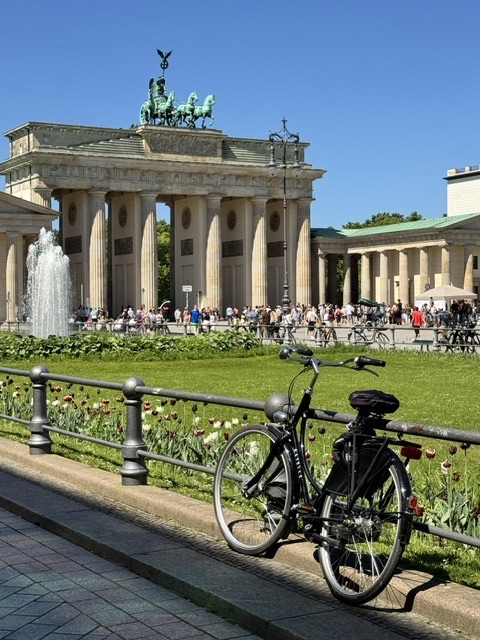
At the Reichstag and Brandenburg Gate, one witnesses symbols of Germany reborn. These landmarks survived imperial ambition, Nazi dictatorship, devastating war, division during the Cold War, and eventual reunification.
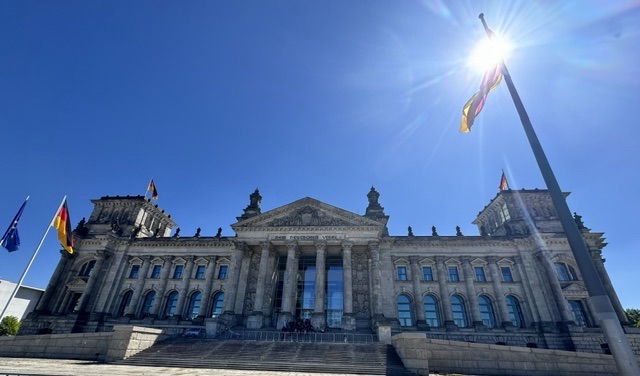
Today, each represents democracy and openness, yet the shadows of the 1930s linger heavily here. The Nazis once marched triumphantly through these spaces, exploiting nationalism and fear while dismantling democratic institutions step by step.
The cast-iron plates I see in front of the Reichstag Building represent markers commemorating the 96 members of the German parliament, the Reichstag, murdered or persecuted by the Nazis after Adolf Hitler came to power in 1933.
Many of the plates bear the names and fate of individual parliamentarians — especially those from democratic parties, socialists, communists, and others who opposed the Nazi regime. Some were imprisoned, forced into exile, or murdered in concentration camps.
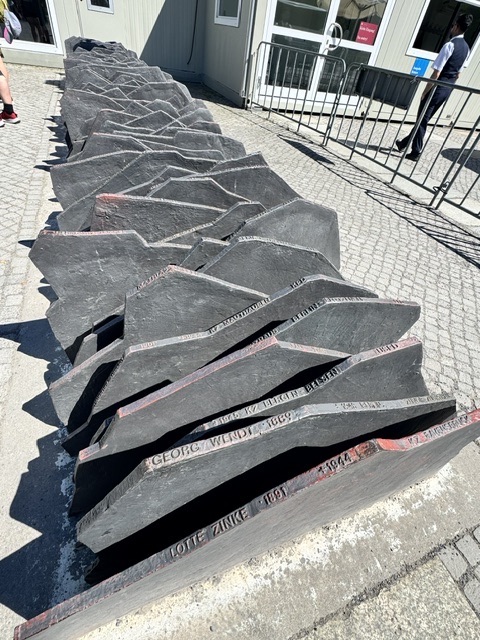
At least two women recognized as dying at Ravensbrück, including Lotte Zinke in 1944.
These plates serve as a powerful reminder that the destruction of democracy in Germany did not happen instantly. Elected representatives were silenced, arrested, and eliminated step by step as the Nazis dismantled democratic institutions from within. Their presence reinforces modern Germany’s message that democracy remains fragile and must be constantly defended. My own country would benefit from also learning this valuable lesson.
Other Victims of the Holocaust
The Memorial to the Sinti and Roma Murdered Under Nazism officially opened in late 2012. Often overlooked in discussions of Nazi crimes, hundreds of thousands of Sinti and Roma people fell to persecution and murder. The still pool of water and solitary flower create a space of silence and dignity amid the noise of the city.
The Sinti are a people of Romani origin who have lived for centuries primarily in Germany and surrounding parts of Central Europe. They are closely related to other Romani groups, often collectively referred to as Roma, though many Sinti identify specifically with their own distinct culture, traditions, and history.
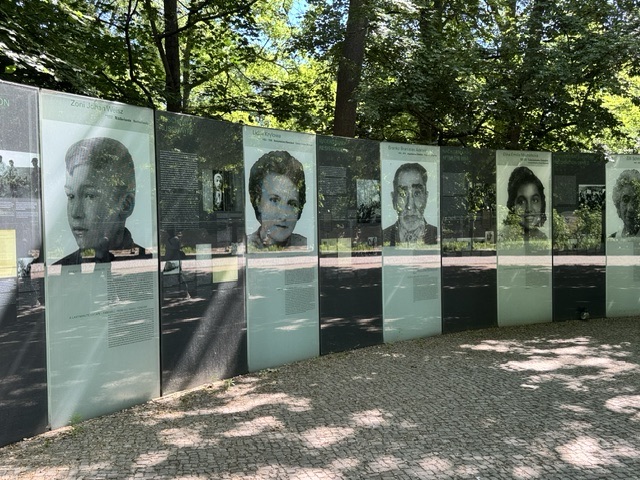
The Romani people originally migrated from northern India around a thousand years ago, gradually spreading across Europe. Over centuries, the Sinti developed their own dialects, customs, music, and communities, particularly in German-speaking lands.
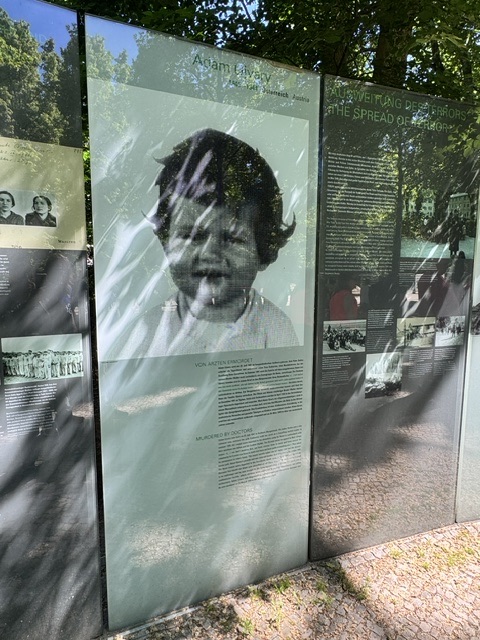
Young Adam “murdered by doctors.”
Under the Nazis, the Sinti and Roma suffered persecution as part of the regime’s racist ideology.
The Nazis falsely labeled them as racially inferior and asocial. Thousands became stripped of rights, imprisoned, sterilized, deported, and murdered in concentration and extermination camps. Some Romani refer to this genocide as the Porajmos, meaning the Devouring.
For many decades after World War II, the suffering of the Sinti and Roma was often ignored or minimized compared with broader Holocaust remembrance. That is one reason the memorial in Berlin is so significant today: it publicly acknowledges victims who were long denied recognition and justice.
Through the Scars of Berlin
Passing through the Tiergarten to the Soviet War Memorial, I encounter another layer of Berlin’s suffering and liberation.

The massive Soviet tanks and solemn columns commemorate the Red Army soldiers who died capturing Berlin in 1945. For many Berliners, the Soviet advance meant the end of Nazi rule.
However, it also marked the beginning of decades of Soviet domination in Eastern Europe. Berlin constantly forces one to confront uncomfortable truths existing side by side.
The Memorial to the Murdered Jews of Europe represents perhaps the emotional center of the journey. Its vast field of concrete stelae feels unsettling and disorienting. As the ground sinks and the blocks rise higher around you, the city disappears.
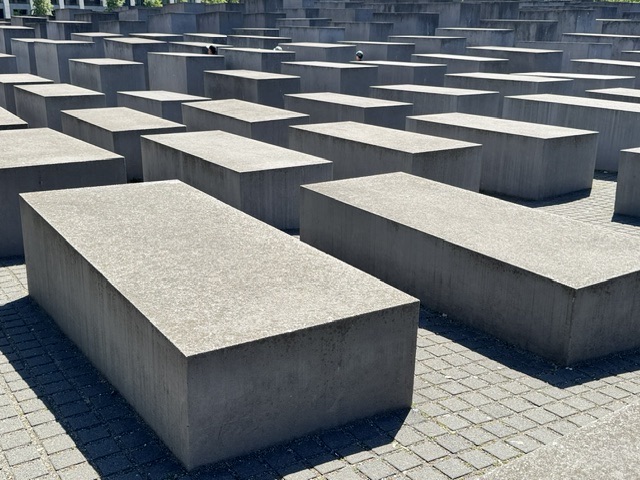
Visitors often describe feelings of confusion, isolation, and unease. No names appear carved into the stones above ground, only a silence. Beneath the memorial, the information center restores individuality through letters, photographs, and stories of families destroyed by the Holocaust. Statistics become human beings again.
Nearby, a large informational placard marks the location of the Führerbunker surrounded by surprisingly ordinary buildings. Cars pass, apartment buildings stand nearby, and little remains visible of the bunker where Adolf Hitler spent his final days before suicide in April 1945.

That ordinariness is intentional. Modern Germany avoids glorifying the site. Instead, it serves as a reminder that monstrous evil often emerges not from mythic places, but from bureaucratic offices and ordinary rooms occupied by ordinary people making catastrophic choices.
The still-standing Aviation Ministry building, one of the few enormous Nazi government structures left intact, demonstrates the intimidating scale and permanence the regime sought to project. Heavy stone architecture was meant to communicate power, obedience, and inevitability. Seeing it today, still looming over Berlin, remains unsettling precisely because it survived when so much else was destroyed.
Spies and Resistance
The German Spy Museum explores the hidden world of espionage across centuries, with a focus on the Cold War, surveillance, and intelligence operations that shaped modern Europe. Interactive exhibits explain codes, encryption, secret communications, and the tools used by intelligence agencies such as MI6, the CIA, and the Stasi. One of its most striking themes is how deeply surveillance became embedded in everyday life in divided Berlin, where East and West monitored not only enemies, but often their own citizens.
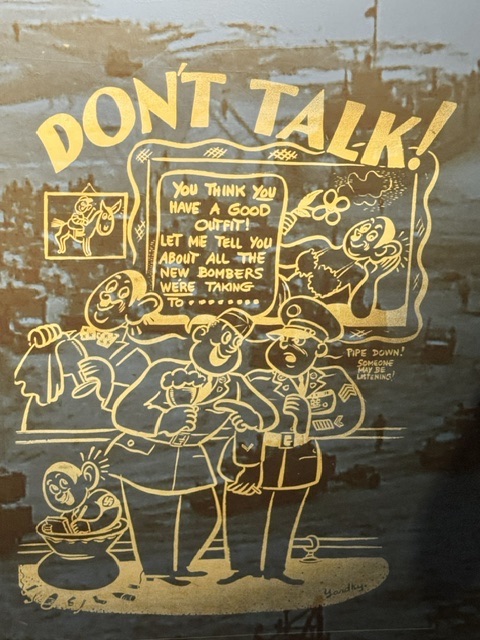
Information became power. Fear, suspicion, and secrecy influenced political systems. Clearly, the mechanisms of control did not end with Nazi Germany, but evolved. It encourages reflection on how modern states balance security with freedom, and how easily surveillance can cross into intrusion when fear drives policy.
The children were fully enjoying the museum’s interactive displays. However, unless deeply interested, as an adult I would choose another museum to explore.
I ran out of time and foot power, but for my next visit, the German Resistance Memorial Center becomes a must-see. It dedicates itself to the individuals and groups who opposed the Nazi dictatorship from within Germany. Here within the historic Bendlerblock, concerned Germans planned the July 20, 1944 plot to assassinate Adolf Hitler. It failed.
This museum focuses on military officers, political dissidents, clergy, students, and ordinary citizens who resisted through conspiracy, protest, pamphlets, and underground networks.
Walking the Geography of Nazi Terror – Confronting History Street by Street

At the Topography of Terror, history becomes brutally direct. Built on the former site of the Gestapo and SS headquarters, the museum documents how terror became organized administratively and methodically. Photographs, documents, and personal accounts reveal how persecution became state policy enforced through paperwork, propaganda, surveillance, imprisonment, torture, and murder. One of my most chilling realization becomes how bureaucratic and systematic the machinery of terror truly operated.
What information about the Holocaust was accessible in the German Reich? What did Germans notice if they were not directly involved in the crimes and not targeted by persecution? How did relevant facts and rumours spread at the time? What did individuals do with their knowledge? These questions are at the heart of the exhibition.
The exhibition consists of three parts. “Propaganda” illustrates what the Nazi regime released to the public about the persecution and murder of Jews. “Indications in Everyday Life” provides insight into unofficial reports on the mass murder. “Putting the Pieces Together” shows how individuals pieced together items of information to create a complete picture.
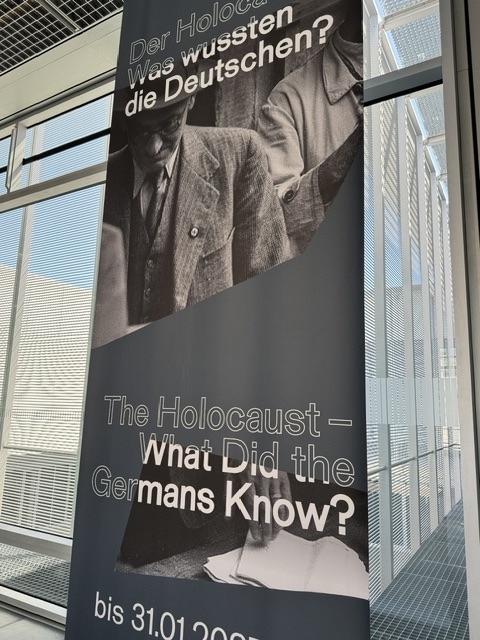
Excellent exhibit which asks and examines what each and every person must consider when studying history and events.
Ending at the Berlin Story Bunker adds a final layer to my day’s walk. Inside a former air-raid shelter, the exhibits explore Hitler’s rise, the war, propaganda, and the destruction that followed. The bunker atmosphere itself becomes part of the lesson. Thick walls and claustrophobic corridors remind visitors of civilians hiding from bombardment while the regime collapsed around them.

In the basement of the wartime bunker, the excellent Ukraine Museum brings today’s war uncomfortably close. Destroyed drones, shattered vehicles, battlefield artifacts, and survivor stories create a raw, immersive reminder that conflict in Europe is not distant history. Here, the Russian attack on an ally became a living reality unfolding within their own neighborhood.


Berlin’s Lessons Written in Stone
What I witness most on this walk is not simply the story of Nazi evil, but the modern German determination to confront it openly. Berlin does not erase these scars. The city places memorials beside government buildings, museums atop sites of terror, and markers in everyday neighborhoods. It forces remembrance rather than hiding it away.
I also witness how fragile democracy can be. Many of these sites reveal how quickly fear, propaganda, nationalism, racism, and silence can destroy institutions and human lives.
So much of what I read screams USA, USA!
This walk represents not merely the past. It quietly asks me to consider the present and future as well. As I move between memorials, ruined ministries, and the sites where hatred became transformed into policy and murder. I cannot help but recognize echoes of the same forces alive today in my own country, the United States.
The lessons written in stone across Berlin reveal how easily fear, propaganda, cruelty, and the dehumanization of others can take root within a society that believes itself immune. Nazi Germany did not descend into darkness overnight. Democracy eroded slowly through anger, division, lies, blind nationalism, and the normalization of hatred. Walking these streets has deepened my understanding that no nation is permanently protected from repeating the mistakes of the past.
These memorials and museums exist because forgetting would be far more dangerous. The memorials of Berlin stand not only as monuments to victims, but as warnings to the living.

Where evil once ruled in East Berlin, Vietnamese food, Tiger beer from Singapore, German and Swiss friends all served within today’s free and democratic Germany. it was all worth fighting for.

0 Comments