A Day Between Lakeside Peace and Dark History
24 May 2026
Whit Sunday arrives as one of those perfect early summer mornings that seem almost staged for postcards and travel brochures. The sky over Berlin beams bright and clear, the kind of blue that promises long hours outdoors and excuses every decision to linger.
Our little family journeys to the station with backpacks, jackets tied around waists, and the excitement that comes from leaving the city behind for the day. There is something comforting about German regional trains on weekends, the mixture of hikers, cyclists, elderly couples, and families all spreading outward from Berlin toward forests, lakes, and villages.
A Perfect Summer Day – An Imperfect Place
We board a train north toward Fürstenberg/Havel, a small lakeside town wrapped in water and pine forests. The ride itself becomes part of the experience. Berlin slowly loosens its grip, apartment blocks giving way to fields, tiny villages, church spires, and stretches of green countryside.
Arriving in Fürstenberg feels like stepping into another rhythm of life entirely.
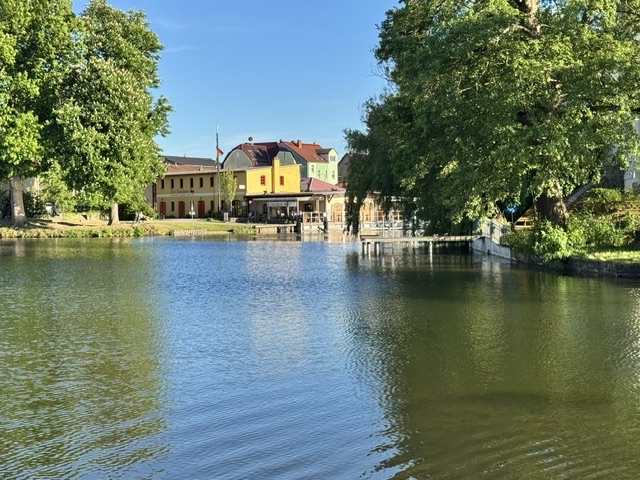
The town sits quietly beside the water. Boats drift lazily across the lake, cyclists move along shaded paths, and the warm breeze carries the smell of water and pine needles.
Before confronting the darker purpose of our journey, we allow ourselves to enjoy the beauty of the day. Sitting lakeside at the yacht club, cold drinks in hand, feels almost dreamlike. Around us people laugh, children chase each other along the shore, and sailboats move slowly through the glittering water. It is exactly the sort of peaceful German afternoon people imagine when they dream of Europe in summer.
A Beautiful Day in Germany – Until History Interrupts
Yet beneath the pleasantness hangs the knowledge of where we are truly headed.
Only 1.6 miles away stands Ravensbrück, the largest concentration camp built specifically for women in Nazi Germany. The contrast between the beauty of the landscape and the horrors once committed there feels almost impossible to reconcile.
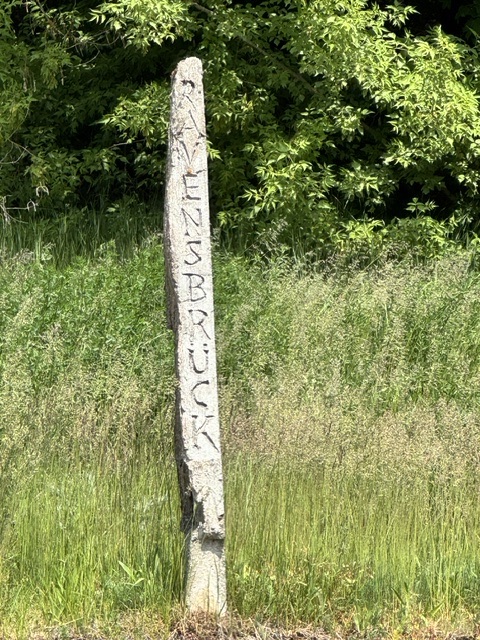
Perhaps that contrast itself is part of what makes the place so haunting. Evil did not happen in some distant wasteland stripped of beauty. It happened beside lakes and within forests, in places where birds still sang in the trees.
As we approach the memorial site, one begins to notice the stillness. Ravensbrück was established in 1939 by the SS and eventually imprisoned more than 130,000 women from over forty nations. Political prisoners, resistance fighters, Jews, Roma, Jehovah’s Witnesses, lesbians, and countless others deemed undesirable by the Nazi regime were brought here. Tens of thousands died from starvation, exhaustion, disease, medical experiments, executions, or were murdered in the gas chamber added near the end of the war.
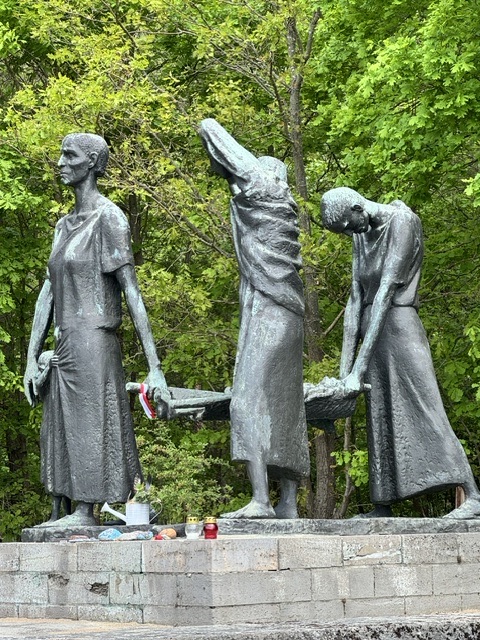

Unlike many camps that people know, primarily through photographs of men behind barbed wire, Ravensbrück confronts the experience of women during the Holocaust and the wider terror of the Nazi camp system. Mothers were separated from children. Pregnant women suffered unimaginable conditions. Friendships became survival itself. Tiny acts of kindness could mean the difference between life and death.
The Weight of History
One of the most disturbing aspects of Ravensbrück is the role played by female guards. More than 3,500 women were trained there as SS overseers, many of whom later served in camps across the Reich. Reading about them leaves an uncomfortable realization: cruelty did not belong exclusively to men.
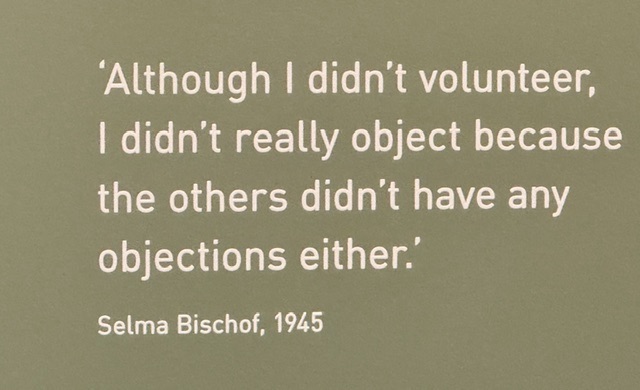
Some of these women reportedly adapted to brutality with shocking speed. Survivors often described how new guards, after only days in positions of authority, adopted the same arrogance, violence, and dehumanizing behavior as veteran SS personnel. Power, uniform. Ideology transformed ordinary individuals into participants in systematic cruelty.
That may be one of the hardest lessons Ravensbrück leaves behind. Humanity can be stripped away quickly when systems reward obedience and cruelty. The camp demonstrates how rapidly people can normalize the suffering of others when authority tells them it is acceptable, even necessary.


Equally unsettling is how few perpetrators truly faced consequences after the war. While some guards and administrators were tried, many slipped quietly back into civilian life. Some served short prison sentences. Others disappeared into postwar Germany almost entirely unnoticed. Visitors naturally want justice to feel proportional to the crimes, but history rarely offers that satisfaction. Instead, the memorial leaves people wrestling with uncomfortable truths about accountability and memory.
Courage, Kindness and Betrayal
Yet Ravensbrück is not solely a story of cruelty. It is also filled with extraordinary stories of resistance and courage. Prisoners secretly shared food despite starvation. Women risked execution to comfort the sick or smuggle messages. Political prisoners organized networks of support inside the camp. Some women sabotaged forced labor production whenever possible. Others documented names and events so the dead would not vanish anonymously into history.
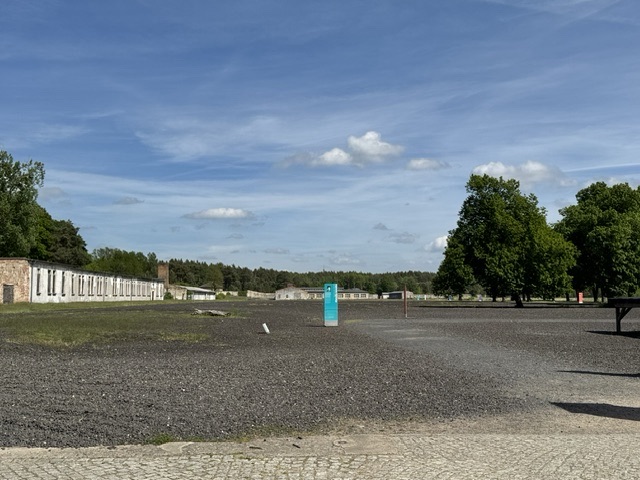
At the same time, survival sometimes demanded compromises impossible for outsiders to judge easily. Certain prisoners collaborated with guards to gain better treatment or avoid punishment. Some became kapos, supervising fellow inmates under SS authority. Ravensbrück forces one to confront morally gray territory where survival and ethics collided daily under unimaginable pressure. It becomes difficult to speak in absolutes. Heroism existed beside betrayal, courage beside fear, kindness beside selfishness. The camp exposed every dimension of human behavior under extreme conditions.
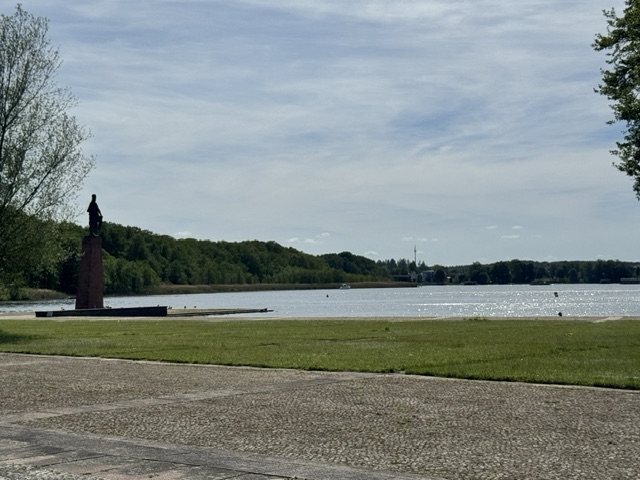
Walking through the memorial grounds, one notices how silence itself seems to settle differently there. The lake beside the camp looks peaceful now, but that same water reflected the smoke and suffering of the camp for years. Considering the crematorium is beside the lake and ashes were dumped there, one avoids swimming in its peaceful waters, even on the hottest of days.
The barracks, walls, and open spaces encourage reflection rather than spectacle. Ravensbrück does not overwhelm through massive ruins as some camps do. Instead, it unsettles quietly.
Perhaps because it was primarily a women’s camp, perhaps because of the surrounding beauty, perhaps because the stories feel so personal, the emotional impact arrives gradually.
Food and Reflection
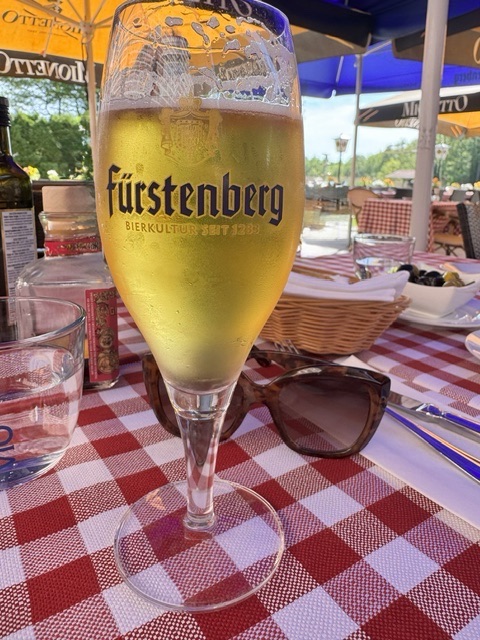
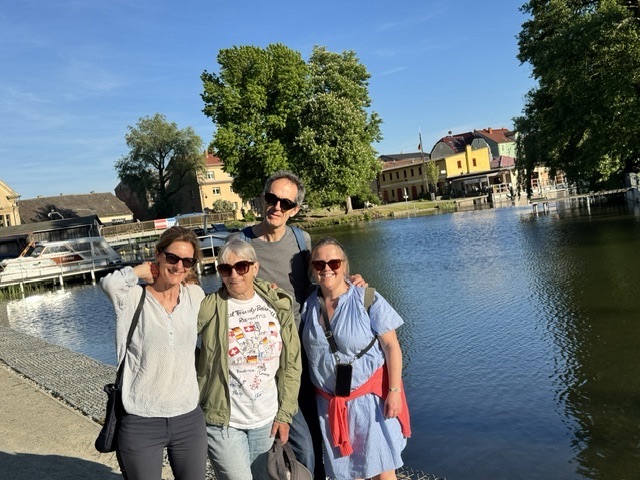
Eventually, though, the human mind needs relief from such darkness. Returning toward town feels almost necessary for emotional balance. Sunshine and ordinary life begin to reappear. We find ourselves once again beside the lake, now sitting outdoors over plates of pasta and cold refreshments. The contrast would almost seem inappropriate if it were not so deeply human. After confronting history at its worst, people instinctively search for reminders that beauty, pleasure, and companionship still exist.
The pasta tastes wonderful. Around us the lake sparkles in late afternoon light while boats glide slowly past outdoor cafés. Conversations gradually grow lighter again. The heaviness of Ravensbrück never fully disappears, but it settles into the background as reflection rather than immediate shock.

As evening approaches we wander farther through Fürstenberg itself. The town feels suspended in time. Many of the houses are traditional half-timbered homes, their dark wooden beams framing colorful plaster walls in that unmistakably northern European style. Streets remain unusually quiet. Few people are out walking. There is none of the frantic tourist energy found in larger destinations. Instead there is calm, almost sleepy stillness, broken only by church bells, bicycles, canoe paddles, and the occasional conversation drifting from a restaurant patio.
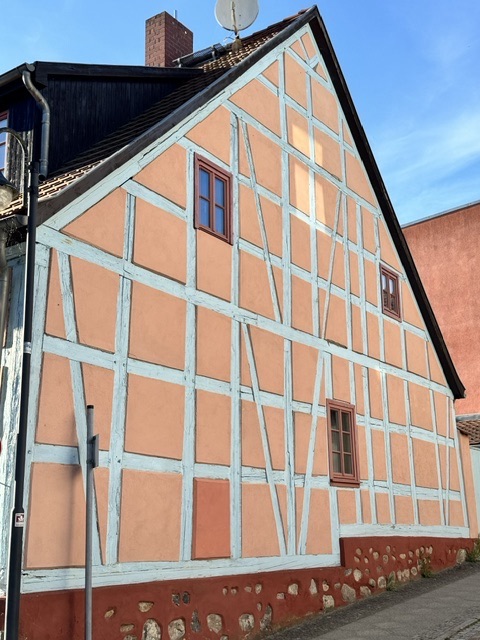
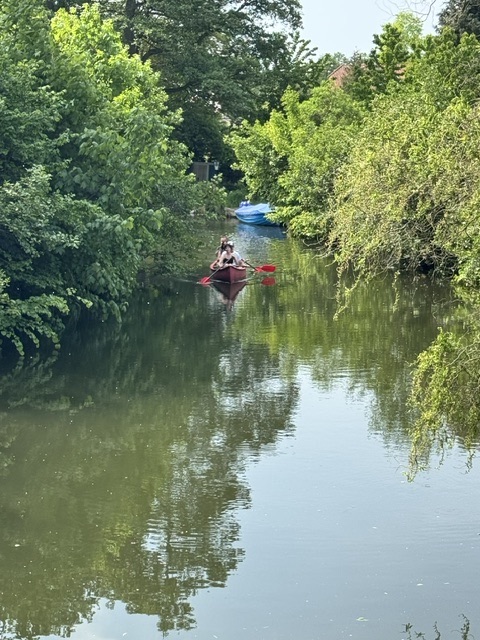
The town’s quietness becomes part of its charm. One feels less like a tourist attraction visitor and more like a temporary guest in an ordinary place where life continues slowly beside the lakes. We stroll along the river, enjoy a coffee overlooking the water, watching canoes drift by along the shore.
The day has contained beauty, horror, history, reflection, laughter, food, exhaustion, and companionship all within a few hours. Perhaps that is why travel becomes so memorable. Everyone processes the experience differently. One person remembers the cruelty of the guards. Another remembers the bravery of prisoners. Someone else remembers simply sitting beside the lake afterward, grateful for ordinary freedom.
Long Ride Home
Eventually our expert transport planner guides us back toward the station with the confidence of someone who has memorized every train schedule. There is always one person in every traveling group whose superpower is understanding European rail systems, and without them entire journeys would collapse into chaos. I follow obediently, trusting that somehow the correct train, platform, and connection will materialize.
And so the day ends not in silence or despair, but in conversation and laughter back in Berlin. Another evening together. Another set of memories. A beautiful lakeside village, one of history’s darkest reminders, pasta by the water, quiet street, and family. All belong to the same Whit Sunday journey.
