3 June 2026
2009 Sunday, August 30th I wrote:
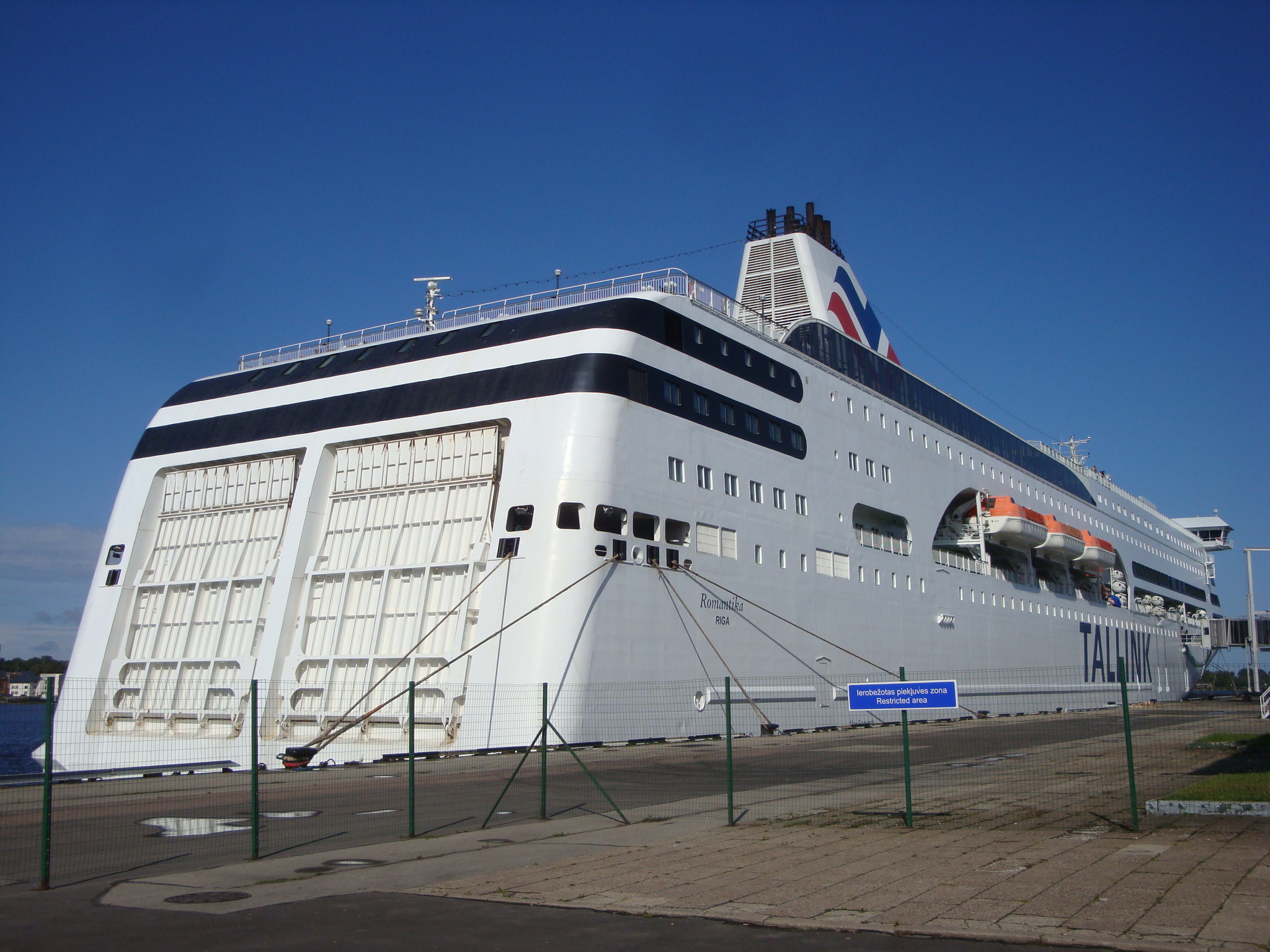
Today finds me entering the harbor of Riga with its skyline of church spires and bridges. No one is in the terminal and I am unaware I am an illegal alien without a Visa. I ride a bus to city center,and walk to my little B&B Hotel Circus.
Not much English but I understand the landlady wants my Visa; she understands I don’t have one. But, I get my little room. Almost a cell and like being locked in, reminding me Latvia was Communist not long ago. I immediately walked to the old city square….”
2026 – All these years later, I cross the border from Lithuania and return to Riga via train. No Visa needed. As part of the EU and Schengen since late 2007, Latvia shares the ease of common borders and currency.
Memories of Riga
My initial opinion of Riga in 2009 has not changed. I can add little to my earlier impression of this wonderful Baltic city.

Riga is a fantastic city. Founded in 1201, it was Sweden’s largest city in 1621. It is easy to walk, clean, modern, friendly, has many trees and much interesting architecture. I spent the day on a hop on hop off bus, always a great way to see much in little time, picking out my return route as I go. Then following the bus route, I walked the city, visiting museums of History of Riga and Navigation, the central Dome, and enjoying a world-class art nouveau city.
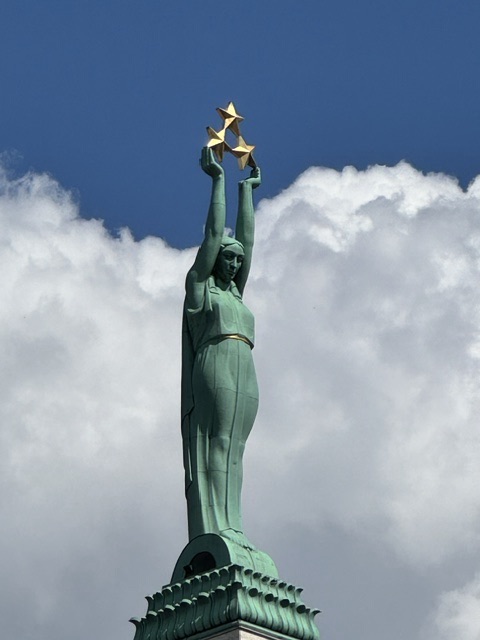
Every street is filled with examples and my neck aches with looking up and taking pictures. Visit Monument of Freedom and changing of guard; climb to the top of cathedral and visit the Lutheran church and the Orthodox church that was saved from the Russians by turning it into a planetarium. It is a beautiful city with a canal and park through its center.
…reboard the hop on bus for an encore around town as my ticket good for 24 hours, but this time I get off in area across the river and walked to the Russian Memorial. I walked back across their spectacular new bridge to downtown and around old Riga. Visited Blackhead house and other museums before ending the day on a cruise of the Daugava River that cuts through the city. Couldn’t have had a better time.
Just one more city I would love to visit again.
My 2009 Wish is Granted
Returning to Riga after 17 years, there exists less pressure to see everything. I relax and enjoy this beautiful city. Much has changed. Tourists have discovered the Rigo. Streets are much more crowded, cafes more numerous and crowded. I decide to plan my visit around just wandering and enjoying the nooks and crannies.
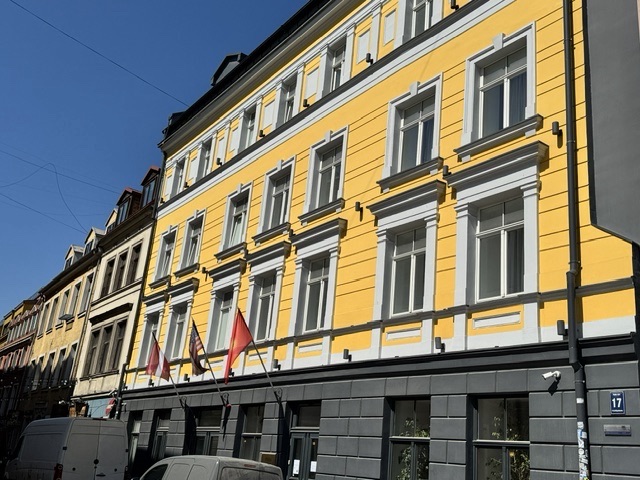
The landlady at the B&B seems long gone so I lodge at the Old Riga Plaza Hotel. It sits within Old Town, surrounded by restaurants and bars, and features an outdoor terrace. I notice they still fly a US flag outside above their door.
As I arrive early, again, reception kindly provides me with my room. I leave by bag and walk the short distance past the House of the BlackHeads and into Dom Square.
Main Square and The Dom
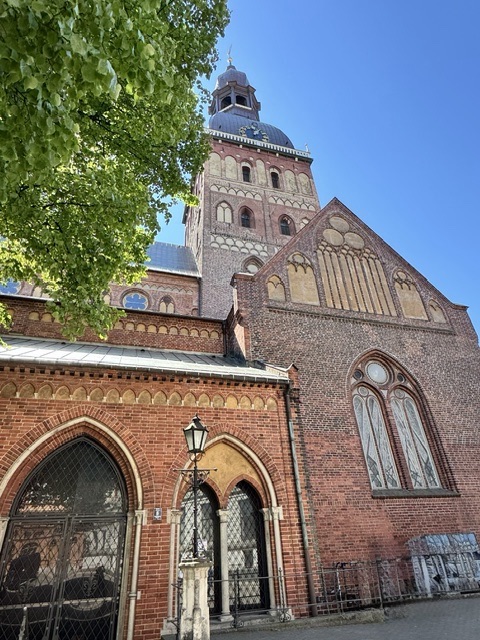
Because I am always interested in checking out what faith built, I enter Rīgas Doms, Riga’s central cathedral. Referred to simply as The Dom, the title comes from the Latin, Domus Dei or House of God. Bishop Albert of Riga constructed this Catholic church in 1211, shortly after he established the city.
The cathedral was meant to signal Riga’s importance as a rising religious and trading center in the Baltic. Later, The Dom became a Protestant/Lutheran church during the Reformation in 1521.
It evolved over the centuries, beginning as a Romanesque structure of thick walls and rounded forms, then later expanded into a Gothic style using vertical lines and buttresses. After repeated fires and other damaging elements, during the 17th century The Dom adopted more of a Baroque architecture.
The cathedral’s tall square brick tower with its Baroque spire dominates the skyline of Old Town. It has long served as a navigational landmark for those arriving via the nearby Daugava River. Atop the spire sits a golden rooster, one of Riga’s iconic symbols. Traditionally, it functioned as a weather vane but also symbolized vigilance and prosperity. The original golden rooster rests inside.
Entering, the huge nave feels open and rather austere rather than Baroque ornate. Massive, tall columns and pointed arches reach to the vaulted cross-ribbed ceiling. Some side aisles feature eight-part rib vaults and ornamental star vaults. The stained-glass windows depict historical events in Riga and religions scenes.
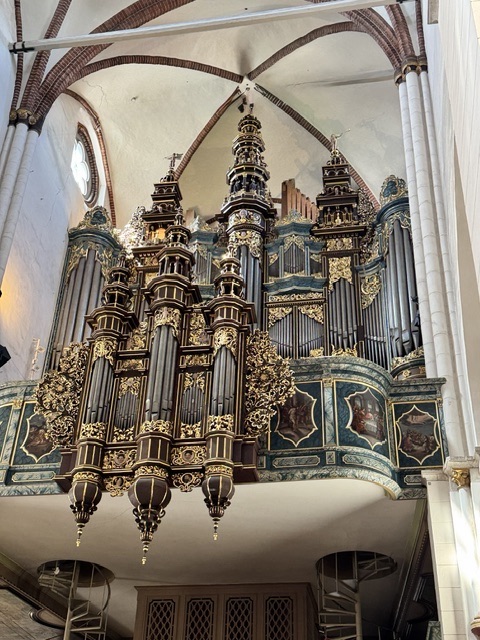
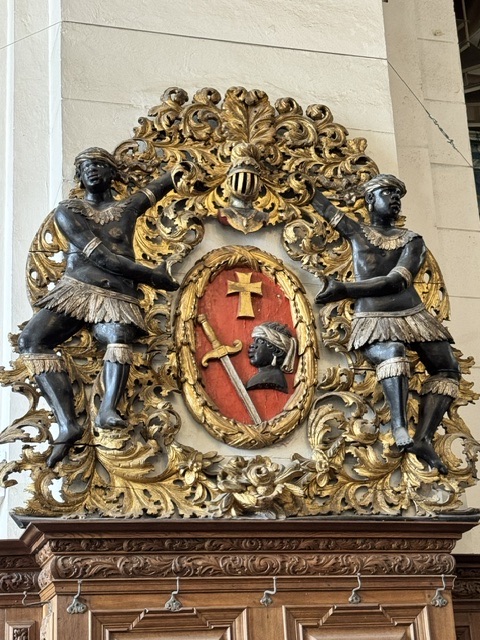
Pulpit and choir stalls are intricately carved. The Dom houses a huge 19th century pipe organ which was once the largest in the world. Beautiful, intricate shields decorate walls and columns. Both floor and walls contain the tombs of past bishops and nobles.
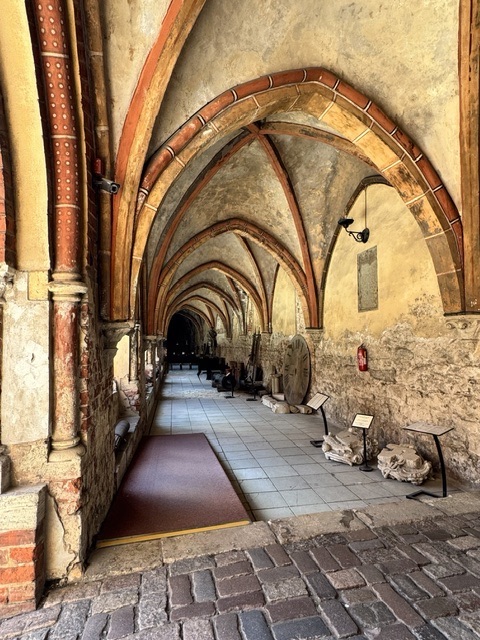
Alongside the cathedral is a peaceful, enclosed cloister. This acts as a pleasant place to pause.
However, it does appear odd this refuge of peace is lined with cannon relics.
Riga Castle
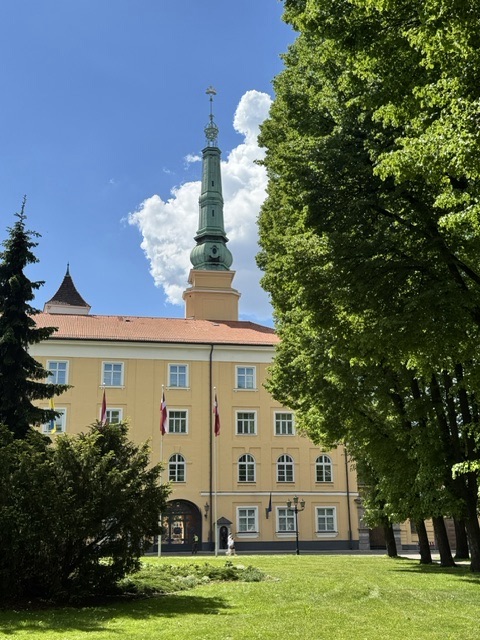
Amid the wonderful architecture and parks of Riga, I arrive at Riga Castle and its National History Museum of Latvia. Except for the rounded turrets and church spire, this restored neo-classic castle is not too impressive as castle and fortifications go.
The Livonian Order founded the castle in 1330 after locals destroyed earlier fortifications (never a great start to landlord-tenant relations). This Order operated as an autonomous branch of the Teutonic Knights, established in 1237, and functioned as a German military-religious order in modern-day Latvia and Estonia. Their purpose was to pursue the suppression of Baltic tribes, push for Christianization and build castles to maintain this control.
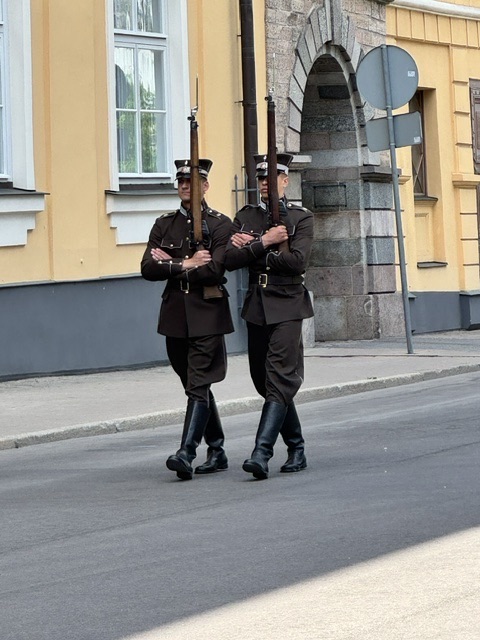
Perched along the banks of the Daugava, the castle served as the seat of successive rulers: Polish-Lithuanian, Swedish, and Russian. Today, it continues to serve as the official Latvian presidential apartments. Guard shifts occur at the castle, but the ceremonial Changing of the Guard is generally reserved for national holidays.
National History Museum
What is most interesting about the castle complex is the National History Museum: large and inclusive of just about everything Latvian. Exhibits dealt with the archaeology of ancient Latvia. Artifacts of tools, jewelry and bronze ornaments from prehistoric Baltic tribes reflect a history long before the crusaders arrived. Artifacts from Riga’s time in the Hanseatic League and as an important trading hub explain a time when Riga was one of the most important cities in Europe. Other exhibits include ethnographic displays of traditional folk costumes, farming and fishing tools, and crafts of everyday Latvian life.
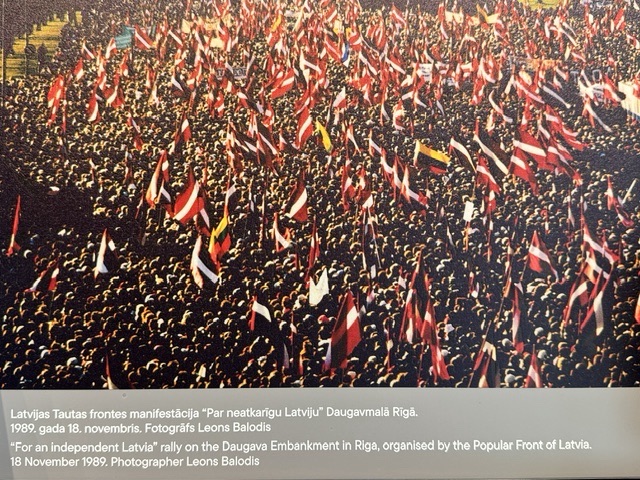
For me, the best exhibits dealt with the story of Latvian independence during the 20th century. While Latvia declared independence as a country in 1918, brutal occupations both by Nazi Germany and the Soviet Union followed. Latvia’s struggle and path back to independence and democratic freedom is a story worth studying. Desire, persistence and non-violence achieved this freedom in 1991.
The Singing Revolution in Latvia
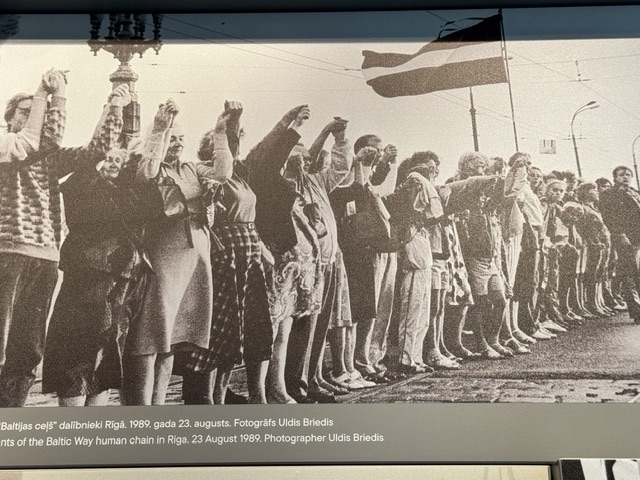
By 1987, patience had reached the wall and the push for freedom began in earnest, led by the Popular Front of Latvia. The movement involved massive demonstrations, including The Baltic Way. On 23 August 1989, a human chain of an estimated 2-million people joined hands over some 400+ miles linking the capital cities of Tallinn, Riga, and Vilnius to protest Soviet occupation.
This culminated in a massive singing protest. Held at various sites around Riga, the main event occurred at the Mežaparks Great Stage, a massive open-air stage north of the city and built for Latvia’s national song festivals, where tens of thousands can sing together. Here, thousands of Latvians gathered to sing traditional folk songs and national anthems (banned by the Soviets).
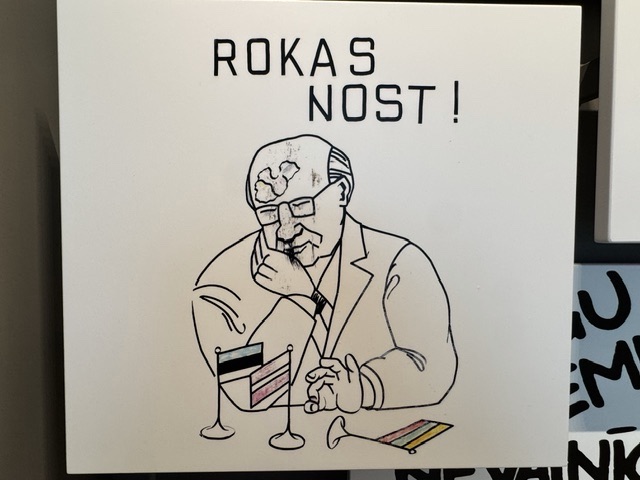
This nonviolent, mass-protest movement led to the Supreme Council of Latvia, on 4 May 1990, to adopt the declaration “On the Restoration of Independence of the Republic of Latvia“, fully restoring independence in August 1991. The Soviet Union, led by Mikhail Gorbachev, admitting defeat and no other option, capitulated. It formally recognized Baltic independence on 6 September 1991, shortly before the entire Soviet Union disintegrated.
Museum of Occupation
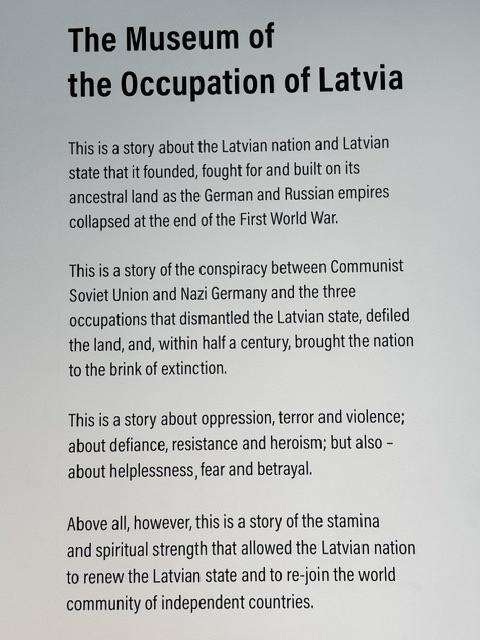
A natural next question after the songs becomes why people were willing to risk everything. The answer comes into focus at the Museum of the Occupation of Latvia, which fills in the emotional and historical weight behind the Singing Revolution.
The museum covers Latvia’s experience under two totalitarian regimes (Nazi and Soviet) from 1940–1991 – a 51-year stretch of occupation, repression, and survival. What pushed ordinary people to risk everything for freedom?
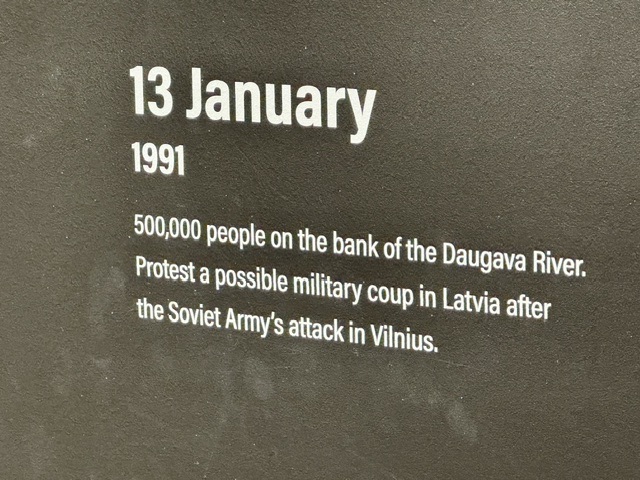
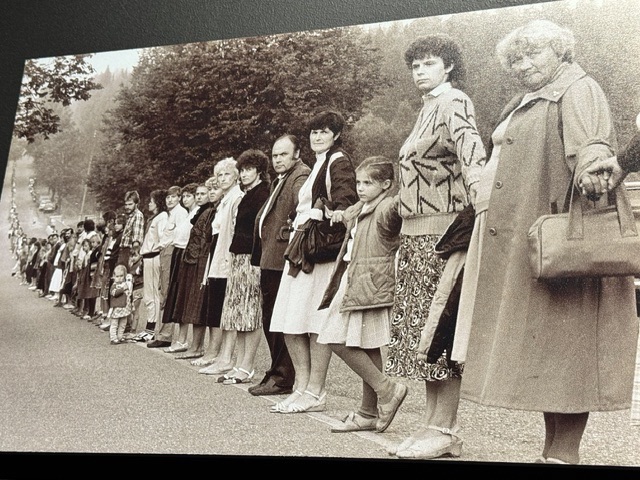
This museum explains the silence that came before the songs – the years when voices were lowered, names disappeared, and a suitcase packed in the night could mean a lifetime away. Only then does the singing make sense. Decades of repression and human tragedy, loss of independence, and cultural suppression…until finally, ordinary people stood together and sang because they had already endured everything else.
Exhibits follow the deportation stories, using personal belongings and stories of families deported to Siberia. The inhuman conditions of the gulag are recreated; KGB interrogation rooms and prison cells show what people had to endure. Some exhibits include prisoner artwork and accounts of forced labor and surveillance.
Keeping history alive with testimony of the affected!
Probably the most important exhibits include the audio and video interviews with survivors. One can read written accounts of deportation, imprisonment, and exile. The museum holds thousands of personal stories from those who lived through it. These stories must never be lost.
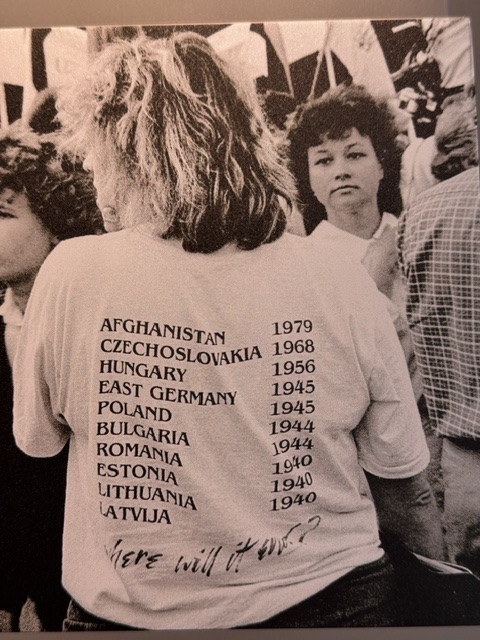

Repression was systematic and brutally enforced. Official decrees, propaganda, evidence of censorship and surveillance are displayed. This dismantled society piece by piece, person by person. Along with these documents are the accounts of the destruction of Riga’s Jewish community. Photographs and documentation speak to the cruel ghettos and mass deportations.
One group who banded together to resist were the guerrilla fighters, the Forest Brothers. Their underground publications and dissident culture encouraged the common man to resist. This museum highlights both armed and cultural resistance over the decades. And it culminated in the Baltic Way’s human chain. Ultimately, the Singing Revolution, where defiance, courage and a loud collective voice broke the Soviet Union.
And There is This!
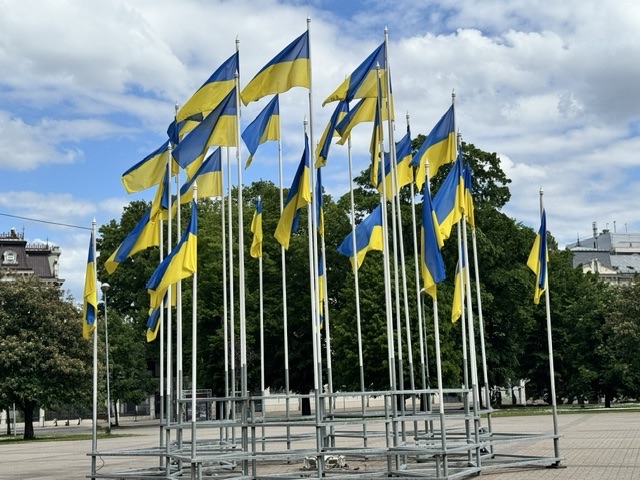
I see the Ukrainian flag proudly flown at every government and public building in Riga,just as I saw them throughout Lithuania. After the Russian invasion of Ukraine, in one year, the Latvian people provided aid, comfort, shelter and about 3 million dollars in aid to Ukraine.
The Baltic States understand what is at stake. Flags and posters appear everywhere while they also coordinated the International Drones Coalition. Latvia’s government and people have provided over EUR 1.13 billion in total assistance and have sworn support of Ukraine until victory is won.
What Voices Reclaimed
I walk to a café and sit. I order a beer. My mind goes to the Mežaparks Great Stage, where voices once rose in defiance of weapons during the Singing Revolution. The lesson: when speech and freedoms become suppressed long enough, they find another form. In Latvia, it became song. Something as simple and ordinary as gathering, holding hands, speaking out carried real risk. I think, surely, such resolve could be summoned anywhere if needed.
My beer arrives. And for a moment, history settles – not as something distant, but as something possible, and quietly instructive. Surely, if the people of Riga and the Baltics can do it, so can my U.S.A.


0 Comments