4 June 2026
Riga invites one to walk without much of a plan, guided less by a map than by whatever catches the eye above street level or just around the corner. Architecture alone would be reason enough – it’s centuries stacked in stone, brick, and ornament.
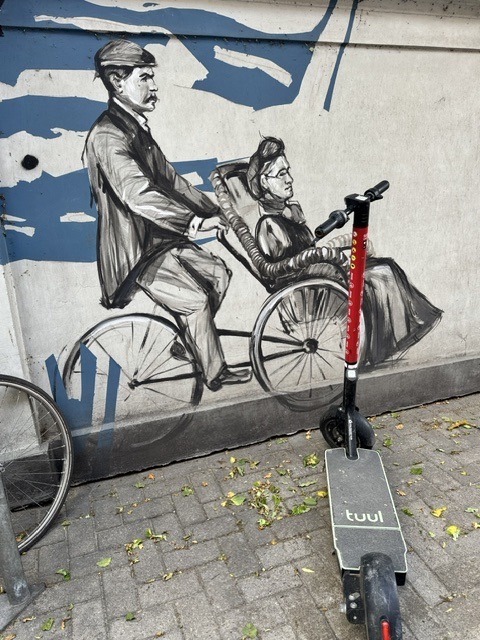
Statues appear in the middle of squares as if mid-conversation, walls quietly host bursts of modern color and commentary, and rooftops sprout cats with attitude. Strolling becomes a slow drift through styles, stories, and small surprises, best enjoyed slowly.
From Brothers to Cats
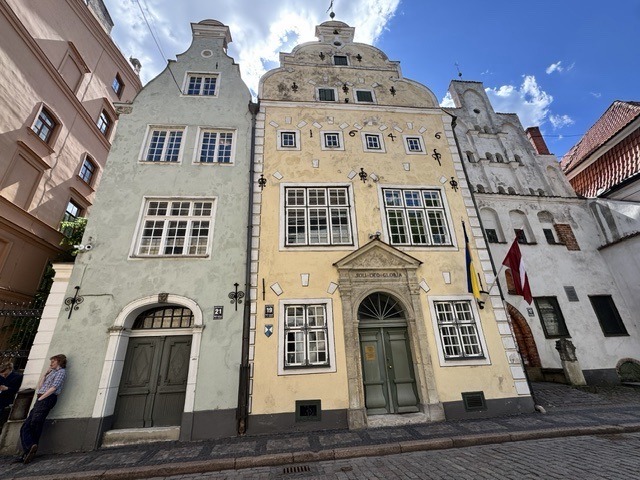
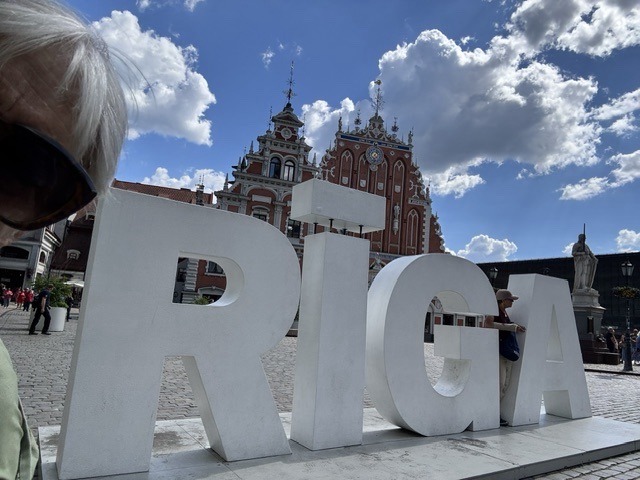
The Three Brothers stand like a condensed history of domestic life, each building slightly different, each leaning comfortably into the next. Nearby, Riga Cathedral anchors the city with its mix of Romanesque, Gothic, and Baroque elements, while Dom Square opens up in a lively contrast of space and movement. A short walk leads to House of the Blackheads in Town Hall Square, where ornament and symmetry reflect a merchant past that once connected Riga to the wider Baltic world.
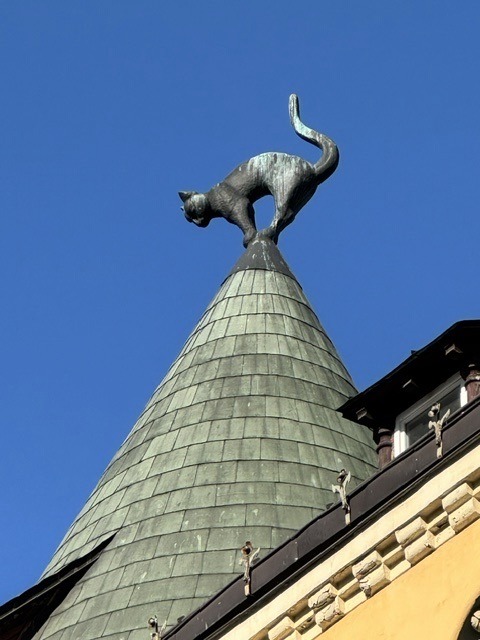
Riga’s personality shows in details: the mischievous rooftop figures of the Cat House, the quiet passage of the Swedish Gate, and the statues that give pause.
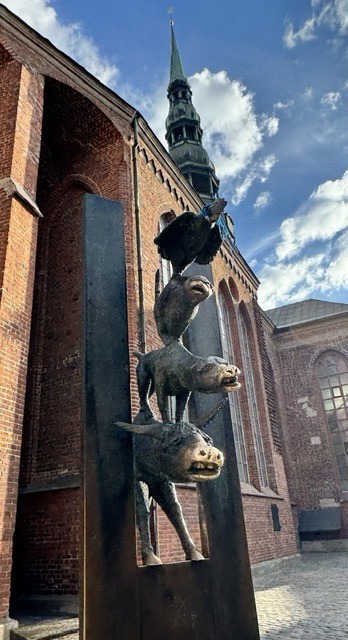
Pause to understand the significance of the medieval symbolism of the Roland Statue, the tall figures of the Latvian Riflemen, and the playful familiarity of the Bremen Town Musicians Statue based on a Brothers Grimm story.
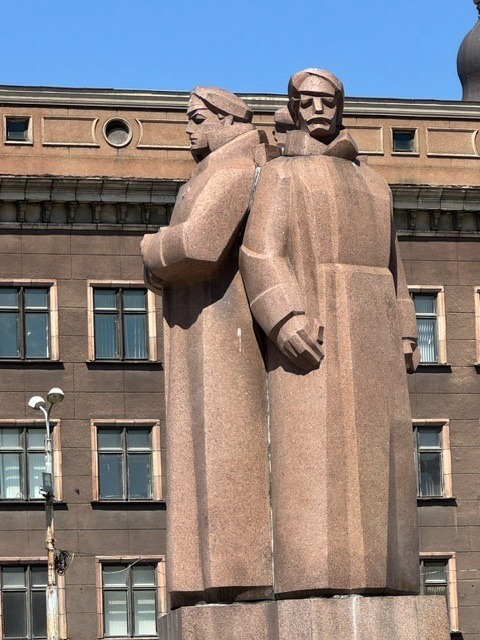
The original Latvian Riflemen were elite units of the Imperial Russian Army during World War I, fighting against Germany on Latvian soil. After the Russian Revolution of 1917, the Riflemen split politically. Some former Riflemen helped create and defend Soviet power, while others fought to establish an independent Latvia.
Not far beyond, the Freedom Monument rises above Bastejkalna Park with a different tone, less decorative and more reflective, a reminder of the country’s harder-won moments.
Bremen Town Musicians statue (left) unchanged except for 17 additional years of rubbing noses for good luck. A rub assures one will return – which I have.
Crossing toward the canal, the elegance of the Latvian National Opera introduces a more formal rhythm, a beautiful 19th-century neo-classical building advertising its opening night of La Bohème. Staid, iconic architecture then gives way to the exuberance of the Art Nouveau district along Alberta iela.
Alberta iela – Wonderfully Different
If Old Town shows Riga’s medieval and mercantile past, Alberta iela shows its moment of artistic confidence. Built mostly in the early 1900s, during a boom when Riga was one of the wealthiest cities in the Russian Empire, this short street (iela) became a kind of architectural showcase for the then-new style of Art Nouveau. Here, façades become theatrical, filled with faces, symbols, and flourishes.
Art Nouveau is a decorative and architectural style that flourished roughly from the 1890s to the start of World War I (around 1910–1914). It emerged across Europe almost simultaneously, but it didn’t have a single founder. Instead, it was a shared international movement that took on local flavors in places like France, Belgium, Austria, Germany, and especially Riga.
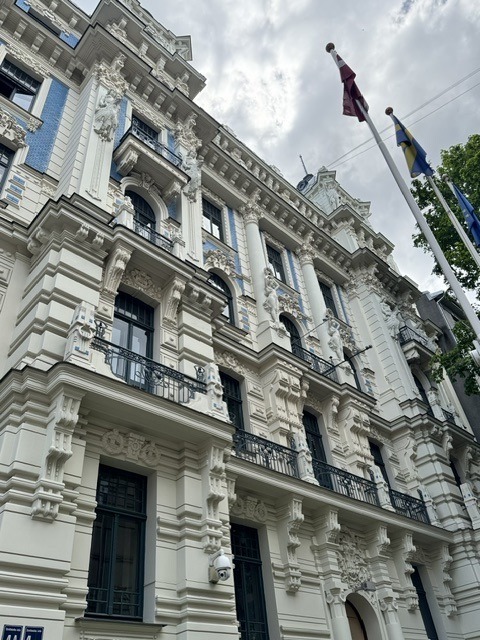
At its core, Art Nouveau was an attempt to create a new modern style for a new modern age. It rejected copying old historical styles (like Gothic or Classical revival). Instead it embraced flowing, natural lines, asymmetry and natural movement. Inspired from nature, from plants and flowers to insects and rippling waves, art nouveau brought a decorative unity to buildings which were meant as total works of art.
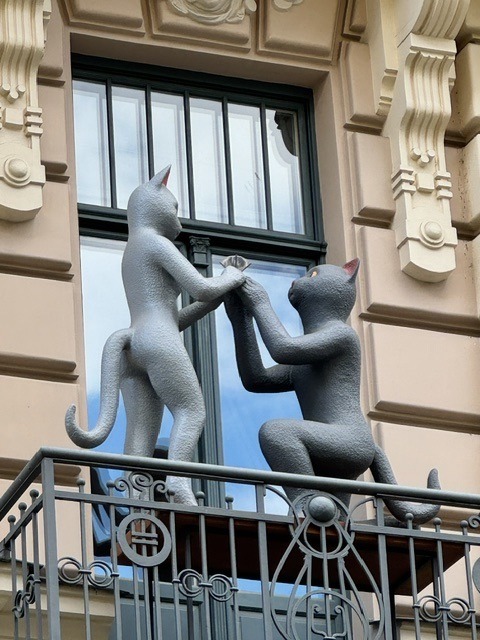
What makes it special isn’t just that the buildings are decorative. It’s that they’re bold, theatrical, and a little excessive, as if the architects were competing for attention.
Architect of Art Nouveau
Mikhail Eisenstein (1867–1920), a Russian architect and civil engineer, designed many of the most dramatic façades on Alberta iela. His ornamental style helped define Riga’s reputation as one of Europe’s richest centers of Art Nouveau architecture. His works at addresses 4, 6, and 13 are outstanding. Windows, railings, doors and façades flow together like a single piece. Vines curl, flowers blossom into window frames and buildings seem they could come alive. (Hopefully not – that would make for a creepy midnight movie.)
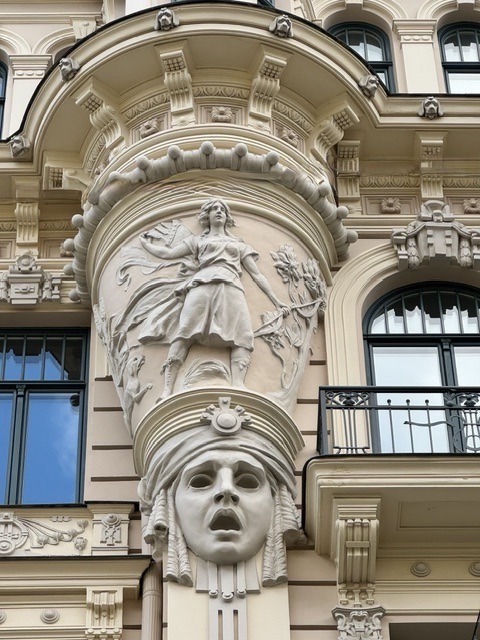
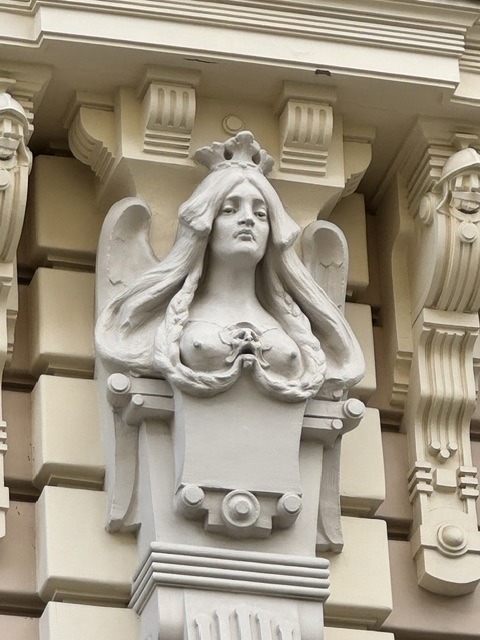
In short, Art Nouveau was Europe’s attempt, at the turn of the 20th century, to invent a modern artistic language. A style based on nature, movement, and imagination – before the world turned toward industrial minimalism.
A Pause in Līvu Square and a Moment to Watch It All
People come and go – history does not.
I return to a much livelier Līvu Square after 17 years. Here, activity and a high concentration of cafés abound. The large and beautiful square acts as a lively pocket in Old Town that exists for atmosphere more than monuments. It is a place where I pause, people-watch, and let the city swirl past.
More social and café-driven, the decorative façades frame the square in a mix of medieval and modern. Entertainment ranges from decorative ironwork and vibrant gardens, to art installations and street performers. It’s essentially Riga’s social crossroads disguised as a square.
Museums Not to Miss
Riga Ghetto and Holocaust Museum
Just beyond the color, noise and smells of the Spikeri Quarter and its Center Market Pavilions, located on the edge of the former Riga Ghetto, one may experience the Jewish experience during Nazi occupation. This museum represents a site everyone should visit – listen and learn.
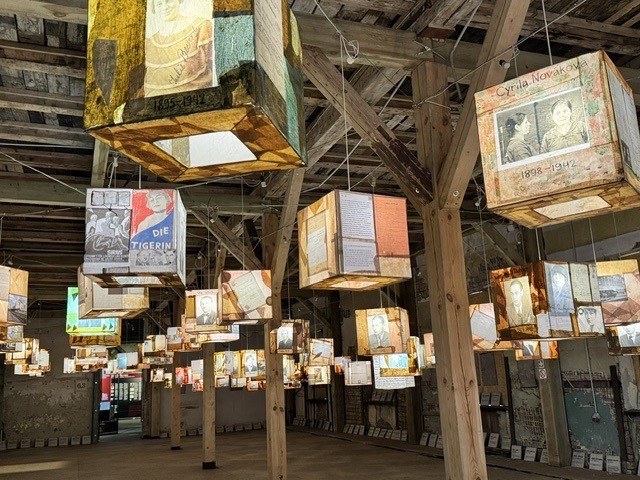
I have visited many museums, camps and sites dealing with the holocaust. Riga, perhaps, organized one of the most moving historical sites to present the reality and horrors of the Holocaust and honor its victims.
The Latvian Ghetto served as a place of concentration for Jews deported from Western Europe. The majority were from Germany, Austria, the Czech Republic and other European countries. The victims of the Holocaust included these deportees and almost the entire Latvian Jewish community, including women, children and the elderly, as well as about 20,000 Jews from other European countries.
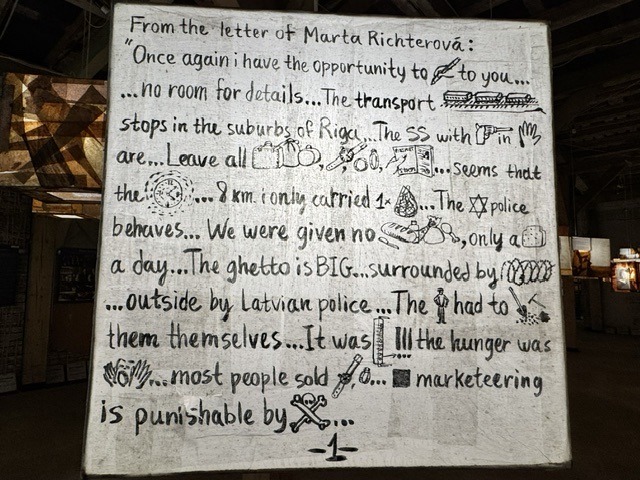
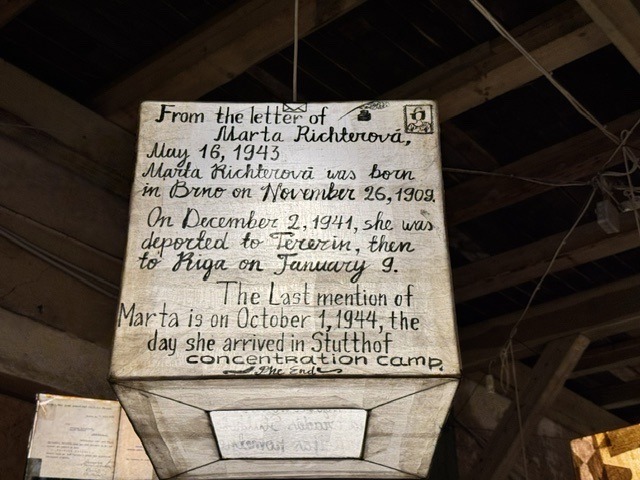
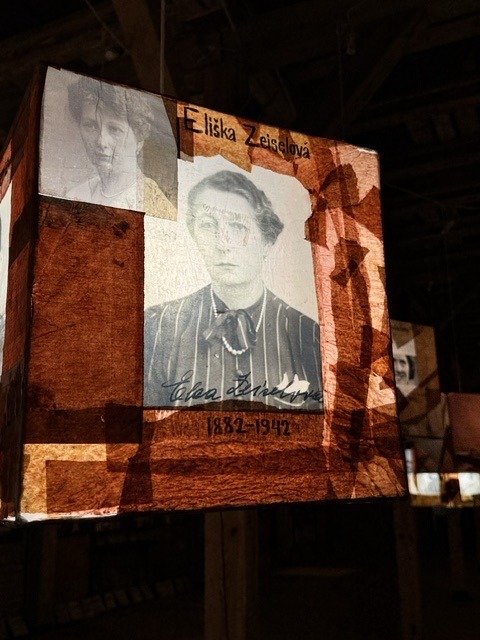
Rather than focusing solely on military events, it tells the human story of Latvia’s Jewish community before, during, and after the Holocaust. The museum stands in the area where tens of thousands of Jews were confined after the German occupation of Latvia in 1941, and many exhibits explore the destruction of a vibrant Jewish culture that had flourished in Riga for centuries.
The museum combines indoor and outdoor displays. I walk along pathways lined with original cobblestones from the ghetto streets and encounter photographs, personal stories, documents, and memorial installations. One of the most striking features is the memorial wall listing the names of tens of thousands of Holocaust victims from Latvia and across Europe!
What makes the museum especially powerful is its focus on individual lives rather than statistics. Restored buildings, survivor testimonies, and exhibits about the nearby Rumbula neighborhood massacres help one understand the reality of daily life under Nazi occupation.

It is less a traditional museum but more a place of remembrance and reflection. For anyone seeking to understand Latvia’s wartime history and the devastating impact of the Holocaust, this is without doubt one of the most important and emotionally affecting museums on the subject.
Latvian War Museum
The first thing to catch my eye is bullet-riddled Twitter Convoy Car at the entrance of the Latvian War Museum. As part of Latvia’s Twitter Convoy initiative, citizens donated more than 850 vehicles and humanitarian supplies to support Ukraine’s defense against Russia’s attack.
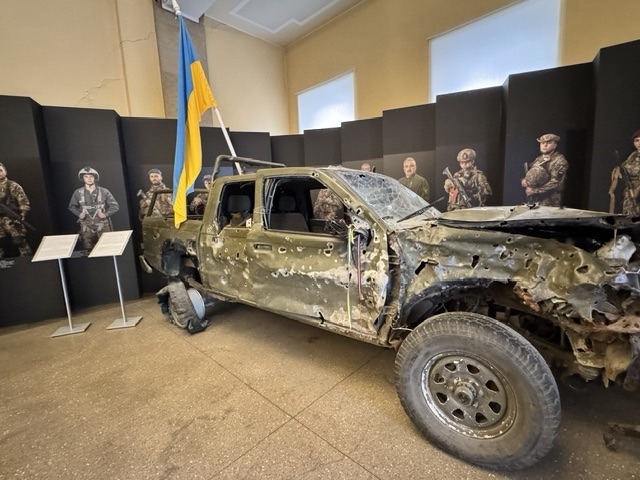
One of these vehicles, nicknamed Orlik or The Eagle by soldiers of Ukraine’s 93rd Mechanized Brigade, served in combat before being returned to Latvia.
Now displayed as an exhibit, the battle-damaged vehicle serves as a powerful reminder of the realities and brutality of war. The exhibition emphasizes that Ukraine’s struggle is also connected to the security and freedom of Latvia.
Housed beside Riga’s medieval Powder Tower in the heart of Old Town, the Latvian War Museum is the country’s largest museum dedicated to military history. Founded in 1916 during the First World War, it was originally created to preserve the legacy of the Latvian Riflemen, whose service became an important part of Latvia’s national identity.
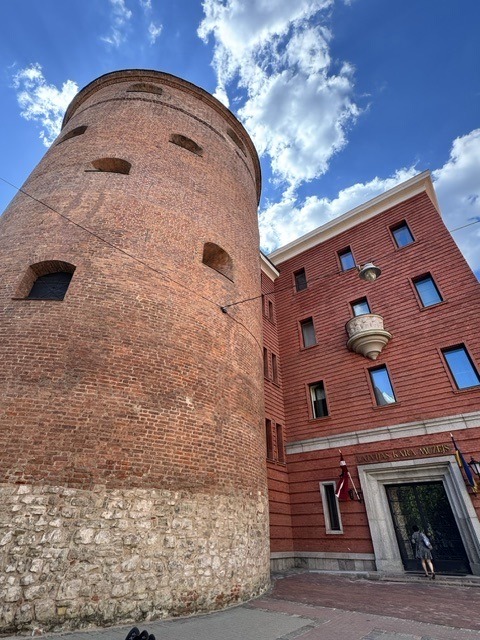
The museum’s exhibitions cover more than seven centuries of warfare, but its greatest strength lies in its treatment of Latvia’s turbulent twentieth century. Displays examine the struggle for independence after World War I, the interwar republic, the Soviet and Nazi occupations, World War II, and the restoration of independence in 1991. Visitors encounter weapons, uniforms, medals, photographs, documents, and personal belongings that help bring these events to life.
One of the museum’s most interesting themes is how Latvia found itself caught between larger powers. Rather than presenting war solely through battles and military equipment, the exhibits explore how ordinary Latvians experienced occupation, resistance, and political upheaval. The historic Powder Tower itself adds atmosphere, with cannonballs still embedded in its walls. For travelers interested in Baltic history, this museum provides one of the clearest introductions to Latvia’s complicated path through the twentieth century.
Latvian Museum of Natural History
Founded in 1845, the Latvian National Museum of Natural History is one of the oldest natural history museums in the Baltics and houses Latvia’s large collection of natural specimens. It offers a welcome change of pace by focusing on the natural world rather than politics and war.
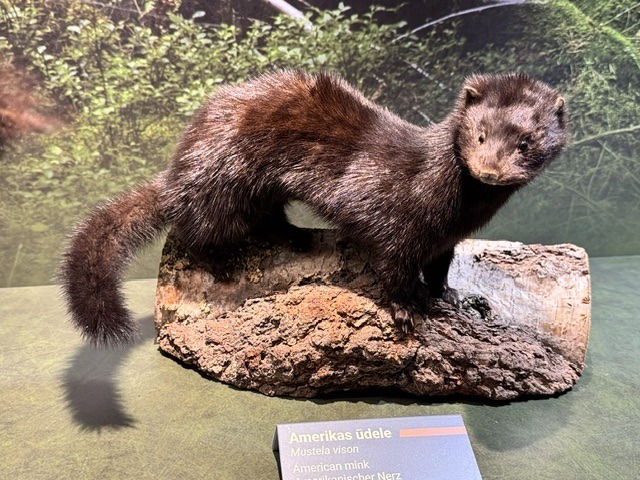
My family raised mink. I remember them as bigger with very sharp teeth.
The museum occupies several floors and explores geology, paleontology, zoology, botany, and environmental science. Visitors can examine fossils, minerals, animal skeletons, insects, birds, and mammals from Latvia and around the world. Particular emphasis is placed on Latvia’s own ecosystems.
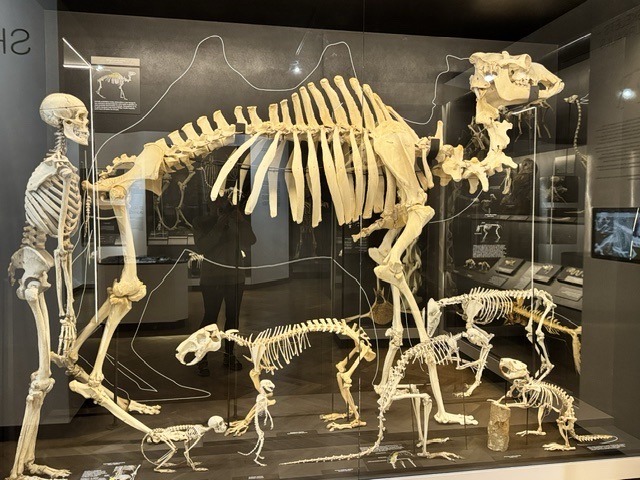
One of the museum’s strengths is that it balances traditional displays—such as taxidermy animals and geological collections—with modern educational exhibits that explain ecological processes and conservation issues while promoting environmental awareness and understanding of humanity’s relationship with nature.
And a Couple Churches
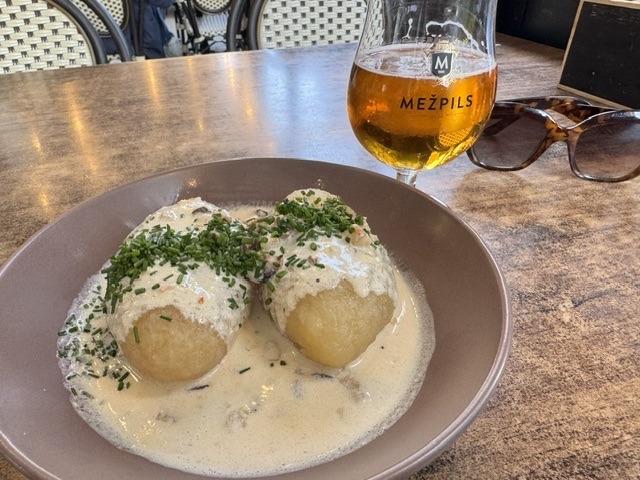
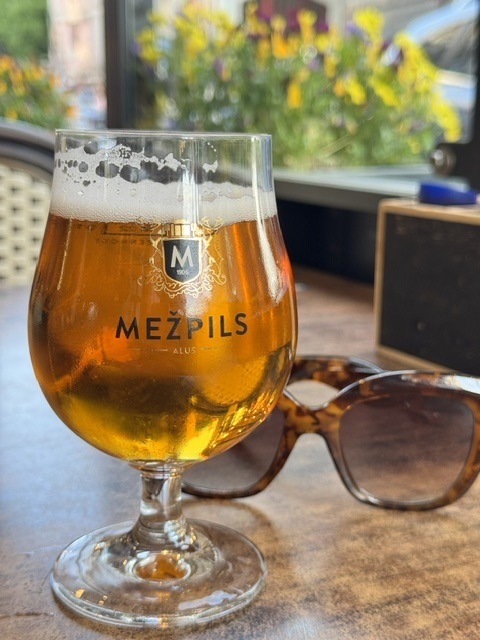
Beer, alus, has been deeply embedded in Latvian culture going back centuries. A craft beer industry of IPAs and experimental brews thrives. I look for the Mežpils Gaišais, a light, crisp lager, Baltic porter, or any unfiltered beer as I do like the wheat beers.
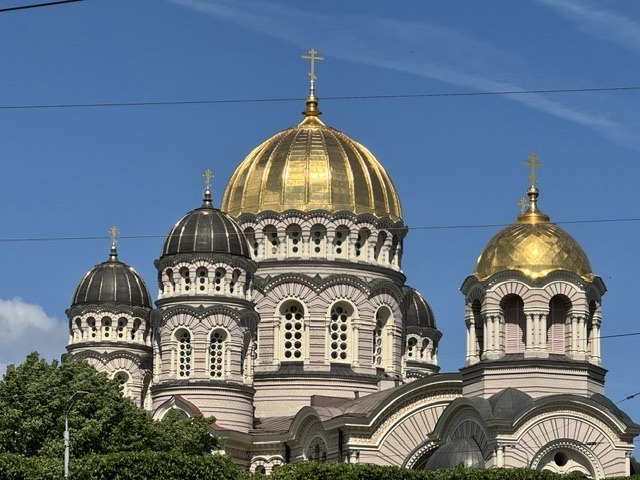
Riga Nativity of Christ Orthodox Cathedral is the largest Orthodox church in the Baltic states and one of Riga’s most recognizable landmarks. Built between 1876 and 1883 during the Russian Empire, it features striking golden domes, richly decorated interiors, and beautiful iconography. During the Soviet era it was used for secular purposes, including as a planetarium, before being restored as a cathedral after Latvia regained independence.
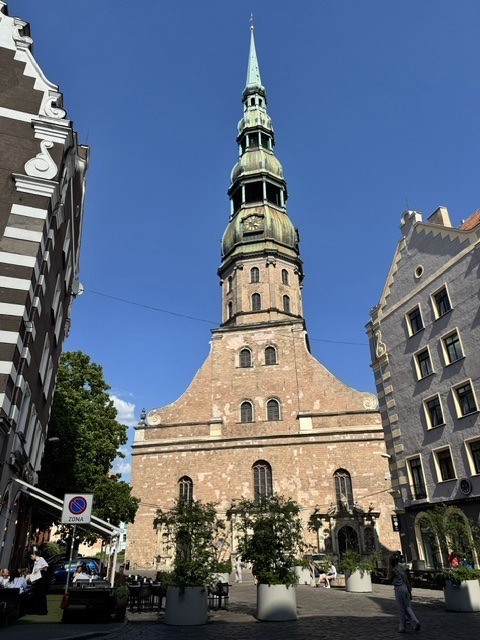
St. Peter’s Church represents one of Riga’s most famous medieval landmarks, with origins dating to the 13th century.
Rebuilt several times after fires and war damage, it is known for its soaring 400-foot tower and steeple, which offers spectacular panoramic views over the Old Town and the Daugava River.
Inside, a vast Gothic interior is characterized by soaring rib-vaulted ceilings, pointed arches, and slender columns. The bright, uncluttered nave emphasizes the church’s immense scale and creates a sense of openness.The central nave rises approximately 98 feet, making it one of the tallest church interiors in Latvia. The result is an interior that feels both elegant and monumental, with the vaulted ceiling serving as one of the church’s most impressive features.
Latvian Dining and Drinking
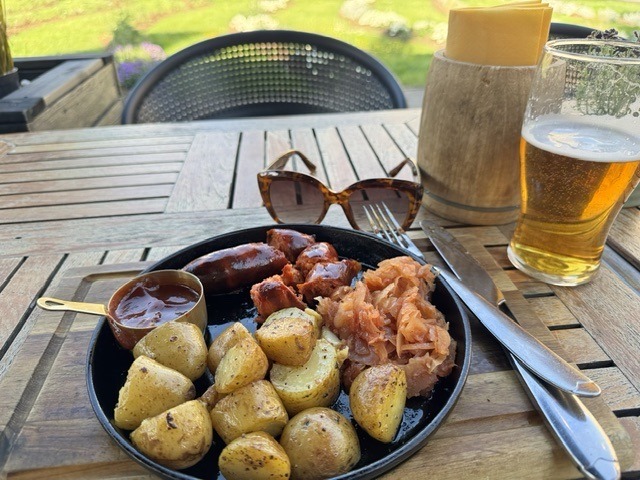
Latvian cuisine is rustic, seasonal, and built around pork, potatoes, rye bread, and cabbage. Possibly their national comfort food is Pelēkie zirņi ar speķi. This is a smoky pork sautéed with peas. Temperatures are a little warm for cabbage soup (Kāpostu zupa). However, a good choice, if a fish lover, is sprats, a smoked Baltic fish usually served with bread and onions. I do enjoy them but I’m more of a pork with potatoes and sauerkraut sort of girl. Flavors are savory, not spicy, and meals are filling, it not a little heavy.
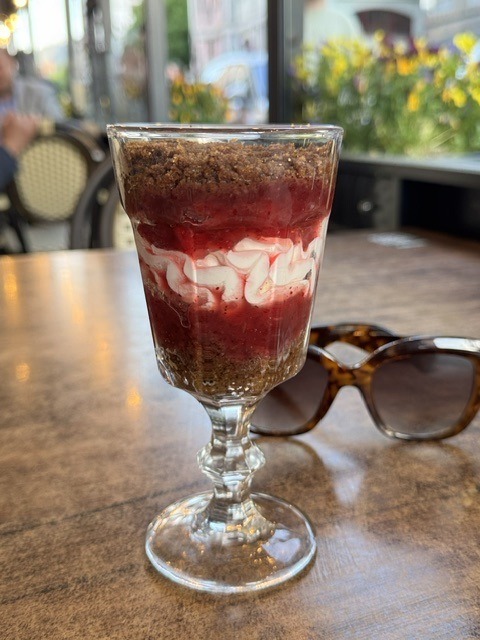
For dessert, I had to try probably the most unusual – the rupjmaizes kārtojums which is a dessert made of rye bread with cream, fruit and spices. It really tastes a lot better than rye bread sounds.
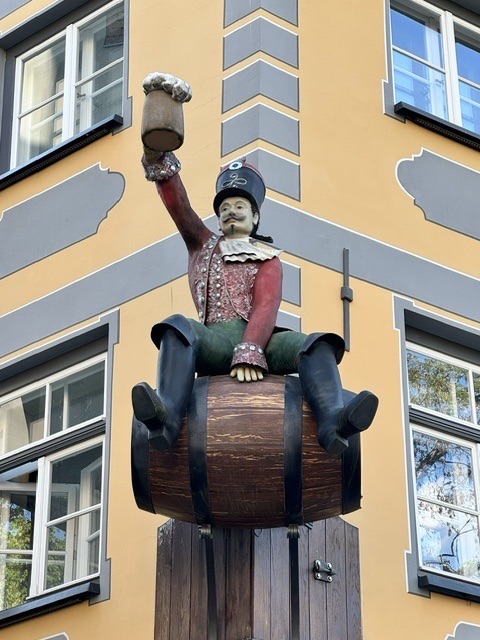
A Beer in the Middle of History
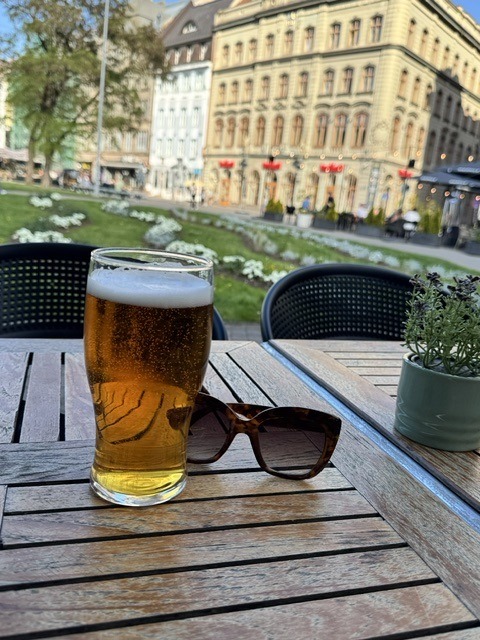
Sitting in Līvu Square with my cold beer, Riga feels both familiar and new at the same time. The outlines haven’t changed since 2009 when I wrote “Riga is a fantastic city.” The same spires, the same layered stone, the cats still atop the turrets.
Riga doesn’t demand admiration; it earns it. Some places I return to and measure against memory. I feel this visit to Riga does not represent a rediscovery or even a feeling of old-times-sake, but a deepening of understanding and admiration.
So, with my order of Mežpils Gaišais draft on the table and the sun warming the cobblestones, I relax and reflect.
Cheers!
Priekā!

0 Comments