28 March 2026
We begin our morning maneuvering Sfax to its historic Medina. Sfax is not pretty in any obvious way. It feels more like a working, industrial city. It’s Tunisia’s second-largest city and its main commercial port, so the rhythm becomes industrial and purposeful rather than historic and touristic.
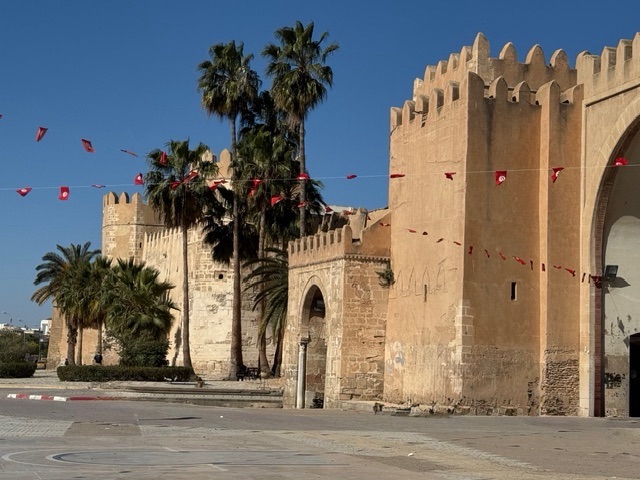
However, Sfax isn’t without character. In the old city, its medina quarter represents one of the best preserved in Tunisia, walled and refreshingly free of souvenir gloss and pressure to buy a rug or copper pot.
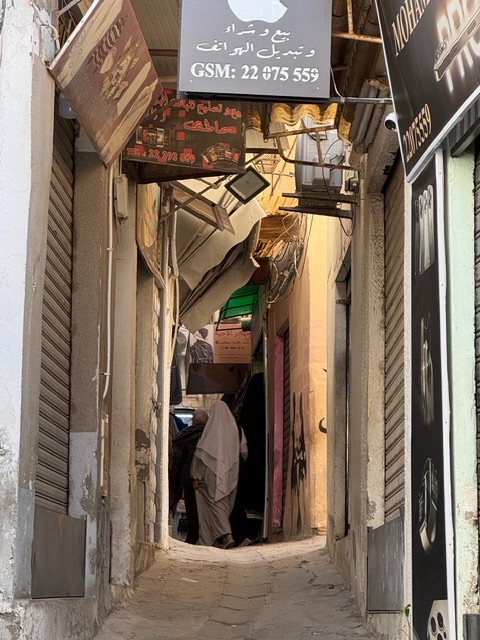
Built by Aghlabid prince Abu Abbass Muhammad between 849 and 851, it shows its age but continues to serve the community. The Medina acts as home to about 115,000 residents and dominated by the Great Mosque.
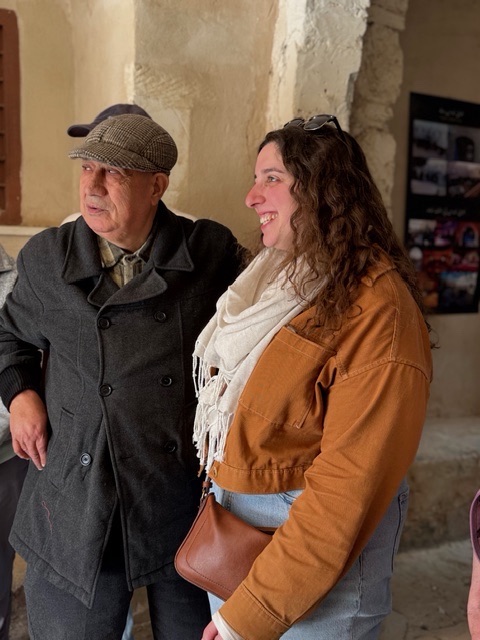
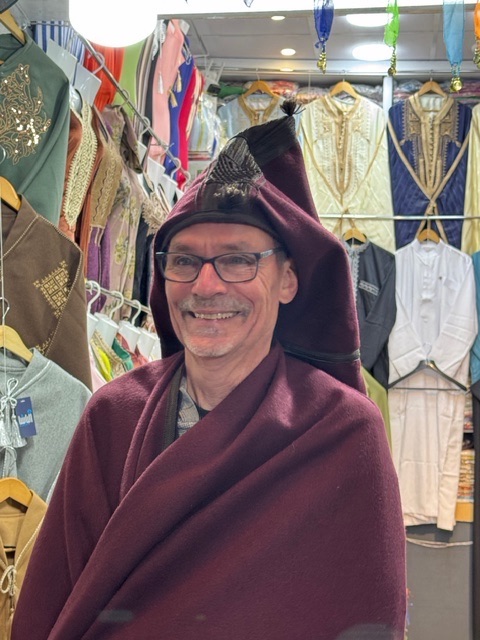
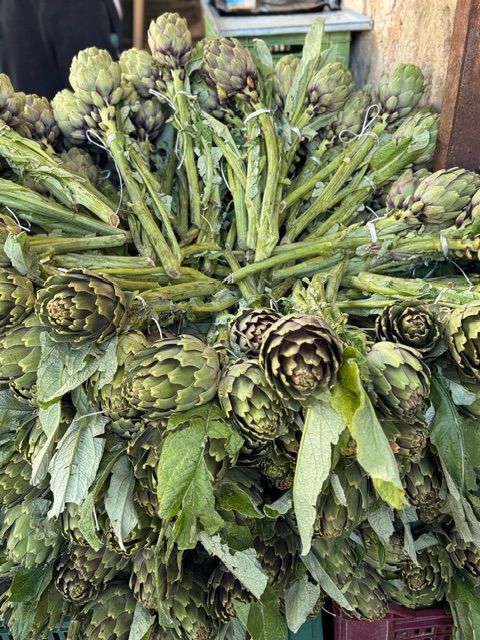

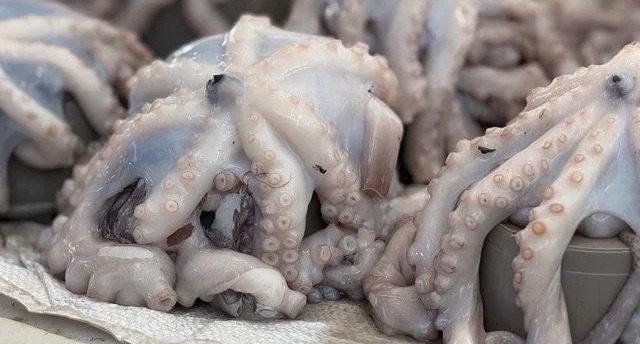
As we walk through the Medina, I’m told, to “soak in the vibrant atmosphere and rich history of this coastal town.” Having traveled a lot and visited dozens of medinas, I ask “sure, so what’s different?” At times like this, I sort of feel the guides are struggling to fill the day.
I hear the usual “welcome,” “where you from,” “my friend” but it’s friendly and less aggressive than in medinas I’ve been like Marrakech or Tunis. Venders quickly switch back to chatting with neighbors or scrolling their iPhones.
It feels more like merchants trying to make a living, not staging a performance. The displays of fish, vegetables, household wares, crafts and meats arranged artfully, creating lots of photo ops. Merchants smile and allow our guide to explain their wares.
On the Road Again
We continue our drive North. Today’s travel consists of about 150 miles with a couple interesting stops along the way. Though we drive close to the sea, the land remans flat and arid. Massive olive groves interspersed with date palms and almond orchards, plus a plethora of cactus, line the highway. Less trash lines the roads.
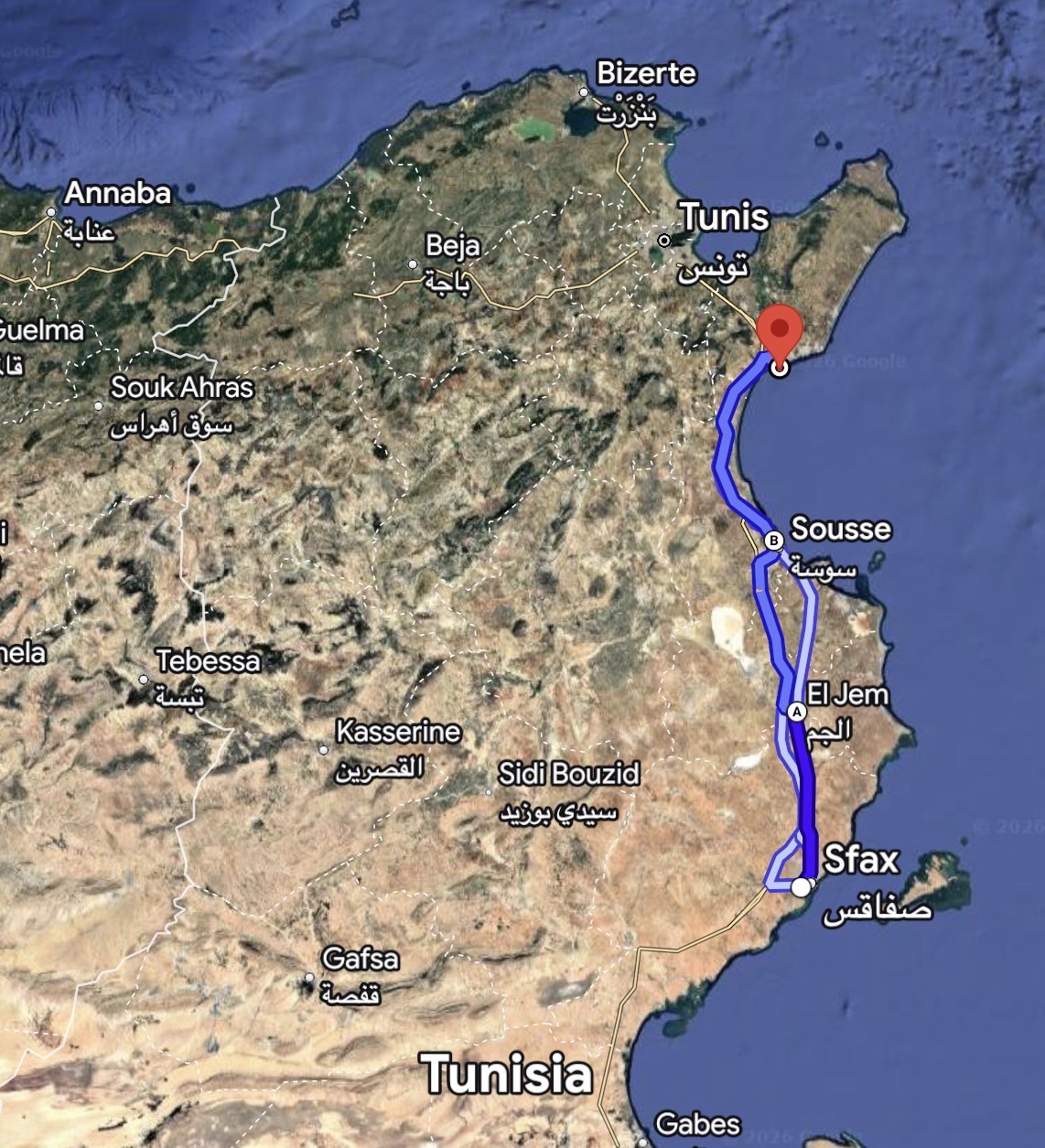
More farms and green fields begin to appear. Most of these farms utilize modern irrigation including drip systems, wadi dams and underground aquifers. Modern orchard management in these regions use a “sustained deficit irrigation,” meaning only enough water is provided to guarantee survival and quality. Cell towers keep us connected throughout our journey.
Roman Ruins of El Djem
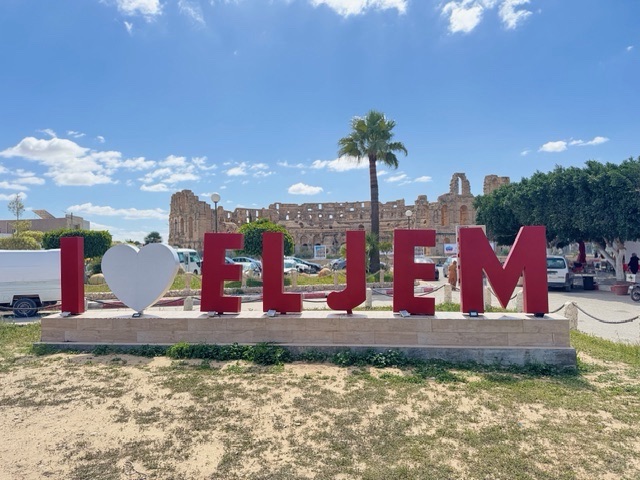
Thysdrus, the ancient city that once stood where El Djem is today, earned its importance because it sat at the heart of one of Roman North Africa’s richest agricultural regions. Originally founded as a Punic (Carthaginian) settlement, likely in the centuries before Roman rule, Thysdrus took advantage of these fertile plains. After Rome defeated Carthage, the city became absorbed into the Roman world and flourished.
The surrounding countryside was covered with vast olive groves, and the city grew wealthy exporting olive oil across the Roman Empire, helping to supply Rome itself. This agricultural prosperity turned Thysdrus into a major commercial hub and allowed it to fund monumental buildings, most famously the enormous Colosseum that still dominates the landscape.
Roman Colosseum of Thysdrus
This Roman Colosseum was built in the early third century CE, during the height of Roman rule. Not only did the Romans build a Colosseum in Thysdrus, but an amphitheater, hippodrome, and baths.
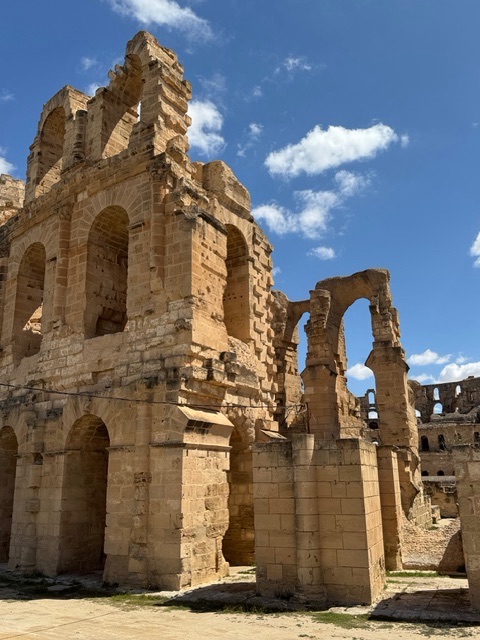
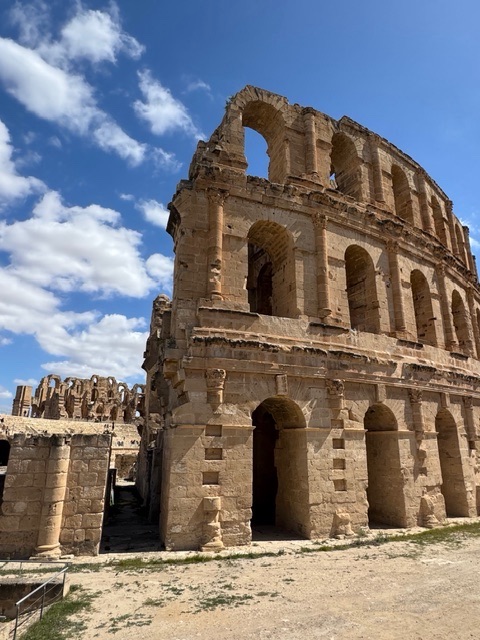
Modeled on Rome’s Colosseum and nearly as large, the area could hold around 35,000 spectators who gathered for gladiatorial contests and public spectacles meant to display imperial authority and entertain the masses. Its sheer scale in what is now a relatively quiet Tunisian town remains a reminder of how important and prosperous the region once was.
Today, the Colosseum remains very well preserved, its massive stone walls rising out of the flat landscape like a stranded monument to ambition. I wander through underground chambers where animals and gladiators once waited, climb into the seating tiers, and look out over the arena floor. Though stripped of decoration and its marble facings, El Djem feels solemn and monumental, well deserving of its title as a UNESCO World Heritage site.
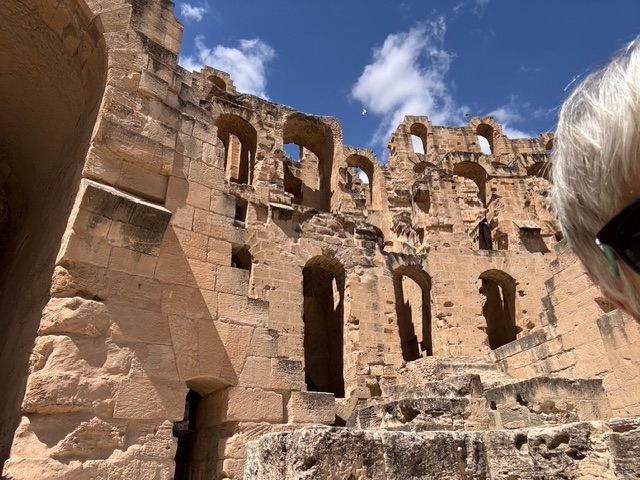
A little side note: In 1996, company Nike used the colosseum to shoot a television commercial titled “Good vs Evil,” which depicts a gladiatorial-style soccer game set in a Roman amphitheater.
However, the most dramatic survivor of the Roman era remains the Colosseum, which dominates the city. Nearby, the Roman baths survive only in fragments; sections of walls, foundations, and floor remain and hint at once-grand heated rooms and communal spaces. A smaller, older amphitheater sits a mile south but little remains of the original site. The hippodrome, once used for chariot racing, is now mostly an outline in the landscape. Mere traces of its long oval shape remain visible.
Mosaic Workshop
From the colosseum, we trudge over to the Dar El Jem, an art studio and cultural space where one explores Roman-style mosaics.
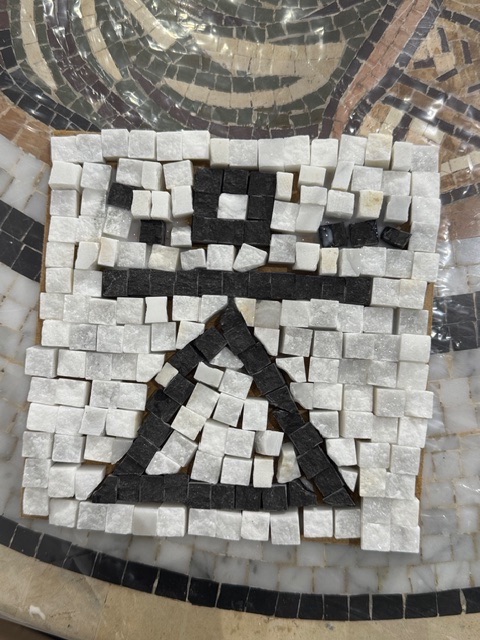
After lunch there, we take part in a hands-on mosaic workshop. Watching artisans helps in understanding the skill that goes into the creation of mosaics. Even more so once I try my clumsy hand at designing something with glue and tile.
I see large copies of famous art like the Mona Lisa and wonder who would put that on their wall? I look for the dogs playing poker. There is the opportunity to buy it and much else if one desires to pack the weight home and a huge mosaic of Hannibal. Of course, they will ship. These places always make me wonder what the artisans do when out of view of the tourists.
I am told finest Roman mosaic panels are found in the El Jem Archaeological Museum. However, we have no time left.
Sousse
After my mosaicing-in-minutes moment, we continue our journey to Sousse. The city sits next to the beautiful waters of the Gulf of Hammamet and Mediterranean. We have little spare time but do elevator to the terrace of the large shopping mall for a panorama of Sousse and the Medina. The city and Martyrs Square are busy with families enjoying a pleasant Sunday.
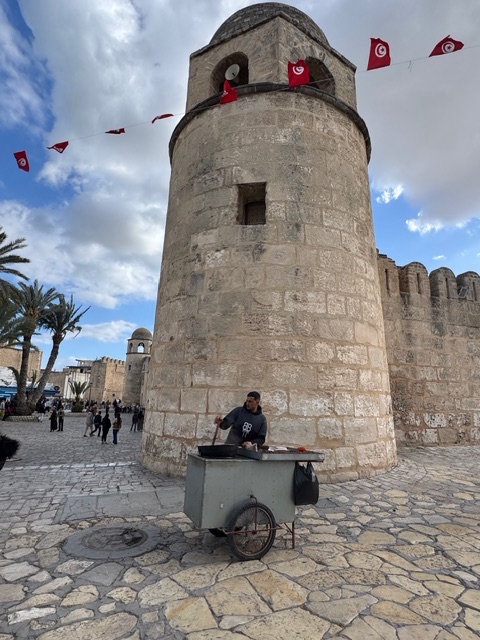
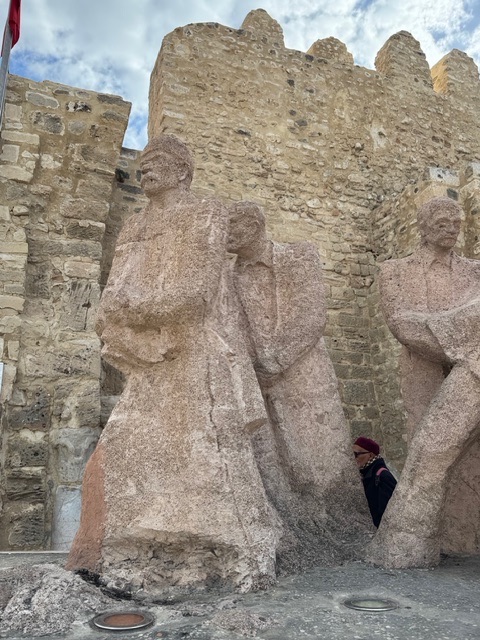
The Sousse medina is tightly enclosed by stout walls, with the massive ribat (fortified religions complex, part fortress and part monastery) and kasbah (the citadel or residence of the local ruler) looming close by. Unlike medinas that spill endlessly into alley after alley, Sousse’s old town is relatively contained, easier to navigate, yet very much lived in. Tailors, repair shops, bakeries, and everyday commerce mix with souvenir stall after souvenir stall after souvenir stall. Its proximity to the sea represents a plus.
As for the sales hassle, I get looks but no hassle. There are not a lot of visitors looking like me around. The city and Medina seems most pleasant and I wish we had more time to explore its history and sites.
Hammamet
We continue another 60 miles to Hammamet, once again a city overlooking white sand beaches and beautiful bay. The wind is blowing and air is cold. Showers hang over the region. I begin to think I may never get to wear those T-shirts I packed.
Once again, Radisson Hammamet’s amenities are luxurious. Out of curiosity, I searched for room details online. A standard room with balcony and breakfast cost under $100 a night (for members). There are activities in town, including a theme park, beach, fort, museum and the ubiquitous medina.
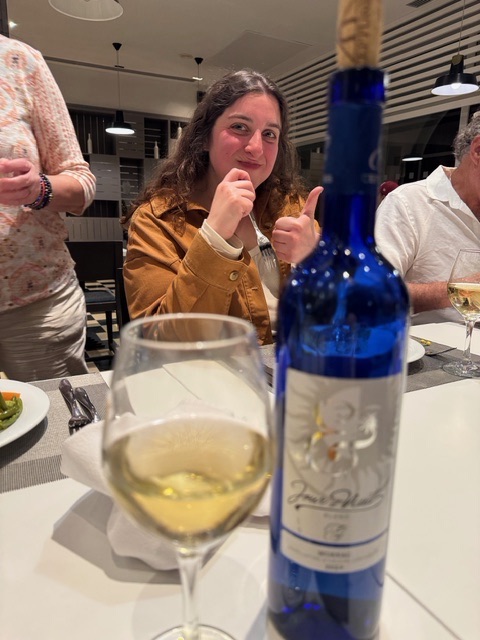
There is an excellent lounge with the usual confusion about guests having to buy the entire bottle of wine. As for the drinkers in our group, not a problem as the dry spells have taught us to take advantage of a good thing when we finally find it.
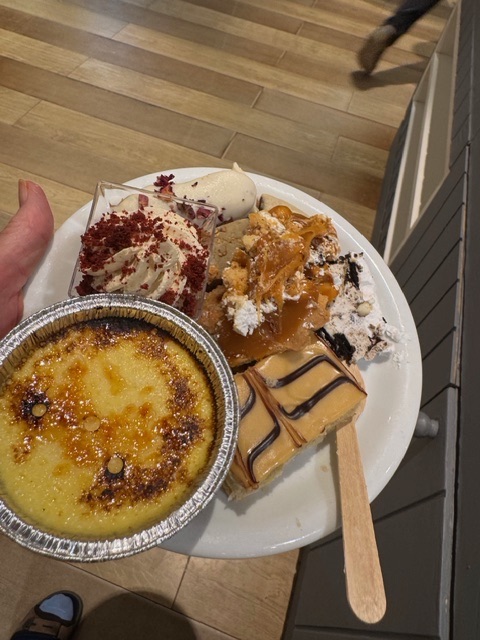
The hotel buffet is Roman-era decadent. I circle the myriad of tables seeking the delicacies I covet from sea food to lamb and veggies. The dessert table is filled with temptations. I believe they need bigger plates! The caramel delight and crème brûlée earned high marks.
Saḥḥtek
To your health
29 March 2026
After breakfast, we drive the 60 miles northwest to Tunis and the Tunis/Carthage International Airport. There, our guide moves us through security and immigration to board our afternoon flight to Algiers International Airport. However, it took over an hour to check-in because they didn’t know what to do with our visas. Or whatever, as it never was clear why the chaotic process. We are so thankful guide Kamel was there to guide and run interference for us.
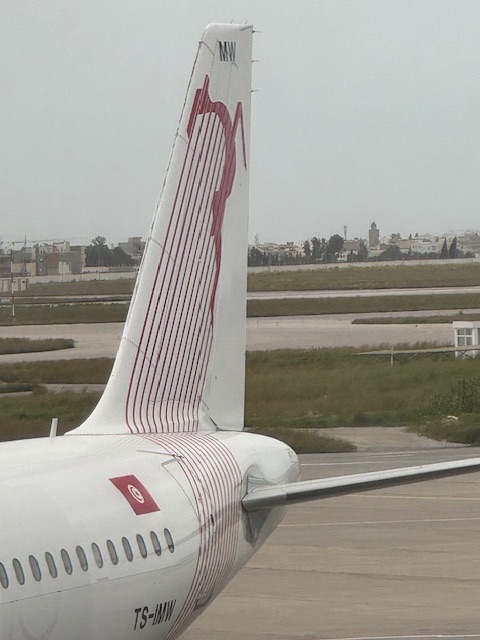
Bag scan required liquids out, shoes off. Again, slow and cumbersome. TunisAir flight departed about an hour late. Onboard, comfortable and fast service.
Algeria
A quick nonstop 1 hr 20 min flight later, I land in Algeria, my 102nd country to visit. But, this occurred over 52 years of my travel life. We arrive in cold and rain. Oh dear, hate to carry clothes I never wear.
Upon arrival, events slow to a crawl, a very, very sloooow crawl. Far worse than Tunis. First, we have to stand in the middle of the hall and fill out information cards. Tho in English, we have to guess at the phrasing of what they are asking. Then, slow line for immigration who looks at our visa, scribbles and pecks at computer, stamps the passport and we move on. He keeps our passport.
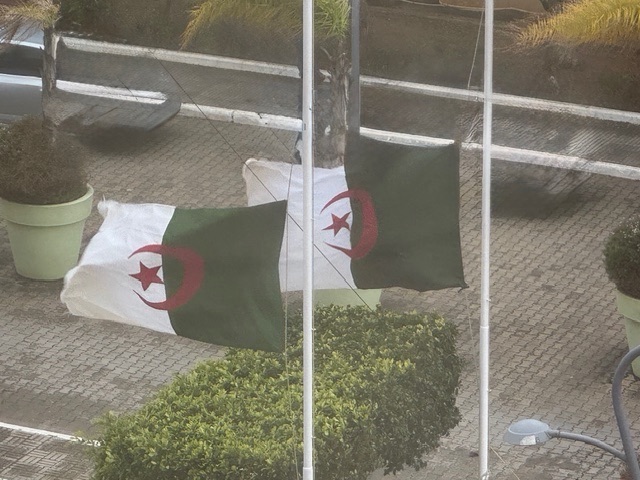
As U.S. and Canadian citizens, we need an entry visa. A 15-day Visa is quite expensive at $188. However, because Gabrielle and I are not flying out until 1:40am, those extra 1 hr and 40 minutes are costing us the price of a 30-day visa – $376. As a traveler, I take it in stride as actually it became easier to pay the extra than change tickets and fly out earlier. Nor did we want to risk angry immigration officials over our 100-minute illegal immigration lapse.
The Art of Waiting
We are shown to a waiting room where we wait. Sans passport. We feel naked and adrift for about another hour.
Our guide is trying some of his magic to avoid the double visa pay. No luck there. The visa actually is $192 now so $384 for our visa. Visas required another hour.
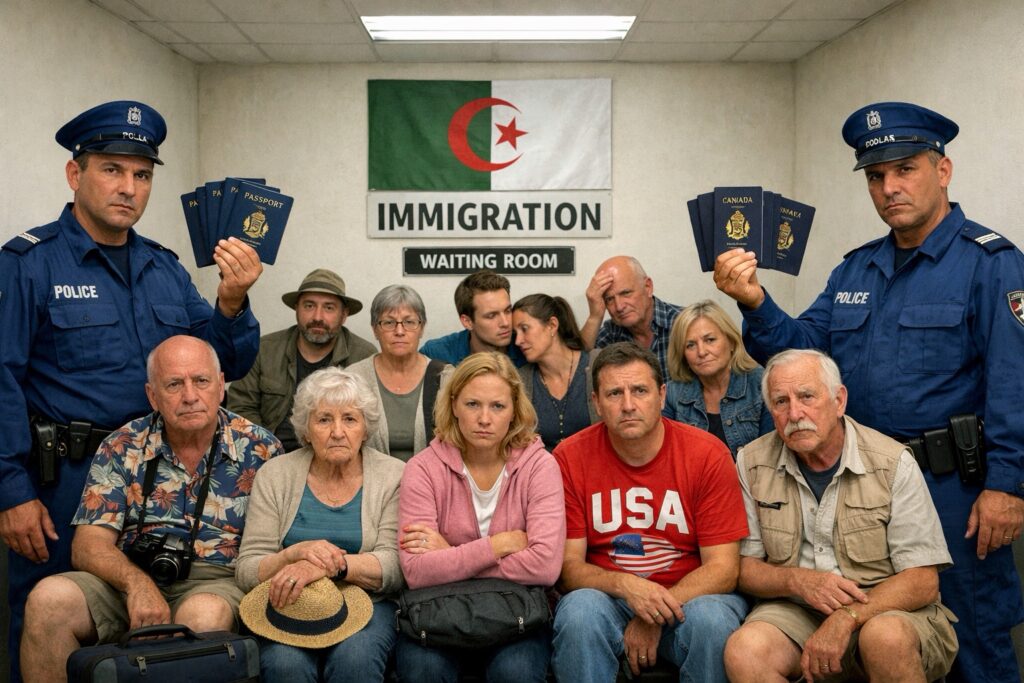
Finally, we are handed our passports after paying our fees and allowed to locate bags – still circling the baggage carousel. Then, after almost 3 hours, we meet our Algerian national guide who transfers us to our hotel. Rain is falling and temperatures are cool. No, actually it is cold, windy and rainy. It has taken over 7 hours for this short flight but cultural jump from Tunisia to Algeria.
We lodge at the modern Sofitel Hamma Garden. Rather modern, but with the amenities one desires and more. The lounge/bar and pool terrace supposedly offer magnificent views, and they serve liquids beyond tea or coffee. No time tonight but tomorrow, tomorrow, I love ya, tomorrow!

0 Comments