7 April 2026

We begin Day 25 of our trip, which becomes the time my digestive system officially files a formal complaint. Days filled with another heroic breakfast followed by a substantial lunch. Then, because restraint seems apparently forbidden—an even larger dinner.
Few hotel rooms provide a hot water pot. Offerings unfailingly comes as a lineup of teas. None of which answer my increasingly desperate call for coffee. As a committed tea-avoider, I find myself longing for something a little less… teaish. I genuinely enjoy the food but at this point my stomach and I negotiate terms.
We continue our exploration of M’zab Valley. Yesterday, we visited the ksar of Béni Isguen. Today, we will explore two additional ksour of the oasis: Bou Noura and El Atteuf. M’zab Valley is famous for its palm groves, date production, and ingenious water management systems, including foggaras. Today’s lesson plan includes all these topics.
UNESCO M’zab Valley
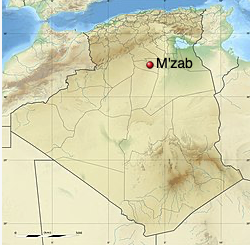
The French annexed the Mʾzab Valley in 1882. It reverted to indigenous rule upon Algeria’s national independence in the summer of 1962. The valley and its villages became a UNESCO World Heritage site in 1982.
During the 10th century, the Ibadites created a traditional human habitat in the Mʾzab Valley around their five ksour, or fortified cities, and they have preserved it intact ever since. They designed its simple, functional architecture to adapt perfectly to the environment and to support community living while respecting the family structure. This represents a good source of inspiration for today’s urban planners.
A traditional human habitat, created in the 10th century by the Ibadites around their five ksour (fortified cities), has been preserved intact in the M’Zab valley. Simple, functional and perfectly adapted to the environment, the architecture of M’Zab was designed for community living, while respecting the structure of the family. It is a source of inspiration for today’s urban planners.
UNESCO 1982
The valley’s five fortified ksour, or walled villages, stand atop rocky outcrops along the Oued Mʾzab. They were built between 1012 and 1350. Collectively known as the five stars or more accurately, the pentapolis of Ghardaïa, the ksour are Ghardaïa, Béni Isguen, Melika, Bounoura, and El Atteuf. These settlements form the historic core of Mozabite society and remain central to the valley’s cultural identity.
Ghardaïa (Taghardait) remains the main capital and administrative center of the Mʾzab Valley. Béni Isguen (At Isgen) ranks as the most sacred of the Mozabite towns and maintains strict traditional rules. The town limits access to certain areas and restricts overnight stays by non-residents.
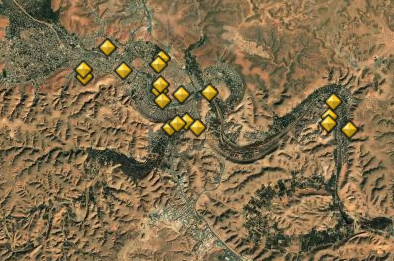
Downstream from Ghardaïa, El Atteuf (Tajnint) represents the oldest settlement in the valley and sits along the banks of the Wadi M’zab.
El Atteuf
After walking through three of the five ksour, I ask: So what is different about El Atteuf?
I learn that even within a valley famous for very orderly planning, El Atteuf shows how each ksar expresses its own personality — like siblings who all follow the same house rules but decorate their rooms differently.
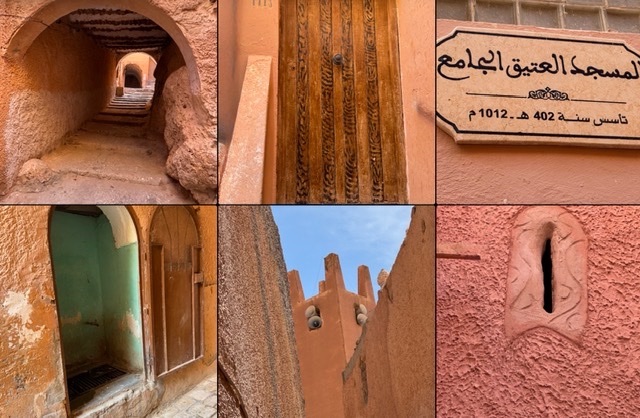
After walking through three of the five ksour, I ask: So what is different about El Atteuf?
Ksar differences can feel subtle — same warm earth colors, same ingenious shade-producing streets, same sense that urban planning here was centuries ahead of modern zoning committees. Each ksar expresses its own personality — like siblings who all follow the same house rules but decorate their rooms differently.
Mr. AY-O
This morning, we visit our fourth Ksar, El Atteuf, and our local guide finally has something new for us. Over 81, he immediately endears himself to us with his exuberance, energy, demands for photo! and distinctive, and resounding AY-O.
El Atteuf is the oldest ksar in the valley, founded around 1012, and it has a slightly more organic feel, as though the planners were still experimenting before issuing the final Mozabite rulebook.
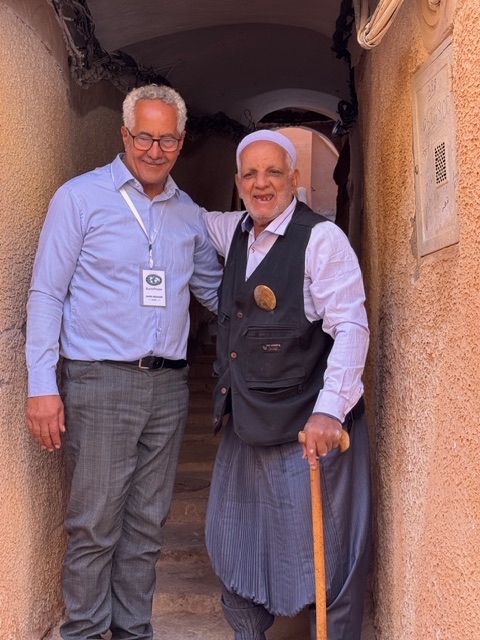
El Atteuf, population about 20,000, we enter through the main gate of six, once again reminded that desert survival here is less luck and more very strict architectural common sense. Our cheerful guide Ay-O keeps us moving — always moving — up an impressive number of low, manageable steps designed so even the weary traveler can climb.
The streets feel less geometrically precise than in later towns like Béni, and the settlement spreads a bit more loosely along the wadi. Its mosque is also distinctive, with a lower and broader profile that influenced later desert architecture.
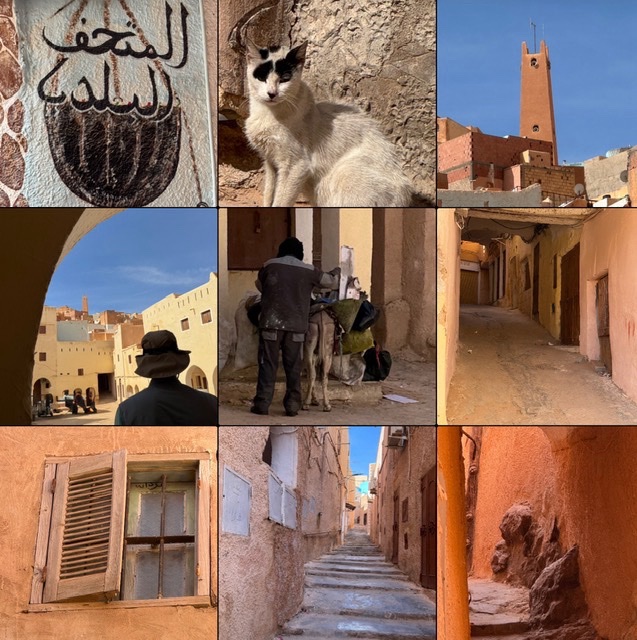
Limestone walls, constantly under repair, reflect the sun and help keep interiors surprisingly cool despite the Sahara’s firm commitment to roasting everything in sight. Local materials rule the day: sand, stone, and ingenuity outperform modern air-conditioning by several centuries. We learn wells were dug through communal effort, with workers paid in dates and wheat — a performance-based system proving productivity rises quickly when lunch depends on it.
Another interesting feature is the cemetery, marked by simple grave slabs that create a striking pattern across the landscape — austere, quiet, and very much in keeping with the community’s preference for modesty over monument-building. No names are etched in stone.
Below, down a long and winding staircase, sits the Mosquée de Chikh Ami Brahim, one of the most distinctive religious buildings in the valley, located just below the ksar and cemetery of El Atteuf. This blinding-white building acts as both a mosque and a mausoleum, built around the tomb of the respected religious figure Sidi (Cheikh) Ami Brahim, likely dating to about the 15th century.
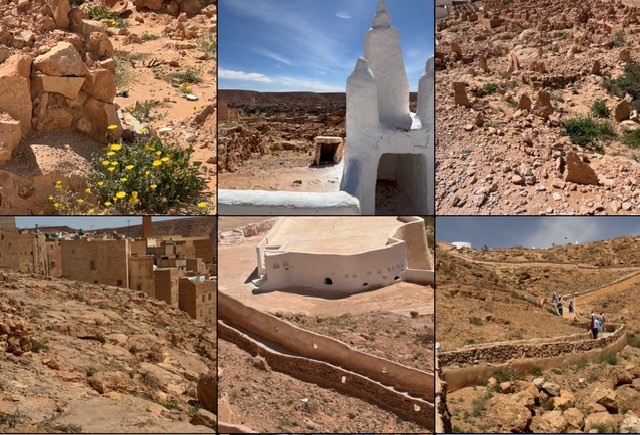
Architecturally, it stands out for its unusual interior of irregular arches, uneven pillars, and semi-subterranean prayer spaces constructed from local limestone, palm trunks, and lime plaster. These materials help keep the interior cool while blending harmoniously with the desert surroundings.
So after three ksour that feel like variations on a very well-tested theme, El Atteuf stands out as the prototype — slightly less standardized, a bit more spacious, and historically important as the place where the valley’s distinctive architectural and social formula first took shape. It is, in effect, the pilot project for a millennium of remarkably consistent desert living. And the home of sweet, happy Ay-O.
Day-o, day-ay-ay-o
Daylight come and me wan’ go home
Day, me say day, me say day, me say day, me say day
Daylight come and me wan’ go home
These are the Harry Belafonte lines I hear in my head — especially when a cheerful guide like Ay-O keeps everyone climbing steps through the ksour of El Atteuf. By the end of the tour, many feel spiritually aligned with our guide… but we wan’ go on.
Foggaras
Perhaps a signature aspect of the Mʾzab Valley are the foggaras. A foggara is a traditional underground irrigation system used in Saharan regions to channel water from underground aquifers to fields and settlements. It consists of a gently sloping tunnel dug beneath the surface, with vertical shafts at intervals for ventilation and maintenance. Gravity carries the water across long distances without the need for pumps. For centuries, Mozabite communities have tapped this groundwater through wells and foggara systems
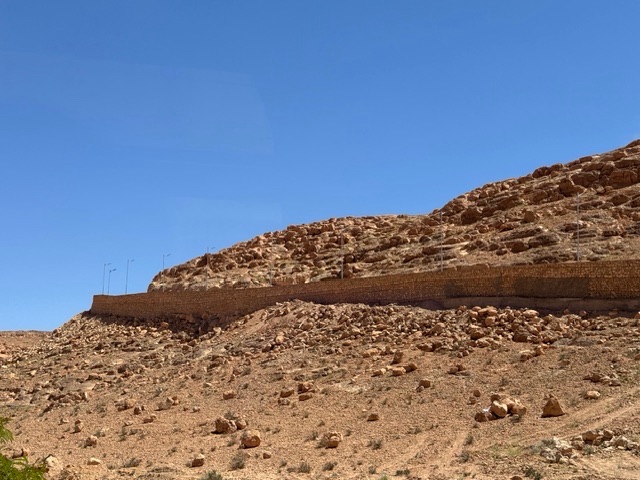
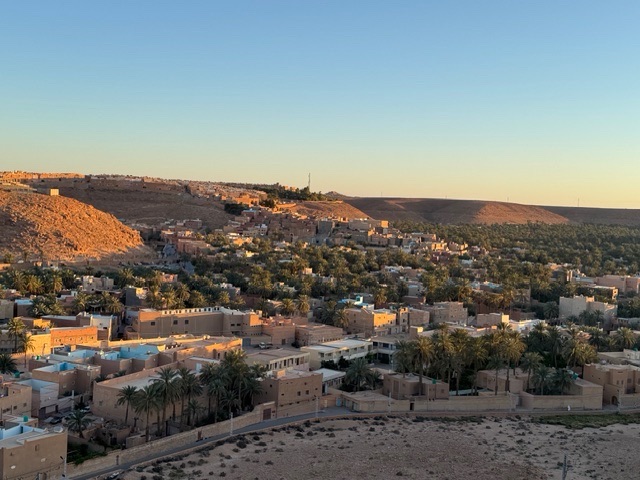
In the M’Zab Valley, water comes primarily from these underground aquifers fed by seasonal rainfall in the surrounding rocky plateau. Although the valley lies in the northern Sahara and receives very little rain, occasional storms send water rushing through the dry riverbed (Mʾzab River). Some of this runoff seeps into the ground, replenishing subterranean water tables.
In the M’Zab Valley, the foggara plays a crucial role in sustaining life. It distributes scarce groundwater to the palm groves and gardens that surround the ksour. The system allows for careful, equitable sharing of water among families, supporting date palms, crops, and daily needs in an arid environment. Without the foggara, the valley’s agriculture and the palm groves that define its landscape could not survive.
And Palm Groves
Palm groves form a green belt around the ksour and are essential to the valley’s and its residents. Each grove traditionally belongs to families who carefully manage water to irrigate their trees and crops. Date palms are the dominant tree, providing both food and income. Beneath the palms, farmers grow smaller fruit trees, grains, and vegetables in a layered system that maximizes shade and conserves moisture.
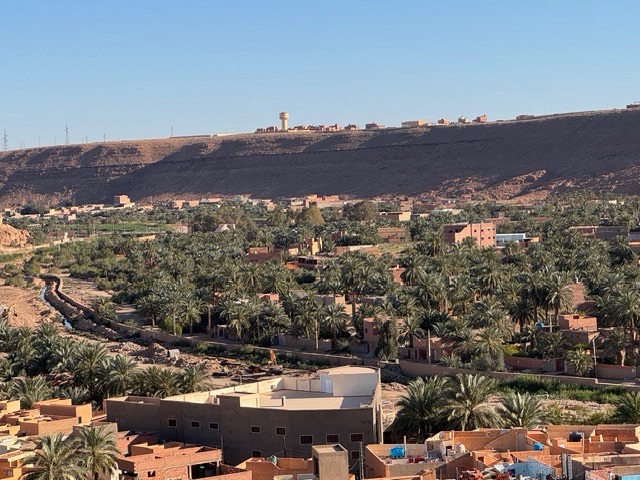
The number of palms in the valley reach into the hundreds of thousands, though exact figures vary due to drought, flooding, and modernization. Economically, the groves have long been the backbone of local life. Dates are consumed locally and traded beyond the region, while the groves themselves create microclimates that make agriculture possible in an otherwise harsh desert environment. Not to mention adding a splash of color to an otherwise bleak landscape.
Ksar of Tafilelt
A short drive takes us around the wadis and hills to the modern city of Ksar Tafilelt. Inaugurated in 2006, it provides housing for over 1,000 families. Developed by the Amidoul Foundation, an Algerian non-profit organization, its goals aim to combat housing crises by merging traditional Mozabite architecture with modern environmental techniques to build self-sustaining, community-managed, low-income housing.
The Ksar incorporates traditional Berber-Mozabite techniques, using stone, lime, and plaster to create energy-efficient, passively cooled, and heated homes. Meanwhile, it mimics the density and social structure of the traditional fortified villages throughout the Mʾzab Valley,
The UN Climate Change recognized Tafilelt as a model for sustainable development in 2016. Ksar features eco-friendly construction with local materials, solar energy, and water recycling. This project reduced costs by about one-third compared to conventional construction, making it accessible to low-income families.
Taqimit Tizefri n Tacha
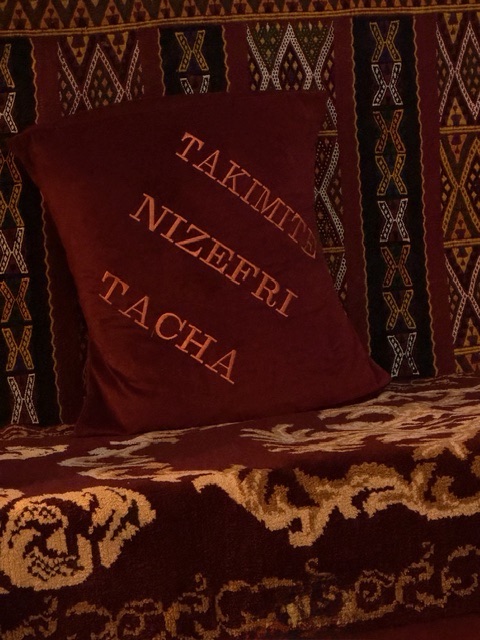
In Tafilelt, we return to the same restaurant where we dined for dinner last night. The food was excellent then as it is now. This is a very traditional dining experience with low benches or pillows on the floor. The soup, dates, couscous and young camel were delicious. However, there is just so much food a human can eat.
Lunch was just as good. Excellent soup, salad, rice and beef. After the meal, we adjourn into a salon for tea. Coffee is not common.
Afternoon on the Farm
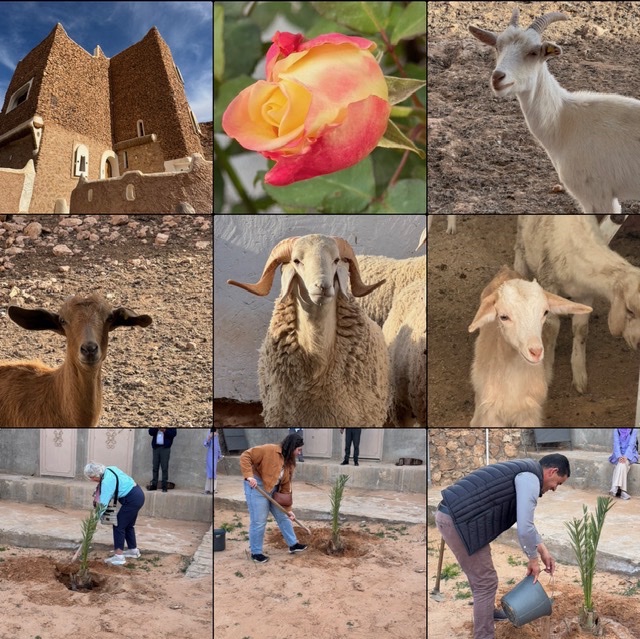
As a surprise, the manager of our tour agency invited us to his family’s “country home” and farm a few miles southwest of Béni Isguen. We are in the desert somewhere among date palms, chickens and goats. Far from roughing it, we tour the home, admire the beautiful gardens and farm animals, and plant a palm tree.
Many valley folk have homes outside the ksour where they go in summer to escape the heat. It’s not that far from the villages but a world of differences in modern comforts. Pool, trees and quiet attract fast weekend getaways with family.
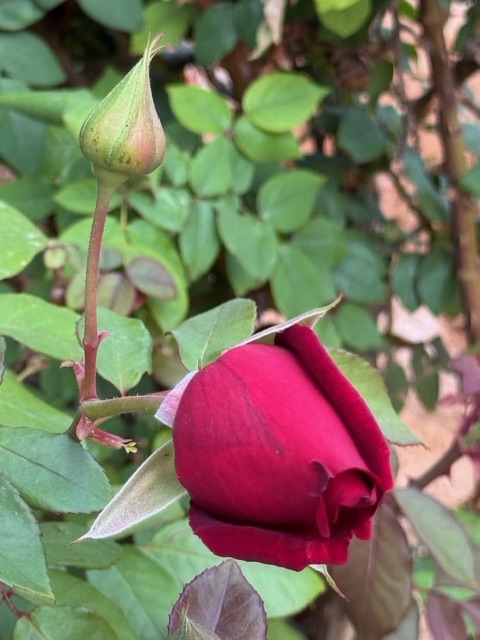
Then Dinner
For dinner, we drive a short distance back towards Béni Isguen to La Villa Tezribt. Again, it seems a huge, and modern, departure from the ksar. While the menagerie of animals (desert fox, monkeys, birds and frightened cats) seemed in dire need of more humane treatment, a southern Algerian musical groups entertained us with traditional instruments, music and dance.
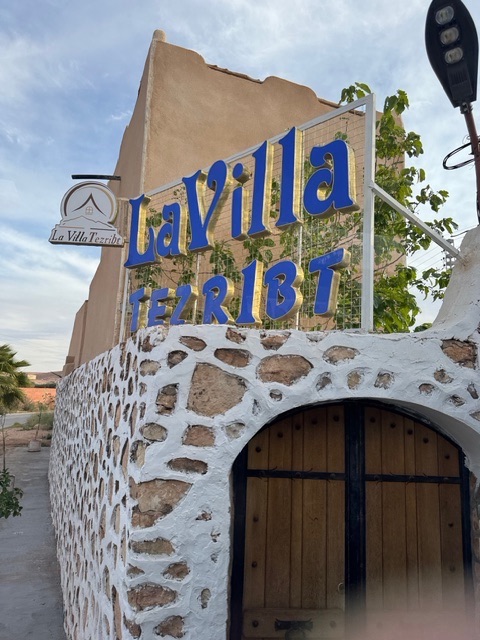
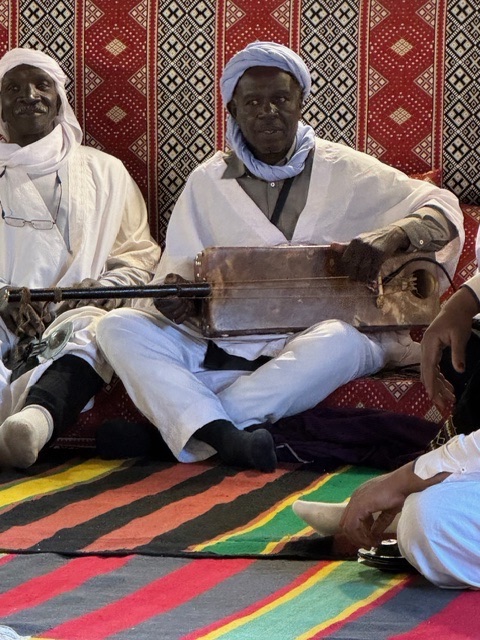
Following, we had another excellent meal.
Oh, food, glorious food, marvellous food, wonderful food, beautiful food!
And Goodnight
Possibly, our visit to the M’Zab Valley represents a true highlight of the journey. Though it lies only some 380 miles from the bustle of Algiers and stands at the threshold of more than a thousand miles of Saharan sand and rock to the south, it provides a fascinating glimpse into Algerian rural life. Here, faith, architecture, water, and desert have shaped a society that endures.
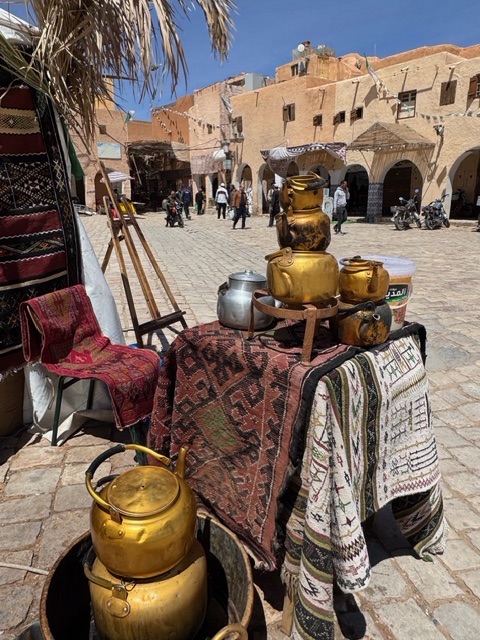
The valley reveals a depth to Algeria – an intricate balance of devotion, ingenuity, and adaptation carved into stone and sustained by palm groves. In its whitewashed ksour and shaded gardens, the past appears to have survived.
And with that impression lingering, I will call it a night.

0 Comments