1 June 2026
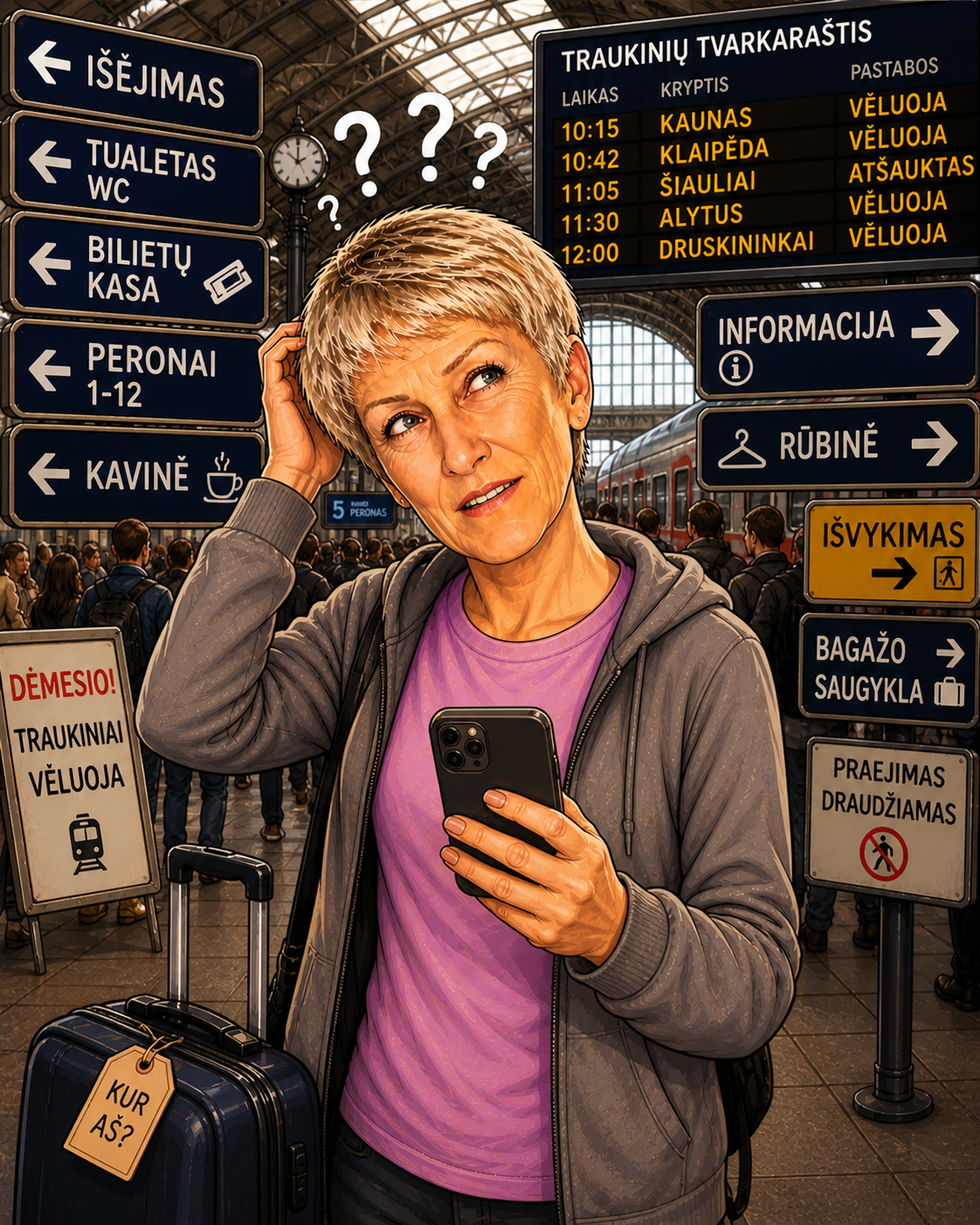
Traveling into rural Lithuania, transportation becomes harder. Transport requires a fair bit of digging. My few requirements include easy access and, if possible, no connections. The last experience I want is standing in a small train or bus station in rural no-woman’s-land understanding next to none of a foreign language. Been there, done that.
I brushed up on my Cyrillic-Alphabet, but then read that most of the Baltics have replaced their second language of Russian with English. Sounds good to me. It also helps to know how to pronounce where I want to go. In this case, my destination is Šaiuliai. I learn locals say show-LAY with accent on the second syllable. Easy even for this traveler!
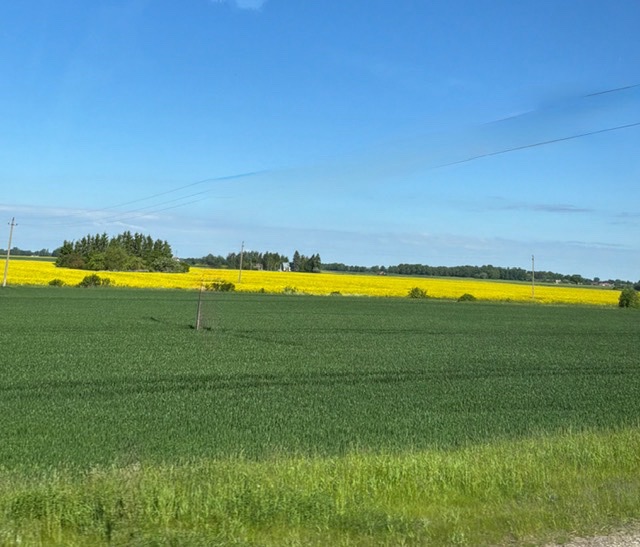
Ultimately, I board KAUTRA for the 2.5-hour ride. Cost with 80% discount is $3.90. The forested countryside is broken up by fields of lush yellow and green. Villages and church spires dot our path.
Why Šaiuliai?
Before looking at a map, I had never heard of the town. What I looked for was a place of interest to break up the long journey from Kaunas to Riga, Latvia. Šaiuliai came up on my travel radar. It seemed to be small and walkable, and sat about half-way along the train route to Riga.
Upon investigation, Šiauliai appeared worth visiting. Known as the City of Sun, Šaiuliai offers a unique blend of Soviet-era architecture, history, and museums like the Bicycle Museum and the Art Nouveau Chaim Frenkel Villa. But it was the Rūta Chocolate Museum and Cat Museum that caused me to book the ticket.
I lodge at the centrally located Šaulys Hotel, sitting in the middle of the activity near Old Town’s Senamiestis Square. My room is ready when I arrive at noon, so I leave my bag and head out to explore. It’s Monday, a time when most museums remain closed. I plan accordingly.

Resurrection Square
Bombing heavily damaged this square during World War II, when much of Šiauliai was destroyed. Its reconstruction and open layout came to represent the city’s rebirth—hence the name Prisikėlimo aikštė or Resurrection Square. During the Soviet period, it served as a central gathering place for demonstrations and public events. Today, it hosts festivals, concerts, and national celebrations.

And, what is becoming ubiquitous signage announcing one’s love for a place. Except this one is in Lithuanian so I have to guess it’s intent,
What stands out here is its scale and openness. It feels more modern and less ornate than older town squares, shaped by 20th-century rebuilding rather than medieval planning. I can almost imagine the Soviet troops stomping through.
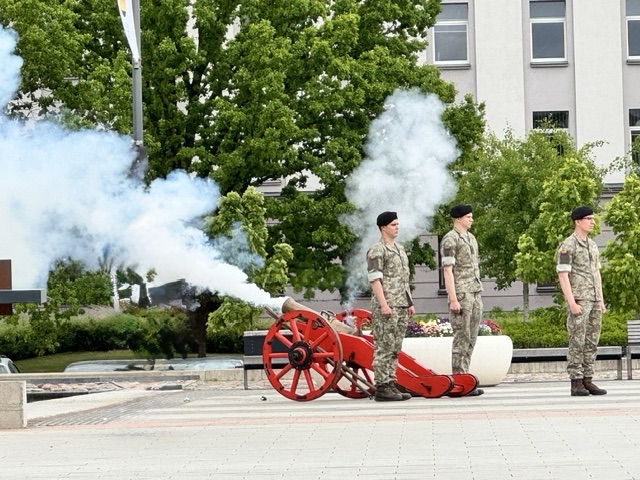
Today, I hit upon good fortune for as I enter the square, a powerful blast of cannon welcomes me. Car horns trigger and I jump half a foot from the concrete. Lithuanian Armed Forces are lined up upon the square, a military band played Tautiška giesmė (the Lithuanian national anthem), and a speech is given. Two more cannon blasts, the car horns reaping quiets, and everyone shakes hands and leaves. Atop a huge army transport, a rock band co ti use the celebrations.
I have no idea why the big booming cannon and song. Few people are in the square to observe it.
Cathedral of the Apostles
Tucked off in one corner of Resurrection Square sits the beautiful Cathedral of the Apostles St Peter and Paul. It represents one of the best examples of Renaissance architecture in Lithuania. Built in the 17th century, a tall white bell tower defines the exterior. Clean, balanced lines give it a strong but understated presence. Unlike more ornate Baroque churches, this one leans toward clarity and proportion, which makes it feel both solid and calm.
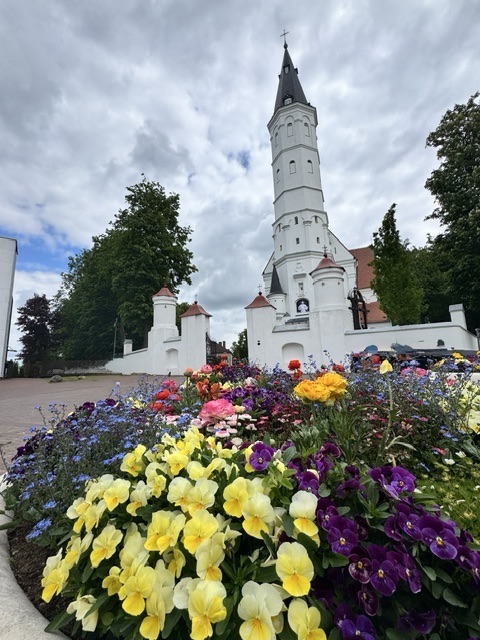
The bell tower becomes its focal point, shooting like a rocket 230 feet into the blue sky. It features over 20 small bells that produce varying tonalities and offers panoramic views of the city skyline. However, the stairs to the top are challenging and perhaps the views from below are enough.
Inside, the space is bright, clean white and relatively restrained. High vaulted ceilings, a sense of openness, and carefully placed decorative elements create a feeling of lightness rather than an oppressive use of ornamentation.
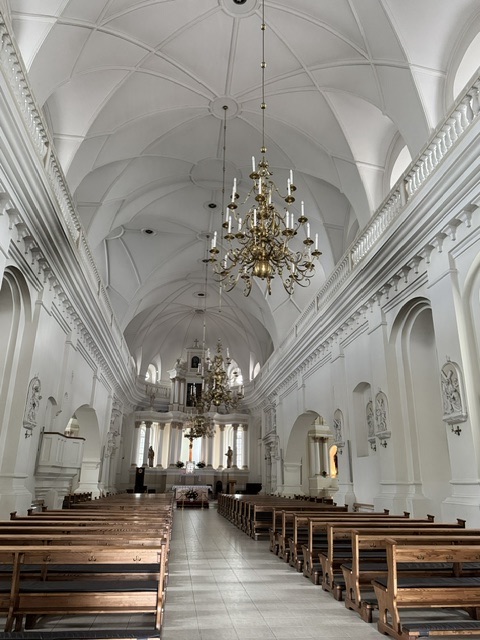
The altars and artwork reflect Catholic tradition, but the overall atmosphere reflects quiet and simpleness. Subtle lights seem to give the alter area a pinkish glow.
Historically, the cathedral has been a constant through upheaval be they wars, fires, or occupations. It survived World War II damage and continued to serve as a place of worship even during Soviet times, making it a symbol of continuity for the city.
The Lady to the Lake
Talksa Lake is a large freshwater recreational area a short walk from city center. I’m not interested in their jogging and cycling trails but within its surrounding green spaces sit several interesting pieces of sculpture. And if dead set, there is an old cemetery and a military cemetery to wander.

Sundial Square represents one of the city’s most striking contemporary spaces. It features a tall sundial sculpture called The Sword. It casts a shadow marking time across the square. The design commemorates the city’s 770th anniversary (in 2001) and symbolizes time, continuity, and Šiauliai’s endurance through history. At night, it illuminates, giving the sculpture a dramatic presence by the lake.
The Archer at the top of the 60-foot obelisk received 1900 sheets of gold foil to cover his 13-foot frame. He reclaims a symbol of the city.

Geležinė Lapė is better understood as the Iron Fox. This is a large 7-ton steel sculpture of a fox standing near the lakeshore. Designed by Vilius Puronas to commemorate the 1000th anniversary of Lithuania’s name, most considered it the largest animal sculpture in the country. Standing, or squatting, it measures 50-feet long by about 22-feet high.
It is part of the local legend that links Šiauliai’s identity to cleverness and survival. Locals say it also references strength, resilience, and wisdom. The fox has become a popular photo spot because it rises above the landscape, visible from a distance with the lake in the background. Its slightly playful character creates a nice break from museums and cathedrals.
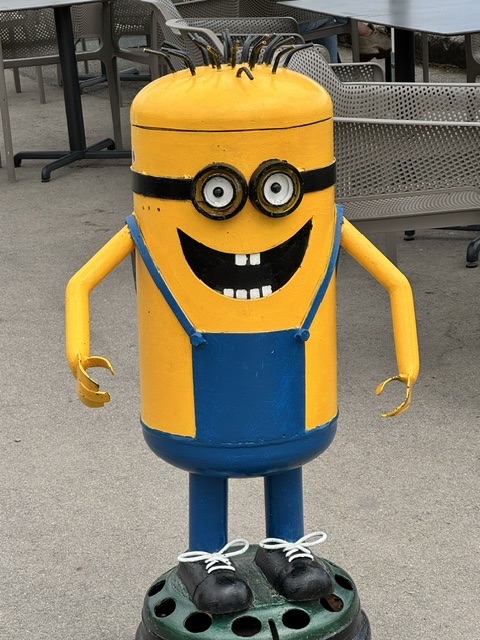
When Curiosity Beats Culture
Within every city rich with activities, history and art, there’s a challenge in choosing what attracts me most in the moment. Not every museum can make the list. My day can tilt toward the unexpected – like a room full of cats or the scent of chocolate. My choice may be something playful instead of profound. It doesn’t diminish the place or experience – it rounds it out.
Travel isn’t just about what you should see, but what you’re drawn to, even if that means letting curiosity win over history. That may mean I choose to meander along narrow paths, step over tree roots, and explore old graveyards.
Hill of Crosses – I Take a Pass
Pilgrims have journeyed to this former hill fort to plant crosses since the early 19th Century. The low earthen mound, about one acre in size, contains an unknown number of crosses (some estimate over 200,000) left by pilgrims honoring everyone from Popes to papa. The site is a powerful symbol of Lithuanian faith, resistance, and national identity.
So, why did I take a pass? The site is not easy to reach and sits some 7 miles northwest of the city. Erroneously, the Hill of Crosses is often cited as a UNESCO site. While this hill is not recognized by UNESCO, the tradition of “cross-crafting and its symbolism in Lithuania” is. However, having just visited Japan’s unforgettable Mount Kōya (Koyasan), the Hill did not call to me as a pilgrim nor a tourist.
Old Šiauliai Cemetery (Talša)
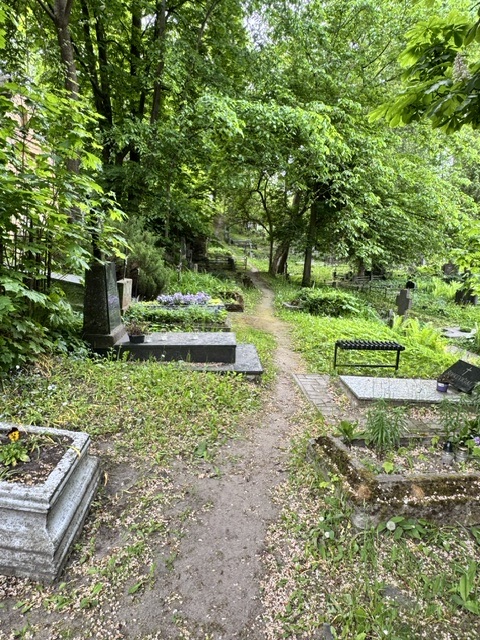
Next to Sundial Square, this cemetery is located near Talkša lake and covers an area of 11 acres. The cemetery consists of three parts: Catholic, Orthodox and Free Thinkers’ cemetery. It is believed that mass burying in the cemetery started in 1831, when cholera raved in the city.
One of the oldest groups of graves is family vaults. Quite many of them remained on the slopes of the hill around a former chapel. Because there are almost no surviving inscriptions on facades of vaults, I can only guess at dates with the majority of burials during the second half of the 19 century.
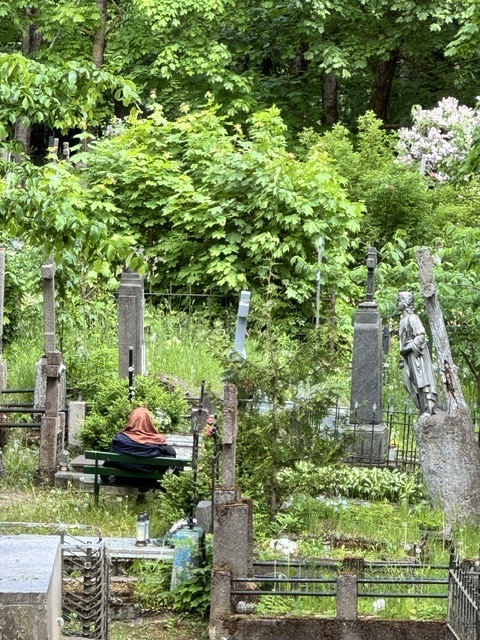
In summer of 1944, when the Soviet aviation was bombarding the city, many bombs fell on the cemetery too, particularly on its oldest part. Many of the former mausoleums and the graves located on the slopes were destroyed or devastated. Officially no people have been buried in the old cemetery of Šiauliai since 1959.
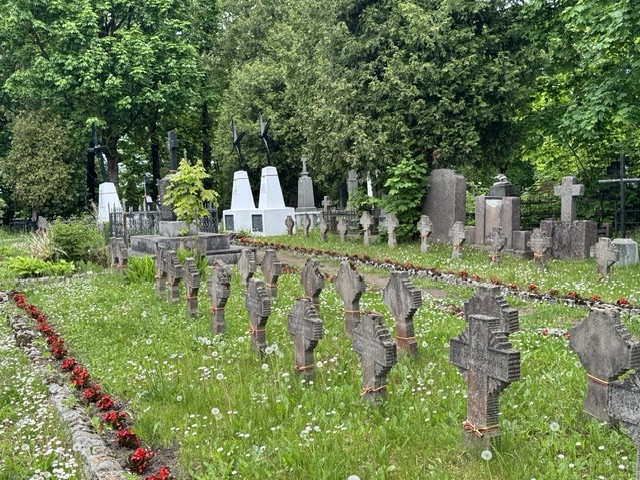
World War I cemetery of Russian Imperial soldiers.
At the northeast end of the cemetery lies an old Russian cemetery. In Šiauliai and the surrounding region, First World War cemeteries of Russian Imperial soldiers are often shared with soldiers of the German Empire. These sites are listed in the Cultural Heritage Register as they represent the heritage and history of the city. Some of the cemeteries were destroyed during the Soviet period.
Recent Changes
If you’re standing today between the cathedral and municipality building, you’re looking at a place that has gone through several layers of history: wartime destruction in 1944, Soviet memorialization after the war, Lithuanian independence, and now a major effort to reinterpret this city’s public space.
For decades, the area served as a Soviet-era memorial and burial site for Red Army soldiers killed during World War II. Established after the war, including an obelisk and eternal flame, the site became an important symbol of the Soviet narrative of liberation and victory. In recent years, Lithuania’s Desovietisation Commission’s efforts prompted a reassessment of such memorials in central public spaces. Nearly 82% of participating residents supported moving the remains from the city centre.
Archaeological excavations carried out in 2025/2026 exhumed the remains of dozens of Soviet soldiers buried at the site. The remains were reinterred at a military burial area near Ginkūnai Cemetery on the outskirts of the city. The former memorial site will be incorporated into a redesigned civic square, reflecting both historical remembrance and the evolving identity of an independent Lithuania.
Senamiestis – The Old Town of Šaiuliai
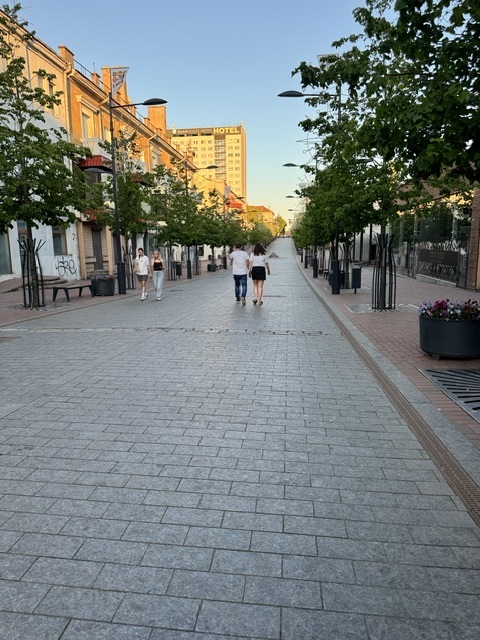
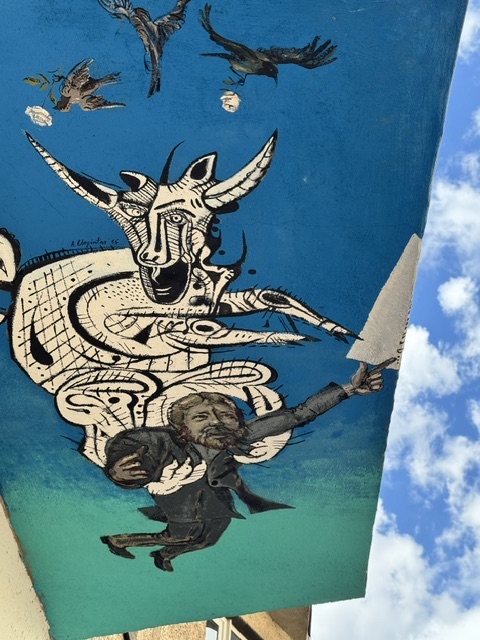
What is almost a mile long, lined with shops and restaurants, boasts the Rock ‘N’ Roll Pub, and absent of cars? The wonderful pedestrian boulevard of Vilniaus. After site-seeing, this street becomes the place to stroll and dine.
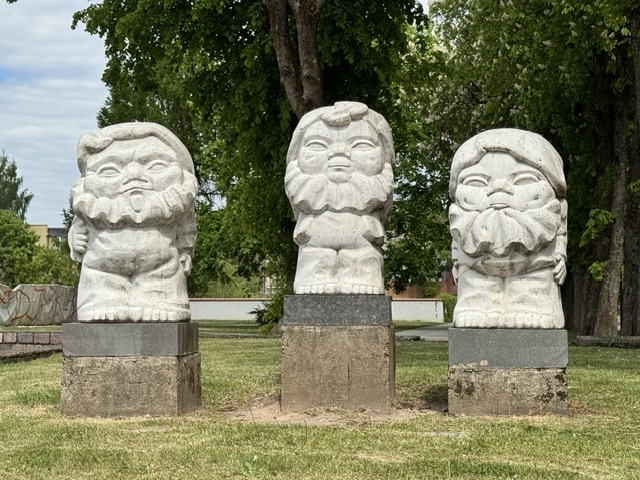
Cutting through the center of Senamiestis, or Old Town, decorating this cobblestone way are fountains and sculptures. Maybe the cutest sculpture would be the white marble statues of the Three Dwarfs.
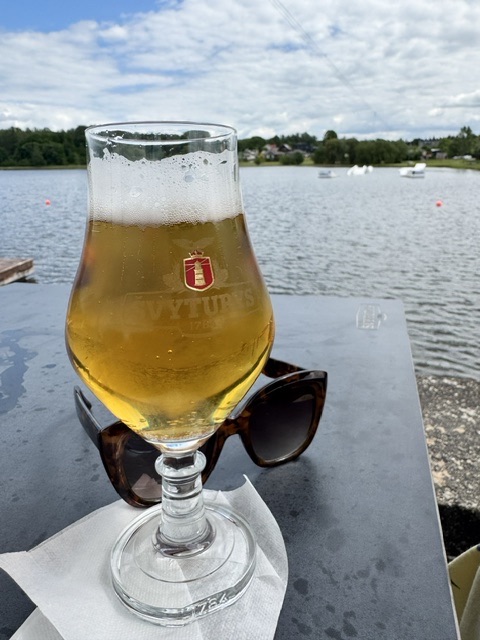
I skip the campy Rock ‘N’ Roll Pub and choose the BOHO. Sitting at an outside table, the atmosphere is quiet, the views of life’s Passeggiata are good. I scan their bar code for a menu in English and point at what I want. Draft beer and a Caesar salad with prawns.
I’m thinking my stop in Šaiuliai was a good choice.

0 Comments