23 May 2026
Berlin presents me with a different kind of wall – not concrete and barbed, but the mental tug-of-war between being a present parent to my German daughters and answering the insistent call of history that seems to echo from every corner of the city. I find my thoughts detouring toward places like the Berlin Wall Memorial or Underground Tunnels. It’s a delicate negotiation within myself of how many historical stops should be smuggled into a day before I feel like a bad mother.
Checkpoint Parenting – Between Walls Then and Daughters Now
What I expect to be a tug-of-war of guilt quietly resolves itself the moment we are together. Being with my daughters laughing, sharing memories, and catching up becomes my focus, and everything else begins to fall naturally around it.
Between family outings and pockets of free time, I experience places that call to me, whether it’s a reflective stop at the Berlin Wall or a wander through the Memorial to the Murdered Jews.
There’s room for both history and coffees, for solemn moments and family dinners. And perhaps the greatest luxury becomes the quiet reminder that I don’t have to see everything. Berlin, after all, isn’t going anywhere. It lingers patiently, one of my bright green flags on my Google Maps, signifying I Want to Go.
Living in East Berlin
Until I explored my neighborhood in Berlin, I did not realize my daughter’s apartment sits within the Mitte District of what was once behind the Wall in East Berlin.
Her apartment overlooks Friedhof der Sophiengemeinde II Cemetery, opened in 1827. The Wall sliced into the lives and deaths of Berlin. No one was allowed to visit there loved ones without permission.
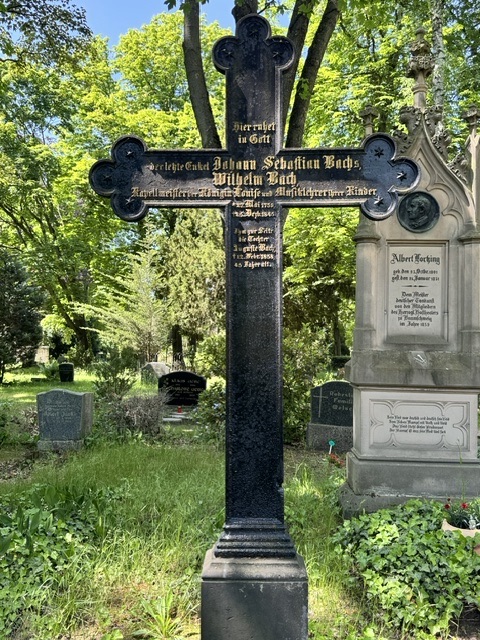
My bedroom window overlooks the grave of Walter Kollo, composer and music publisher. Wilhelm Bach. the Great-grandson of Johann Sebastian Bach, passed his final opus here. Here lies Johanna Stegen a heroine of the Napoleonic Wars and subject of the painting Heroine of Lüneburg. A plain slab of concrete marks the resting spot of Johann Caspar Schmidt, German philosopher known by the pen name Max Stirner.
Bernauer Straße
Just a few steps from the apartment sits a street as significant to Berlin’s recent history as Brandenburg Gate and Checkpoint Charlie – Bernauer Straße. We spend an afternoon walking in its history.
The Wall
Berlin Wall construction began on 13 August 1961, when East German forces suddenly sealed the border with barbed wire and armed troops to stop citizens fleeing to West Berlin. Within days, temporary fencing evolved into concrete walls. During the 1960s the border system expanded rapidly with guard towers, patrol roads, floodlights, trenches, attack dogs, and the infamous death strip.

By the 1970s, East Germany replaced earlier crude barriers with a more sophisticated outer wall known as Grenzmauer 75, a tall smooth 12’ high concrete structure designed to prevent climbing. Behind it stood a second inner wall, creating the heavily fortified border zone seen in photographs. The Wall remained until 9 November 1989, when the Wall and border crossings unexpectedly opened, leading to the collapse of East Germany and eventually German reunification in 1990.
Documentation Center
An excellent introduction to this neighborhood is gained by a visit to the Documentation Center. Climb to the top of its tower for a view of the Berlin Wall Memorial, Friedhof Cemetery, and along the wall’s path and its border houses. Inside are photos, film and information about this street and events.
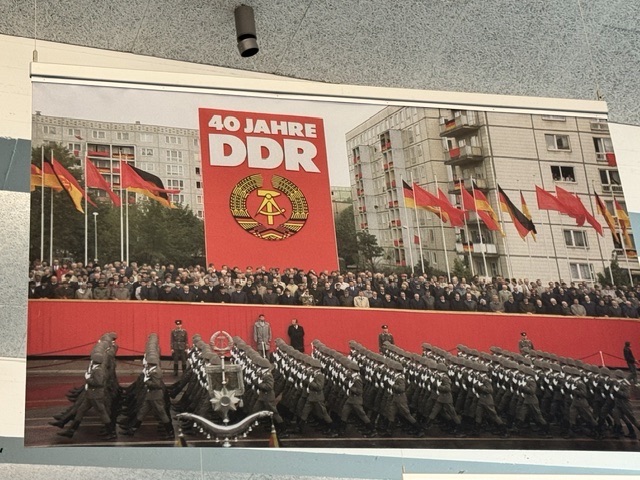
This particular urban quarter was enclosed by the Wall on three sides. Walk along Bernauer Straße for photographs, art, memorials, and interpretive boards telling story of people who lived in theses border homes, its tunnels, and events during this time in history.
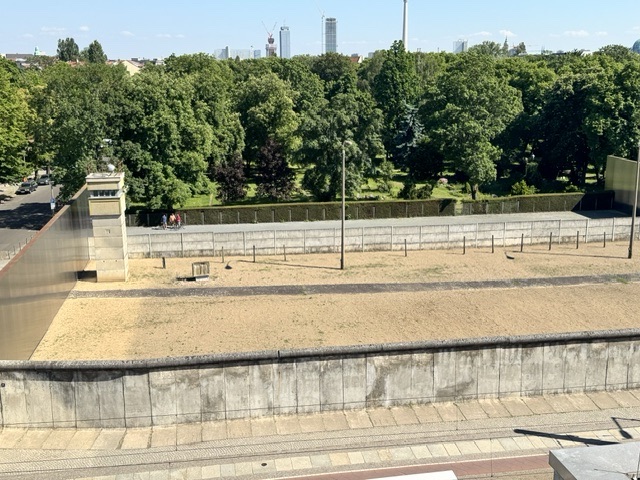
Events captured in photos and film provide vivid images conveying the significance of the Berlin Wall. Dramatic escapes on this street occurred often and were watched by people Grenzmauer 75, the lives of its captives. Bernauer Strasse became recognized throughout the world through these photographs and films.
Walking the Patrol Path

Few places in Berlin capture the reality of the Cold War as vividly as Bernauer Straße. More than simply a street beside the Berlin Wall, it became one of the most tragic and symbolic front lines of a divided city. Here, ordinary apartment buildings, sidewalks, churches, and even sewer lines suddenly became part of an international border overnight when East Germany sealed the frontier on 13 August 1961.

Bernauer Straße occupied a strange geographic position. The street itself belonged to West Berlin, while many of the apartment buildings along its southern side stood in East Berlin. Residents woke one morning to find soldiers stringing barbed wire directly outside their front doors.
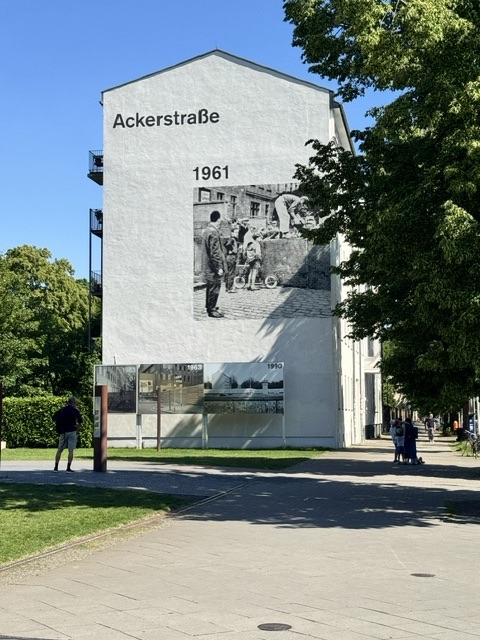
Some East Berliners escaped dramatically by jumping from apartment windows into sheets held by West Berlin firefighters below. Others climbed down ropes or fled through hidden routes before the windows were bricked up and the buildings eventually demolished.
One of the most amazing events associated with the Wall occurred on 22 August 1961 when a young East German border guard named Conrad Schumann leapt over the newly erected barbed wire near here and escaped to the West. The famous photograph of his jump became one of the defining images of the Cold War and displayed along this path. Just days later, another tragedy unfolded when Ida Siekmann, trapped in her apartment building, jumped from a window attempting escape and became the first known civilian to die because of the Wall.

As you walk the preserved border strip today, the “patrol path” follows what East German guards once called the Todesstreifen — the “death strip.” This barren corridor was designed to prevent escapes and was layered with barriers, floodlights, anti-vehicle trenches, guard towers, patrol roads, dogs, alarms, and raked sand that recorded footprints. Guards constantly patrolled these paths under orders to stop escape attempts by almost any means necessary. The openness of the modern memorial area makes the former brutality even easier to imagine because so much empty space still survives in the middle of a crowded city.
Why Did Locals Cooperate?
A question haunts me: why did the soldiers follow orders to shoot if people did not stop?
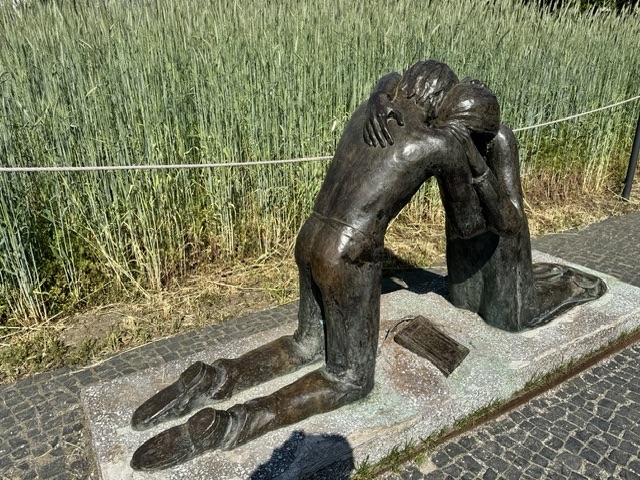
That question haunts many people who walk here. It is difficult to understand how young men — often not much older than teenagers — could stand in towers or patrol the death strip and fire upon fellow Germans trying only to leave.
Part of the answer lies in fear and indoctrination. East German border guards were raised in a system that constantly portrayed the West as dangerous and hostile. They were taught that protecting the border meant protecting socialism itself from collapse. Escaping citizens were officially labeled traitors or tools of the enemy rather than ordinary people seeking freedom. Repetition of that ideology, beginning in schools and reinforced through military training, shaped how many guards viewed their duty.
But Ideology Alone Was Not Enough
The East German state also relied heavily on pressure, surveillance, and punishment. Soldiers who refused orders could face imprisonment, expulsion from the military, ruined careers, or suspicion from the feared Stasi. Border guards themselves were constantly watched by fellow soldiers and political officers. A guard was rarely alone; everyone monitored everyone else.
Many guards were also extremely young and frightened. Some were barely out of adolescence and placed in highly tense situations with loaded weapons, strict orders, and constant warnings that hesitation could allow an enemy escape. In authoritarian systems, obedience becomes survival. “I was following orders.”
History shows this pattern repeatedly, not only in East Germany. During events such as The Holocaust, The Cultural Revolution, or even the shootings at the Berlin Wall, ordinary people often participated in systems they might never have created themselves. Most were not monsters in their daily lives. Many were average people shaped by fear, conformity, propaganda, ambition, or the inability to resist authority.

That may actually be the most unsettling part. It is comforting to imagine history’s cruelties carried out only by uniquely evil individuals. But places like the Berlin Wall Memorial force visitors to confront a harder truth: under certain systems and pressures, ordinary people can become participants in terrible acts while convincing themselves they are simply doing their job.
Some former border guards later expressed remorse. Others defended their actions for years. A few admitted they never truly believed in the system but felt trapped within it. The Wall did not only imprison those trying to escape westward; in a different way, it trapped many of the men ordered to guard it as well.
Much More Than a Wall
The preserved border holes and steel remnants reveal how complex the Wall truly was. It was never just a single wall. It evolved into a fortified border system intended to isolate East Germans from the West physically and psychologically. The holes and exposed foundations show where barriers, fences, and escape tunnels once existed beneath the surface of the city.
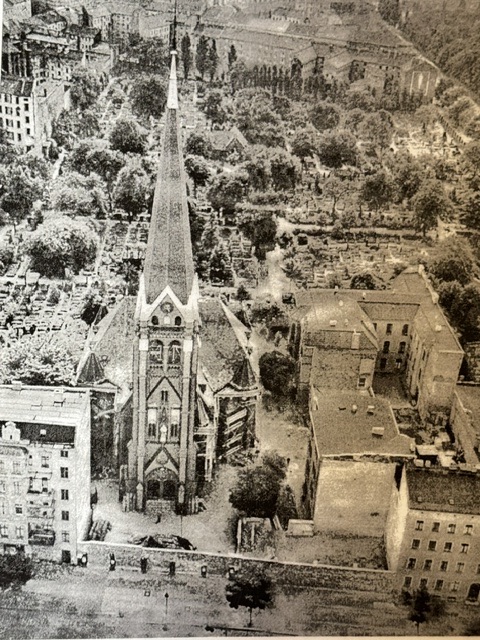
Along the route you also encounter the preserved section near the Berlin Wall Memorial, perhaps the most historically important remaining stretch of the Wall anywhere in the city. Nearby stands the rebuilt Chapel of Reconciliation, constructed on the site where a church once stood stranded inside the death strip before East German authorities demolished it in 1985.
Walking Bernauer Straße today feels less like visiting ruins and more like moving through a scar left open in the middle of Berlin — a reminder of how ideology once divided neighborhoods, families, and lives with concrete, wire, and armed patrols.
Between Family Moments and History
Some of the best moments of travel are not found in museums or famous squares, but sitting around a kitchen table while dinner is being prepared. A wonderful pasta dinner appears piece by piece, local beer is poured, wine glasses somehow never stay empty, and conversation flows so constantly that nobody can remember who was actually supposed to finish a sentence.
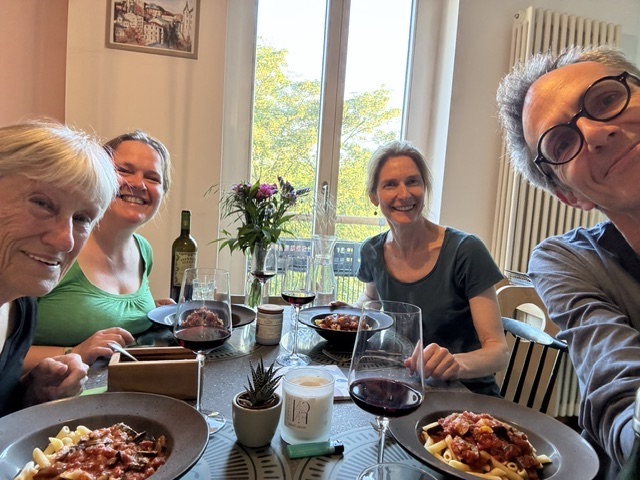
Poor man of the house spends the evening cooking for us, topping off drinks, and bravely attempting to speak over the sound of three women chattering away at full speed. He never really stood a chance. Yet somehow that noisy kitchen, filled with laughter, clattering dishes, and endless conversation, becomes one of those priceless and memorable moments that stays with you far longer than any sightseeing list ever could.
