26 May 2026
We started our day of excursions beneath the shadow of the Berlin Wall, descending underground to hear stories that feel almost impossible today: young men and women digging through clay, sewage, and darkness for the chance to reunite with family, lovers, and freedom itself.
Beneath Berlin’s Divided Past
In the years after East Germany sealed the border in 1961, desperate Berliners turned underground. Researchers have uncovered 76 escape tunnels beneath the Wall, with 65 dug during the first frantic five years after the border closure. Most failed. The Stasi constantly monitored suspected escape networks, tunnels collapsed, equipment broke, and diggers risked prison or death if discovered. Yet against the odds, 19 tunnels succeeded, helping somewhere between 300 and 450 East Germans crawl into West Berlin.


What struck me most was the sheer determination involved. These were not professional engineers. Many tunnel builders were students, friends, brothers, or former neighbors working in secret basements and abandoned cellars with shovels, buckets, rope, and homemade ventilation systems. Most tunnels were dug from West to East because it was easier to organize supplies and avoid suspicion in West Berlin.
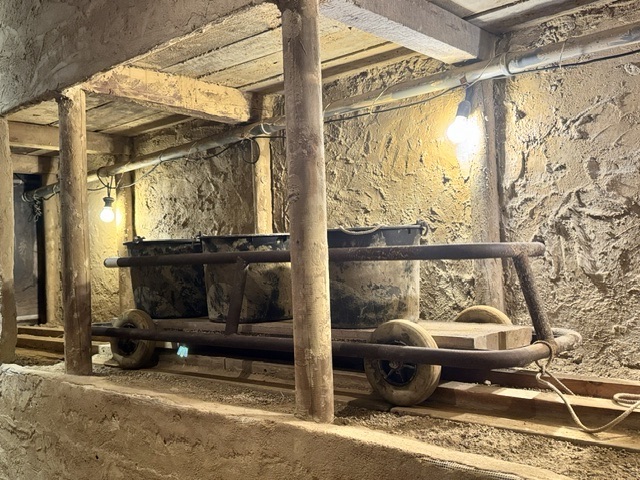
Beneath the Death Strip
Two of the most famous tunnels were the focus of our tour. Tunnel 57, completed in 1964 by West Berlin students, became legendary after 57 people escaped through it over two nights before the Stasi discovered the operation. The tunnel itself was two feet high and three feet wide, and the people making the escape could not bring any belongings, only their papers. One little boy was saddened because he had not seen the dragon his parents promised him if he would enter the tunnel.
Tunnel 29, dug in 1962 from the cellar of a bakery (where our tour occurred) carried 29 East Germans to freedom in just two days. Sitting above the route where Tunnel 29 once ran made the story feel chillingly real.
Our guide, Jacob, shared fascinating details along the way. The tunnel numbers themselves reflected how many people escaped through them. Months of dangerous digging might ultimately free only a few dozen people, yet for those families it meant everything.
Freedom Had a Price
One surreal detail involved American television. NBC reportedly paid about $12,000 for filming rights to document Tunnel 29 and turn it into a television special. Considering the network now spends billions for modern sports broadcasting rights, it seemed astonishingly cheap for one of the most dramatic real-life stories of the Cold War.
Jacob also explained another escape route that required no digging at all: the West German government sometimes quietly paid East Germany enormous sums — often equivalent to 40-50 thousands euros per person — to secure the release of loved ones from the East. Freedom, in every sense, came at a price.
The Men Who Dug for Freedom
Two of the stories our guide told perfectly captured the strange mix of courage, desperation, tragedy, and even absurd comedy that surrounded the tunnel escapes beneath the Berlin Wall.
Digging for Love
One centered on a young man determined to rescue his fiancée from East Berlin. Joachim Neumann was an East German who fled to the West then dug several tunnels, including the legendary Tunnel 57. All three were attempts to rescue his imprisoned fiancée, Christa
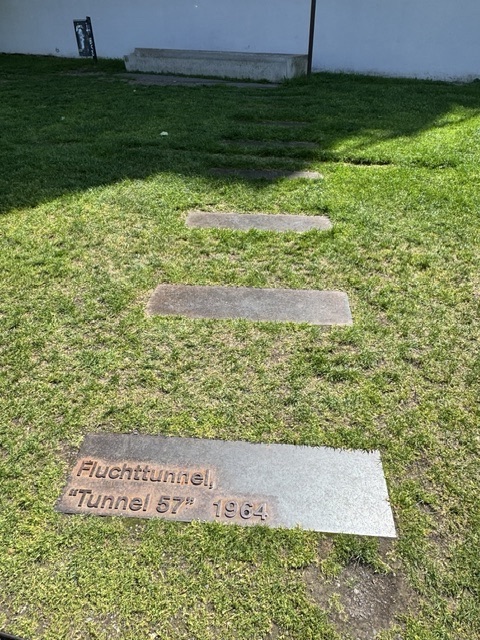
His first tunnel failed. Then the second collapsed or was discovered before it could be used. Most people would have given up after risking arrest twice, but he refused. Love became stronger than fear. He organized yet another secret digging operation, once again crawling through dirt by candlelight and hauling soil out bucket by bucket in silence.
Finally, on the third attempt, the tunnel succeeded. His fiancée escaped through the narrow underground passage into West Berlin, turning months of exhaustion and terror into a reunion that must have felt almost unreal. It sounded less like history and more like the plot of a Cold War romance film, except these people were risking their actual lives for the chance to simply be together.
The Tunnel Beside the Toilet
The second story carried both dark humor and tragedy. Christian Zobel and a group of West German students, including Joachim Neumann, spent months digging a 475-foot-long tunnel from the basement of a disused bakery in West Berlin to directly beside a toilet.
During one attempted escape, East German police discovered them and chaos erupted. Four men scrambled into the tunnel entrance to escape capture. In their panic, three became jammed together underground, completely stuck inside the narrow shaft.
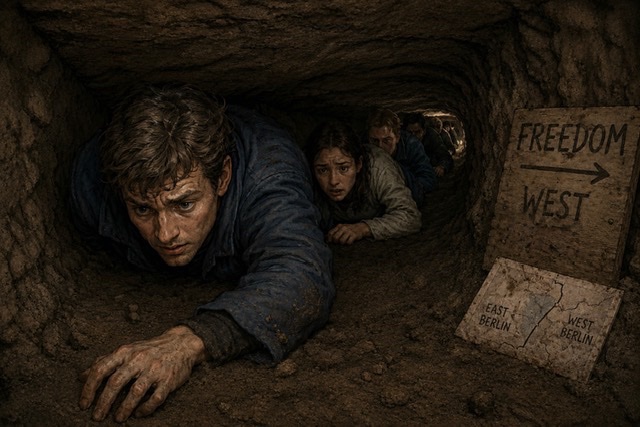
Then came gunfire above. Zobel believed he had shot and killed a border guard, Egon Schultz, during the confusion. Convinced his life was effectively over if captured, he threw himself into the crowded tunnel headfirst, using his full body weight to force the others forward and free the blockage. Somehow, the desperate human cork finally gave way, and all of them managed to escape back into West Berlin.
The heartbreaking twist came later. Zobel believed he had killed someone during the escape. Only afterward was it divulged that the Schultz, who the Stasi martyred, had actually been killed by shots fired from fellow East German guards. Zobel, who died in 1992, never learned the truth.
That story lingered with me because it showed how confusion and fear shaped life around the Wall. These were not clean heroic moments. They were messy, claustrophobic, terrifying situations involving ordinary people making split-second decisions underground in total darkness. Yet somehow, amid all the danger and absurdity, people still found ways to save one another.
Brass Plaques and Broken Lives
Not everyone survived. While tunnel operations caused relatively few deaths compared to other escape attempts, at least 140 people were killed trying to cross the Berlin Wall in various ways. Today, many are remembered by small brass memorial plaques marking the places where their lives ended. Medallions also mark the spot of many failed attempts to escape.
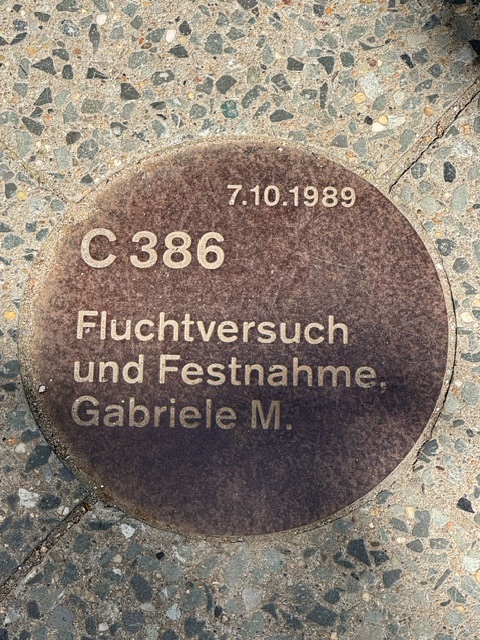
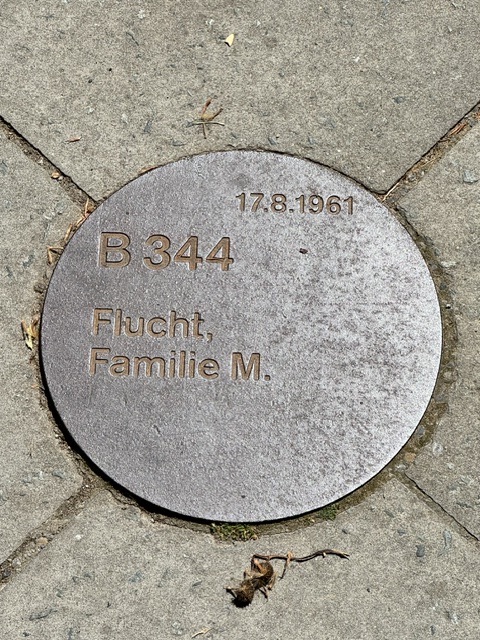
Escape & arrest, Gabriele M. Escape, Familie M.
Walking Berlin now, it is easy to forget the terror and desperation that once divided the city. Underground, hearing these stories beneath the former Wall, that history suddenly felt very real.
We walked north along the Patrol Path and Bernauer Strasse for additional memorials and plaques.
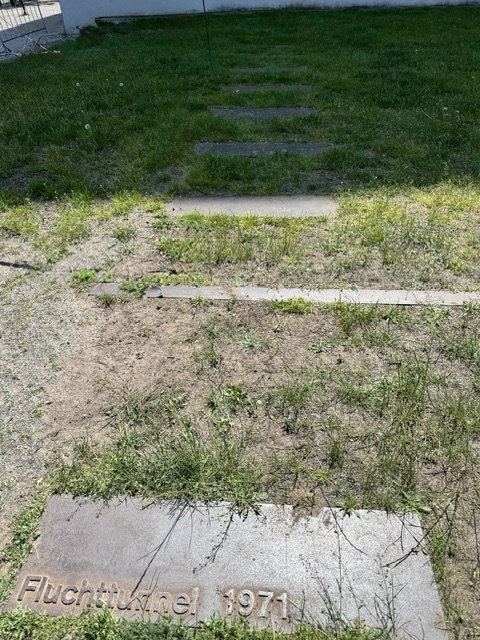
Fluchttunnel 57 (German for “escape tunnel”) stretches from where I just walked during the tunnel tour and east under the Wall a few yards to my right. I now notice how many of these brass plaques pass through this zone.
What looks like rail tracks actually outline the border homes which lined this street before they were boarded up end eventually were torn down.
Small plaques found along Bernauer Straße and between the two walls commemorate those who died at this spot. Some jumping from windows, others shot, one left to die in the barbed wire fencing.
The Window of Remembrance
At the northern end of the Patrol Path sits the Window of Remembrance for Victims of the Berlin Wall. Alongside the machinery of terror, there were always individuals who recognized what was happening and tried, often at the cost of their lives, to escape it.

The Window of Remembrance seems one of the most moving memorials in the city. It displays photographs and names of people who died attempting to escape East Germany across the Berlin Wall between 1961 and 1989.
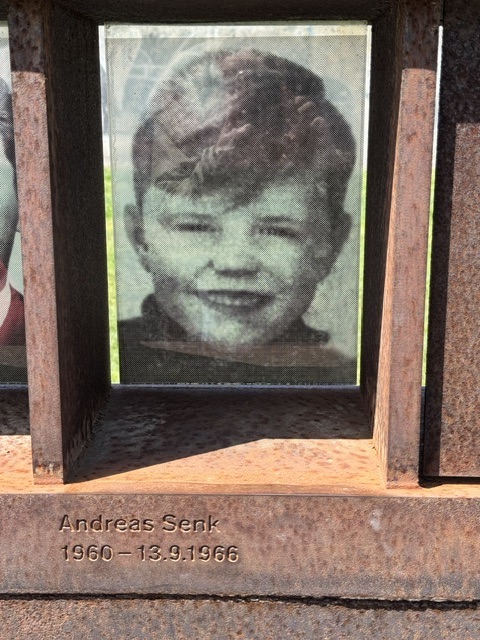
At least 140 people are officially recognized as victims of the Wall, though some estimates are higher depending on how deaths are classified.
The memorial honors men, women, and children shot by border guards, drowned in canals or rivers, killed in accidents during escapes, or driven to despair by the division of the city.
The youngest known victim was only a few months old — infant Holger H., who suffocated during an escape attempt in 1973 while hidden in a car trunk. One of the most famous victims was 18-year-old Peter Fechter, who was shot in 1962 and left bleeding in the death strip for nearly an hour as helpless West Berliners watched. His death shocked the world and became a symbol of the Wall’s cruelty.
Standing before the photographs transforms history from statistics into human lives abruptly cut short.
Lunch in a United Berlin
Quite the day. We concluded our adventures with a relaxing lunch back at our little neighborhood Vietnamese restaurant, sharing plates of appetizers and cold refreshments while finally slowing down after hours spent walking through layers of Berlin’s difficult history.
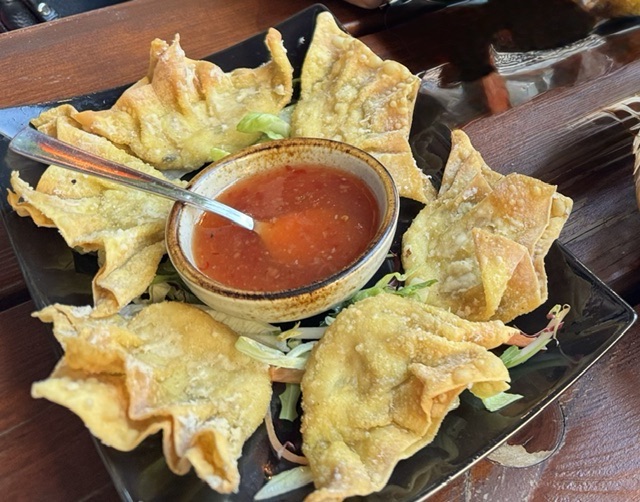
It felt oddly fitting to end the day that way — not beneath guard towers or within tunnels, but surrounded by conversation, laughter, and the simple freedom to sit where we pleased. Berlin has a way of doing that. One moment you are standing at places where people risked everything for liberty, and the next you are enjoying a quiet meal in a vibrant, united city. A Berlin that those same people could scarcely have imagined.
