30 October 2026
The Early Bird Can Have the Worm
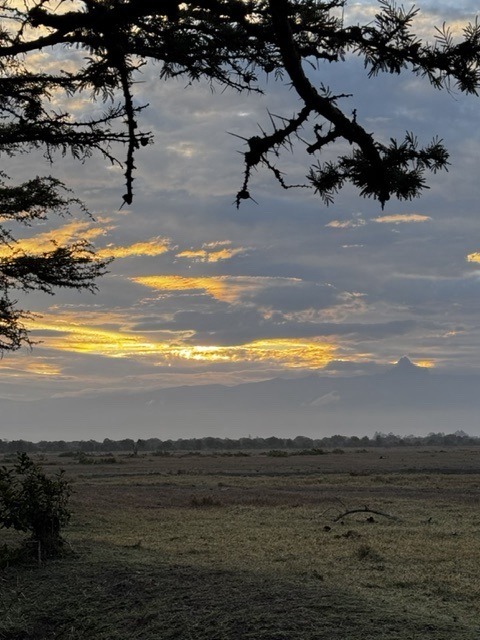
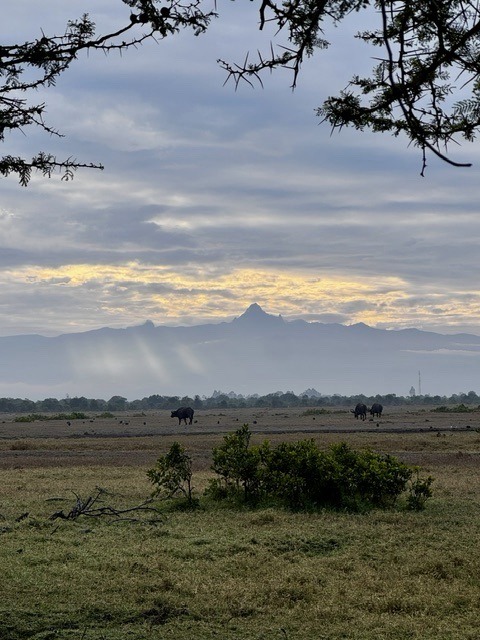
I know animals emerge early – the African version of the early bird catches the worm. Dawn becomes prime time for wildlife, when the air is cool, the animals are active and the chances of seeing something exciting are at their best.
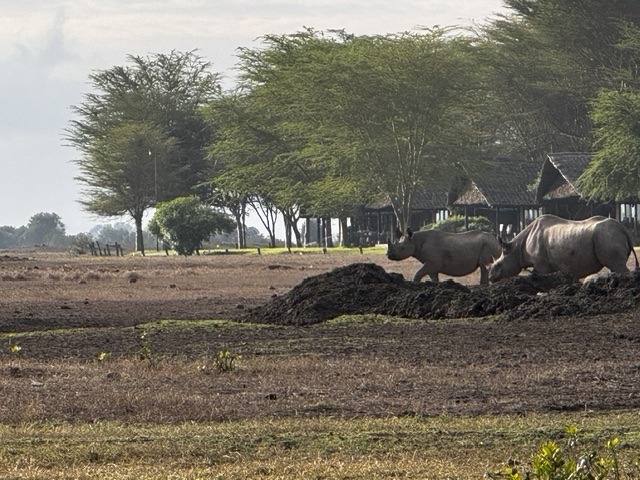
Birds always start before I’m ready. One call will be answered by another, and then another, until the quiet of the night gradually gives way to the sounds of morning. Leaves rustle, insects buzz, birds call back and forth, and somewhere beyond the lodge animals beginning their own day. They check out ye ole watering hole. There is something wonderfully appealing about experiencing an African morning without immediately jumping into a safari vehicle.
Why rush when I can sit on my veranda and watch Kenya wake up? The jungle comes alive. What is making each sound?
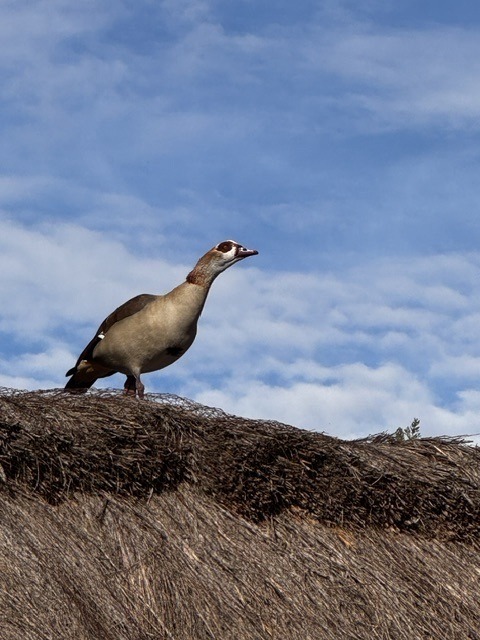
Our resident Egyptian Goose couple seem the loudest, protesting just about everything. That may be because one calls its mate from the top of our tent. Hot cup of coffee in hand, I enjoy watching the action.
On Kenya’s Roads Again
I know by now, regardless of distance, no drive is short. We depart by 8:30 with the promise of at least a 5-hour drive ahead. We are traveling only 150 miles!
Our Rover blasts down the two-lane only to slam to a near stop to pass over a large speed hump, blast on only to repeat it within a few yards. Pot holes are numerous and we swerve around them, unless oncoming traffic or a sheep is in the road. Brakes slam on and avoid catastrophe. Then there are the road spikes meant to control speeds. Extremely efficient in doing so. It is not a smooth ride.
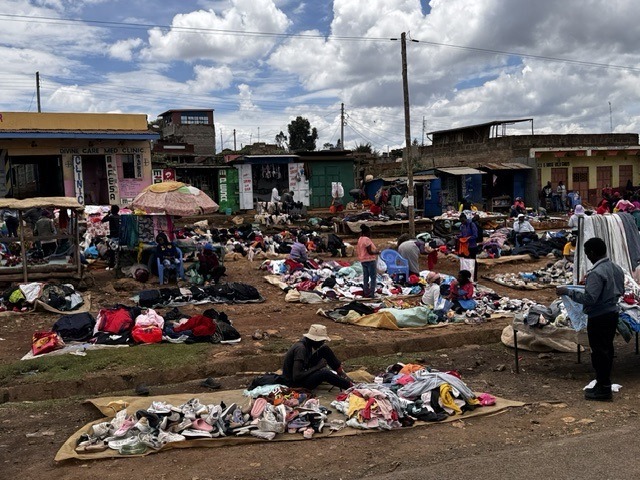
Most of the drive passes through flat scrubland dotted with a few roadside villages. I see more trash and litter as we weave our way southeast. Villages are active, seemingly a road with endless stands and markets along each side. Numerous sellers display secondhand clothing and shoes.
Our driver explains most of the clothes and shoes come from the U.S. and represent a thriving industry here. For unaware U.S. donors, those private boxes one sees in parking lots are in this business. In fact, charitable organizations like Goodwill and Salvation Army do not throw away all their unsold or unwanted clothing; instead, a significant portion of it is sold in bulk to commercial recyclers and wholesalers. Reacher would love this!
Home is Where the Hearth Is
Speaking of love, I have seen many of these villages proudly displaying an I ❤️ (insert the name of village here). It made me curious what was going on. Clearly, witnessing what the roadside village offered, I questioned who besides the residents loves it so.
This love craze began at the TLV Rooftop, a nightclub near the Kenya-Tanzania border. It was inspired by the classic 1977 “I Love New York” campaign. This love campaign gained momentum. What started as a grand display at the border in Namanga quickly spread to roadside entryways and local businesses across Kenya.
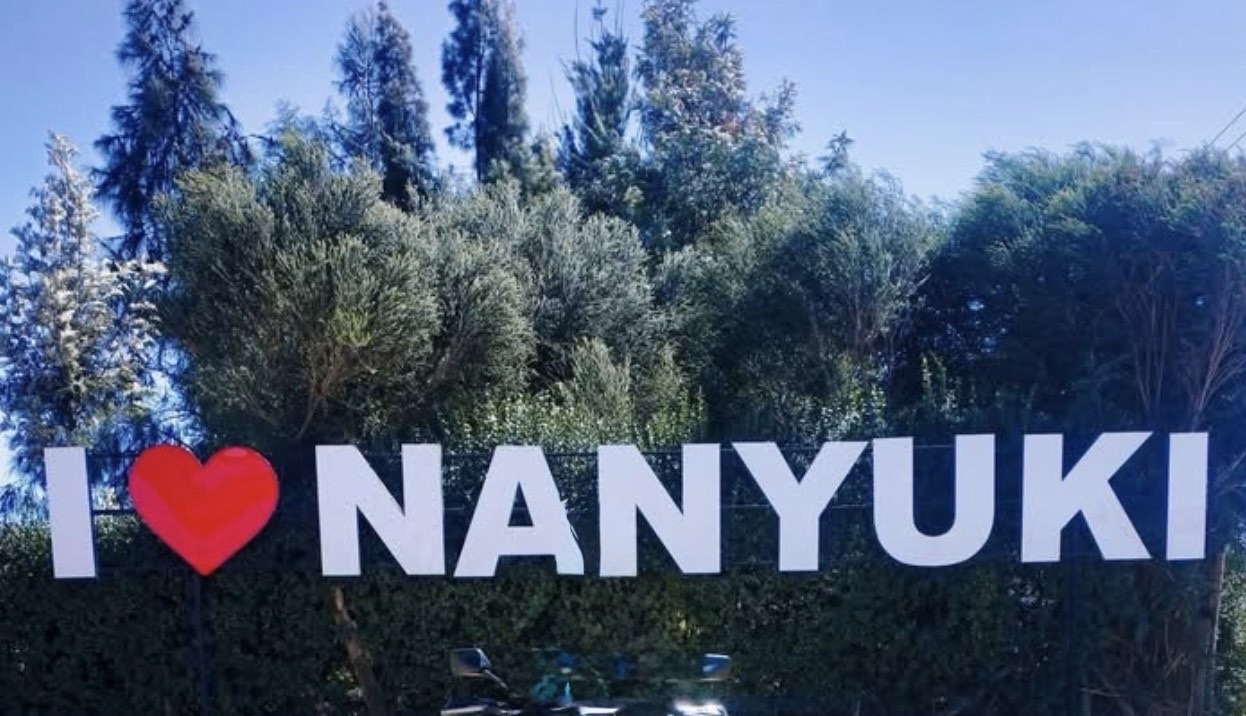
Then came the detractors and haters. The once-novel idea, which many said should have just stayed at Namanga, now became a badly replicated scheme. It quickly lost its uniqueness and beauty, becoming a rather tasteless imitation, found in sometimes very unappealing road junctures and locations. But I’m sure the locals love home and the signs provide a nice selfie for tourists.
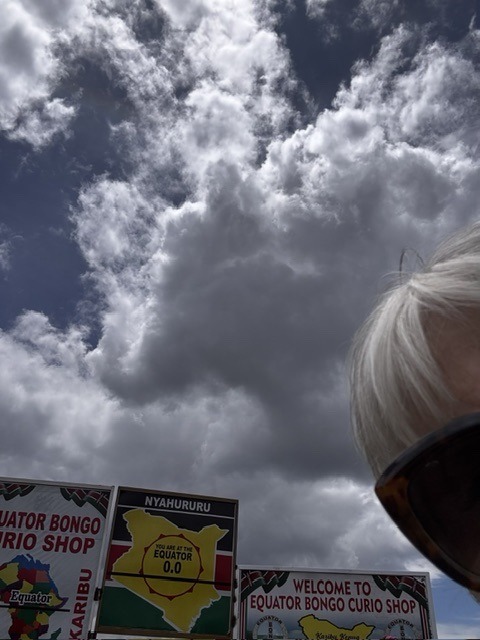
We enter the mountains, once again crossing over the equator into the Southern Hemisphere, climbing to an elevation of over 7300’. Turning south, we drive into Aberdare National Park and enjoy the beautiful green of trees and slashes of riverbeds. Eventually, we arrive into the Rift Valley.
Lake Naivasha — A Walk on the Wild Side
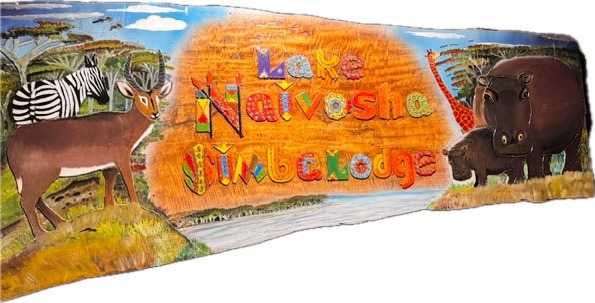
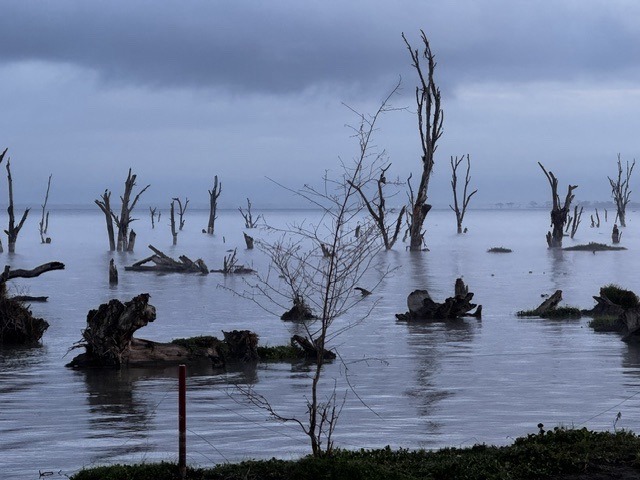
We make our way south to Lake Naivasha. A freshwater lake surrounded by mountains, acacia trees and lush vegetation, Naivasha acts as home to hippos, flamingos, eagles and many other birds, as well as giraffes, zebras and antelope. Its name comes from a Maasai word meaning “rough water,” a reference to the lake’s winds that can suddenly make the surface choppy.
The Great Rift Valley represents a huge geological depression running through eastern Africa, created as the Earth’s crust slowly pulls apart. In Kenya, it stretches from north to south, marked by dramatic escarpments, volcanoes, lakes and wide-open landscapes. Historic discoveries along the rift include early fossils, evidence of earliest Man, and human ancestors like Lucy. Lake Naivasha is one of several lakes found within this remarkable geological system.
I Bless the Rain Down in Africa
We arrive at our destination, Naivasha Simba Lodge, minutes before a downpour. Portions of skies have been dark. Rain has threatened every day with no results. Mother Nature made up for it this afternoon. Sheets of rain poured forth just as we were walking to our rooms. Umbrellas helped little. Even the wildlife took shelter.
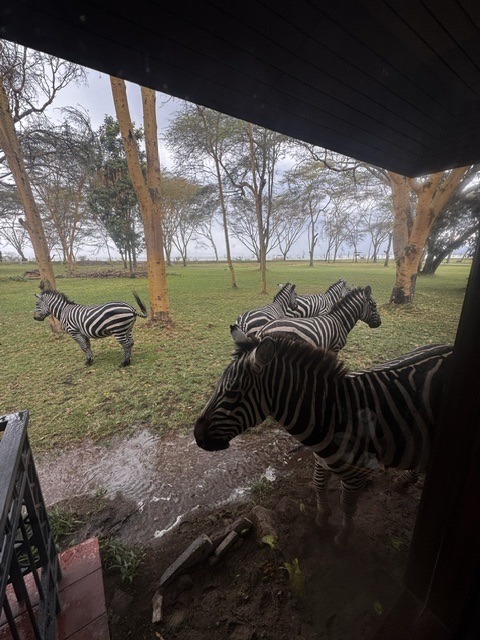
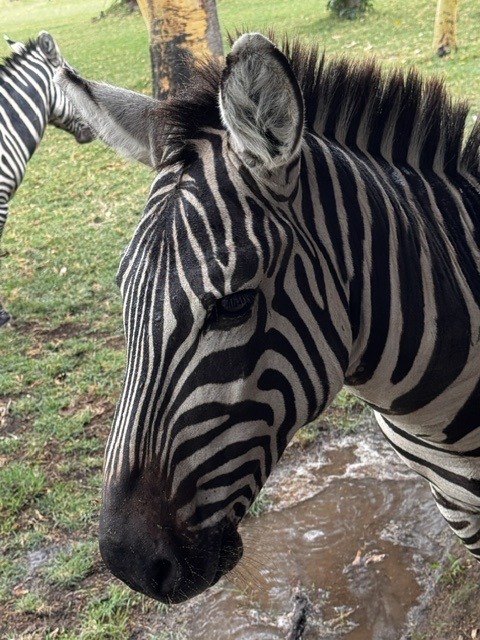
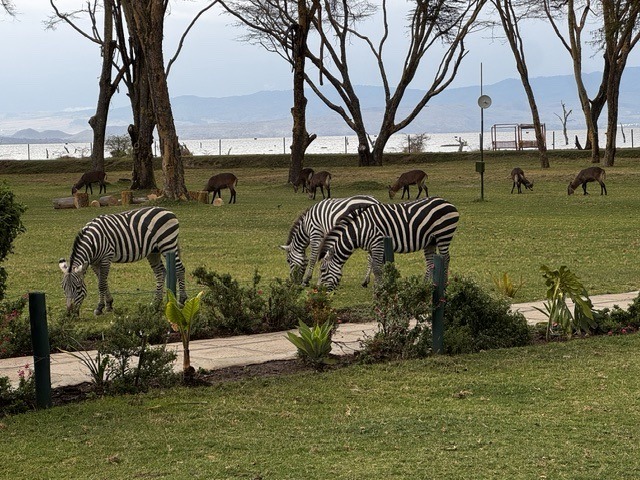
Perhaps the best thing about my comfortable, large room is the windows facing the beautiful gardens. Under the eaves, taking shelter from the rain, stand zebras. Even they aren’t happy about the downpour. There must be well over a dozen within a few feet of our patio door.
An Impressive Setting for a Walk
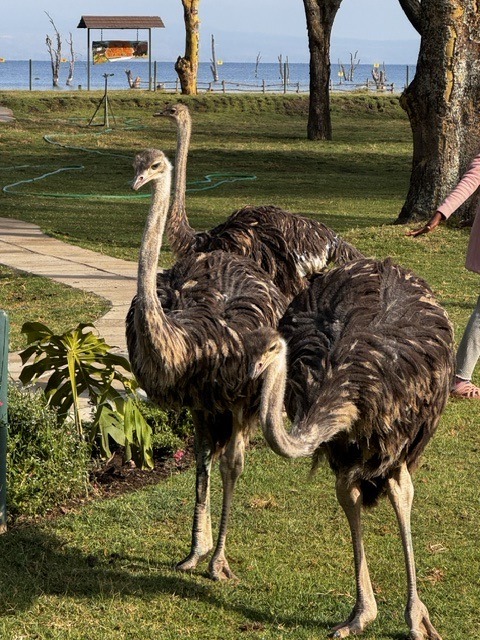
A plethora of animals are seen freely roaming and grazing across the open lawn and gardens near the rooms and under the acacia trees. I am told the mammals include about 80 zebras, an equal number of waterbucks, 8 resident giraffes, and a variety of monkeys. The nearby lake hosts about 100 hippopotamus, unfortunate heard but not seen. Three young ostriches call this home.
At night, I am told the hippos emerge from the waters to graze on the short grass of the lawns. There exists a wire fence around the perimeter that couldn’t stop a two-ton hippo for more than two seconds.
All the Wildlife, None of the Roughing It!
After bouncing around in safari vehicles, we settle into our Naivasha Simba Lodge. My neighbors are vibrant zebras grazing on the free grass. They don’t seem to mind us moving into their territory. I feel relief – the walls of my room are thicker than canvas.
The lodge has all the amenities – and then some. It may be a little overkill for one night, but I don’t complain. There exist worse ways to experience the African wilderness than settling into a comfortable chair, beer in hand, watching giraffes, zebras and waterbucks graze. They get the grass. I get the Tusker.
I suppose this represents roughing it Kenya style. Somehow, I think I’ll manage.
Dining Among a Plethora of Choices
Smorgasbord dining, even though the lodge prefers to call it a buffet, offers plenty of choices. Dining represents hotel/safari cuisine with Kenyan influences. Our dinner includes a selection of Nyama choma (grilled or roasted lamb, one of Kenya’s best-known dishes); Ugali, a maize-meal; Sukuma wiki or cooked collard greens or some leafy green stuff; and lots of roasted vegetables, potatoes and rice.
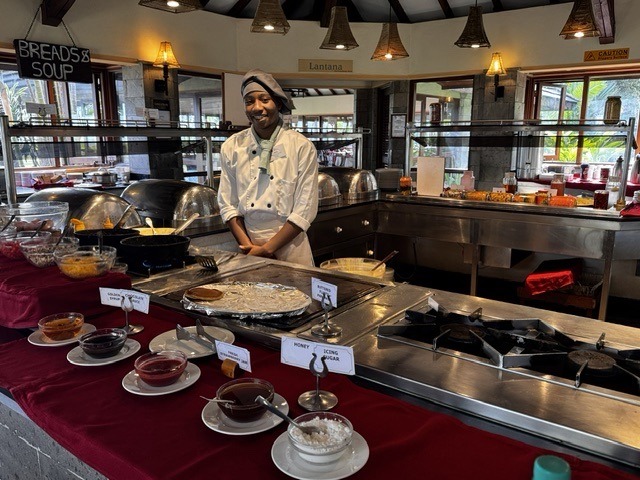
There is also a fish called Tilapia from the surrounding region, though possibly something else that swims. I tell myself to avoid fish dishes as the three times I have gotten food poisoning while traveling always traces back to fish.
Of course, there is the ubiquitous soups, salads, pasta and breads. The fresh tropical fruit ranges from mango and pineapple to passion fruit and strawberries.
Life is Good
For me, I always like to check out any local craft beers. In Kenya, there are two major choices, both Kenyan pale lagers brewed by East African Breweries Limited.
Tusker Lager: First brewed in 1922 and officially named by co-founder Charles Hurst in memory of his brother George, who was trampled by a rogue elephant. Its iconic bottle features an elephant logo. Brewed using 100% African ingredients, including locally sourced malted barley (such as from the Maasai Mara region) and Aberdare mountain spring water, with an ABV typically around 4.2%.
White Cap: Born over 70 years ago and historically favored by figures like former president Mwai Kibaki, its name depicts the snow-capped peak of Mount Kenya. Marketed as a pure, all-natural premium lager made with spring water from the slopes of Mount Kenya, finest hops from Naro Moru, and no added sugar or preservatives. It also makes a Whitecap Crisp, which is a lighter-alcohol option.

Tusker is known for a malty, slightly sweet, and smooth taste with subtle notes of honey, caramel, and bready quality rather than heavy hop bitterness.
White Cap is perceived as crisper, cleaner, and slightly more refined or traditional bitter-leaning pale lager compared to Tusker’s sweeter malt finish.
The same brewery bottles Balozi Lager, a popular European-style pale lager. Ingredients: Pure water sourced from Aberdare Range and malted barley with no added sugar. Balozi means “ambassador” in Swahili.
All taste good and the price is right. For about $3.50, I enjoy a cool one.
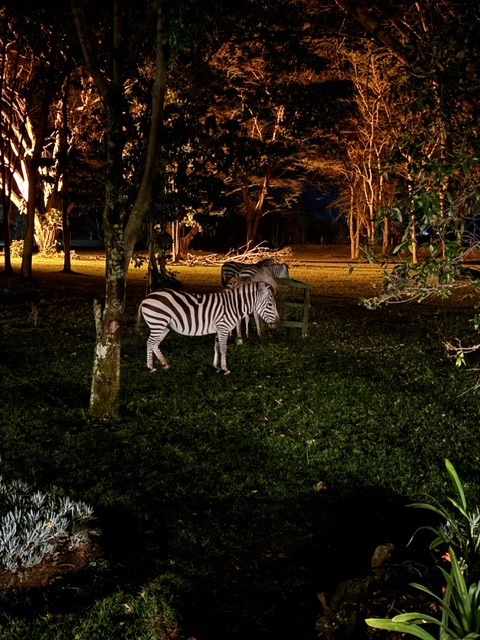
Nothing says “Life is good” quite like sitting by a lake, watching zebras, with a locally brewed beer in my hand. I may not be an expert on African birdlife, but I expertly manage safari beverages.

0 Comments