5 Nov 2026
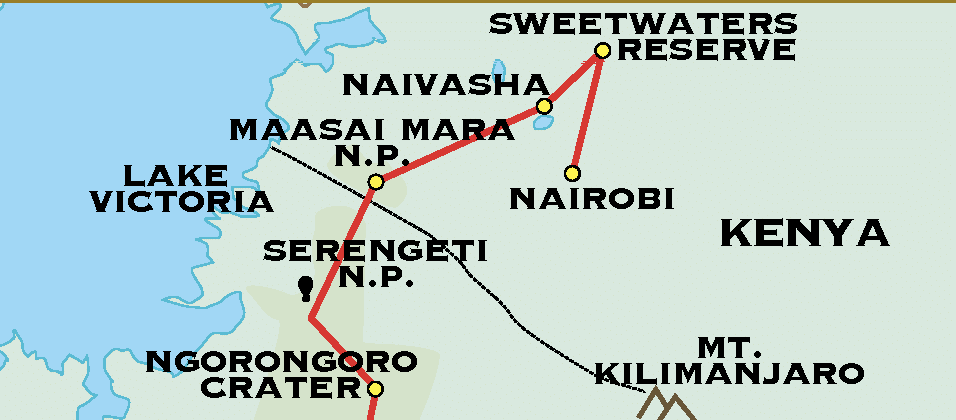
Another day of bumps, dust and feelings of amazement at the openness, the vastness of the Serengeti and Africa.
I have been in the Gobi, Sahara, Death Valley, Siberia, Steppes – their horizons seemed to stretch forever. Here, the enormous landscape – sweeping, uninterrupted panoramas, endless grasslands – is stunning. The road stretches ahead through open plains, grassland and scattered acacia, and often an animal or a herd gives us reason to slow down. Even slower than the slow pace we currently enjoy.
Bumps, Ruts and Dust in My Teeth
We drive but a short distance, less than 100 miles, gradually moving toward the highlands. However, the 4+ hour drive leaves me time to appreciate this fascinating landscape and its inhabitants. The roads are rough and dusty, with stretches of corrugation. The beginning of the short rains results in the return of green.
Short rains occur in East Africa from October to December. Rain usually falls in brief, heavy afternoon bursts rather than continuous all-day storms. Most times they do nothing but settle the dust and, thankfully, make the grass grow lush and green
Much of our route travels on VERY rough safari roads that bounce and rattle our vehicle. Dust hangs behind me, and occasionally the road seems to disappear altogether. Eventually, the wide, familiar plains of the Serengeti gradually give way to a more rugged landscape as we approach the highlands.
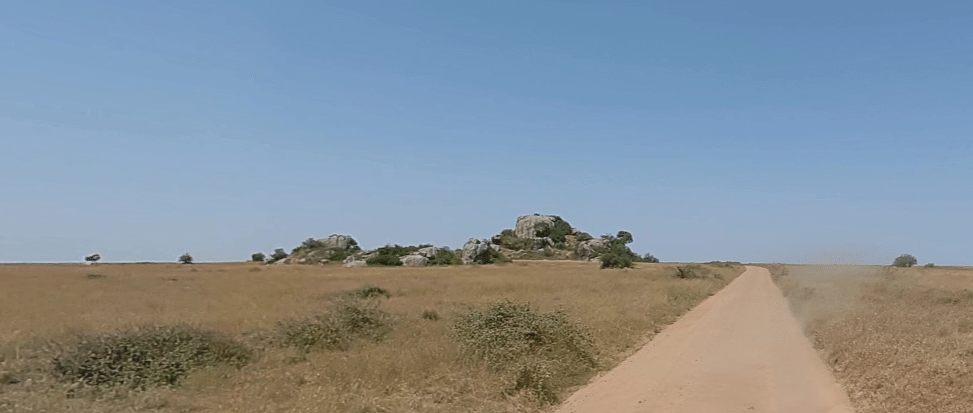
The endless expanse is occasionally broken by a high pile of rocks, and I envision Simba and Scar perched dramatically on top surveying their kingdom. Naturally, the theme song from The Lion King immediately worms its way into my brain – and there it stays, whether I want it or not. Every rocky outcrop now looks like Pride Rock, and I find myself half expecting a lion to appear at the top and begin a musical number.
From Simba to the Leakeys
Patience, relax! “Nants’ ingonyama bagithi baba, Sithi uhm ingonyama.” I know that a cool shower and colder draft awaits me at my destination. The song will remain.
Olduvai Gorge represents more than a museum stop – here the story of human evolution was dramatically rewritten. The gorge contains a remarkably long archaeological record, with fossils and stone tools going back about two million years. The Leakeys’ work there helped establish a sequence showing how early humans and their technology changed over immense stretches of time.
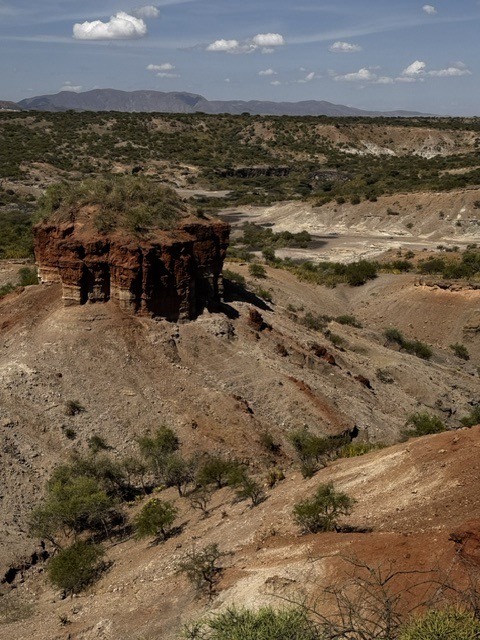
This is serious archaeology! Louis and Mary Leakey spent decades working in this landscape, often under conditions that make our safari vehicles and comfortable camps look positively luxurious. Mary was the meticulous archaeologist; Louis was the energetic visionary and great promoter of the work. Together they turned Olduvai into one of the most important places in the world for understanding where we came from.
And then there is Zinj – The Day They Found Our Ancestors
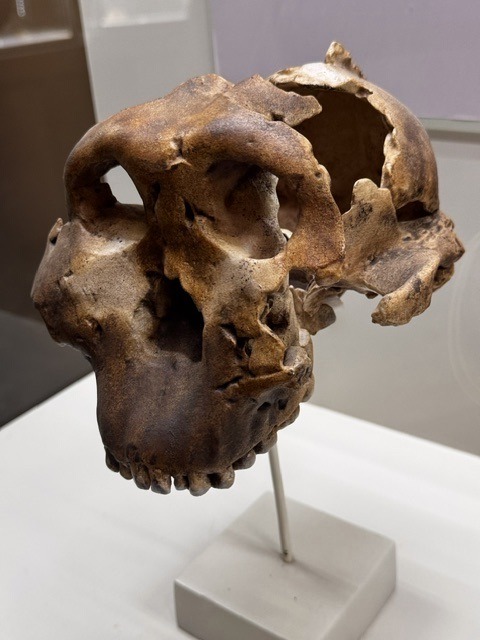
In 1959, while Louis was ill in camp, Mary discovered an extraordinary skull, about 1.8 million years old. It was initially called Zinjanthropus boisei and is now known as Paranthropus boisei. The skull has enormous chewing muscles and spectacularly large teeth—four times the size of ours. Not exactly someone I would want to share a chicken leg with.
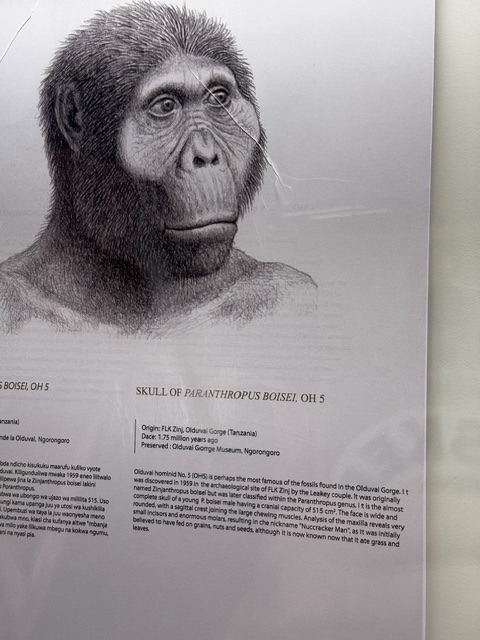
The really important story at Olduvai, though, isn’t just the fossils. It is the stone tools. The gorge contains some of the earliest known evidence of stone technology, including the Oldowan tools associated with early Homo. Scientists have also found butchered animal bones alongside tools and fossils, giving clues about how these early humans – or their relatives – were finding food, processing it and using the landscape. The Olduvai Gorge Museum may be small but does a fine job displaying and explaining the importance of this site.
Standing on the overlook above the gorge, it is hard to wrap my head around the numbers. Two million years ago isn’t simply “a very long time ago.” It represents a time when our entire human history disappears into the distance. And yet someone was here, walking across this landscape, making a stone tool, cutting meat, looking for food and figuring out how to survive.
Meeting Lucy’s Counsins
And I have to admit, there is a little déjà vu for me. I have already visited Lucy.
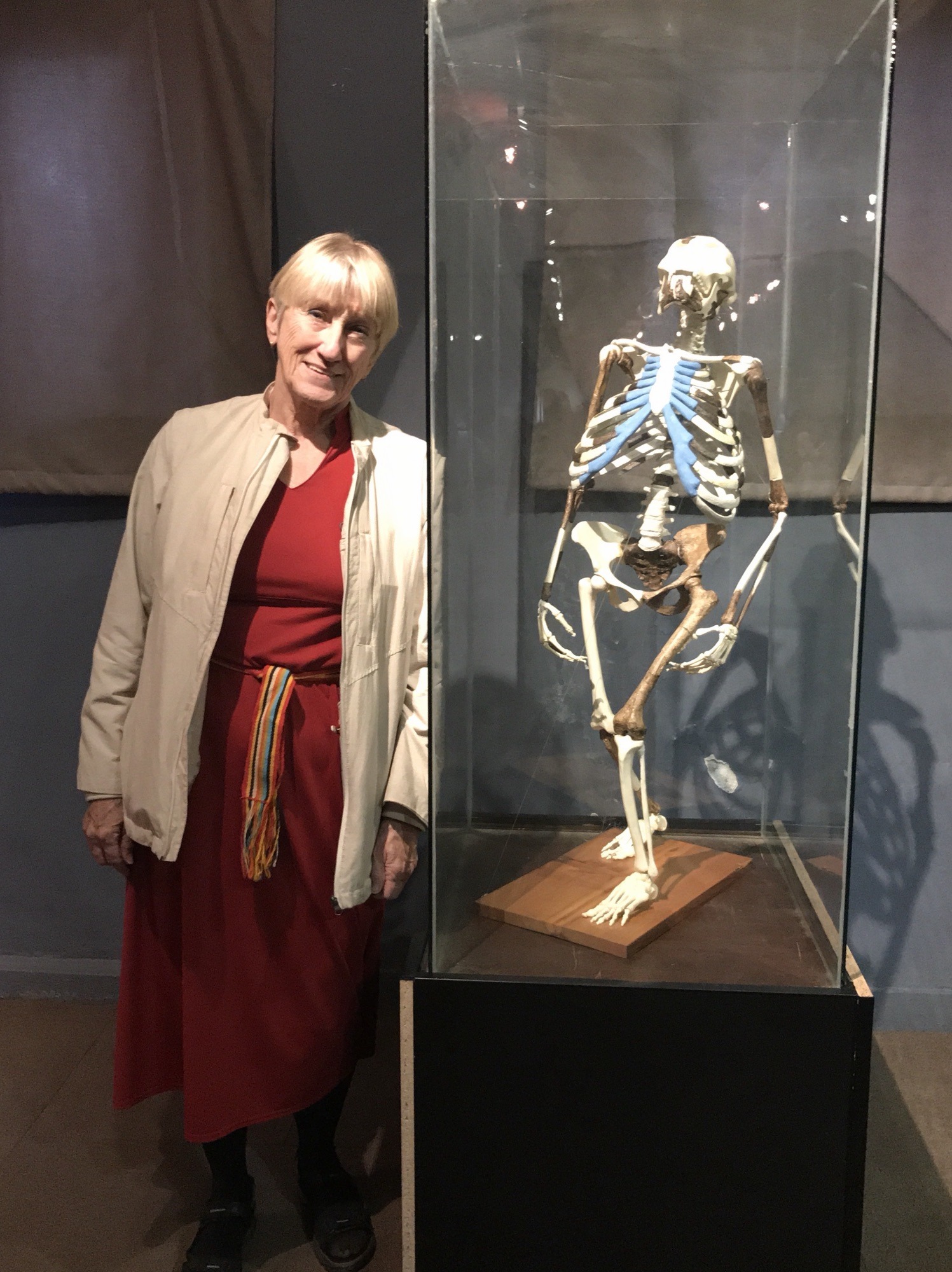
When I was in Ethiopia, I met Lucy at the National Museum – the famous 3.2-million-year-old Australopithecus afarensis skeleton. So today feels a little like continuing a conversation.
Lucy showed me one part of the story in Ethiopia; Olduvai explains another part here in Tanzania. As a genealogist and researcher of DNA, all this feels a little like early home.
I suppose a family reunion would be rather large. Unlike most family reunions, this one spans several million years.
Lions, Fossils, Shifting Sands and One Very Big Crater
No cellular as we bounce along exiting the Serengeti. I see lots of brown, lots of rocks. Blue skies, white clouds drifting over the few acacia trees, distant wildlife and an occasional motorbike kicking up more dust. I don’t see one example of wildlife glancing at their phones. We drive in a southeasterly direction into an area where even Google Maps fails to follow.
Our destination? A big hole in the ground. The scenic green valley of Malanja Depression and its neighboring dips in the ground.
Malanja Depression
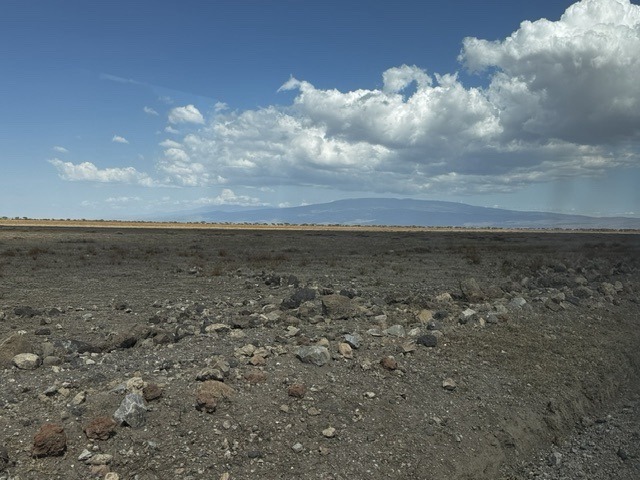
The Malanja Depression creates a fascinating change. It looks somewhat like a giant shallow crater, but its story is geological rather than volcanic. Faulting associated with the East African Rift caused the land to drop, leaving a broad depression between the surrounding mountains. These are not colossal mountains but far higher than humble foothills.
The land looks inhospitable yet Maasai can be seen along the rocks, tending their livestock, or riding their own transport to the town for shopping.
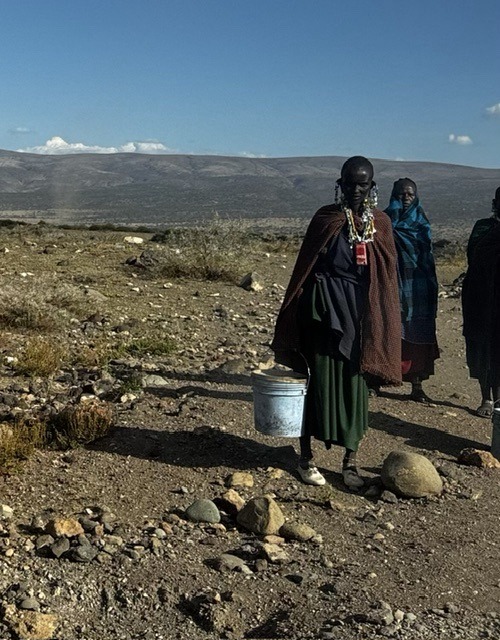
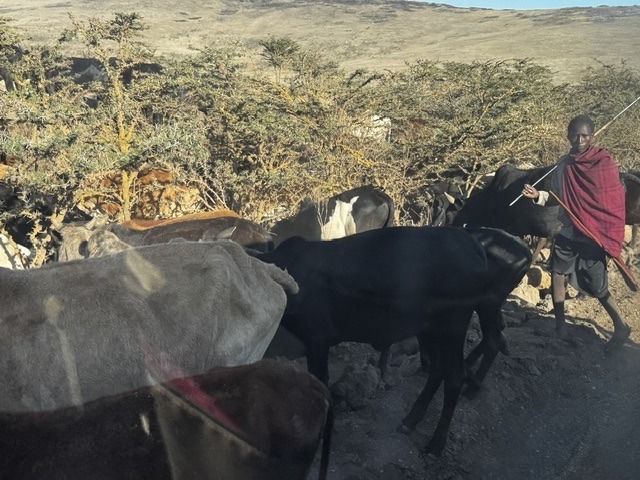
A freshwater spring provides an important source of water, and Maasai families graze their cattle here. The sight of livestock, people and wild animals occupying the same landscape makes this feel less like a national park and more like a living African landscape.
Short grass covers the crater’s floor, making it look almost like an extension of the Serengeti itself.
Ngorongoro Serena Lodge
Thick brush and trees border our red dirt road – B144. Goggle Maps says there is a bus stop out here. Just beyond the narrow foot path either for humans of animals, I see a sign.
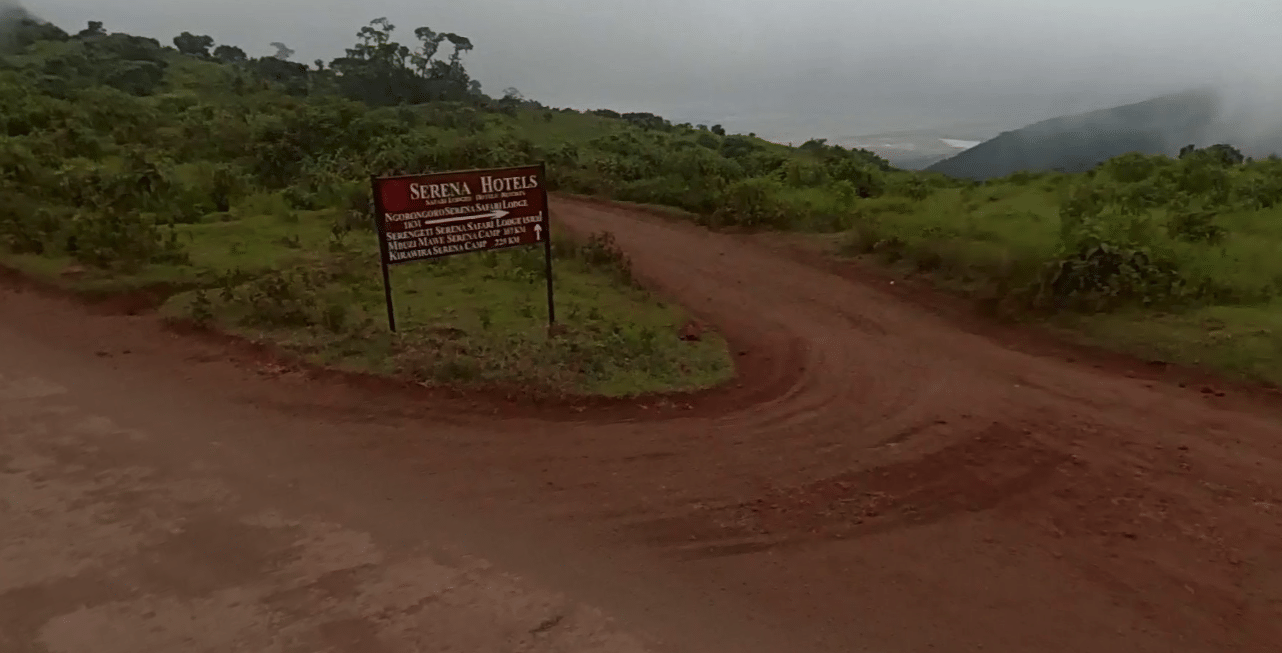
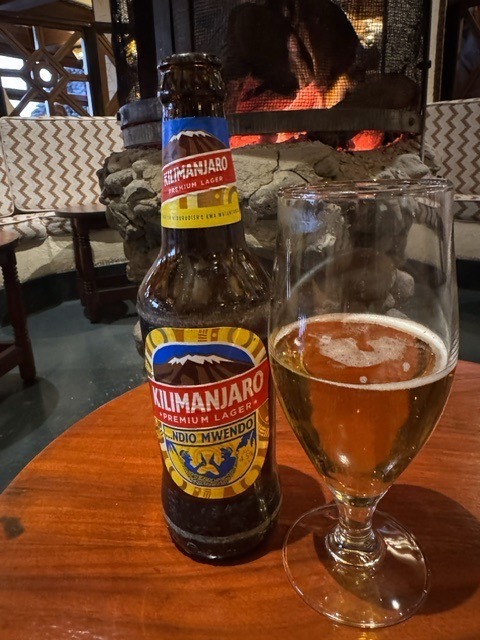
We make a sharp left turn and we arrive at the Ngorongoro Serena Lodge. Visions of a cold beer dance in my head along with that Lion King song.
The lodge advertises as a full-service lodge built right into the rim of the Ngorongoro Crater. Geologically, this is a caldera not a crater. However, the lodge’s big attraction is wonderfully simple: my room has a private stone balcony overlooking the crater. I step outside and look straight down into the enormous crater – one of the world’s great natural spectacles in my backyard.We make a sharp left turn and we arrive at the Ngorongoro Serena Lodge. Visions of a cold beer dance in my head along with that Lion King song.
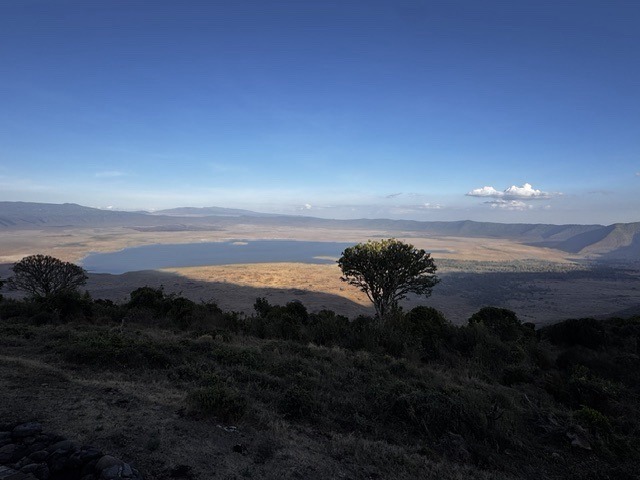
Lodge architecture consists of river stone covered with indigenous vines so that it blends into the crater rim. Inside are stone passageways, timber, torch-like lighting and prehistoric cave-painting motifs. A large central fire burns in the lounge – very welcome because it gets chilly up on the rim at night.
The dining room provides big windows and a terrace overlooking the caldera. Dinner impresses with a multi-course meal with a salad buffet, soup, entrée, dessert, cheese and coffee.
After two nights of canvas tents and deep grunts overheard somewhere beyond the darkness, we sleep at a lodge that has apparently decided that if you’re going to stay in Ngorongoro, you might as well do it with upscale amenities and stone construction. And a view!
Hakuna Matata

0 Comments