6 November 2026
Yesterday, I traveled from the steps of human evolution to stand on the rim of an ancient volcanic world. One of the most identifiable sights in Africa, the Ngorongoro Crater, lies below my balcony. Today, I will get to enter and explore it.
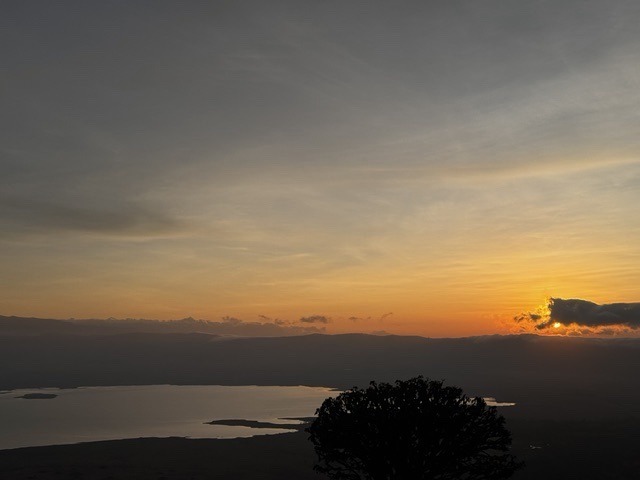
A Bumpy Road to Ngorongoro
Viewing the caldera becomes one of those times I know photos won’t do justice. Its scale becomes lost. From the rim, the land suddenly seems to fall away into an enormous bowl. The crater is actually a collapsed volcanic caldera, formed roughly 2.5 million years ago when a massive volcano collapsed in on itself. It is about 12 miles across and more than 2,000 feet below the rim. Ngorongoro becomes A landscape of its own.
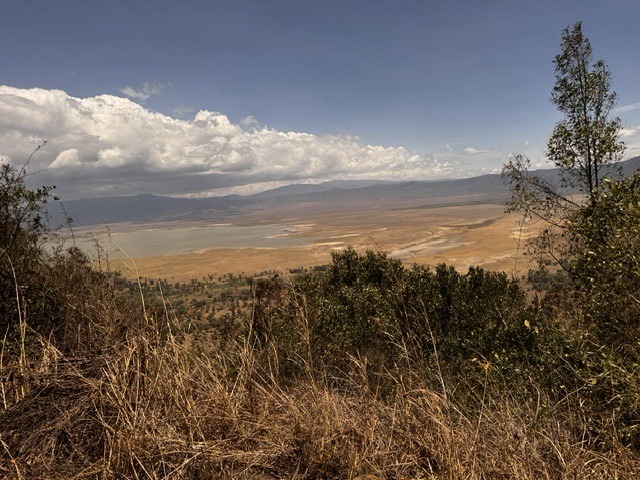
Just for comparison, the Ngorongoro makes the Meteor Crater in Arizona look like a teacup. Take Meteor Crater and make it twelve times wider, nearly four times deeper, fill the bottom with wildlife, grasslands and a lake, and surround it with 7,000-foot-high walls. Approximately, 230 Meteor Craters could fit inside the Ngorongoro!
From above, the crater floor looks almost impossibly contained. Grasslands stretch across the basin, with patches of woodland, swamps, streams and a shallow alkaline lake. Herds of zebra and wildebeest appear as small moving dots far below. Likewise buffalo, elephants, lions, hyenas and, maybe that speck there is an endangered black rhino. This habitat represents an extraordinary enclosed world. Steep crater walls make the whole place feel like a natural amphitheater.
There remains something wonderfully prehistoric about Ngorongoro. It isn’t just that the crater itself is millions of years old. The entire surrounding conservation area contains some of the world’s most important evidence of human evolution. Nearby Olduvai Gorge has yielded fossils and archaeological evidence extending millions of years into the human past, while the wider area includes the famous Laetoli footprints. UNESCO describes the region as containing an extraordinary record of human evolution and human interaction with the environment.
The Noah’s Ark of Tanzania
Once we descend into Ngorongoro, it feels almost like entering another world. We get up close and personal with a plethora of wildlife. We no longer look down into the crater but drive across its floor. The enormous walls rise around us like someone has built the world’s largest wildlife theater and forgotten to put include a roof.
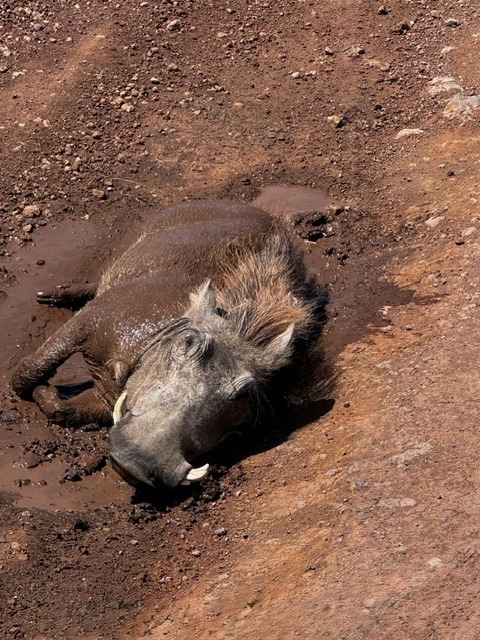
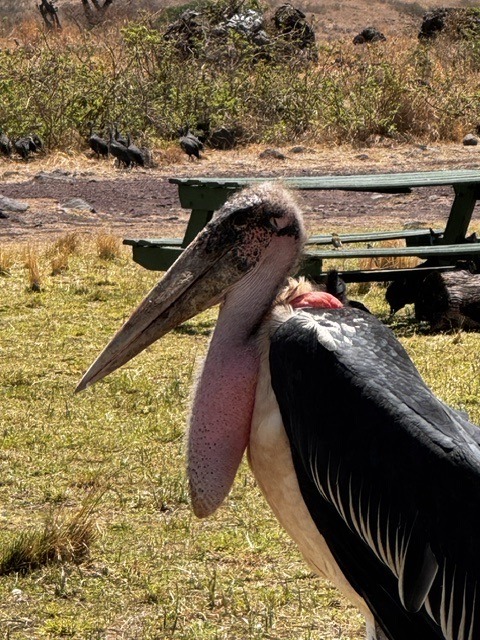
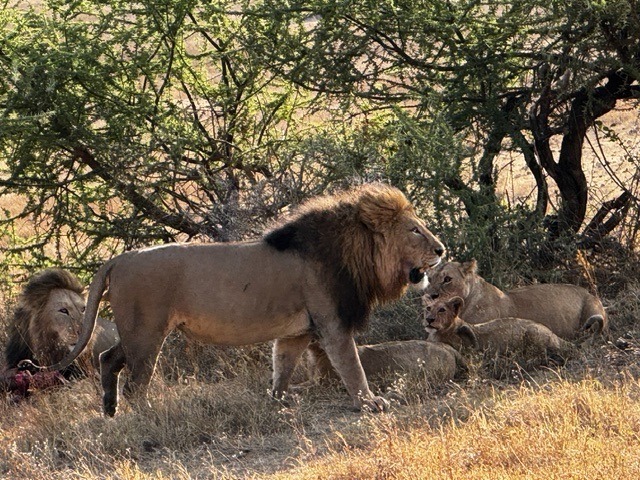
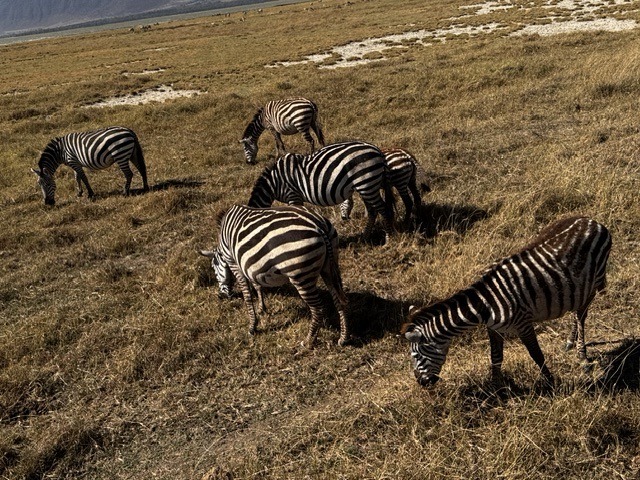
The floor is a mixture of open grassland, woodland and wetlands, with animals seemingly everywhere. Wildebeest, gazelles, zebra and buffalo graze across the plains, while lions, hyenas and jackals have the rather enviable job of watching the buffet walk past.
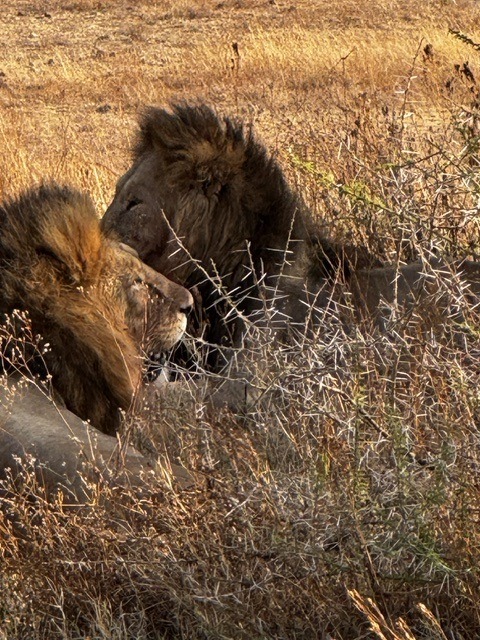
Noisy monkeys and baboons hang out in the trees and bush. In the distance, elephants move through the landscape. I look for the elusive rhino. This entire scene sits inside the remains of a volcano. I now understand why the crater earned a comparison to Noah’s Ark.
Two animals which don’t make the steep descent from the rim are giraffes and topi. But there exists a large buffet of others for the lions. they prefer the buffalo as they are bigger and one can feed the pride.
Lake Magadi
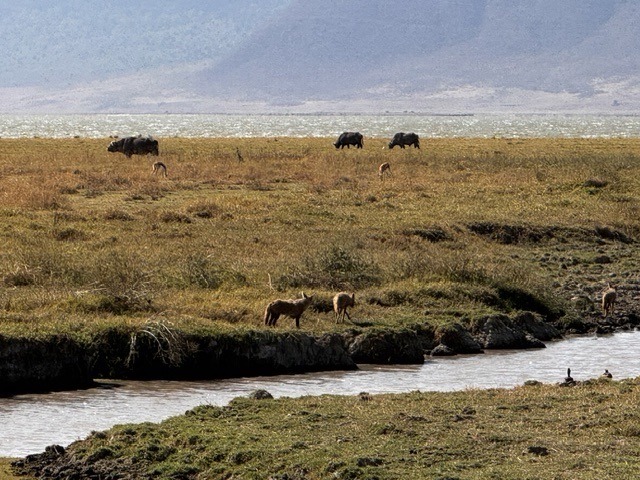
Then we explore Lake Magadi, sort of the pièce de résistance of Ngorongoro Crater. A shallow, alkaline soda lake in the middle of the crater, its depth usually doesn’t exceed about 10 feet. Depending on conditions, monkeys, baboons, hippos and thousands of pink flamingos gather around its edges. Sometimes, the shoreline seems pinkish.
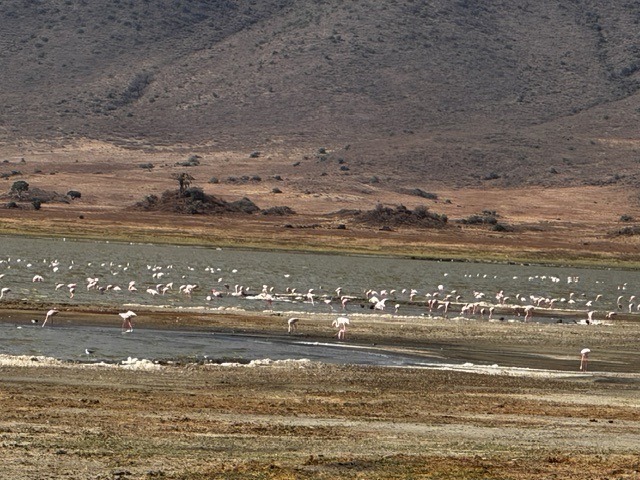
The water itself isn’t particularly inviting because of its high alkalinity, but apparently the flamingos and other water birds aren’t looking for a swimming resort. They are here for the food. The lake also proves great hunting territory for jackals, hyenas and lions.
Standing beside the lake, surrounded by wildlife with the enormous crater walls rising behind everything, I have the feeling that we have somehow wandered onto the set of a prehistoric movie. Except this one comes with real animals, no special effects and a safari vehicle that occasionally reminds us that getting here involved a very bumpy road. It feels surprisingly intimate compared with the vast Serengeti.
Fossils and Footprints
The Laetoli footprints represent one of the most extraordinary things in the whole Ngorongoro area as they present a snapshot of our very distant ancestors actually walking across the landscape. About 3.6 million years ago, three early humans walked across a layer of wet volcanic ash at Laetoli. Later volcanic ash covered the tracks, and over millions of years the ash hardened and preserved the footprints. The trail contains roughly 70 footprints over a section about 88 feet long.
The footprints are generally attributed to Australopithecus afarensis—the same species to which the famous fossil “Lucy” belongs. What makes them so important is that they show these creatures were walking upright on two feet.
(Replica at right)
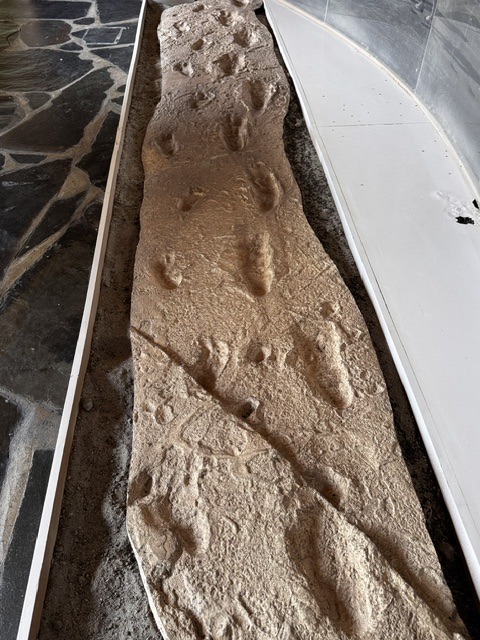
Their feet had a big toe aligned with the other toes, rather than the grasping, separated big toe typical of apes. These footprints show a heel-to-toe walking pattern surprisingly similar to ours.
And there is a wonderfully human detail to the story: there appears to have been three individuals walking together. One was smaller, one larger, and a third set of footprints overlaps the larger person’s tracks. Scientists have debated exactly what that means, but simply imagining three of these early humans strolling together, 3.6 million years ago, is extraordinary.
One thing to know: the original footprint trail has been reburied for conservation, so one can’t see the actual footprints exposed in the ground. UNESCO’s recent conservation reports indicate that the site remains subject to ongoing decisions about how the footprints should eventually be presented to visitors.
Boxed Lunch Blues and Bush Dining
When eating or touring, don’t become the lunch!
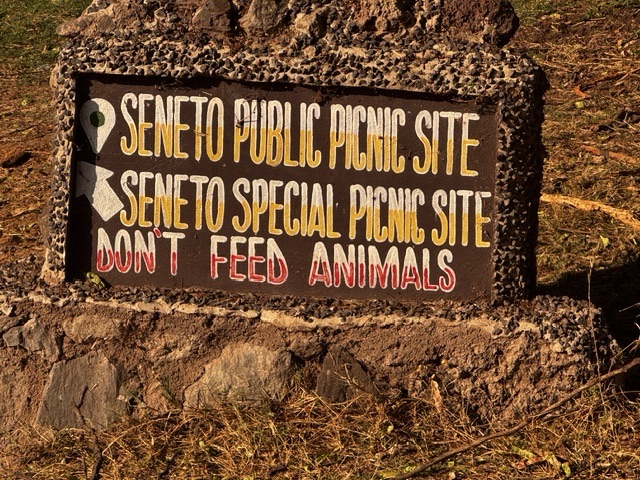
There is something about a boxed safari lunch that immediately lowers my culinary expectations. Open the lid and there it is: the obligatory dry sandwich, a handful of chips, an apple and perhaps a mysterious little pastry pretending to be dessert. Nothing says “culinary adventure” quite like a white-bread sandwich that has been sitting in a cardboard box since dawn.
Do I think I will starve between breakfast and dinner? I normally pass on breakfast or opt for a yogurt. By noon, do I imagine weakness from hunger? So, I look at the contents, sigh, and proceed to eat most of it. I remove unidentified sticky substances with an emergency deployment of hand wipes.
When Nature Calls
Then there is the other great road tradition: finding a toilet. There are no convenient little signs saying “Restrooms →” to be seen. The nightmare: the guide slows the vehicle to survey the landscape with the practiced eye of someone who has done this many times. A suitable rock? Too exposed. That acacia tree? Possibly, but perhaps a little too close to the wildlife.
Eventually a promising bush or large rock is selected, and suddenly I am on my own, clutching my dignity and trying to look casual. One learns quickly that privacy in the African bush is a relative concept. One chooses a spot carefully, keeps one eye on the landscape, and hopes a distant zebra becomes the only audience.
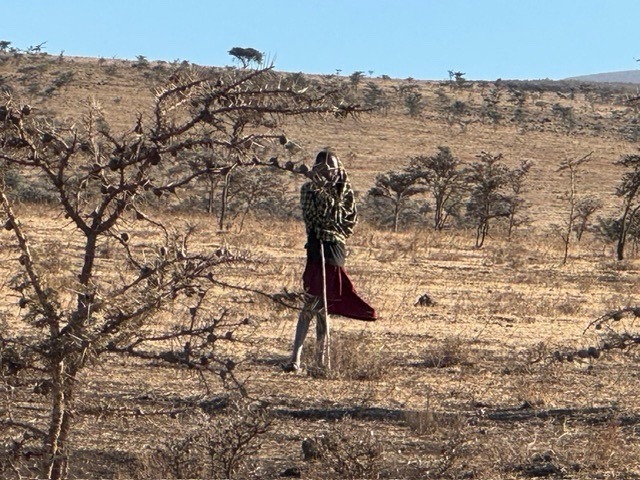
I am reminded of a middle of nowhere spot in Ethiopia. Our van paused. Women got the rock on the left. Men a tree on the right. Open space, isolation, solitude. It was not 5 minutes before a half-dozen little heads popped up over the ridge. Having heard our engine pause, the kids emptied their village?
However, I must admit, the box lunches and souvenir shop’s toilets have been good. National Park stops excellent. Still, don’t forget tissue.
Road? Where We’re Going, We Don’t Need no Stinking Road!
We continue our drive for the final 15 miles or so to our new lodge. Suddenly, the landscape feels completely different. The crater sits behind us, and we wind through a surprisingly lush, almost jungle-like countryside. The red volcanic earth makes the green even sharper.
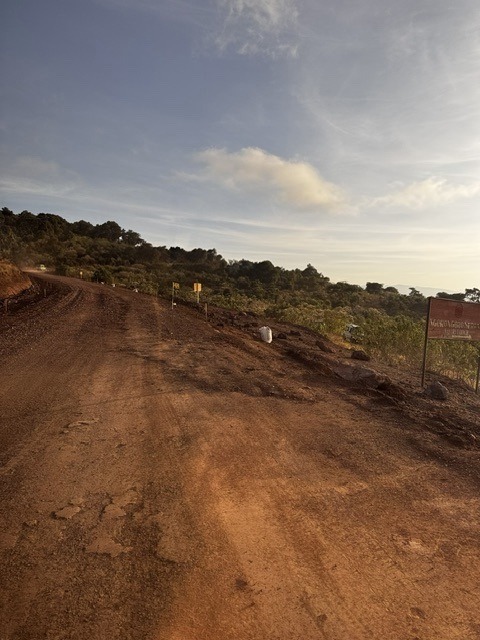
Small farm fields appear along the road, planted with maize, beans, potatoes, and vegetables. Occasionally we pass what looks like a particularly ambitious patch of red onions. The countryside is busy in a wonderfully unhurried way – monkeys scamper along the roadside, skinny goats wander wherever they please, and an occasional cow looks considerably more substantial than its goat companions. Motorbikes buzz past us, providing the local version of rush-hour traffic.
The posted speed limit says 31 miles per hour. This seems rather optimistic when the road is dirt, deeply rutted and determined to shake loose every bolt holding the vehicle together.
We bounce along, watching the scenery change, until unexpectedly – be still my heart – we leave the Ngorongoro Park and find a paved road! Actual pavement! After all the dirt tracks, dust and Serengeti massage, it feels like a luxury amenity. We may not have a minibar, but we have asphalt.
Three Nights on the Farm – A Very Nice Farm
After days of bouncing over dirt roads, sleeping in canvas tents and testing my relationship with picnic sandwiches, Acacia Farm Lodge sounds civilized. We arrive via a paved road, surrounded by green hills, coffee plants and gardens.
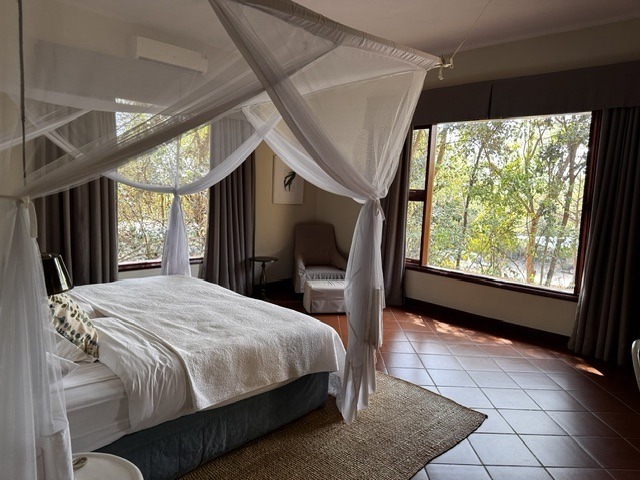
Our accommodations are spacious rooms with sitting areas, great showers, and a private balcony.
The lodge sits on a working coffee farm. Instead of giraffes wandering past the tent, I can look out over coffee plants and gardens, listen to birds and take a walk around the farm to learn about coffee production. I also have high expectations for their own coffee.
And then there is dinner. After a picnic lunch, I am more than ready for a proper meal. Acacia Farm serves a mixture of African and international food, with vegetables grown on the farm. Dining is buffet style so I make my own decisions about how much food belongs on my plate.
Who Knew Tanzania Made Wine?
Tanzania’s wine country lies just to the south. Tanzania may not immediately come to mind when one thinks of wine, but the country supports a growing industry centered around the Dodoma Region. Grapes have been grown there for decades, and the region is now home to wineries producing wine for the Tanzanian market and beyond. The idea of vineyards in this part of Africa seems almost surprising after spending the day surrounded by wildlife, dust and volcanic landscapes. But there they are—grapevines growing in the middle of Tanzania.
Much of the country’s wine is made from grapes suited to the warm climate, including Chenin Blanc for white wines. The best and most famous wine in Tanzania is Dodoma Dry Red, a full-bodied red made from local Makutupora grapes.
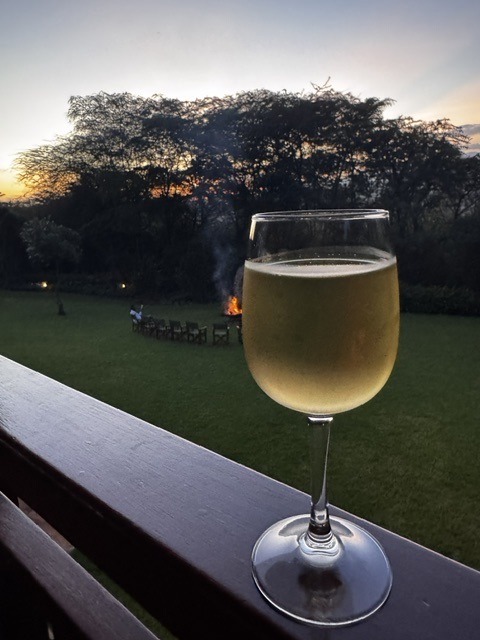
Tonight, I look for a crisp white. After all, when traveling, drink local. The problem becomes – few places stock Tanzanian wine. What I sip instead is a nice Chenin Blanc from South Africa.
I plan to keep searching.

0 Comments