5 June 2026
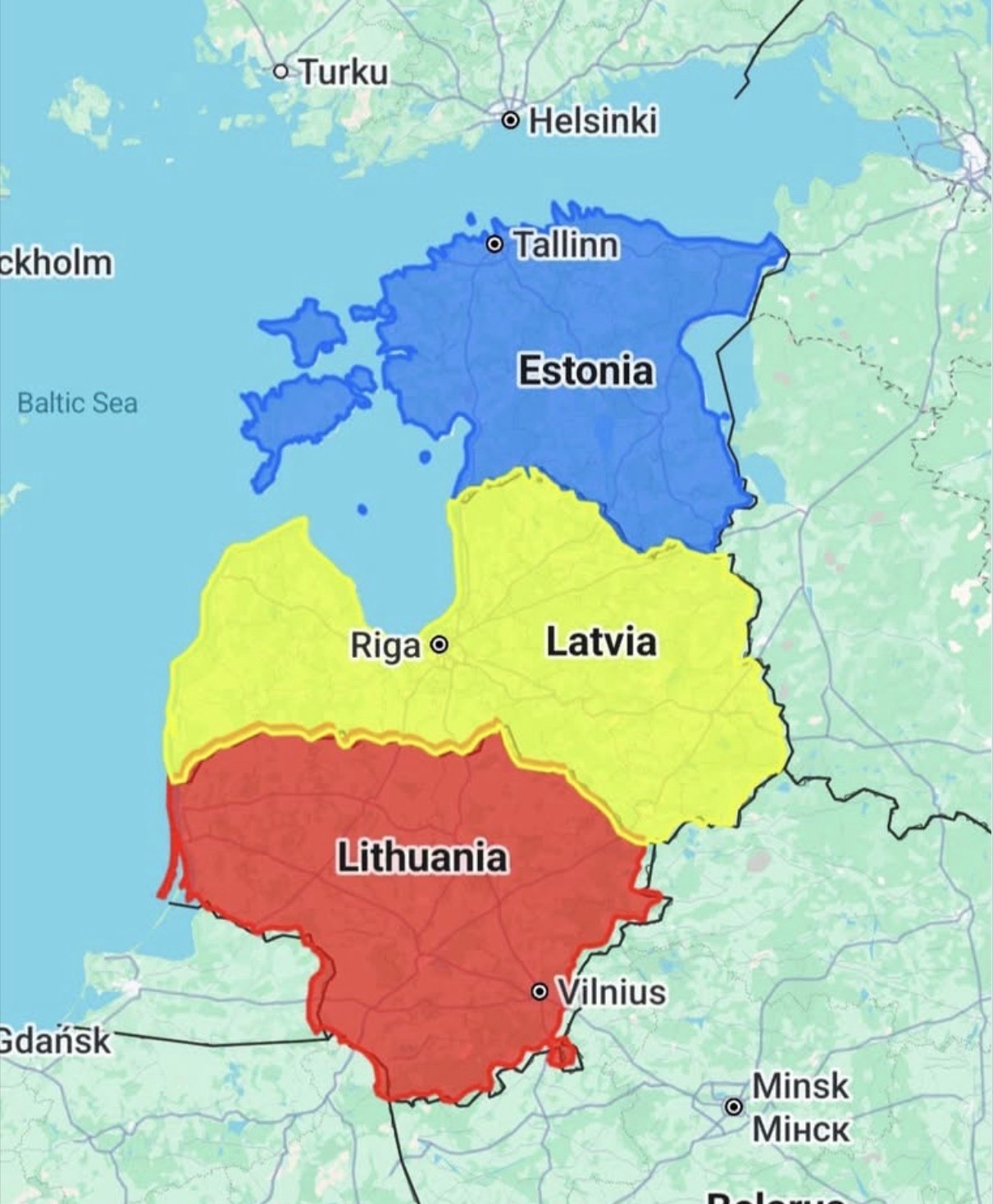
Pinky swear: it seems the hardest part of visiting the Baltic states involves remembering that Riga sits in Latvia and Tallinn sits in Estonia. Don’t know why this becomes such a challenge for me. Previously, I traveled to both cities – I should know this geographical fact by now.
2 September 2009
I walk to the bus depot and catch my comfortable Eurobus to Tallinn, Estonia. It is interesting to be passing through the forests, passing old Soviet check points, and so easily leave one country into another. Both these countries were terrorized by the Nazis just to be controlled by the Russians. I am not sure which they should dislike more. However, that is not the feeling I get. They have their museums of occupation and they educate their people, but they seem to have moved on.
Arriving at the Tallinn ferry terminal, it is a short walk into old town to my room at the Hostel Alur. I then strolled the streets of this walled city, climbed onto the fortifications and up the towers. Not sure I like the touristy feel of town; it is like an open-air living history museum.
I spend two days visiting the Occupation Museum, History Museum, wonderful streets, busy town square, churches, Bear House, and take a bus out to Peter the Greats Palace and Cottage. There I walk the gardens and visit the new KUMU Art Museum. I walk back along the waterfront to meander the streets. Rain at night but days are blue and gorgeous. I eat my dinners in the busy square and people watch. I have to climb the tower of St Olaf as it is highest in the city and gives a magnificent view of Tallinn and the piers nearby. For my final evening, I splurge on Boar served by a wench at one of those tourist places, but the food is good as it rains lightly in the square. I have decided I like Tallinn very much.
Seventeen Years Later and The Challenge of Transport
I do my research and learn of transportation options, including a rumor that a direct train has begun. I resort to seeking information from online travel groups. Buses travel the route in about 5 hours but bus stations are not convenient to Tallinn’s Old Town. A train may run Riga Pasažieru to Tallin Balti Jaama Turg station taking almost 6 hours.

Weighing pros and cons, I opt for a comfortable Lux Express to Terminal D at the port. From there, it is a moderate walk to my hotel, the Shnelli, next to the train and bus station. Convenience wins as the bus to the airport stops right outside.
I checked in, left my bags, and immediately went seeking the walls and towers of Tallinn. My eagerness reminds me of of Stanley Tucci’s Nigel character in Devil Wears Prada: “Well, you know me. Give me a full ballerina skirt and a hint of saloon and I’m on board.”
Give me a medieval wall and towers and a hint of history and I’m on board.
Pat Bunyard
Climbing the Baltic’s Best-Preserved Fortifications
Tallinn’s medieval walls with its 26 towers travel more than a mile hugging Old Town. Originally built during the 14th-century, they tell a story of trade, wealth, fear, and constant readiness.
Construction began in the 13th century, when the city, then called Reval, came under the control of the Danish Crown. At first, defenses were simple: wooden palisades marking borders more than to repel attack. But Tallinn’s importance grew thanks to its position on Baltic trade routes, especially after it joined the powerful Hanseatic League. With merchants bringing in great wealth, the need for serious protection became mandatory.
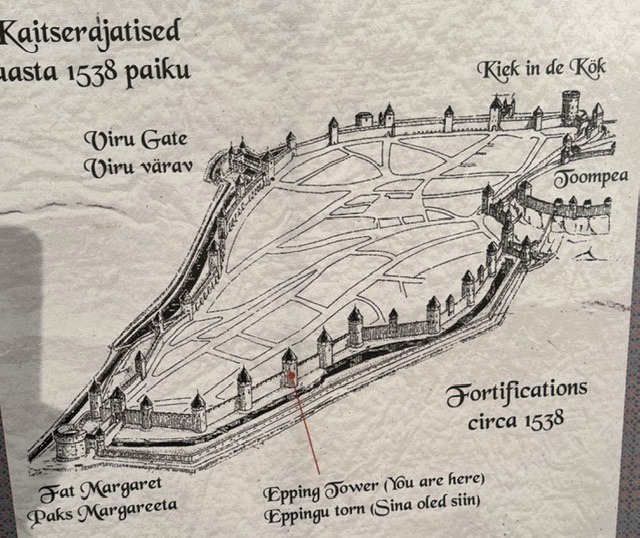
By the 14th and 15th centuries, the city replaced wood with thick limestone walls, some reaching up to 52 feet high and several feet thick. These walls stretched roughly 1.5 miles around the old town. Along them rose 46 defensive towers each designed for surveillance and combat. Guards could move along the wall, watching for threats from land or sea, while archers and later gunners used narrow openings to defend the city.
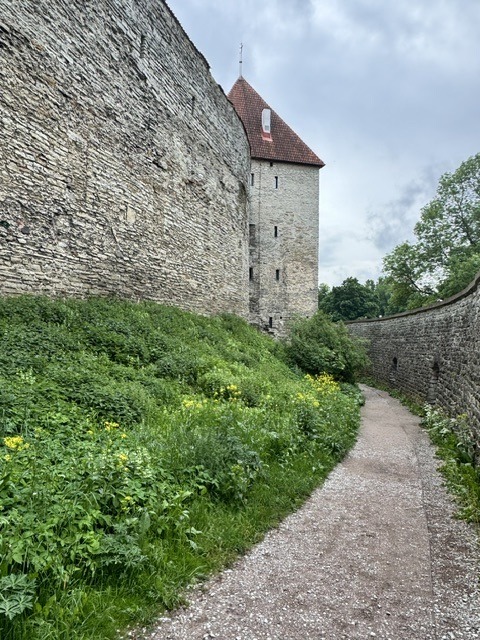
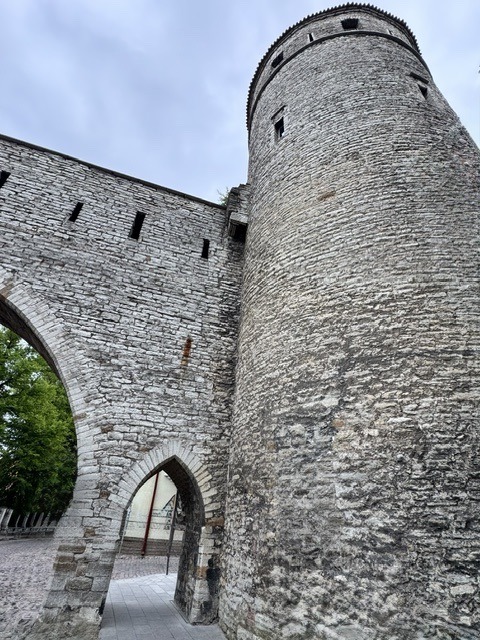
Each tower had its own purpose. Some were squat and sturdy for artillery, others tall and narrow for lookout posts. One of the most famous is Kiek in de Kök; another notable tower is Fat Margaret, a massive, round structure built in the early 16th century to defend the harbor entrance and intimidate approaching ships.
Tallinn’s fortifications were constantly upgraded as warfare evolved. When firearms became more common, towers were thickened and reshaped to withstand cannon fire. During periods of control by the Teutonic Order and later Swedish rulers, additional reinforcements were added, including bastions.
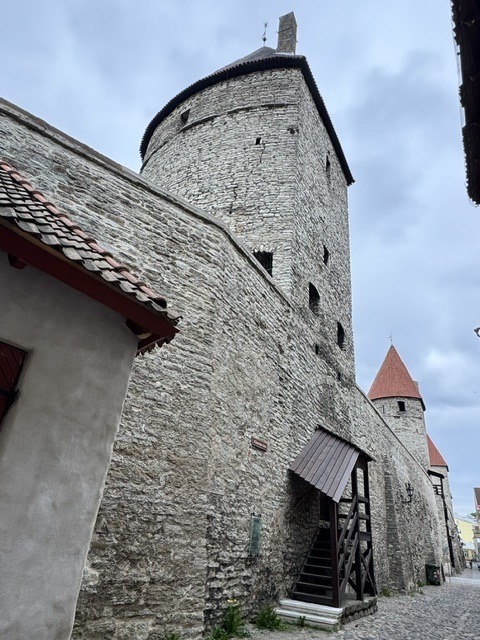
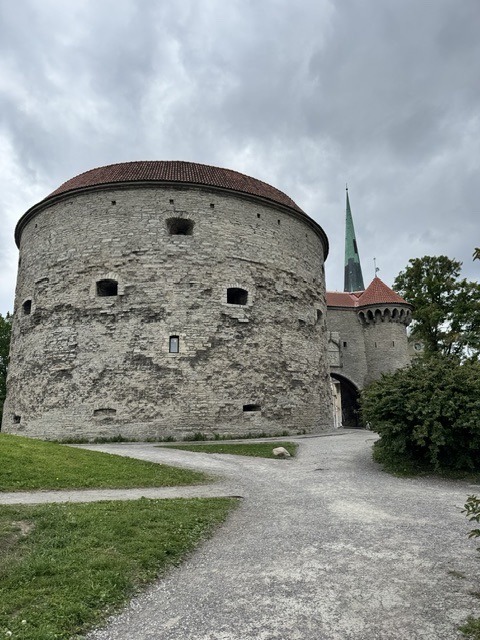
Despite their strength, the walls were never truly invincible. Control of Tallinn shifted multiple times between Danish, German, Swedish, and eventually Russian powers often through political agreements or sieges rather than outright destruction. By the 18th and 19th centuries, as modern warfare made medieval walls less useful, parts of the fortifications were dismantled.
I love walking along these walls. They are not just relics of defense. The towers, once filled with soldiers and weapons, now house museums and viewpoints, offering a quieter, modern-day kind of view over the red rooftops and kitchens of Tallinn.
More Walls, More Fortifications
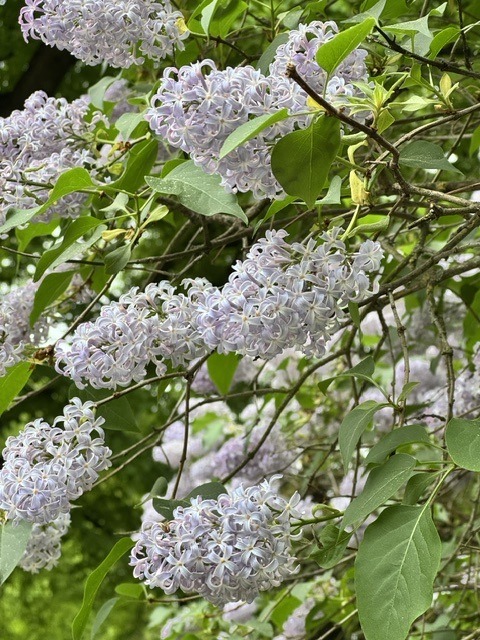
Walking through beautiful Toompark, I enjoy the sweet scent of the flowering lilacs, happy birdlife and the Snelli River which meanders through its center. It’s a pleasant path, but my destination is older and more historical.
The Kiek in de Kök Fortifications Museum complex ranges for about a third of a mile on the southern edge of Old Town. It encompasses four medieval towers: Kiek in de Kök cannon tower, the Maiden Tower, the Marstall Tower, and the Short Leg Gate Tower. The story of Kiek in de Kök is really a story of Tallinn adapting to gunpowder warfare and then later, wisely adapting to peace and tourism.
The tower was built in 1475, when cannons were changing how cities defended themselves. Unlike earlier narrow towers meant for archers, Kiek in de Kök’s design reflected its purpose as an artillery tower with 13-foot-thick limestone walls and a commanding height of roughly 125-feet.
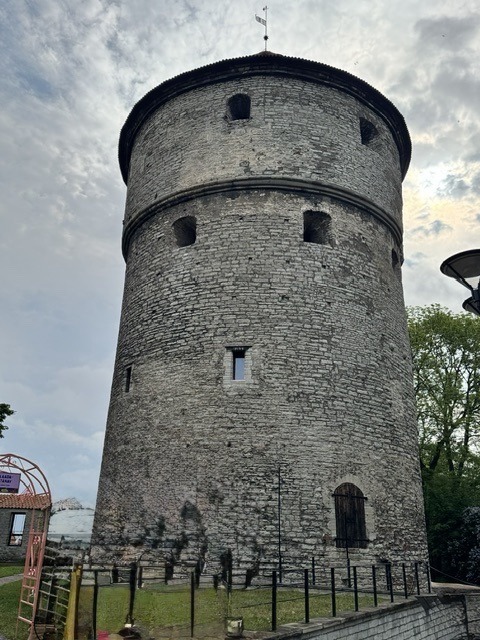
This made it one of the most formidable defensive structures along the Baltic. Its slightly humorous Low German name of peek into the kitchen came from its height, as guards could supposedly see into nearby homes and check what fräulein was cooking for dinner.
Adapting from Threats to Tourists
In the 16th and 17th centuries, as warfare evolved, the tower’s structure adapted. Lower levels were buried within earthworks for extra protection, and new gun openings were added for improved artillery. I can still see cannonballs embedded in its walls.
By the 18th century, having outlived its military usefulness, it was repurposed and used for storage, archives, even apartments. Today, it remains the domain of tourists.
Entering the Kiek in de Kök Fortifications Museum, I explore the long, connected complex of four towers and walk a section of the old wall.
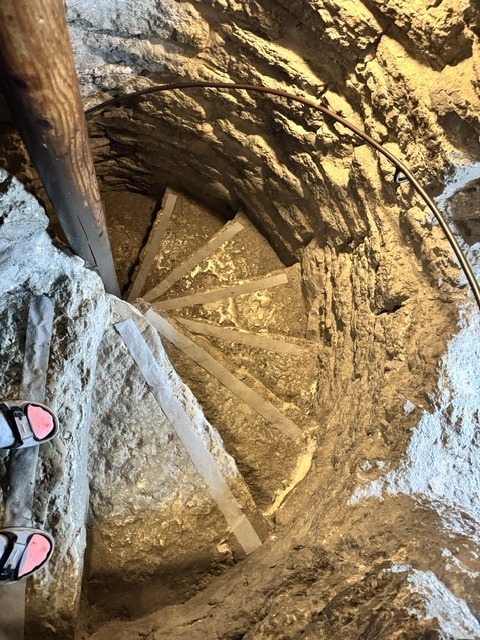
The tower has multiple floors of exhibits about Tallinn’s defensive history. Dsplays include armor, cannons, and everyday military objects. One of the most distinctive parts lies underground, the 17th-century bastion passages. The tunnels were dug when star-shaped bastions replaced medieval walls. These deep and long passages hold a long history including bomb shelters and Soviet propaganda printing presses.
Above ground, great views encompass Tallinn’s red rooftops. One finds glimpses of how towers were reused by artists and residents, and even a café for morning expresso.
Odds and Ends of Old Town
I spend my time wandering the streets within the walls of Old Town. Monuments here and there, museums to explore, squares for lingering. Points of interest? I’m not one to pass a monument or statue without finding its purpose or who it represents.
One excellent monument is known as The Broken Line. This modern granite structure sits close to the Maritime Museum. It commemorates the 852 victims of the 1994 sinking of the MS Estonia ferry.
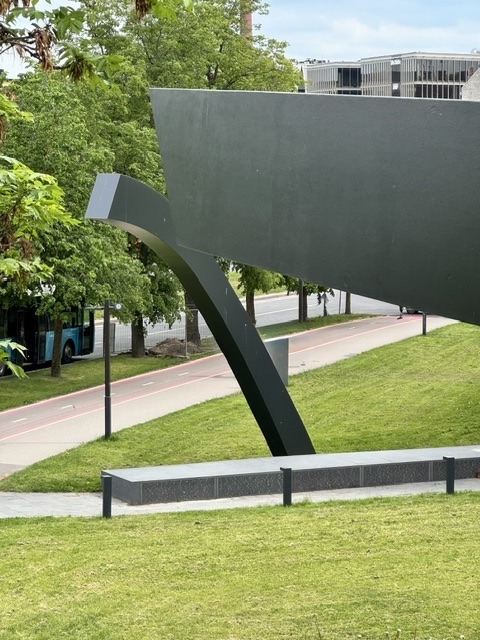
The MS Estonia sank in September 1994 as it crossed the Baltic from Tallinn to Stockholm. Of the 989 souls on board, only 138 survived. The monument takes the form of a broken line or arches, its two halves directed towards each other, but never meeting. A large memorial stone with the names of all the victims engraved is part of the artwork.
The KGB Prison Cells along with their former headquarters are located in a the center of Tallinn. The small museum features interrogation rooms, documented stories of repression, and of course, a look at the cells.
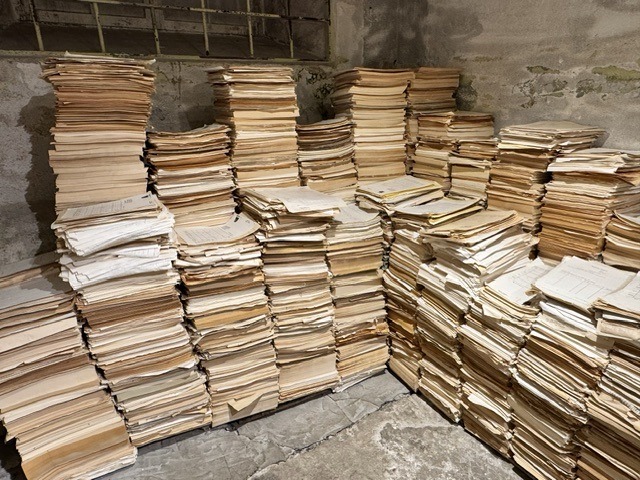
Soviets collected stacks of documents on residents. Here, citizens were jailed, tortured and disposed of. The Soviet presence became one of cruelty, oppression and murder.
Along the Streets
If one visits the site of the Three Brothers in Riga, one should visit its sister site, here. The Three Sisters. Architecture is an integral part of Tallinn. But in Tallinn, every street contains beautiful buildings. Just wandering around is a fulfilling experience in itself.
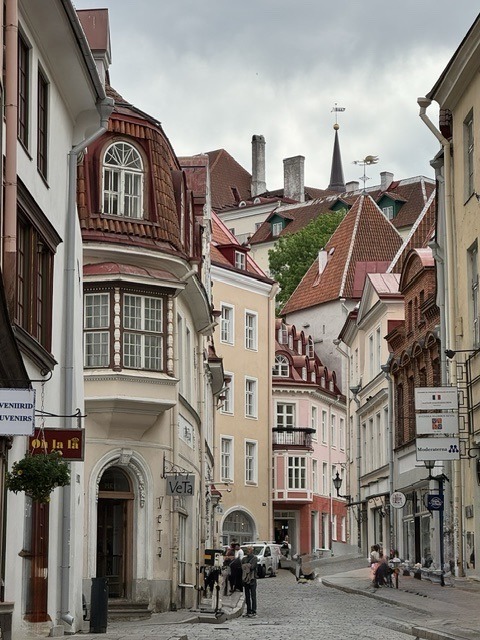
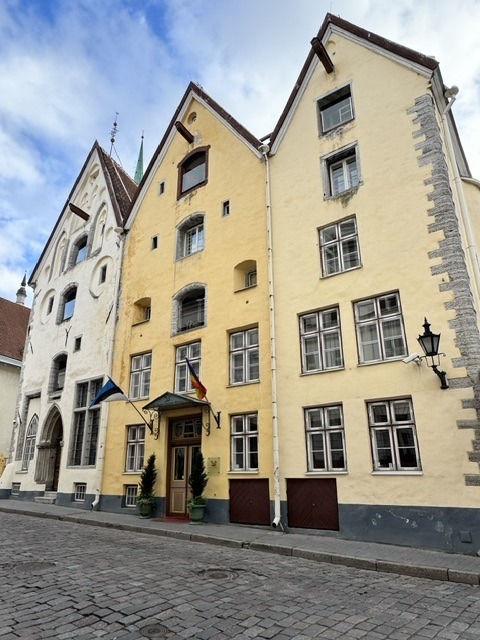
In fact, the charming quiet street of Pikkjalg leads along a wonderful cobblestone path below the defensive walls. But then, having wandered over a lot of Tallinn, I didn’t experience much that was not charming.
Because of a large cruise ship docked at Tallinn’s port, the streets are very busy with tourists. Large groups of them stand in the middle of the streets, listening to narrated speeches about the architecture and history. Sadly, they seem to go no further; most museums I visit are empty.
I find my peaceful escape in the smaller lanes, gardens and delightful paths.
Watching Tallinn Go By, One Beer at a Time
As I step into Raekoja Plats, or Town Hall Square, I enter the historic heart of Tallinn’s Old Town, a square that has been the city’s main gathering place since medieval times.
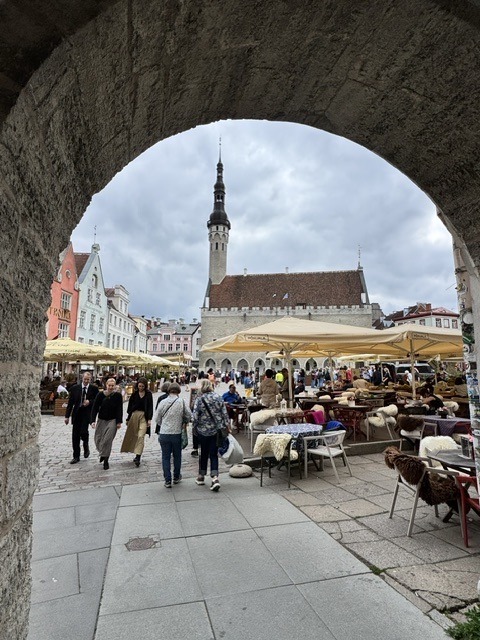
It opens up suddenly, framed by pastel guild houses and anchored by the Gothic Tallinn Town Hall, one of the oldest town halls in Northern Europe. Street performers, market stalls and cafés spill into the square.
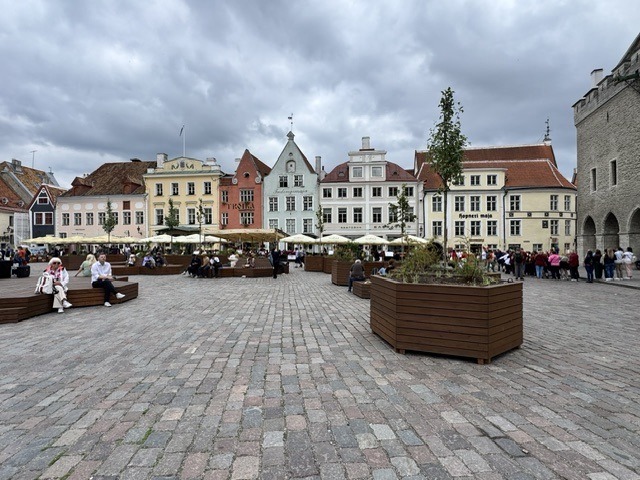
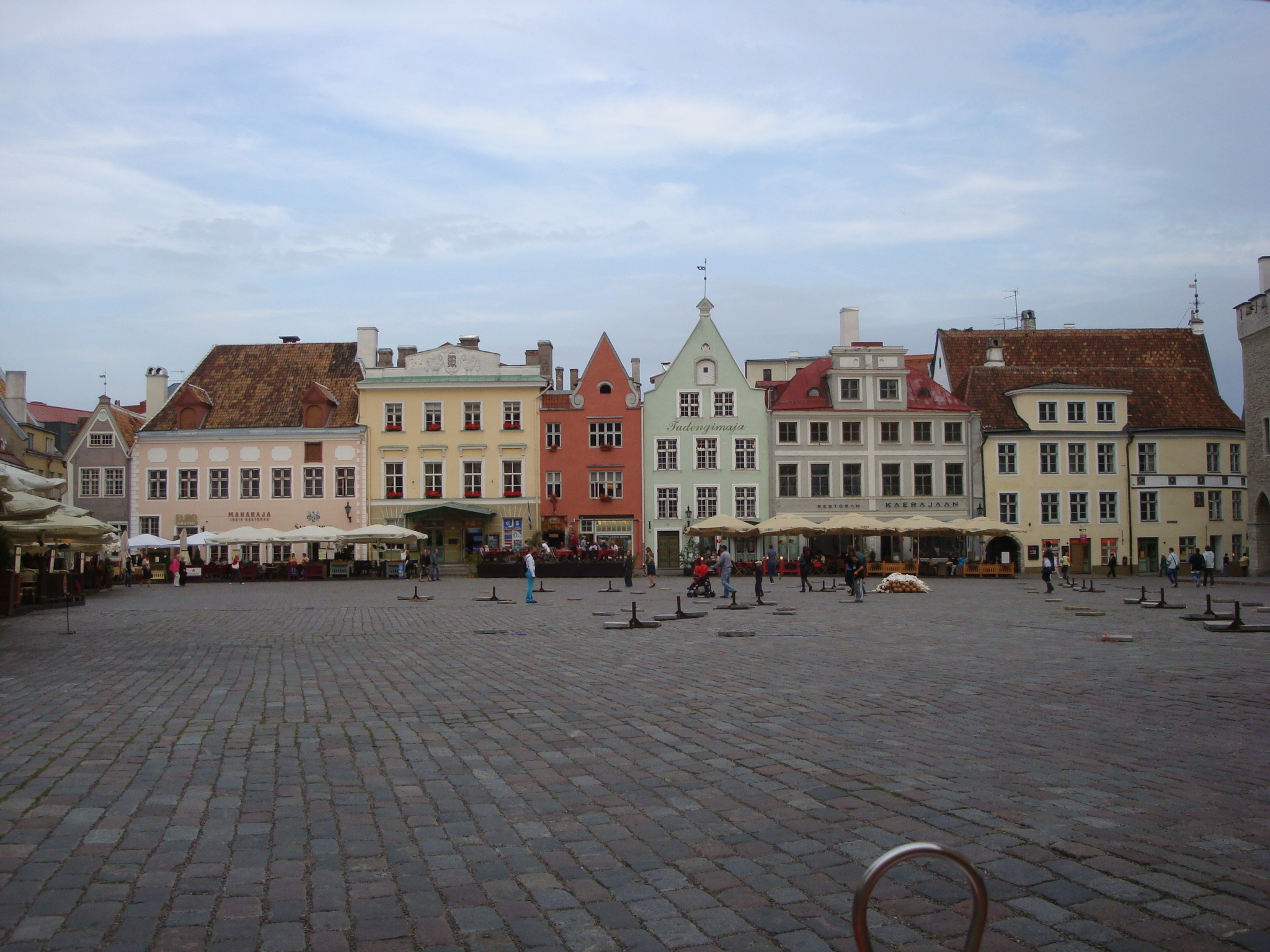
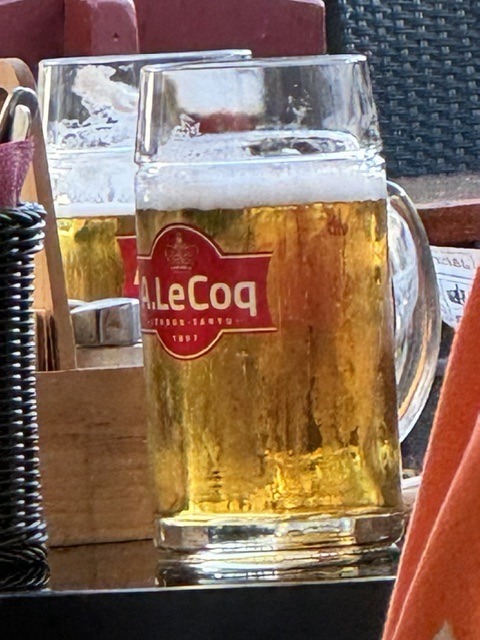
For the beer of choice, I check the umbrellas – they advertise what the pub pours. So, for my beer and a front-row seat to the scene, I eschew the Goofy Wiener Dog Bench and settle into the Raekoja Pubi which sits right on the square and ideally situated for lingering over a drink. It serves simple medieval-style Baltic fare. Alongside a cold A. LeCoq draft, I let Tallinn come to me. The square becomes one of those places where the city feels most alive just by sitting still and watching.

0 Comments