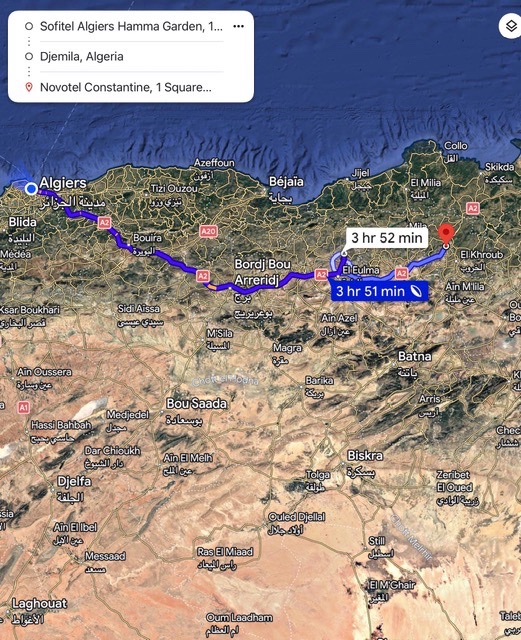
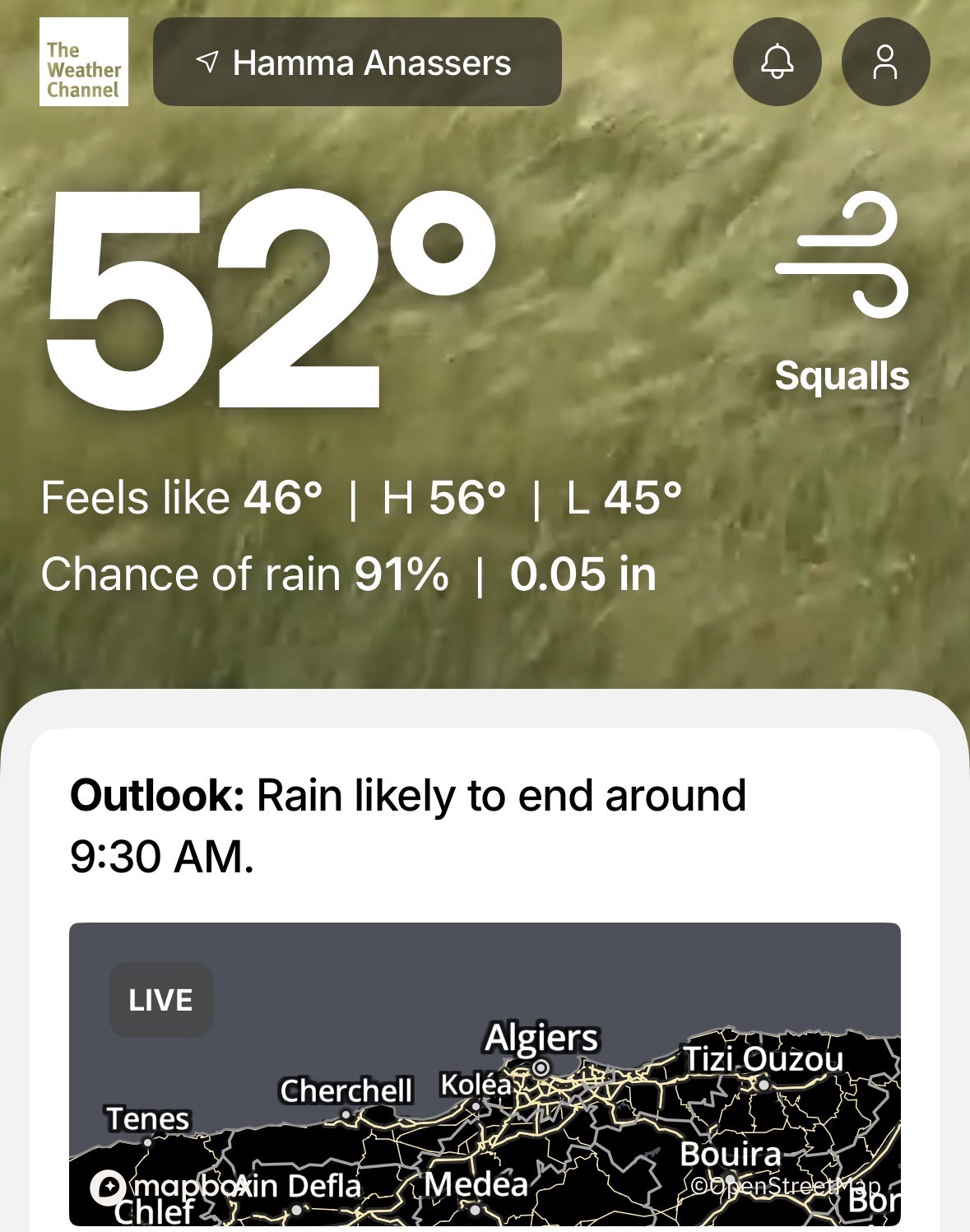
We depart Algeria and travel to Constantine – a long, long 275-mile drive. The guide describes it as embarking on “a captivating journey.” Skies loom gray, rain falls and wind gusts.
Weather not expected
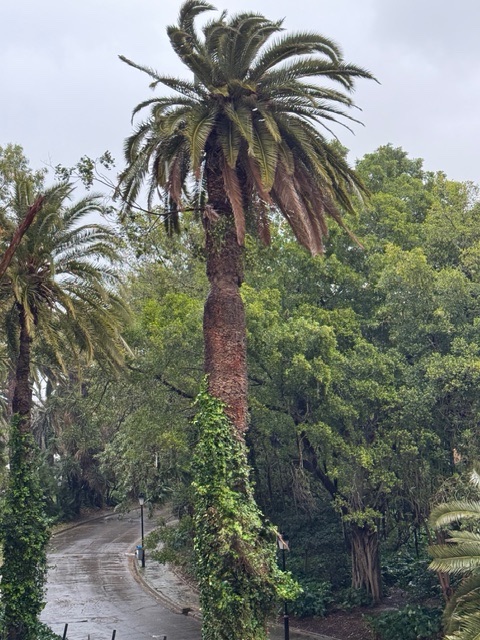
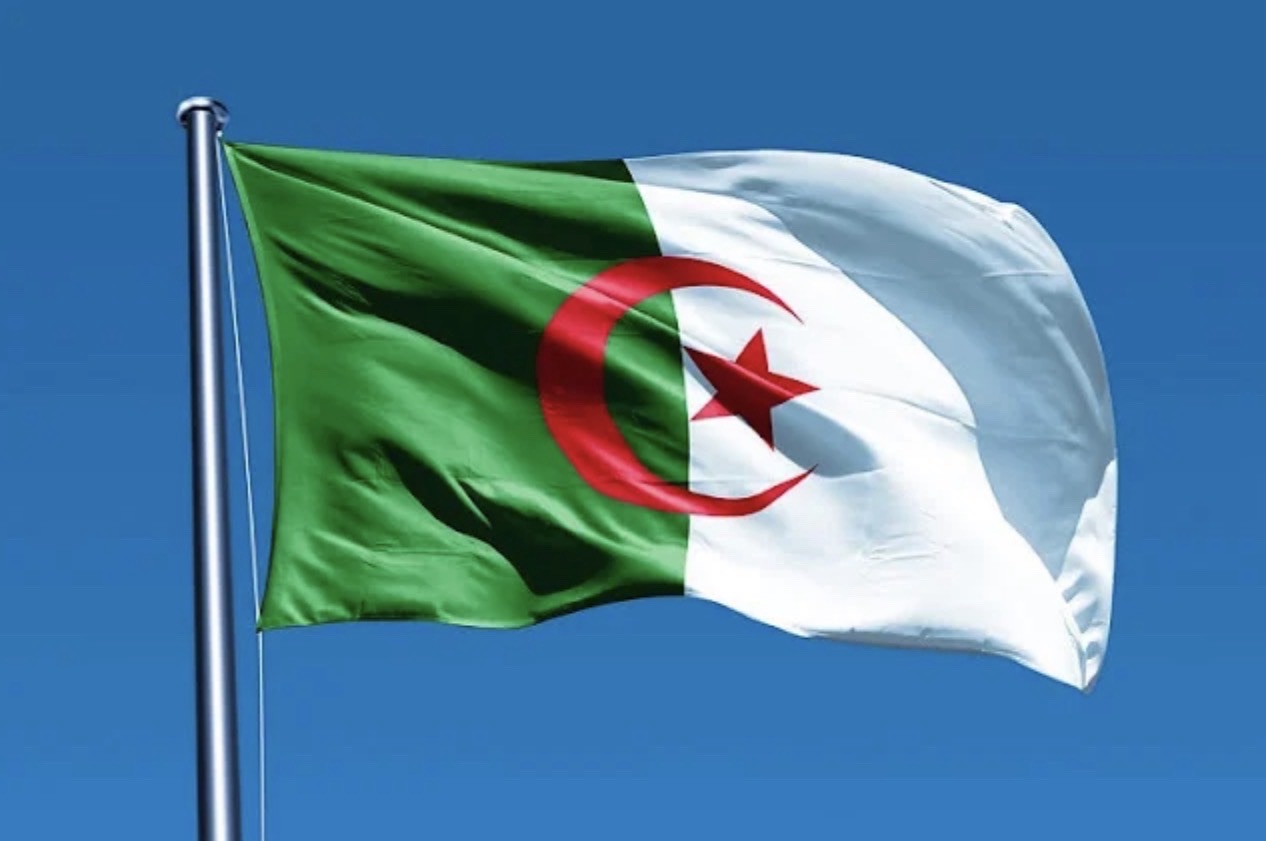
Flags flap perpendicular. The gardens and trees take the wind in stride. For me, a good day sitting in a bus.
Will this be a captivating journey or a stretch of the imagination? We travel the multi-lane A2. For the first 30 minutes, we technically remain In Algers. Opposite, solid lanes of traffic inch past entering the city while we zoom along destined for the countryside. Toll booths sit empty, no tolls collected.
Scenery consists of arid hills, lots of orchards with mountains toward the north. The blue Mediterranean lies far beyond, never in sight. About 200 miles southeast, we will stop to explore more Roman ruins.
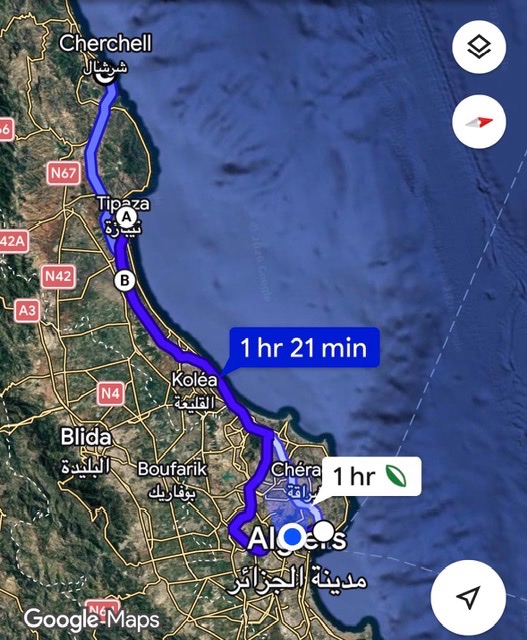
After a breakfast of yogurt, nuts and a bit of baghrir (semolina pancake soaked in honey), we depart Algiers to visit the nearby city of Tipaza.
The day seems warmer as there is less wind, but rain threatens to pour on our parade. Driving west along the bay for about 150 miles, we discover some of the best Roman archeological sites in the Algeria.
New country, new breakfast. While still centered around strong coffee, breakfast appears heavily influenced by the French, traditions left behind when the they left Algeria in 1962.
Morning meal is a tasty mix of sweet and savory – think coffee, breads, and pastries. Lots of breads line the tables, including traditional semolina-based bread, eaten with butter, honey, jam, olive oil, or cheese. I do taste the sfenj, a light but chewy fried doughnut dusted with sugar and dipped in honey. Something I must try later is baghrir, a semolina pancake soaked in honey and butter. However, this morning I enjoy my usual: yogurt and nuts.
The weather is definitely not what I expected. The morning temperature reaches a cool 56°F under cloudy skies and with very brisk winds of 23mph. Only bearable with 3 layers of long-sleeve shirts, a windbreaker and scarf. Thankfully, no rain.
29 March 2026 One needs time in a country to truly begin to appreciate its history, culture, diversity and idiosyncrasies or peccadillos. I did not have the time or exposure during my brief visits to Tunis in 1982 and 2010. But, 10 days touring Tunisia, I can feel a true Read more
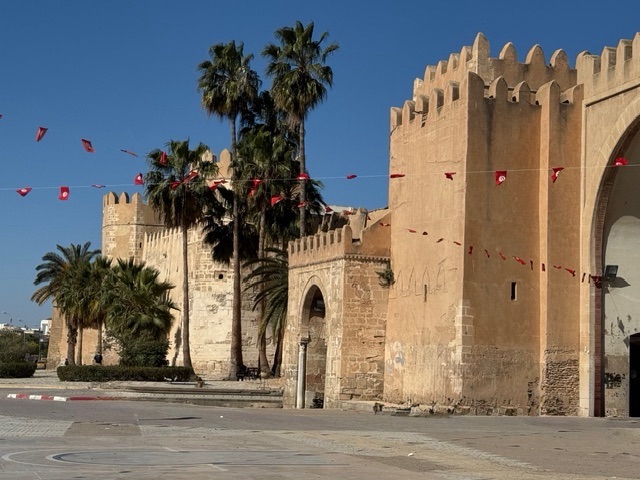
We begin our morning maneuvering Sfax to its historic Medina. Sfax is not pretty in any obvious way. It feels more like a working, industrial city. It’s Tunisia’s second-largest city and its main commercial port, so the rhythm becomes industrial and purposeful rather than historic and touristic.
However, Sfax isn’t without character. In the old city, its medina quarter represents one of the best preserved in Tunisia, walled and refreshingly free of souvenir gloss and pressure to buy a rug or copper pot.
Built by Aghlabid prince Abu Abbass Muhammad between 849 and 851, it shows its age but continues to serve the community. The Medina acts as home to about 115,000 residents and dominated by the Great Mosque.
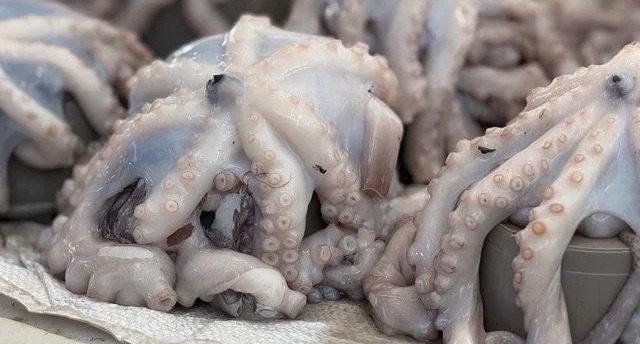
Sfax Medina for whatever your needsOctopus is regional favorite as is a plethora of sea food
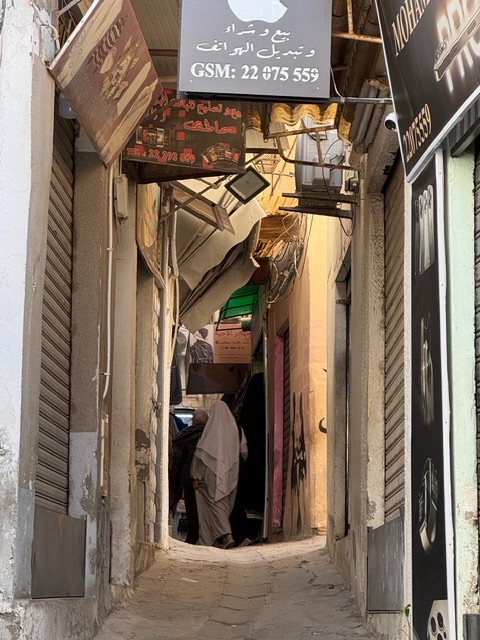
As we walk through the Medina, I’m told, to “soak in the vibrant atmosphere and rich history of this coastal town.” Having traveled a lot and visited dozens of medinas, I ask “sure, so what’s different?” At times like this, I sort of feel the guides are struggling to fill the day.
I hear the usual “welcome,” “where you from,” “my friend” but it’s friendly and less aggressive than in medinas I’ve been like Marrakech or Tunis. Venders quickly switch back to chatting with neighbors or scrolling their iPhones.
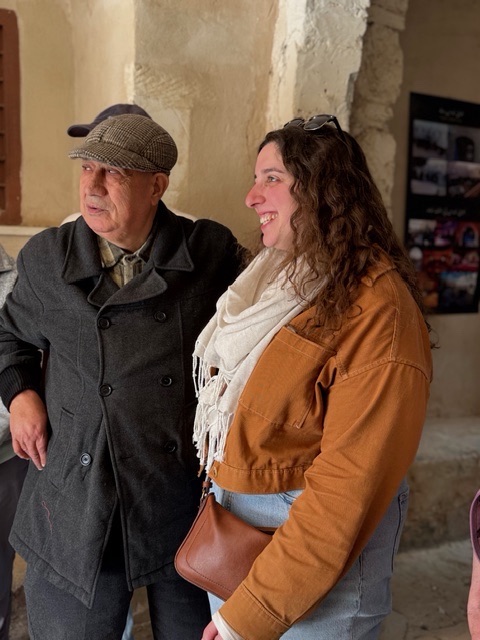
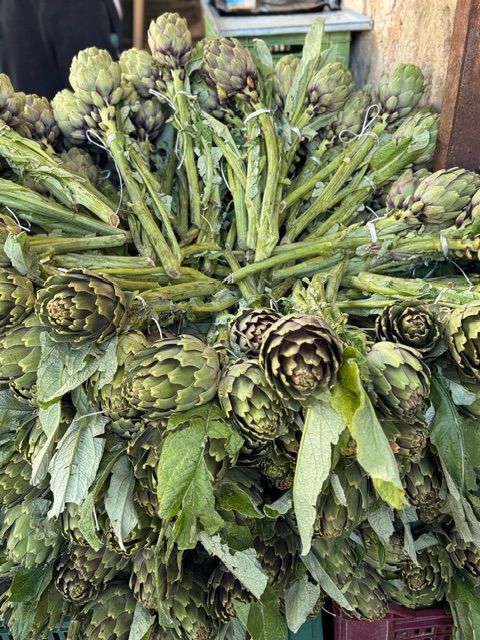
It feels more like merchants trying to make a living, not staging a performance. The displays of fish, vegetables, household wares, crafts and meats arranged artfully, creating lots of photo ops. Merchants smile and allow our guide to explain their wares.
On the Road Again
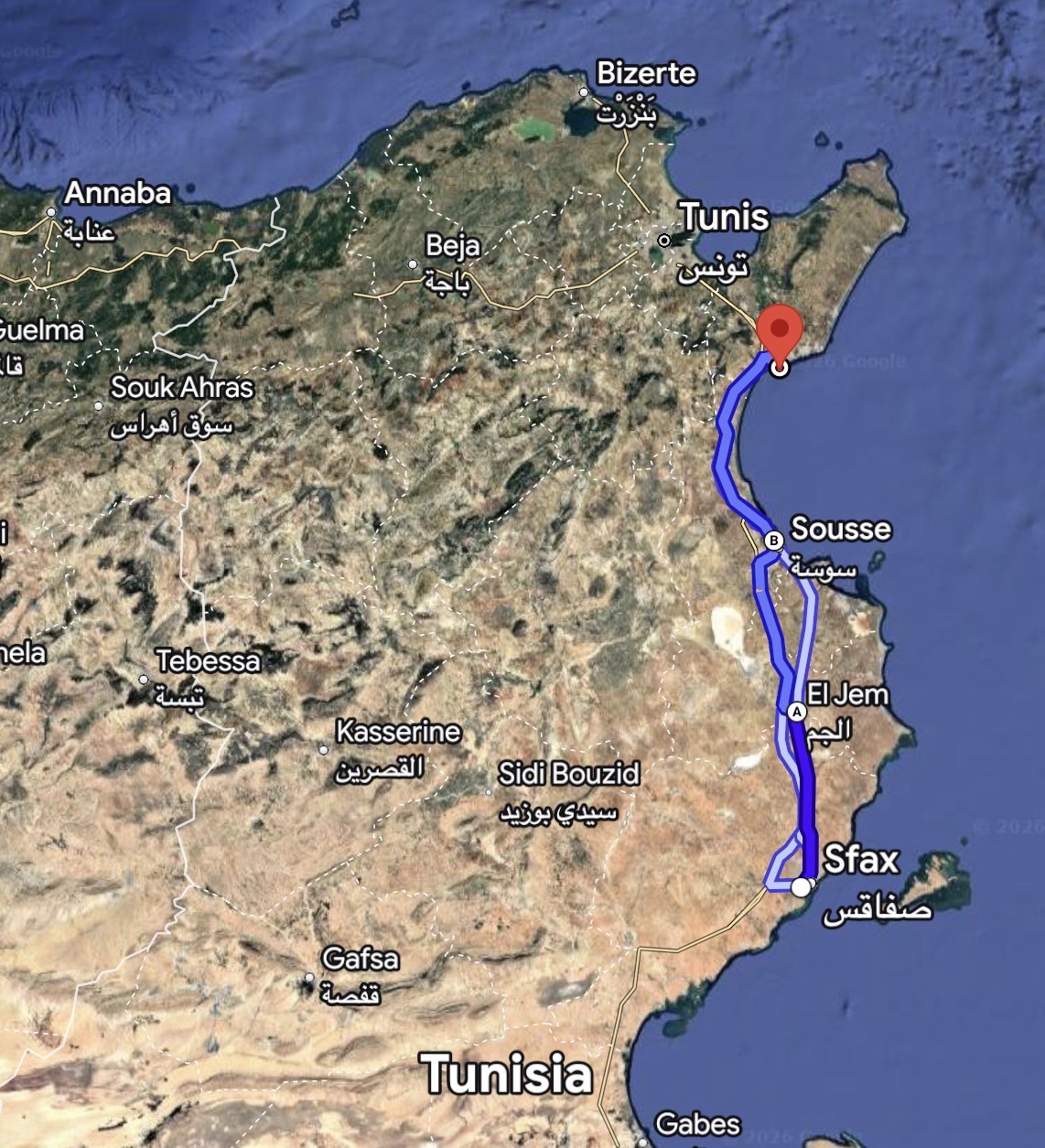
We continue our drive North. Today’s travel consists of about 150 miles with a couple interesting stops along the way. Though we drive close to the sea, the land remans flat and arid. Massive olive groves interspersed with date palms and almond orchards, plus a plethora of cactus, line the highway. Less trash lines the roads.
Beautiful drive alone eastern coastal region from Sfax to El Jem, Sousse to Hammamet
More farms and green fields begin to appear. Most of these farms utilize modern irrigation including drip systems, wadi dams and underground aquifers. Modern orchard management in these regions use a “sustained deficit irrigation,” meaning only enough water is provided to guarantee survival and quality. Cell towers keep us connected throughout our journey.
Touring: not for the weak or the slow. It rewards those who can function on little sleep, adapt to early wakeup schedules, and climb vans and jeeps with the agility of a mountain goat. Usually, in-room coffee saves my morning. Bathrooms require timing, yet I constantly remain at the mercy of other women’s weak bladders.
Meals are aspirational and after a few days of planned 3-meals a day, entirely too long and too much food. Just a quick stop proves never quick. If you require slow mornings, naps, or emotional support when plans change, touring invariably separates you from those expectations by day two.
I hardly imagine I am currently on the Mediterranean Coast. The wind blows cold and strong, just the type of gale that blew Odysseus off course for years. We crossed the Djera-Zarzis Roman Causeway above the Boughrara Gulf on arrival to the small, resort island of Djerba. There appears much to see before we exit the island, this time by ferry, for other destinations.
Tunisia’s Tataouine Governorate feels like stepping beyond Earth’s familiar into a landscape sculpted by wind, silence, and time. The horizon stretches endlessly, carved into rippling desert plains, honey-colored ksour rising like ancient fortresses, and villages seemingly grown from the rock itself.