6 June 2026
Tallinn has a way of blending centuries together. On this cool June day, the heavy scent of lilacs drifted through the parks and streets while Old Town seemed transformed into a medieval fair, with costumed performers, market stalls, and crowds gathering beneath ancient towers and walls.
Yet beyond the fairytale setting lay stories from many different eras. It was a day that revealed Tallinn not as a city frozen in the Middle Ages, but as a place where medieval legends, imperial history, Soviet memories, and modern independence all coexist within a few fascinating streets.
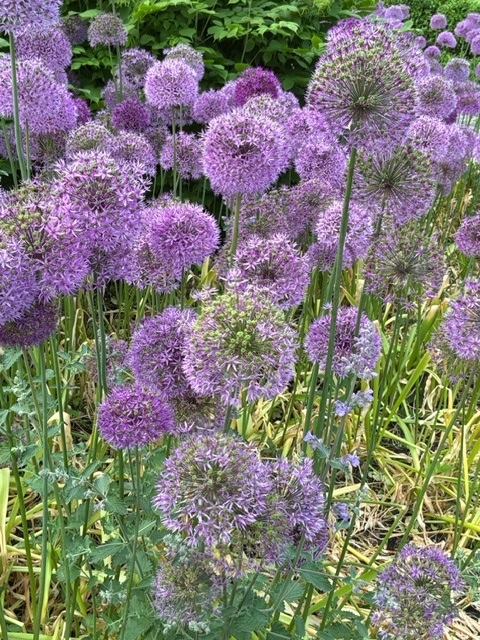
My wanderings would take me from a plaque commemorating Boris Yeltsin and Estonia’s struggle for freedom, to elegant works of art, secret rooms once used by the KGB, a museum filled with orders of knighthood, and paths past Dutch garlic and fragrant lilacs in Toompea Park.
From Freedom to Oppression
I leave the fortifications, walk through Freedom Square with its monument to the War of Independence Victory, and visit Hotel Viru. Inside is the KGB Museum.
Seems odd that artifacts from the era of Soviet occupation are exhibited here. However, Hotel Viru became one of the most revealing relics of the Soviet-era in Tallinn not because of how it looks, but because of what went on behind its doors.
The hotel represented openness to the world on the surface, but represented constant observation just out of sight. Built in 1972, Soviet authorities constructed it to serve foreign visitors like tourists, journalists, and especially business travelers from the West. The Soviets needed a place that felt modern and comfortable enough to impress foreigners. They also wanted the cash.
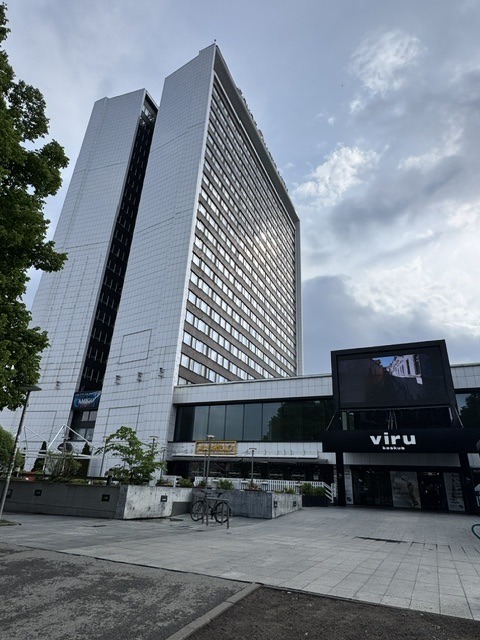
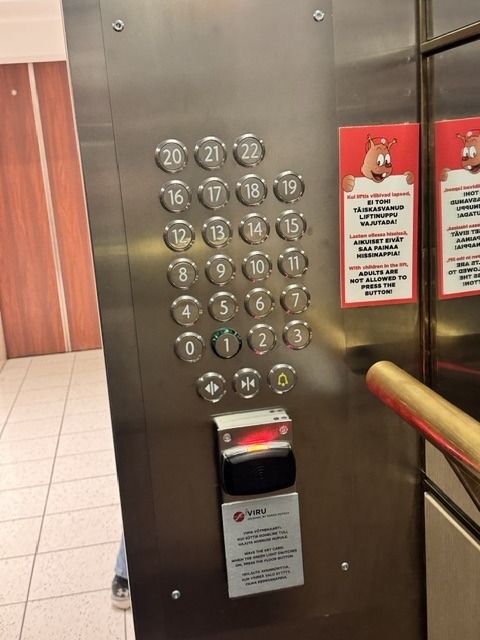
Officially, it was a showcase hotel, bright, relatively luxurious by Soviet standards, with restaurants, bars and showgirls that were positively lively compared to most of the USSR. Unofficially, however, it was a surveillance hub.
The top floor, floor 23, mysteriously considered as nonexistent by the elevator, actually served the KGB. From there, agents monitored guests through an extensive network of bugs and listening devices hidden in rooms, phones, and even walls.
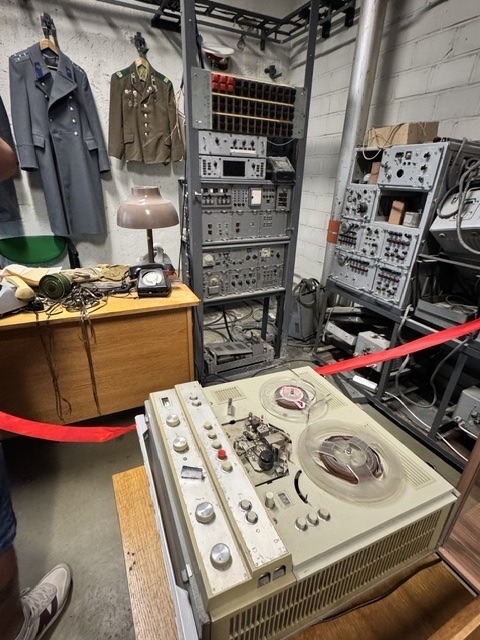
This wasn’t unusual for the Soviets, but Hotel Viru became particularly known for it because of the volume and type of guests it hosted. Foreign currency flowed through the hotel. With it came influence, ideas, and potential dissent, things the authorities were determined to control. Even Estonian employees faced close scrutiny.
There exists stories, some confirmed, about microphones hidden in ashtrays, conversations overheard in multiple languages, and guests who suspected they were never truly alone. Whether every tale is true or not, the broader reality is not in doubt: the hotel functioned as a controlled interface between the Soviet world and the outside.
Surprisingly, most of the KGB equipment remained behind when they left Estonia. The very informative tour and the excellent views over the city made this a must stop in Tallinn, especially for this history buff.
Three Museums – Three Purposes
Tallinn Museum of Orders of Knighthood
This museum presents a different view of history. It displays decorations, medals, and insignia from royal and state orders across Europe and beyond. This includes ornate badges linked to monarchies like Napoleon Bonaparte and other imperial courts from around the world, alongside explanations of what each honor represented be it loyalty, service, or power.
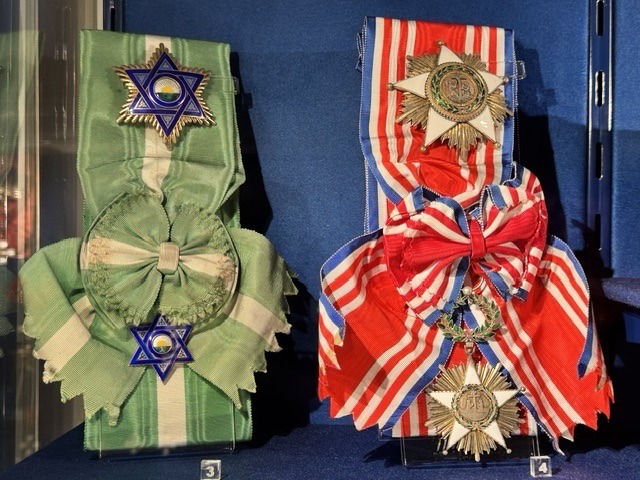
It’s compact but beautifully curated, giving a glimpse into elite history through craftsmanship and symbolism. I enjoyed the exhibits and it represented a quick stop that felt different from the usual medieval and war-heavy sights.
Adamson-Eric Art Museum
Dedicated to Estonian artist Adamson-Eric, this museum blends modernism with decorative arts. Born Erik Adamson in 1902, he became known for his versatility, working as a painter, designer, ceramicist, metalworker, and creator of decorative arts. As an artist, he adopted the name Adamson-Eric.
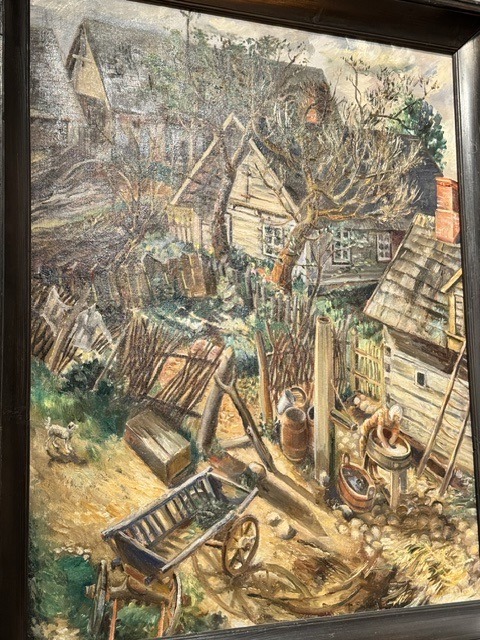
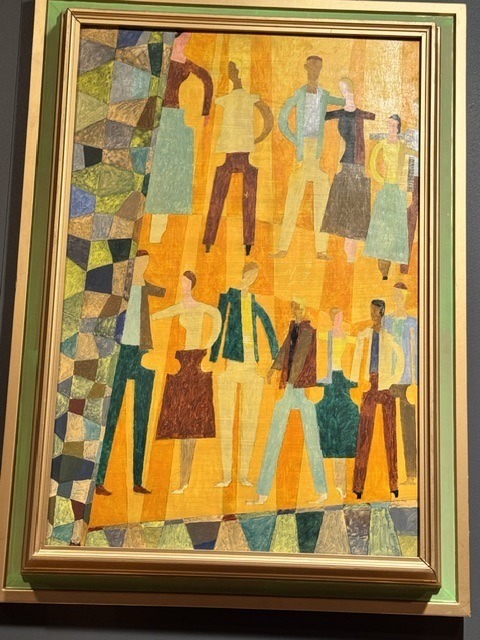
Rather than focusing on a single style, Adamson-Eric embraced everything from portraits and landscapes to furniture, textiles, ceramics, and applied arts. His colorful, elegant works helped shape Estonia’s modern artistic identity. His creative versatility is amazing.
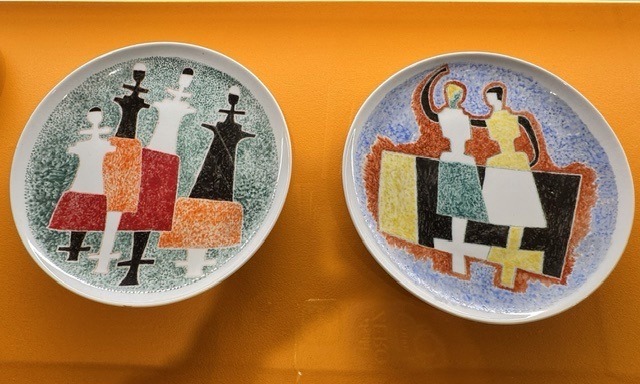
Displays include paintings, ceramics, textiles, and furniture, all designed by Adamson-Eric. The museum sits in a charming historic house, which adds to its intimate feel. It gives a nice break from medieval history with a look at Estonia’s 20th-century creativity, its design, color, and the intersection of fine art and functional objects.
Tallinn City Museum
Beyond its fun interactive displays, the Tallinn City Museum excels at bringing everyday life to the forefront. Housed in a beautifully preserved medieval merchant’s house, it showcases centuries of objects ranging from guild treasures and household items to wartime artefacts and photographs.
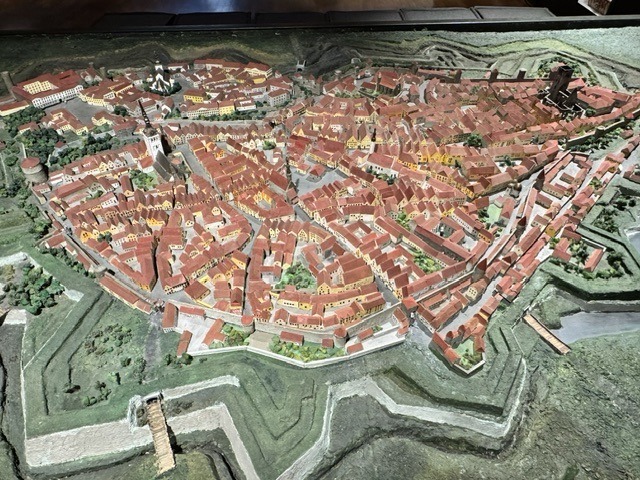
The museum’s historic interiors, including ancient cellars and timbered rooms, help one experience Tallinn’s past in an authentic setting rather than simply reading about it. And the excellent 1825 city model shows the Old Town of Tallinn with its medieval fortifications, red-roofed buildings, and distinct bastion tunnels.
The museum effectively and humorously uses role-based historical characters in vignettes, particularly those associated with the Hanseatic merchants and Brotherhood of the Blackheads (young, unmarried merchant guild members) to recreate a period of city history.
Giving Some Love to a Russian?
Oddly, there is a Plaque to Boris Yeltsin in Toompea Park along Nunne Street across from the train station. The bas-relief acts as a commemoration to the Soviet ruler “… to honor his role in the peaceful restoration of Estonia’s independence in 1990–1991.”

Yeltsin is the only democratically-elected leader in Russia. As Soviet tanks rolled to action to crush pro-independence, Boris Yeltsin, then speaker of Parliament of the Russian Federation, came to Tallinn. In open defiance of the Kremlin, Yeltsin signed a treaty with Estonia recognizing her “inalienable right to national independence.” (He later did the same for Latvia and Lithuania. Gorbachev played an accidental role because his reforms of glasnost lit the fuse that ultimately led to Yeltsin’s success. Gorby opposed independence.)
Not one representative of the current Russian authorities participated in the plaque ceremony in 2013. The memory of Yeltsin, nor Gorbachev, are not welcomed by the Putin regime. “When some rogue in the Duma once again raises his voice about the Baltics’ ‘disrespect’ for Russia … I will remember that shameful scene,” wrote Sergei Parkhomenko, a prominent Russian journalist. “… a large crowd of Estonians who came to express gratitude and respect to Russia and her president, and the cowardly absence of Russian politicians and diplomats.” Unfortunately, this sounds horrifyingly familiar in today’s U.S. politics.
A Conversation with a Russian
During dinner, I enjoyed one of the more interesting moments in Tallinn during a conversation with a Russian-born man who had moved to Estonia. We compared the advantages and disadvantages of living in our respective countries.
He spoke positively about safety in Russia and some aspects of its social system, while also making it clear he preferred living in Estonia.
I asked whether he worried about Putin one day trying to reclaim parts of the old Russian Empire, like Estonia. His response was simple: if things ever became that serious, he would move elsewhere. A practical view, especially given Russia’s history of military conscription.
We talked about everyday costs. He noted that fuel in Russia was only a fraction of the price in Estonia. Still, the question lingered: is cheaper petrol worth the trade-offs?
Politics inevitably came up. He was not particularly impressed by Trump, and while discussing America he pointed to the country’s violence and social problems. On that point, I had to concede he had a valid argument.
By the end, we seemed to reach a common conclusion. Neither of us had much faith in our current political leaders. He was content living outside Russia, and I was content being away from the United States for a while. Two people from very different backgrounds finding some unexpected common ground in Tallinn.
Elagu vaba Ukraina “Long live free Ukraine”
Across Tallinn, displays of Ukrainian flags, posters, and handwritten messages of solidarity reflect a strong public response to Russia’s full-scale invasion of Ukraine. Walls covered in blue and yellow speak not only to political alignment but also to shared memories of occupation and the value Estonia places on independence and sovereignty.
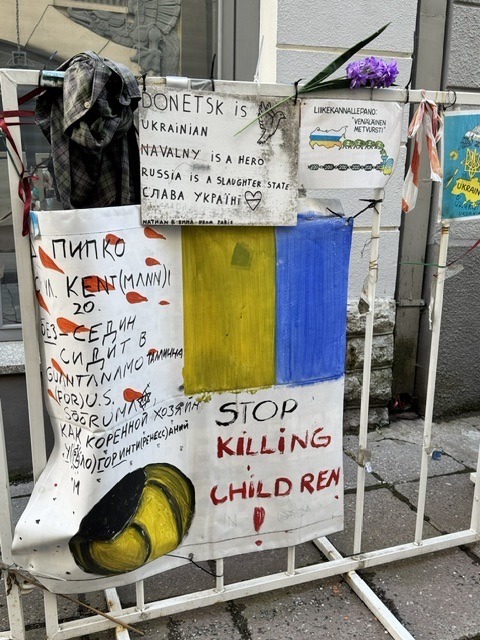
Many Estonians see Ukraine’s struggle as echoing their own 20th-century experience under Soviet rule. Civic institutions, museums, and public spaces have contributed to these expressions, reinforcing a sense of moral support and regional unity. The displays also serve as reminders of ongoing humanitarian aid, refugees, and Europe’s interconnected security concerns today.
Conversation with a Hongkonger
I anticipated encountering people from Russia, Ukraine, or Finland in Estonia. However, I met a young man from Hong Kong who managed one of the tower museums.
Since I was the only person there, I asked him why he had chosen to live in Estonia. His mother had suggested it, he said, but he couldn’t explain why she had insisted. “She dreamed it,” he replied. He could have gone to the UK, but his mother had a strong desire for him to live in Estonia, a country she had never visited.
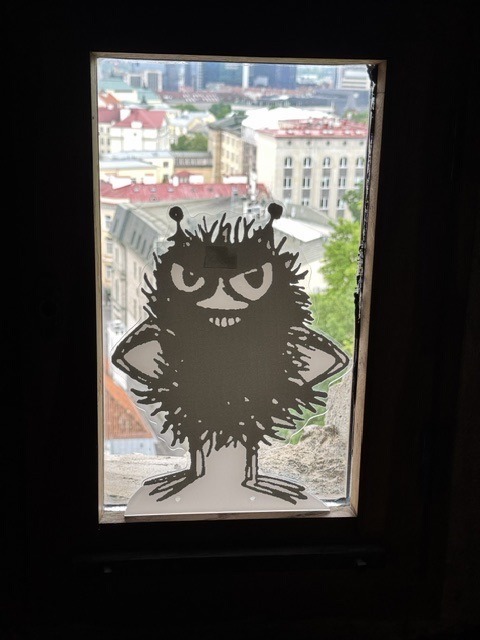
Mā mī, you think I should move where?
It seems that a few Hongkongers have settled in Tallinn. This may not be solely due to a dream, but rather because of the emigration from Hong Kong that began in 2020. Political changes and concerns about civil liberties have led many Hongkongers to seek new opportunities elsewhere. While most of them have chosen the UK, Canada, or Australia, a few have also considered smaller European countries, including Estonia.
Despite the challenges, the young man remained optimistic and seemed content with his mother’s decision. He mentioned the abundance of Chinese restaurants in Tallinn and even mentioned a few girls living there. And, of course, the flight home is only 14 hours.
A City of Steeples and Domes
Always a moment for churches, a look at what faith once built and what tourism now helps sustain. Tallinn offered a remarkable variety.
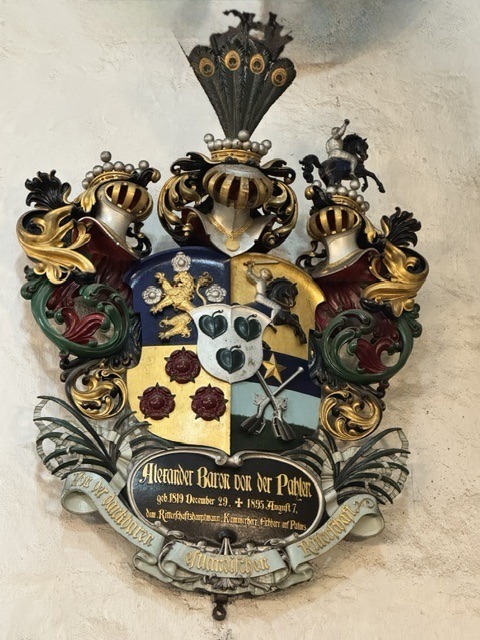
St. Mary’s Cathedral (Lutheran) at left, known as the Dome Church or Toomkirik, is simple yet dignified, with centuries of noble coats of arms and tombs. St. Nicholas’ Church (Lutheran) is a compact medieval survivor, now housing religious art treasures.
The Orthodox Church of St. Nicholas (Eastern Orthodox) is richly decorated, its golden iconostasis contrasting with the restrained Lutheran interiors.
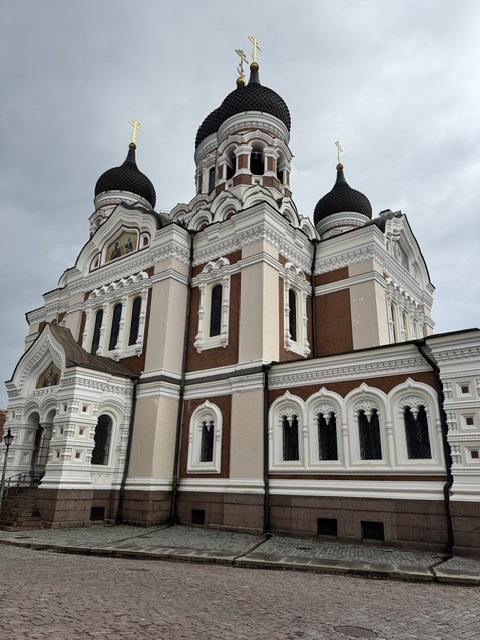
The Alexander Nevsky Cathedral, a prominent Russian Orthodox cathedral, was completed in 1900. Situated in Toompea, the upper town of Tallinn’s Old Town. Renowned for its Russian Revival architecture, the cathedral boasts gleaming white walls, ogee arches, and imposing black domes.
Finally, St. Olav’s Church (Lutheran) rises skyward with its towering spire, once believed to be the tallest building in the world and still one of Tallinn’s most striking landmarks.
History is Fascinating But All Cobbled Streets Lead to Beer – Eventually
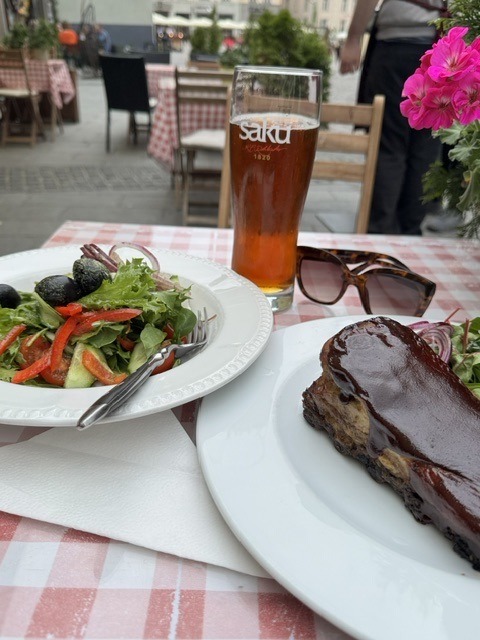
I end each day like the locals, relaxing in a street-side restaurant. My cuisine ranges from salads to pork ribs, fish and chips to a massive serving of French fries.
And of course, there’s always the kohalik külm õlu or cold local beer. I can’t pronounce the name, but I can point to my choice. I prefer the restaurant with the umbrella because they advertise their pour in this way.
In Tallinn, the most popular beer is A. Le Coq, Estonia’s oldest brewery (1807). Their Premium and Alexander lagers are delicious. A close second would be Saku Brewery, which has been pouring beer in pubs in Tallinn since 1820. Saku Origina becomes my preference.
To the spirit of an independent Estonia, and to a free Ukraine—may both stand strong and unbroken.
